Follow Us:
Follow Us:

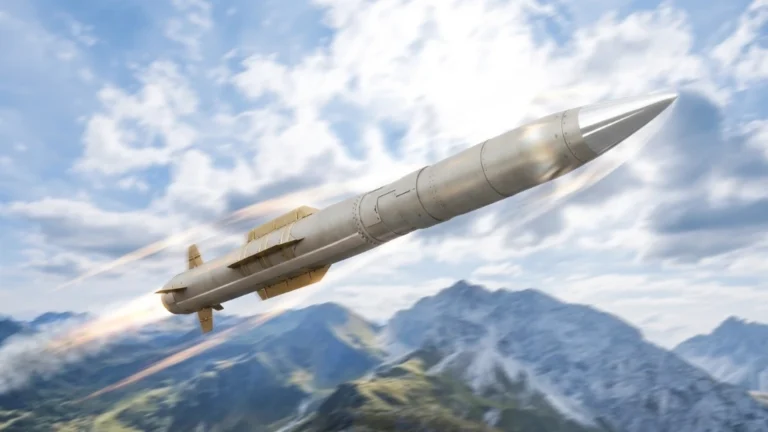
In recent months, the U.S. Army’s new Precision Strike Missile (PrSM) has been showing up more often in defense headlines, sometimes even overshadowing older systems like ATACMS. What’s surprising is just how quickly this system has advanced. In 2020, it was still in early testing, yet by late 2023 the U.S. Army was already talking about fielding it.
Although the official range is listed as “up to 500 kilometers,” some reports hint the missile could go significantly farther, pushing into ranges once thought out of reach for a ground-launched system restricted by earlier arms treaties.
Some observers even note that other countries are watching closely, since long-range precision weapons have become one of the deciding factors in conflicts we’ve seen over the past few years.
If both missiles were designed for precision strikes, “what exactly makes PrSM different from ATACMS, and why does that difference matter on the battlefield?”
That was fine thirty years ago, but today the Army faces opponents who field missiles that can reach much farther and in much greater numbers.
If we want to understand why the U.S. Army is putting so much effort into a new missile, it makes sense to start with what the Precision Strike Missile (PrSM) is. It’s being built by Lockheed Martin, and the plan is for it to replace the older ATACMS.
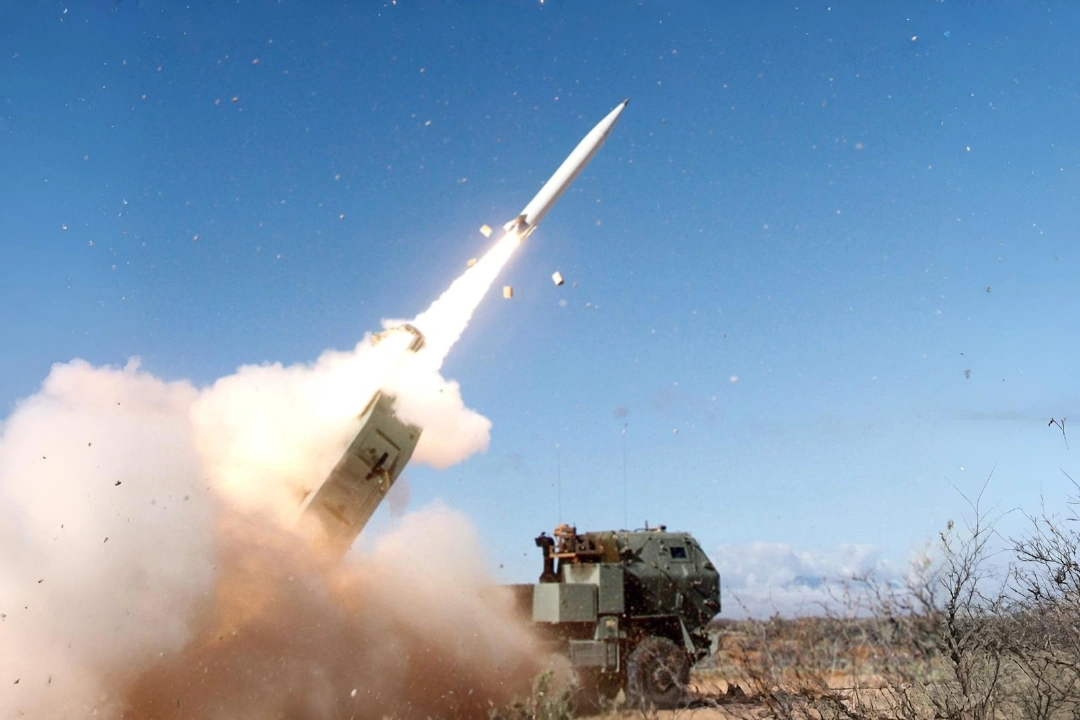
That missile has been around since the early 1990s, and while it did the job in wars from the Gulf to Iraq, it also showed some limits. Its range was restricted by arms treaties at the time, and each launcher could only carry one round. That was fine thirty years ago, but today the Army faces opponents who field missiles that can reach much farther and in much greater numbers.
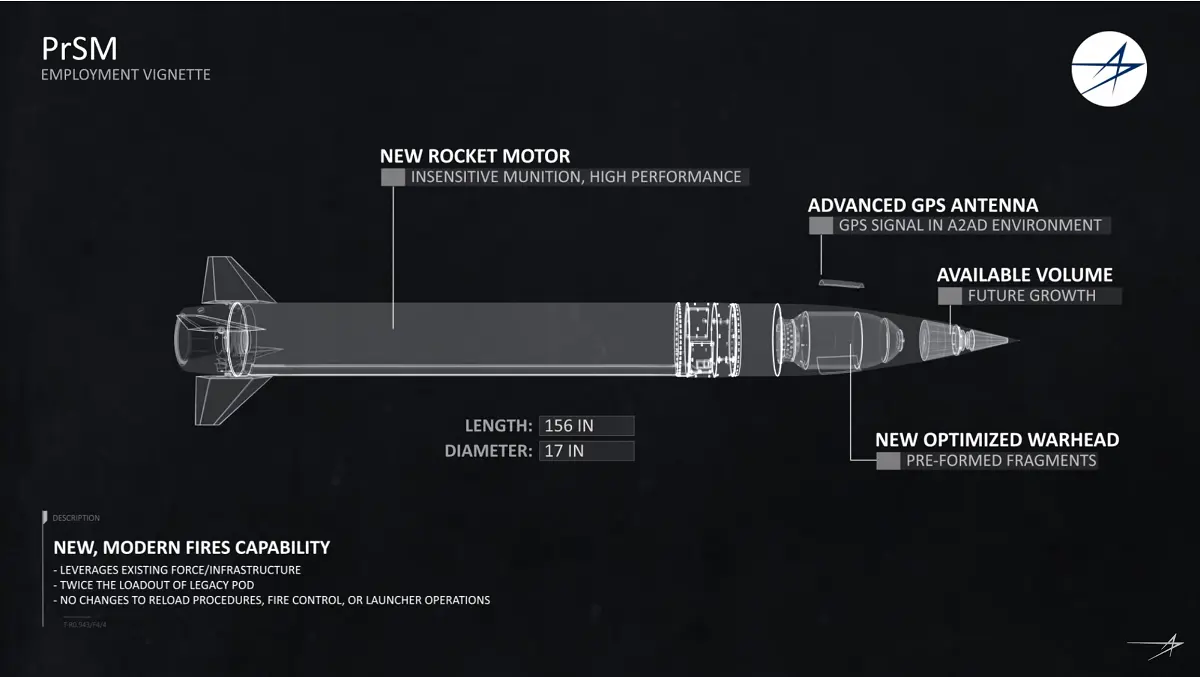
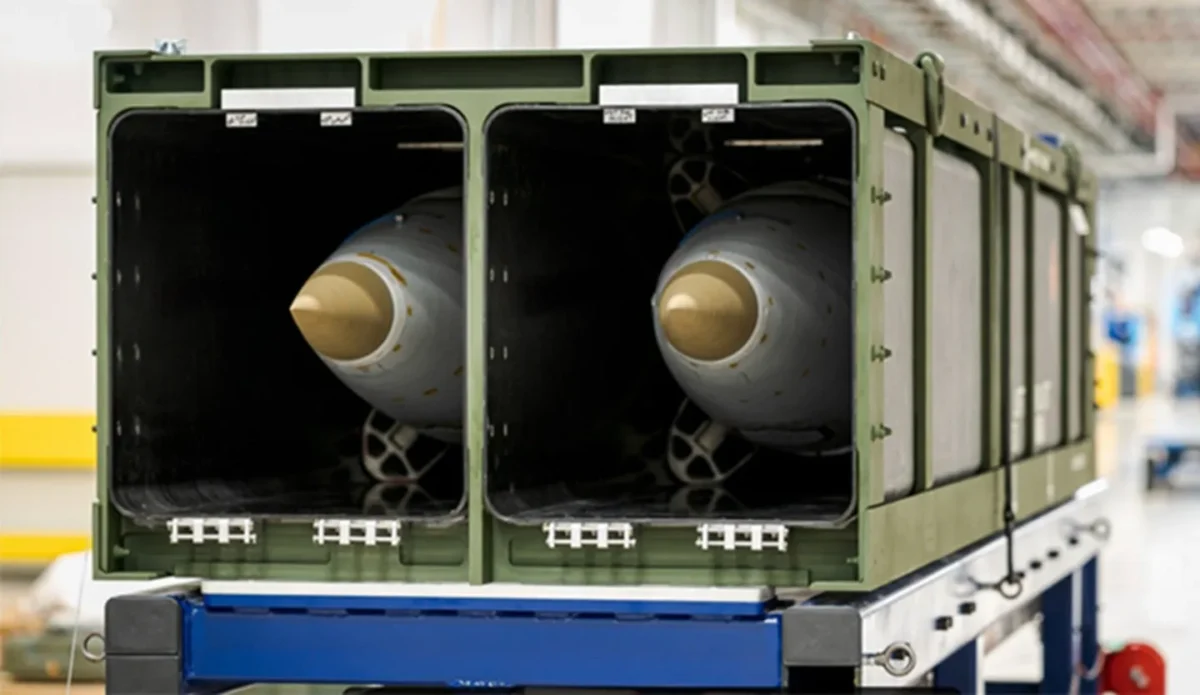
PrSM was developed to fix those problems. One of the more noticeable changes is how many missiles the launcher can carry. With ATACMS, each pod only held one. PrSM doubles that. Now a crew can load two into the same space.
On paper that sounds like a small design tweak, but in practice it matters. For example, a unit that could fire six ATACMS before can now fire twelve PrSMs in a single strike. It doesn’t guarantee victory, but doubling the firepower makes it a lot tougher for the other side to shrug off the first strike.
The missile also ties into a bigger shift in how the U.S. Army is thinking about future wars. The Army has been looking more toward the Pacific, where long distances make even basic operations harder than in Europe or the Middle East.
In that setting, a weapon that can reach 500 kilometers, or maybe even more, starts to change the options on the table. It means commanders don’t always have to call in the Air Force to hit a target, and they can think differently about how to defend islands, block sea routes, or slow down an enemy push before it gets too close.
Range is another reason the Army pushed for a new system. ATACMS was capped by old arms treaties, which limited how far it could go. But today, potential rivals have missiles that reach much farther. PrSM was designed with that in mind, giving commanders the ability to hit targets well beyond what ATACMS could reach.
Table: PrSM Key Specifications (baseline version)
| Feature | Detail (approximate/known) | Notes / Caveats |
| Range | ~500 km (planned) / future >700 km | Later versions may extend much farther |
| Payload | Unitary high-explosive warhead | No cluster munition option (political choice) |
| Speed | Supersonic (exact figures not public) | Likely >Mach 2, but not confirmed |
| Guidance | GPS + Inertial Navigation | GPS jamming could reduce accuracy |
| Launch Platforms | HIMARS, MLRS | Doubles load per pod compared to ATACMS |
When people talk about the PrSM, the first thing to notice is how little we actually know for sure. A lot of the numbers being talked about are still in flux. Some are from early trials, others are what the Army or Lockheed Martin have chosen to say publicly. That doesn’t mean the numbers are fake, but they only tell part of the story. A missile that looks great in trials can stumble once it’s used under real pressure.
Think about how many systems in the past performed well in testing, then struggled once dust, weather, or enemy jamming got involved. PrSM could face the same gap. Still, a few details are clear enough to explain why the Army keeps putting money and energy into it.
The most obvious is range. For the baseline missile, the range looks to be about 500 kilometers. That alone gives the Army far more reach than ATACMS ever had, which stayed closer to 300. There’s speculation that new upgrades could push the missile well beyond 700.
At this point, those numbers are still uncertain, and future versions will need time to prove themselves, but the direction of development shows how seriously the Army views long-distance precision strike.
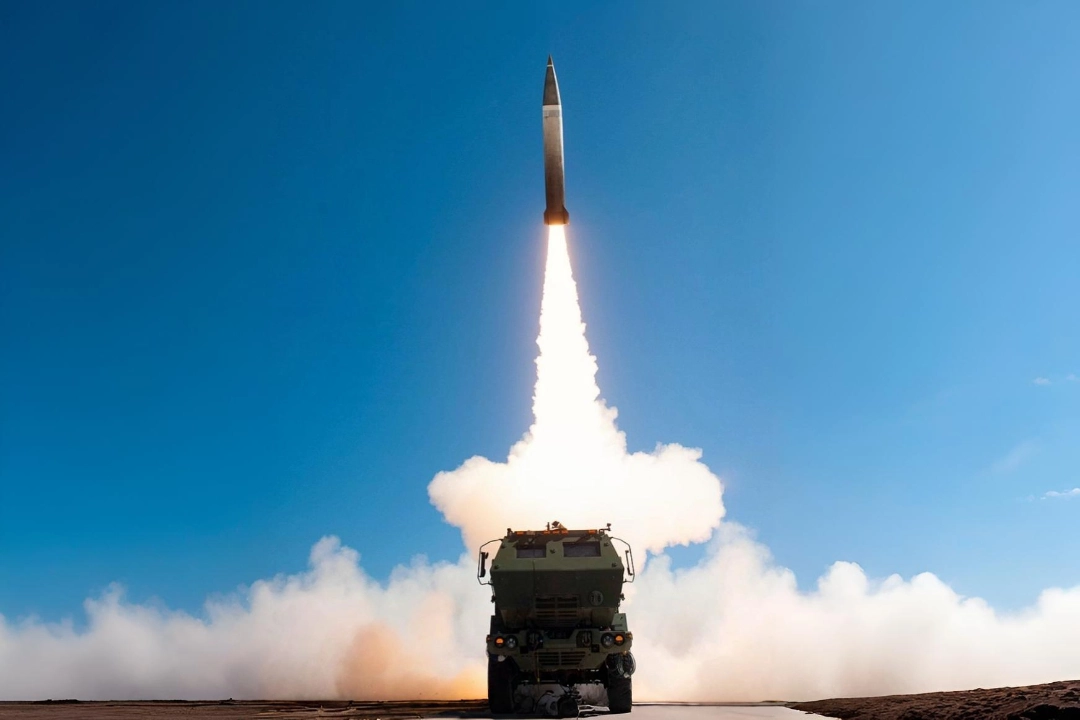
Payload is another area where PrSM differs. The PrSM doesn’t carry submunitions the way some ATACMS versions did. Instead, it uses a single high-explosive warhead. That design works well for fixed targets like supply dumps or command posts.
The downside is obvious; it can’t spread damage over a wider area the way cluster weapons can. Some people see that as a weakness, but it also avoids the controversy around cluster weapons, which many countries don’t want to use anymore.
Details about PrSM’s speed aren’t widely shared, but most reports suggest it travels faster than sound, maybe near Mach 2. That might sound impressive, but many modern systems already operate in that range. The missile’s guidance uses GPS alongside an internal navigation unit, which should give it strong accuracy. The problem is that GPS can be disrupted. In the war in Ukraine, for example, Russian forces have repeatedly jammed or spoofed GPS signals.
In late 2022, Ukrainian officials admitted that some of their HIMARS rockets were not striking as accurately as before. The cause wasn’t mechanical failure but Russian electronic warfare, which was disrupting GPS signals around the Donbas front.
By the spring of 2023, similar concerns were being raised by Western analysts, who noticed that the effectiveness of guided strikes had started to drop as Russian jamming became more intense. The point here is simple, precision weapons are only as reliable as the signals that guide them.
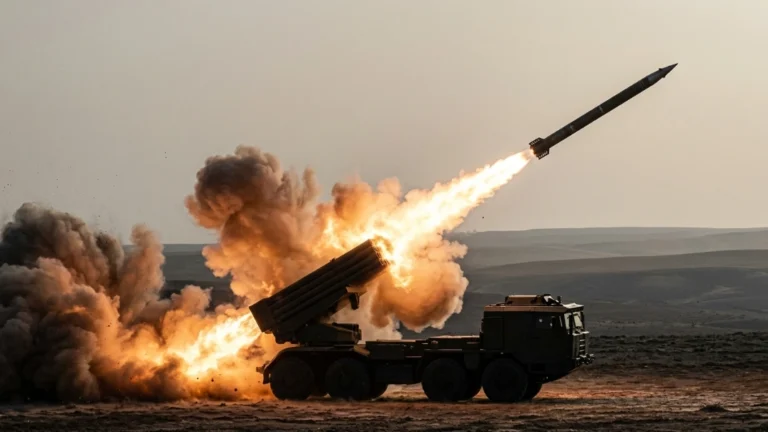
Perhaps the most practical advantage is that PrSM does not require a new launcher system. It fits directly into existing HIMARS and MLRS platforms. This matters because a single pod that once carried one ATACMS can now carry two PrSMs.
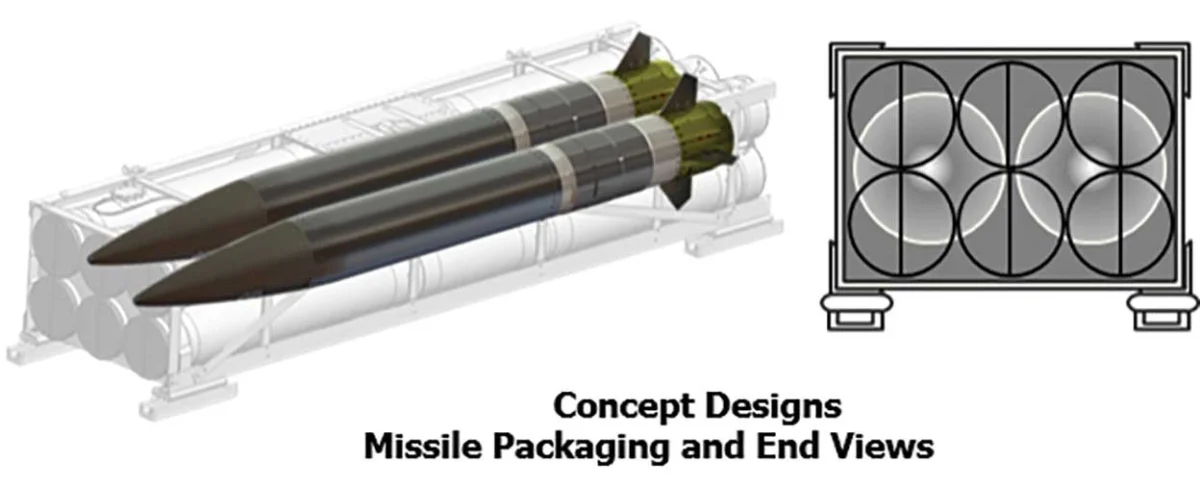
In simple terms, the same launcher vehicle instantly doubles its firepower. For field units, this kind of efficiency can be just as important as raw performance.
| Feature | ATACMS (MGM-140) | PrSM (Precision Strike Missile) |
| Range | ~300 km (max) | ~500 km (baseline); future >700 km (planned) |
| Payload | Unitary or cluster warhead options | Unitary high-explosive warhead only |
| Warhead Weight | Up to ~560 lb (varies by variant) | ~200 lb (lighter, optimized for precision) |
| Speed | Supersonic (exact figures classified) | Estimated supersonic, Mach 2+ |
| Guidance | GPS + inertial navigation | GPS + inertial navigation (future seekers possible) |
| Launcher System | HIMARS, MLRS | HIMARS, MLRS |
| Missiles per Pod | 1 | 2 |
| Service Entry | Early 1990s | Projected full entry ~2025–2026 |
| Role | Theater strike, area effects (submunitions) | Precision strike, long-range, hardened targets |
| Cost (est.) | ~$1.3M per missile (varies by type) | ~$1.5–2M per missile (early estimates) |
When people line up PrSM against ATACMS, the easy headline is that the new missile goes farther, fits better in launchers, and carries updated guidance. That makes it sound like a clean win. But is it really that simple?
Take range, for example. The jump from 300 km with ATACMS to 500 km with PrSM, and possibly 700 km later, seems like a big win. Yet longer range only matters if commanders can get reliable targeting data at those distances.
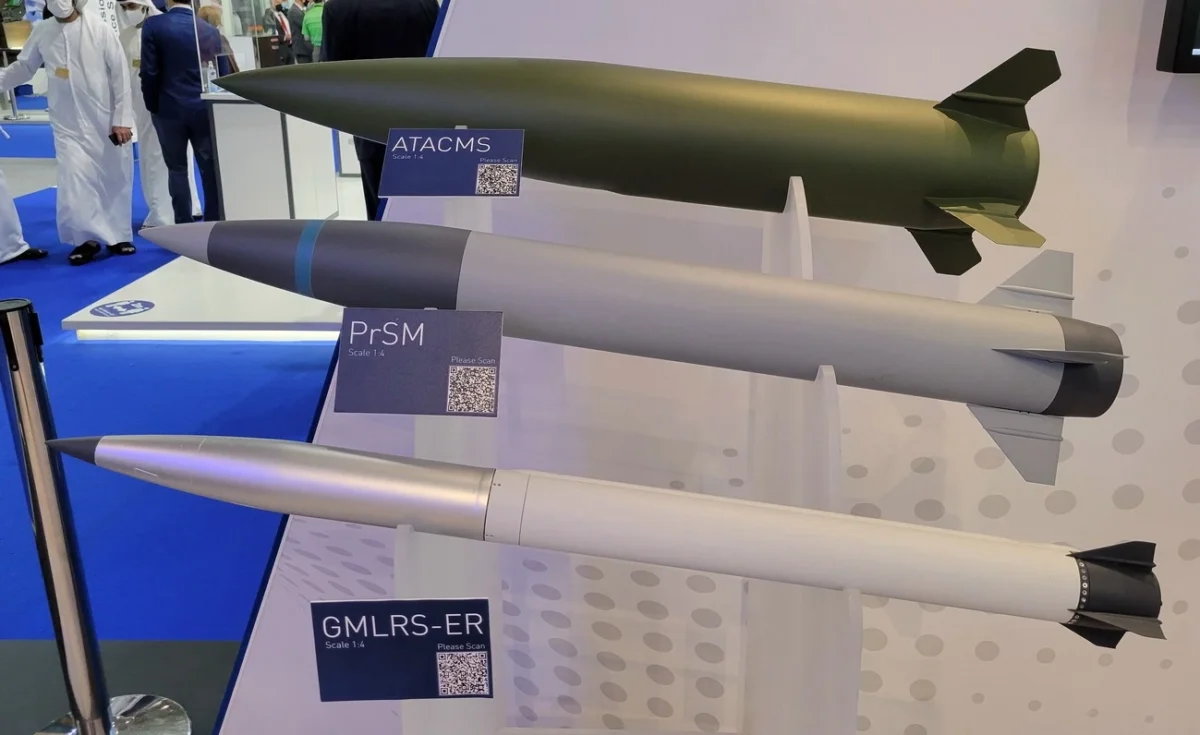
More reach is good, but it also raises questions: how often will commanders actually need to hit targets that far out? If reconnaissance drones or satellites can’t keep up, does the extra range actually translate into battlefield advantage, or is it just theoretical?
Then there’s payload. ATACMS had the option of cluster munitions, which could scatter damage across a wide area. PrSM doesn’t, it carries a single high-explosive warhead. That makes it cleaner, and politically easier to share with allies, but the trade-off narrows its role. Against enemies that spread out rather than concentrate, this design choice could leave commanders with fewer effective options on the battlefield.
Deployment looks better on paper for PrSM. Early estimates suggest PrSM may be even more expensive than ATACMS, despite carrying a lighter warhead. Two missiles can fit into a single launcher pod that used to carry only one ATACMS. Twice the firepower sounds like a breakthrough, but here too there’s a catch. More missiles per pod doesn’t change the fact that logistics, resupply, transport, storage, will remain a bottleneck.
And finally, guidance. PrSM uses GPS and inertial navigation, which promises accuracy. Yet ATACMS was already quite accurate, and recent conflicts have shown how easily GPS can be disrupted. If Russia and China keep developing stronger jamming systems, is PrSM really a leap forward, or just a slightly longer-ranged target waiting to be diverted off course?
On balance, PrSM is clearly more modern and better suited to long-range, high-end conflicts, which is what the U.S. Army says it needs. But superiority isn’t absolute. In trading submunitions for a unitary warhead, in betting on GPS for precision, and in chasing longer range, PrSM may have solved some problems while creating others. The real test will be whether it can deliver under pressure, not just on a test range.
The Army’s interest in the Precision Strike Missile isn’t only about adding a new piece of equipment. It seems to fit into a larger plan they’ve been talking about for years, known as “long-range precision fires”. In plain terms, the goal is to strike faraway targets, and do it accurately, before an enemy has the chance to respond.
Part of the push is likely about keeping up with countries like Russia and China, both of which have put a lot of money into their own missile programs. But there’s also a more practical angle. Over time, the Army has stepped back from deep-strike missions, leaving much of that work to the Air Force and Navy. By backing PrSM, the Army may be trying to take some of that responsibility back, rather than always relying on other branches.
The way PrSM is being integrated tells its own story. Army leaders often stress “multi-domain operations,” a buzzword that sounds abstract until you picture the reality. One way to picture this is to think about a possible conflict in the Pacific. Navy ships might spot targets far out at sea, while Air Force aircraft could pass back the information in real time.
On land, Army missile crews could then launch strikes within minutes. This kind of teamwork between the services has often been described in plans and speeches, but in practice it hasn’t always worked as smoothly as imagined. If PrSM works as intended, it could be one of the first weapons to make that vision more than theory.
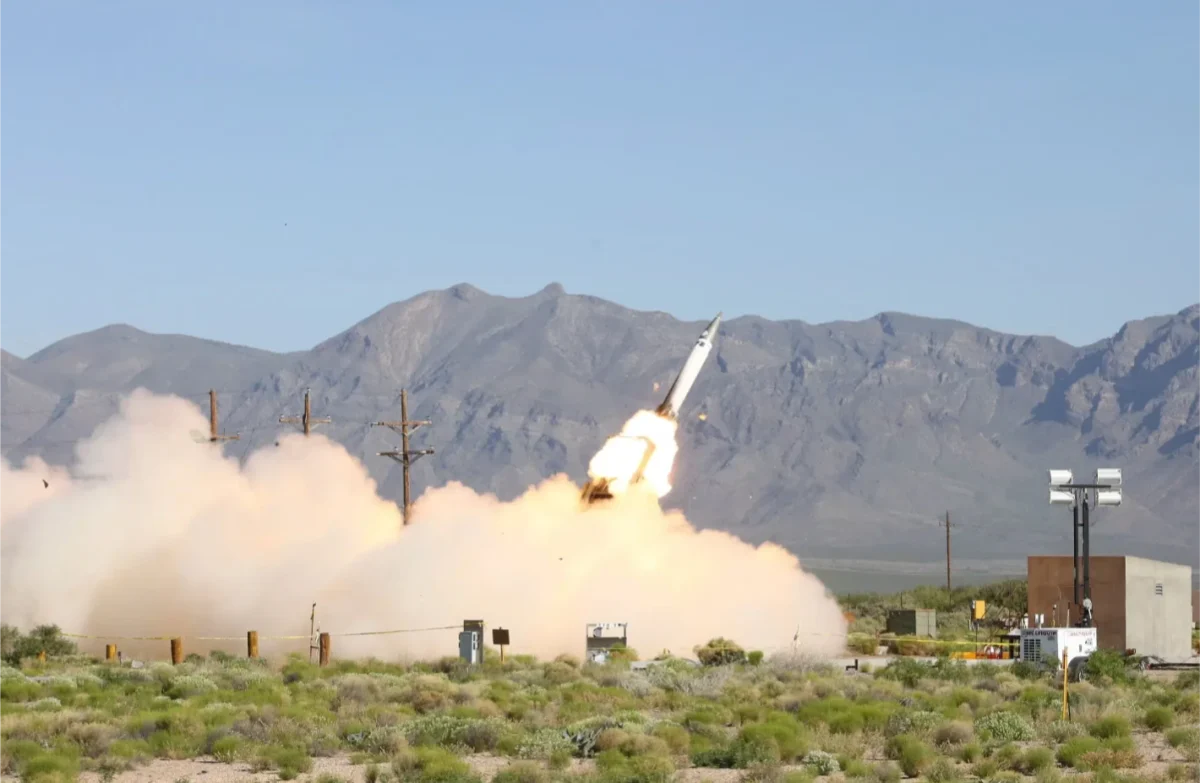
The geography of potential conflicts also shapes the missile’s importance. In Europe, some NATO planners see the PrSM as a way to pressure Russia by threatening air bases, supply hubs, or command posts, without having to risk aircraft in heavily defended skies.
The picture in the Indo-Pacific, however, is more complicated. Distances are greater, and geography shapes almost every decision. Holding islands or keeping sea routes open often comes down to who can strike first and at longer range. A missile that can reach over 500 kilometers and be fired from a mobile launcher might look well-suited for that role, though whether it would deliver the same effect in practice is less certain.
Still, the story is not only about potential. Questions remain about how well PrSM will perform once electronic warfare, cost pressures, and alliance politics enter the mix. NATO allies may welcome the system, but sharing advanced munitions has always carried political strings.
In the Pacific, moving and supporting missile units is rarely straightforward. Every deployment depends on host nations agreeing to it, and those talks are often complex and politically sensitive. That means the missile’s real value may not just come from its design, but from whether the U.S. can secure the access it needs in the first place.