Follow Us:
Follow Us:

Not long ago, the idea of a fighter jet flying into combat without a pilot onboard sounded like pure science fiction. But in 2025, that future is already taking shape in Australia.
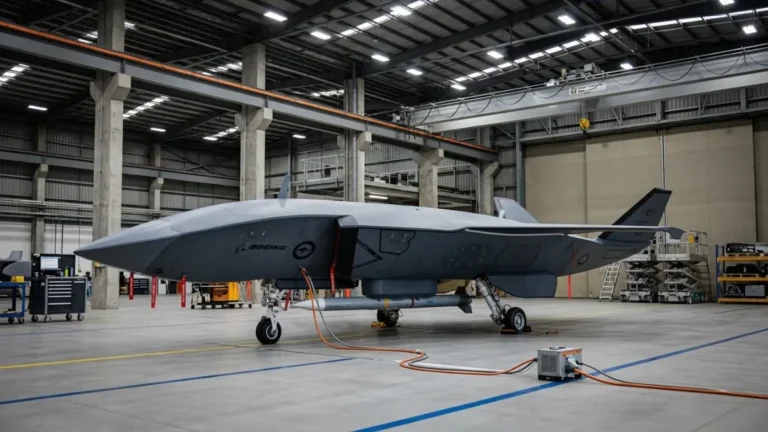
While global attention often centers on U.S. stealth bombers or China’s drone swarms, it’s the MQ-28 Ghost Bat, developed by Boeing Australia, that’s quietly rewriting the playbook. Unlike many so-called “next-gen” systems still stuck in testing, this loyal wingman drone is already flying operational missions with the Royal Australian Air Force.
What makes the Ghost Bat stand out is the fact that it can think independently, make decisions in contested environments, and work in close coordination with piloted aircraft, all without constant human control.
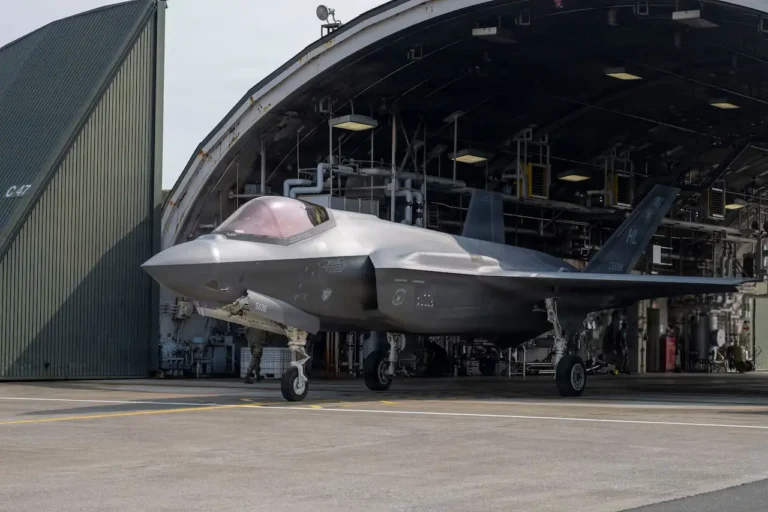
In theory, it could even absorb enemy fire to protect more expensive jets like the F-35. But what exactly makes the MQ-28 Ghost Bat so different from everything we’ve seen before?
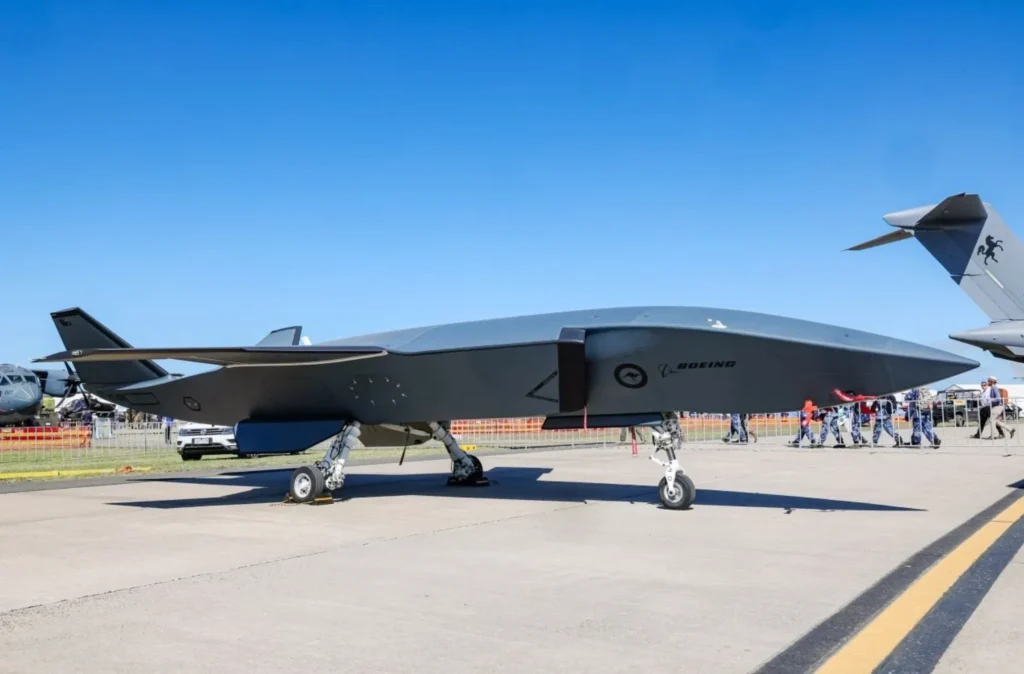
The MQ-28 Ghost Bat is an autonomous combat drone, or more formally, an unmanned combat aerial vehicle (UCAV), designed by Boeing Australia in close collaboration with the Royal Australian Air Force (RAAF). It’s not a scaled-down aircraft or a glorified surveillance drone.
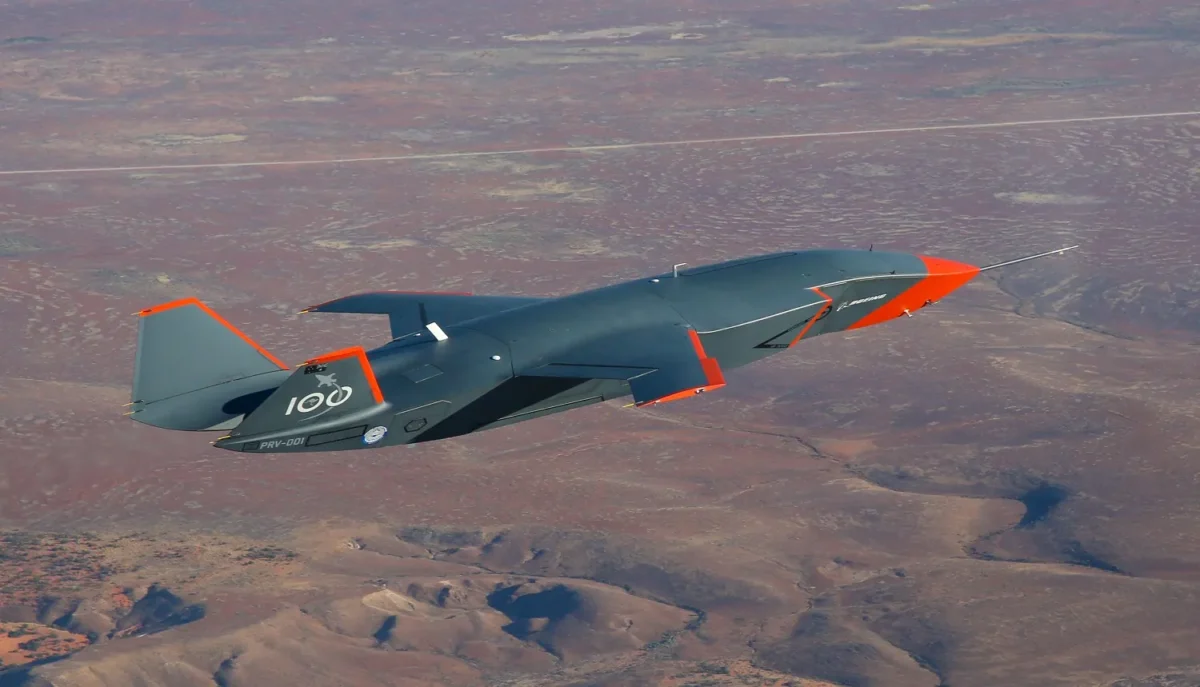
Instead, it represents a shift in thinking; a high-performance loyal wingman drone that’s meant to fly in formation with crewed fighters like the F-35 or F/A-18, share data in real-time, and take on high-risk missions, including those too dangerous for human pilots.
Read also: BAE Systems Powers MQ-28 Ghost Bat Drone with Autonomous VMS
In terms of size, the Ghost Bat is roughly 11 meters long, placing it closer to a fighter jet than most conventional drones. It’s powered by a single jet engine (rumored to be a variant of a commercial turbofan), which gives it fighter-like speed and range, likely over 3,000 kilometers. While official figures remain classified, it seems designed to keep up with fast-moving strike packages across long distances.
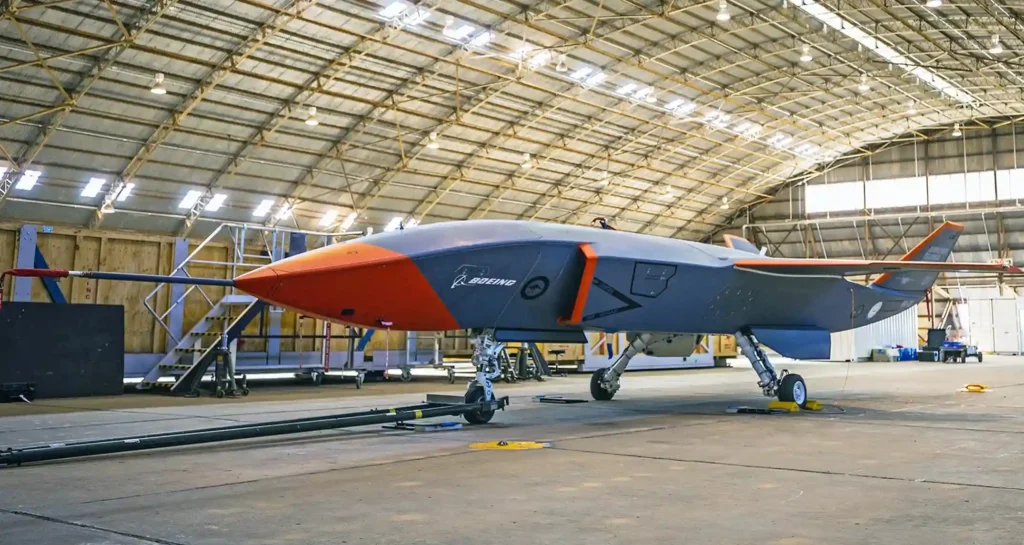
Where the Ghost Bat really stands out is in its modular payload system. This allows it to be rapidly reconfigured depending on the mission: electronic warfare, ISR (intelligence, surveillance, reconnaissance), or potentially even air-to-air combat roles. That kind of flexibility is rare, even among top-tier drones, and could allow a fleet of Ghost Bats to act as a Swiss Army knife for modern air forces.
It also appears to incorporate stealth features, including a smooth, angular fuselage and internal payload bays, which likely reduce its radar signature. This would make it much harder to detect, especially when flying low or in contested airspace. Combined with its autonomy and range, the Ghost Bat might be well-suited for operating in environments where traditional drones or manned aircraft would struggle to survive.
As for autonomy, the MQ-28 capabilities reportedly include onboard AI that enables real-time threat detection, route planning, and decision-making during missions. While humans remain in the loop, at least for now, the system seems to be designed with the long-term goal of manned-unmanned teaming in mind, where Ghost Bats can operate semi-independently alongside fighters, providing support without constant micromanagement.
At the heart of the MQ-28 Ghost Bat concept is something called manned-unmanned teaming, or MUM-T. In simple terms, MUM-T is about pairing piloted aircraft with autonomous drones, allowing them to operate as a coordinated team. But in practice, this approach could unlock a whole new level of flexibility, survivability, and reach for modern air forces.
So how does it work? Imagine an F-35 pilot flying deep into contested airspace. Instead of going in alone, they’re flanked by two or three loyal wingman drones like the Ghost Bat. These drones fly semi-independently, using onboard AI to handle threat detection, jamming enemy radar, scouting ahead, or even engaging hostile targets, without putting a human pilot at direct risk. The pilot doesn’t have to control every movement; instead, they command the mission objectives, while the drones adapt on the fly.
These Drone-assisted missions could allow fewer crewed aircraft to achieve the same (or greater) effects on the battlefield. For instance, a small strike group could use autonomous combat drones to draw enemy fire, jam radar, or extend sensor coverage. The benefits include lower risk to human life, better situational awareness, and potentially much lower operational costs.
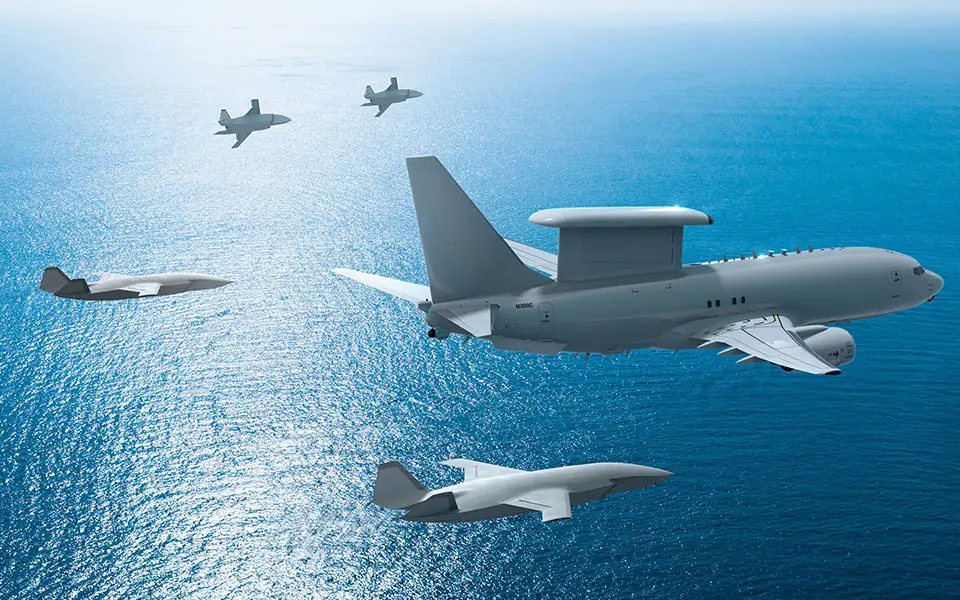
The strategic rationale appears compelling. Crewed jets remain highly expensive to acquire and maintain, so integrating unmanned combat aerial vehicles (UCAVs) like the Ghost Bat could, in theory, allow air forces to stretch limited resources and reduce exposure in contested environments.
Globally, several countries are now pursuing their own MUM-T programs. The United States is experimenting with the Collaborative Combat Aircraft (CCA) concept as part of its Next-Generation Air Dominance (NGAD) program, aiming to field a family of drones that can fight alongside human pilots.
The UK’s Project Mosquito, although recently canceled, also explored similar ideas. And China is reportedly testing swarms of semi-autonomous drones as part of its manned-unmanned strategy.
What makes the RAAF Ghost Bat so interesting is that it might be the first operational example of MUM-T in action. While many countries are still prototyping, Australia has already deployed the MQ-28 in exercises, possibly making it a test case for the rest of the world. If it performs as expected, it could validate the idea that autonomy, paired with human judgment, is feasible now.
Still, there are big unknowns. How much decision-making should be left to AI? What happens in electronic warfare environments where communications break down? And can manned pilots realistically manage several drones in the chaos of combat?
In an increasingly complex air combat environment, survival often depends not just on what a jet can do alone, but on how well it can coordinate with others. That’s where the MQ-28 Ghost Bat enters the picture. As a loyal wingman drone, it’s designed to support piloted aircraft in real-time, expanding their tactical reach while reducing the risk to human lives. But what exactly does that support look like in practice?
Tactically, the Ghost Bat could take on a variety of roles, depending on how it’s configured. Thanks to its modular payload system, the drone might be tasked with reconnaissance, flying ahead of a strike package to scout enemy defenses. In other scenarios, it could act as a decoy, intentionally drawing surface-to-air missiles away from high-value crewed aircraft like the F-35. There’s also growing interest in using the Ghost Bat for electronic warfare (EW), jamming enemy radars or communications, without needing to put a manned platform like the EA-18G Growler at risk.
In theory, the MQ-28 could even carry out precision strikes, especially in the early stages of a conflict when airspace is still contested. While it may not match the full strike capacity of a traditional bomber or fighter, using unmanned systems to suppress or neutralize air defenses could open the door for follow-on attacks by piloted jets.
One hypothetical scenario helps illustrate this point. Imagine a stealth F-35 tasked with a strike deep into defended airspace. Rather than going in alone, it’s accompanied by two MQ-28 Ghost Bats, one configured for electronic warfare, the other for intelligence, surveillance, and reconnaissance (ISR).
The Ghost Bats move ahead of the formation, jamming enemy surface-to-air missile (SAM) systems and feeding real-time targeting and threat data back to the F-35 pilot. If hostile radar locks onto the formation, the drones are the first to be targeted, not the manned aircraft.
In this context, the RAAF Ghost Bat functions not merely as a supporting asset, but as a tactical force multiplier that increases survivability and improves mission effectiveness through distributed risk and expanded situational awareness.
AI also plays a central role in making this teamwork possible. The MQ-28 capabilities reportedly include AI-assisted threat detection and decision support, meaning the drone can identify emerging dangers, prioritize targets, and suggest evasive or offensive maneuvers, all without waiting for direct instructions from a human pilot. That could be especially useful in high-speed engagements, where delays can be fatal.
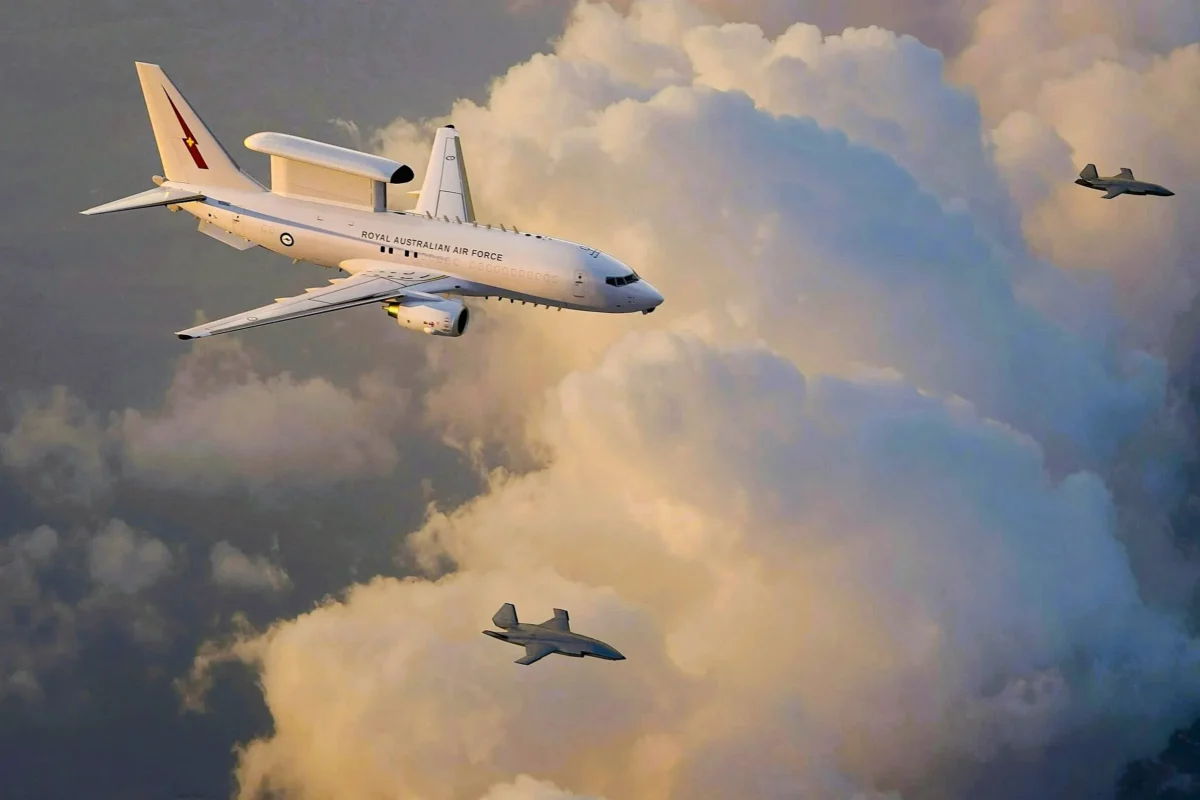
Just as crucial is the Ghost Bat’s ability to conduct real-time data sharing. It can act as a flying sensor node, passing information directly to manned aircraft through secure datalinks. Of course, all of this assumes seamless communication, which remains one of the biggest challenges in MUM-T operations. In degraded or jammed environments, the Ghost Bat would need to rely more heavily on its onboard autonomy. This capability is still evolving and may not be fully battle-proven yet.
As discussed before, one of the core advantages of using the MQ-28 Ghost Bat in a manned-unmanned teaming environment is the potential to reduce risk to human pilots. Another major advantage is force multiplication.
By integrating several autonomous combat drones into a formation, a single manned aircraft could command a small, multi-role team, each drone carrying out a different function such as jamming, surveillance, or decoy operations. This approach could allow fewer piloted jets to cover more ground and deliver greater operational effect.
These ideas aren’t purely theoretical. In the U.S., the XQ-58A Valkyrie has already demonstrated data-sharing with crewed fighters like the F-22 and F-35, hinting at the real-world viability of loyal wingman concepts.
Similarly, the Skyborg program successfully tested autonomous drones flying in coordination with manned aircraft, validating many of the same capabilities the Ghost Bat aims to deliver. Notably, Australia has already flown the RAAF Ghost Bat in live exercises, making it one of the most mature examples of MUM-T integration in the world today.

The third advantage lies in enhanced battlefield awareness. The MQ-28’s AI systems and real-time data-sharing capabilities allow it to function as an airborne sensor node, feeding timely intelligence to human pilots. This could help crews make faster, better-informed decisions, especially in fast-moving, multi-domain conflicts.
Of course, these benefits depend on reliable communication links, robust autonomy, and interoperability with legacy systems—all areas that are still evolving. But based on current trends and early test results, the potential upside of platforms like the Ghost Bat appears significant.
While the MQ-28 Ghost Bat presents promising capabilities for future air combat, there are still serious challenges that could limit its effectiveness. One of the most complex issues is trust in AI.
As an autonomous combat drone, the Ghost Bat relies heavily on onboard algorithms to interpret threats, navigate dynamic battlefields, and support decision-making in real time. But for pilots and commanders, handing over critical tasks, like identifying targets or executing evasive maneuvers, to machine logic still carries risk.
There’s an inherent tension between speed and control: the faster the AI acts, the less time humans have to intervene. And while early flight tests have shown that platforms like the Ghost Bat can function with a degree of independence, it’s unclear how reliably that autonomy would perform in a real war, under pressure, and against unpredictable threats.
Another major concern is communication latency and security. For manned-unmanned teaming to work effectively, drones like the Ghost Bat must share data instantly and securely with piloted aircraft.
However, in a high-intensity combat zone, especially one saturated with electronic warfare or cyber attacks, these links could be jammed, delayed, or intercepted. If the MQ-28 Ghost Bat loses contact with its human operator or wingman jet mid-mission, it must rely entirely on pre-programmed logic or onboard AI, which may not adapt well to unexpected situations.
Then there’s the more sensitive and unresolved issue of rules of engagement (ROE) for autonomous systems. Most military doctrines still require a human in the loop when using lethal force. Yet in a fast-moving air battle, even a split-second delay could mean the difference between a successful strike and mission failure.
So, how much freedom should an unmanned system have to act without explicit authorization? With the Ghost Bat being designed for tasks like reconnaissance, electronic warfare, or even limited strike roles, these legal and ethical boundaries become more than academic. They are central to how, where, and when the drone can actually be used.
While the MQ-28 Ghost Bat drone offers significant tactical advantages, building a framework of human trust, ensuring secure and resilient manned-unmanned coordination, and clarifying the legal status of autonomous actions are all critical steps that have yet to be fully addressed.