Follow Us:
Follow Us:

Think fighter jets, and one name always comes up, the F-4 Phantom. Built for speed, power, and adaptability, the McDonnell Douglas F-4 Phantom II wasn’t just another Cold War aircraft; it was the aircraft that defined a generation of air combat.
Introduced in 1960, the F‑4 Phantom II quickly became a cornerstone of U.S. air power. Originally developed for the Navy, it was soon adopted by the Air Force and Marine Corps thanks to its unmatched performance. In fact, the F-4 Phantom’s top speed hit Mach 2.2, or around 1,472 mph, making it one of the fastest fighters of its time.
But speed was only part of the story.
This jet could carry more than 18,000 pounds of weapons, missiles, bombs, and later an internal cannon. Its radar and avionics were cutting-edge, especially in the missile-dominated skies of the Vietnam War.
Over 5,000 F-4 Phantoms were built. That’s not just impressive, it’s historic. With dozens of F-4 Phantom variants, it served in over a dozen countries and proved itself in nearly every major conflict from the 1960s through the Gulf War.

Now, you might be wondering, why was the F-4 Phantom retired? And what made it such a game-changer in the first place?
We’ll dive into all that. From its powerful F-4 Phantom engine to its global legacy, this blog is your complete guide to one of the most iconic military aircraft ever built. We’ll even talk about the F-4 Phantom cost, its continued use today, and how it still inspires aviation fans worldwide.
Let’s take off into the history of the legendary Phantom.
The story of the F-4 Phantom II begins in the early 1950s, when McDonnell Aircraft (later McDonnell Douglas) set out to create a high-performance fighter for the U.S. Navy.
The Navy wanted a fleet-defense interceptor that could take off from aircraft carriers, fly at high speeds, and carry the latest guided missiles. What McDonnell delivered was far more than anyone expected.
The original prototype, designated XF4H-1, first flew in 1958. It was bold, bulky, and powerful, built with twin General Electric J79-GE-8 engines that delivered over 35,000 pounds of thrust combined. These engines were crucial to achieving the F-4 Phantom top speed of Mach 2.2. Few jets in the world could match that at the time.

The airframe itself was unconventional. It featured anhedral tailplanes (angled downward), sharply swept wings, and a raised cockpit to improve visibility. Engineers also designed the Phantom without an internal gun, believing that air-to-air missiles had rendered dogfighting obsolete. While that idea didn’t hold up in real combat, especially in Vietnam, it marked a key shift in military aviation philosophy.
Read also: F-20 Tigershark: Advanced Cold War Jet That Never Served
One of the Phantom’s most innovative features was its radar. The AN/APQ series allowed long-range target acquisition, making the jet effective in both daytime and night missions. Its two-person crew—a pilot and radar intercept officer—worked together to control the aircraft and manage its complex weapons systems.
The F-4 Phantom cockpit was roomy by jet standards. It needed to be. The aircraft carried a full suite of electronic warfare gear, communications, targeting systems, and in later versions, heads-up displays and infrared sensors.
By the time production kicked into full gear in the early 1960s, the Phantom had proven it could do far more than intercept enemy bombers. It was rugged enough for carrier landings, fast enough to outpace Soviet fighters, and adaptable enough to serve in nearly every combat role.
This was the beginning of the Phantom’s long career, and just the start of its evolution
One of the most remarkable things about the McDonnell Douglas F-4 Phantom II is how adaptable it was. Over its decades of service, it evolved into more than a dozen specialized models tailored to different missions, services, and even countries. These F-4 Phantom variants turned one airframe into a global workhorse.
The first production version, the F-4B, entered service with the U.S. Navy in 1961. It was designed for fleet air defense, launching from aircraft carriers to intercept Soviet bombers. The Marines also used the F-4B for close air support in Vietnam. Later, the improved F-4J added better radar and engines.
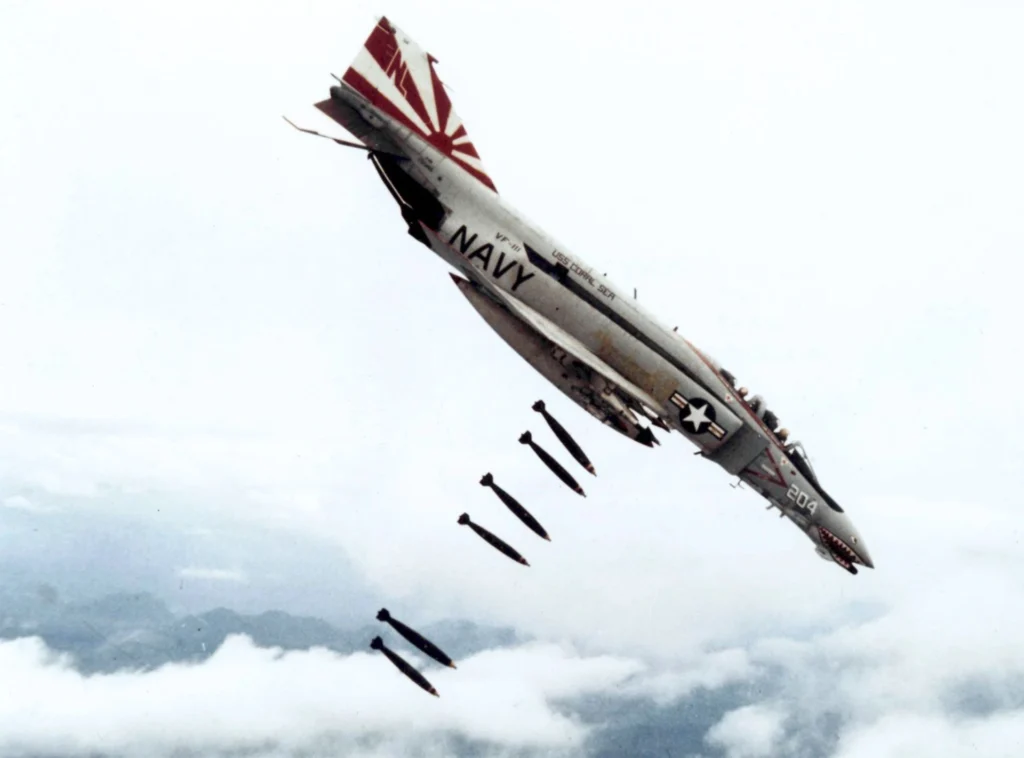
For the Navy’s training needs, the F-4N and F-4S were upgrades of older Phantoms, fitted with better avionics and structural improvements to extend their life.
When the U.S. Air Force saw how well the Navy’s Phantom performed, it ordered its own version—the F-4C—with modifications for ground operations. This was followed by the F-4D, which improved missile targeting and bombing accuracy.
The most famous Air Force model was the F-4E, introduced in 1967. It finally addressed one major issue: the lack of an internal gun. Combat experience in Vietnam proved that dogfights weren’t dead, so the F-4E came with an internal M61 Vulcan cannon. It became the most produced variant, serving well into the 1980s.

Then came the F-4G “Wild Weasel”, a specialized electronic warfare version. This Phantom hunted enemy radar and missile sites using electronic countermeasures and anti-radiation missiles. It was a vital part of the U.S. strategy during Operation Desert Storm.
Phantom variants weren’t limited to U.S. forces. Export versions like the F-4EJ (Japan), F-4F (Germany), and F-4K/M (UK) were customized for local needs. Some countries still operate them today, including Turkey, Iran, and Greece—proof of the platform’s durability.
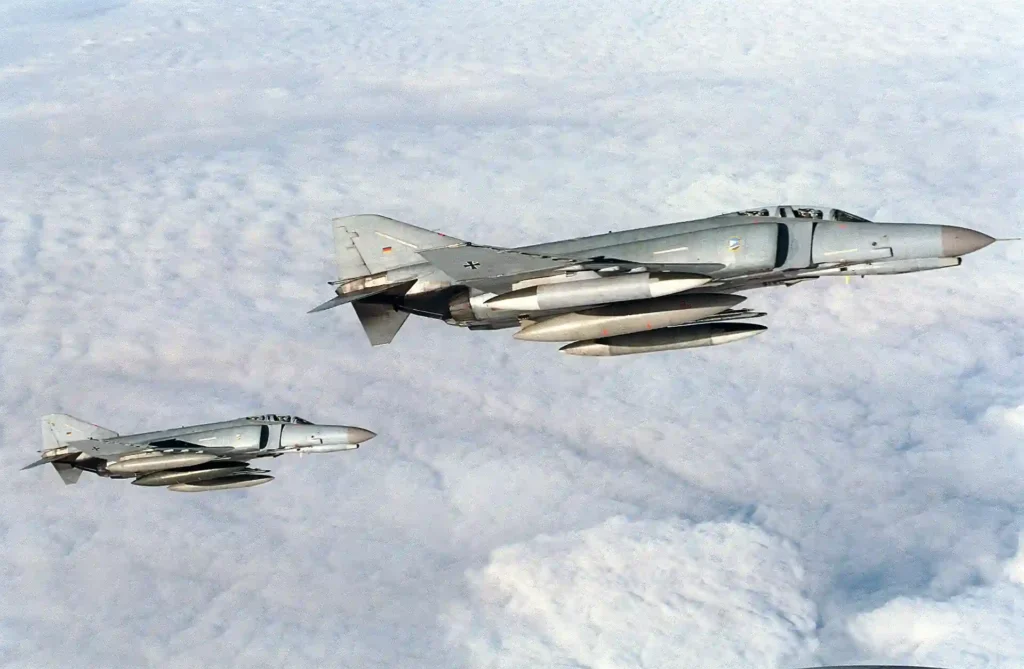
In all, the Phantom’s ability to evolve made it one of the most successful and longest-serving fighters ever. Each version added new capabilities without sacrificing the raw speed and firepower that made it legendary.
The F-4 Phantom II wasn’t just an intimidating sight, it backed up its looks with sheer performance and advanced technology. For its time, no other fighter could match its combination of speed, range, and payload.
At the heart of this jet were its powerful engines. Two General Electric J79 turbojets propelled the Phantom to a blistering F-4 Phantom top speed of over Mach 2.2, about 1,472 miles per hour. This meant it could outrun most adversaries and climb to 60,000 feet faster than almost any fighter of the 1960s. Those engines were loud, belching black smoke on takeoff, a trademark of the Phantom that pilots and ground crews never forgot.
The airframe was big and rugged. The Phantom measured 63 feet long, with a 38-foot wingspan and a height of nearly 17 feet. Its maximum takeoff weight topped 60,000 pounds, making it heavy compared to fighters like the F-100 or MiG-21. Yet despite the size, the F-4 remained agile enough to dogfight when needed.
One of the most impressive features was its payload. The Phantom could carry up to 18,650 pounds of ordnance on nine external hardpoints. That meant it could launch long-range Sparrow missiles, short-range Sidewinders, bombs, rockets, and later guided munitions, all in a single mission.
The F-4 Phantom cockpit was packed with electronics: radar screens, targeting systems, navigation gear, and eventually a heads-up display in later variants. Operating all of it required a pilot and a radar intercept officer working together in constant coordination.
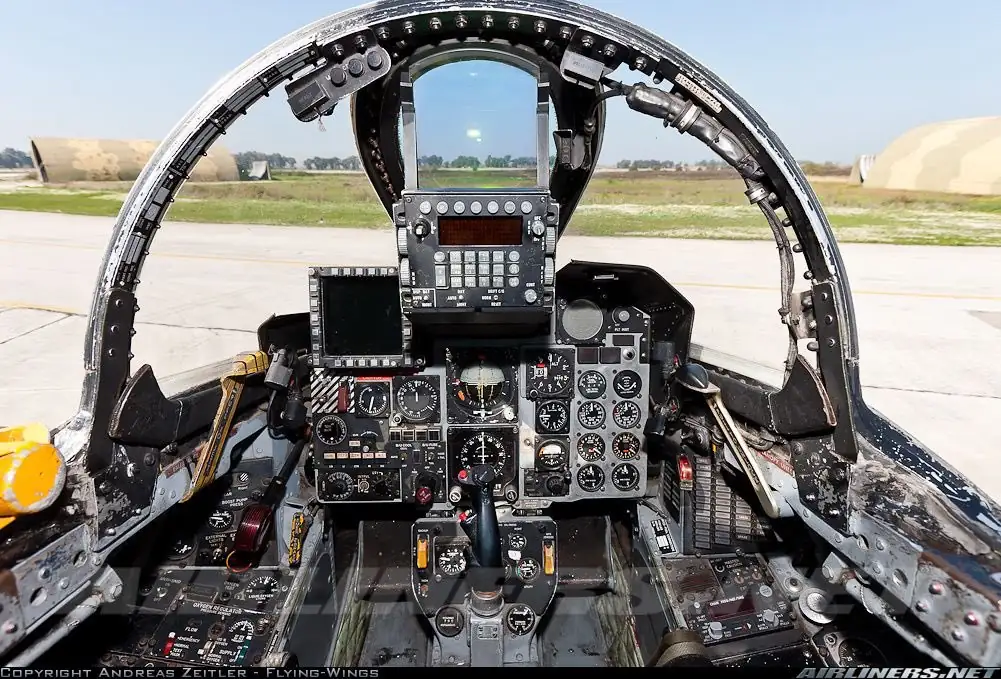
When people ask about the F-4 Phantom cost, it helps to remember the technology packed inside. Each aircraft cost around $2–3 million in the 1960s, equivalent to more than $20 million today. That was a serious investment, but one that paid off in combat capability.
These specs made the F-4 a force to be reckoned with, able to fly faster, carry more weapons, and survive in hostile skies longer than many of its contemporaries.
If you really want to understand why the F-4 Phantom II earned its legendary reputation, you have to look at the battles it fought. From the steamy jungles of Vietnam to the deserts of Iraq, this jet proved time and again it could take on any mission and survive.
The Phantom’s first major test came during the Vietnam War, where it quickly became the backbone of U.S. air operations.
In Southeast Asia, it flew thousands of sorties. American pilots used it for air superiority missions, ground attack, and close air support. Though early models lacked a gun, which frustrated pilots in dogfights, it still racked up impressive kill counts. By the war’s end, the Phantom was credited with more than 100 air-to-air victories over North Vietnamese MiGs.
Its missile-focused design taught hard lessons. Pilots often found themselves too close for Sparrows and Sidewinders, which is partly why the F-4 Phantom was eventually modified to include an internal M61 Vulcan cannon in the F-4E variant. This combination of guns and missiles finally gave crews the flexibility they needed.
The Phantom didn’t stop with Vietnam. Israel flew it in the Yom Kippur War and Six-Day War, using it to bomb enemy airfields and fight in fierce air battles. Iran purchased F-4s before the 1979 revolution and used them extensively during the Iran-Iraq War. Even today, Iranian Phantoms still fly occasional combat missions.
During Operation Desert Storm in 1991, the last active U.S. Phantoms, specifically the F-4G “Wild Weasel” variants, played a critical role. These aircraft specialized in electronic warfare and the destruction of enemy radar sites. They were the first in, hunting Iraqi surface-to-air missile batteries so coalition aircraft could attack safely.
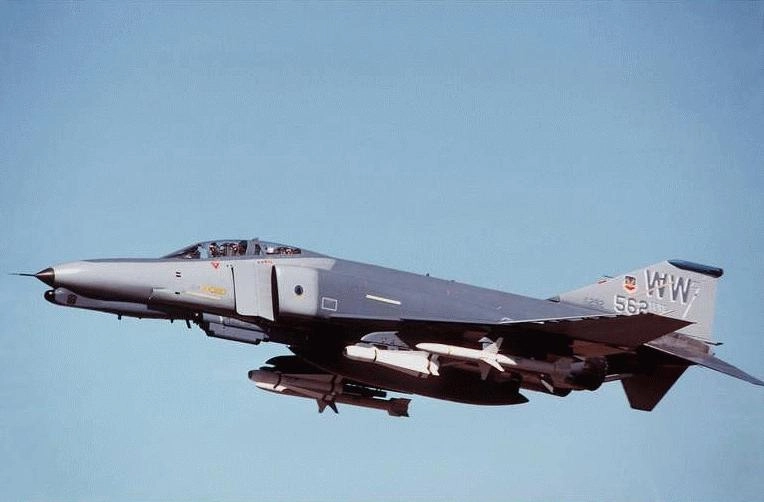
After decades of service and evolving threats, the U.S. eventually retired its remaining Phantoms in the 1990s. But the jet didn’t disappear. Many countries continued to fly them, proving that the Phantom’s design was decades ahead of its time.
The retirement of the F-4 Phantom II wasn’t about failure, it was about evolution. As capable as the Phantom was, by the 1990s, it had reached the limits of what it could offer in a modern battlefield shaped by stealth, digital avionics, and precision warfare.
One of the biggest reasons for its retirement was technological obsolescence. The Phantom was designed in the 1950s and built with analog systems, older radar technology, and a large radar cross-section. In a world where stealth aircraft like the F-117 and later the F-22 were entering service, the Phantom’s size and heat signature made it easier to detect and target.
Although upgraded in several variants, like the F-4G Wild Weasel with modern jammers and anti-radiation missiles, the Phantom still relied on outdated avionics and airframes that were pushing 30 years of service by the time of Operation Desert Storm. Even with overhauls, it couldn’t match newer fighters in terms of agility, situational awareness, or digital integration.
Then there was the issue of maintenance and cost. While the original F-4 Phantom price per unit was relatively low (around $2–3 million in the 1960s), keeping them airworthy became increasingly expensive over time. Spare parts became harder to find, and sustaining aging engines like the J79 turbojets was a logistical challenge. The F-4 Phantom cost of upkeep eventually outweighed its battlefield value.
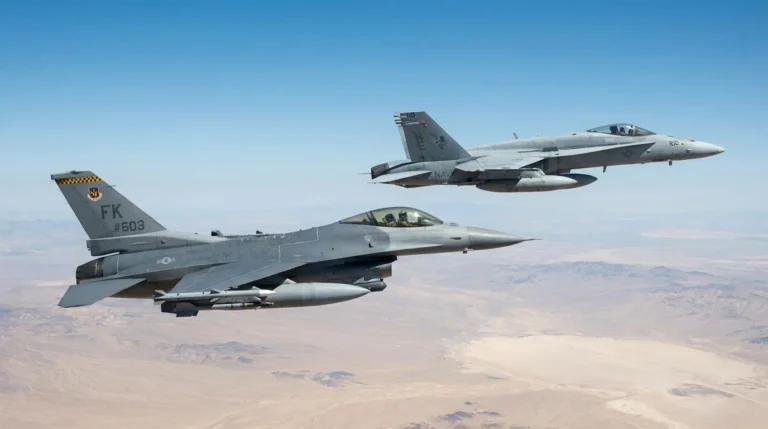
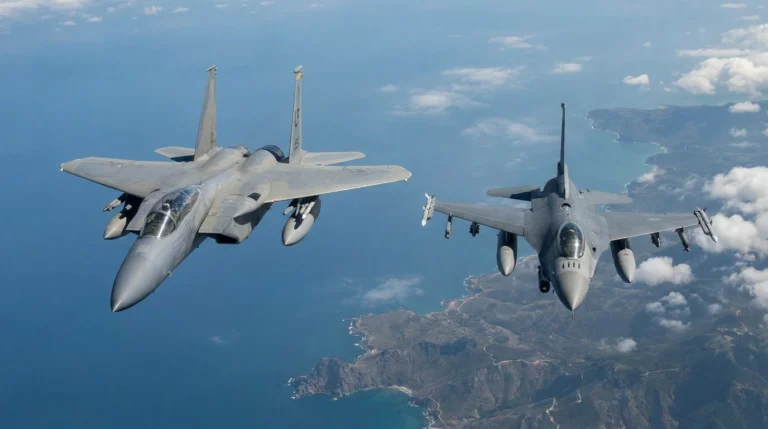
Operational doctrine also shifted. The military moved toward multi-role fighters like the F-15 and F-16, which could perform all of the Phantom’s roles, interception, strike, and SEAD, but with better range, accuracy, and survivability. These newer jets were lighter, more maneuverable, and easier to fly with fewer crew members.
Still, the Phantom didn’t disappear overnight. It served long after most of its generation was retired and remains in limited service in countries like Iran and Turkey. For the U.S., though, the Phantom’s long, proud career came to a close in the 1990s, not because it failed, but because the world around it changed.