Follow Us:
Follow Us:

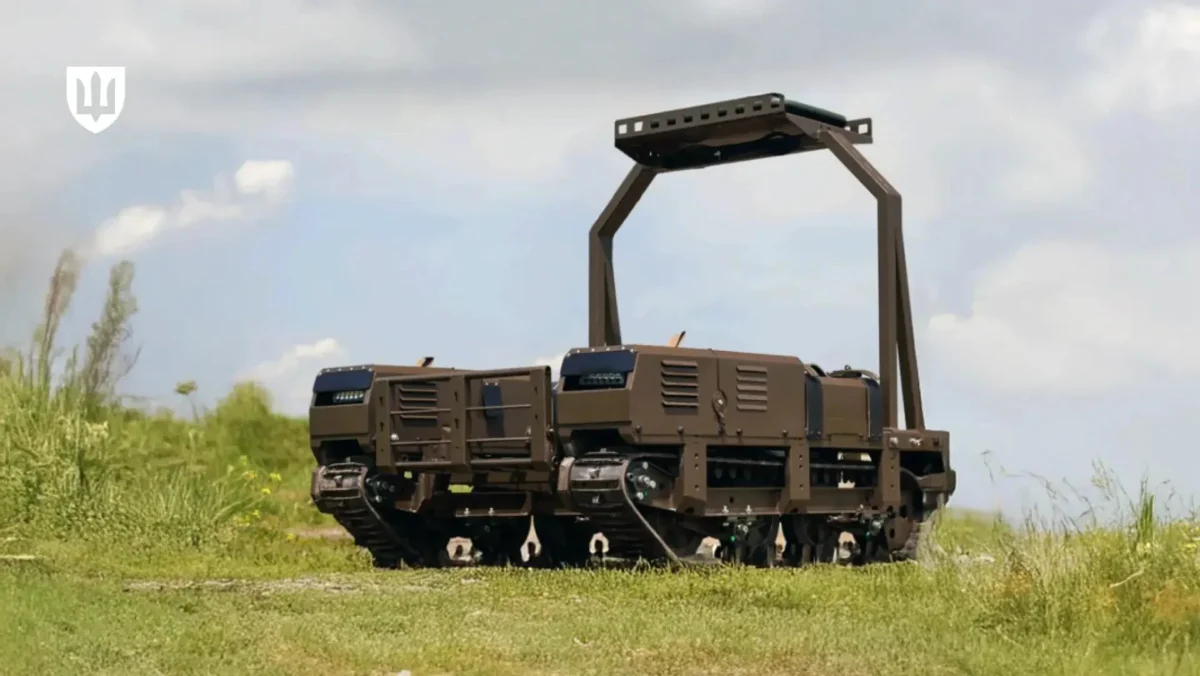
Defense Feeds – The NUMO Battlefield Robot has been officially introduced by Ukraine as a domestically produced unmanned ground vehicle (UGV) now active in frontline operations.
This deployment marks a key advancement in Ukraine’s efforts to incorporate cutting-edge robotics into its military capabilities.
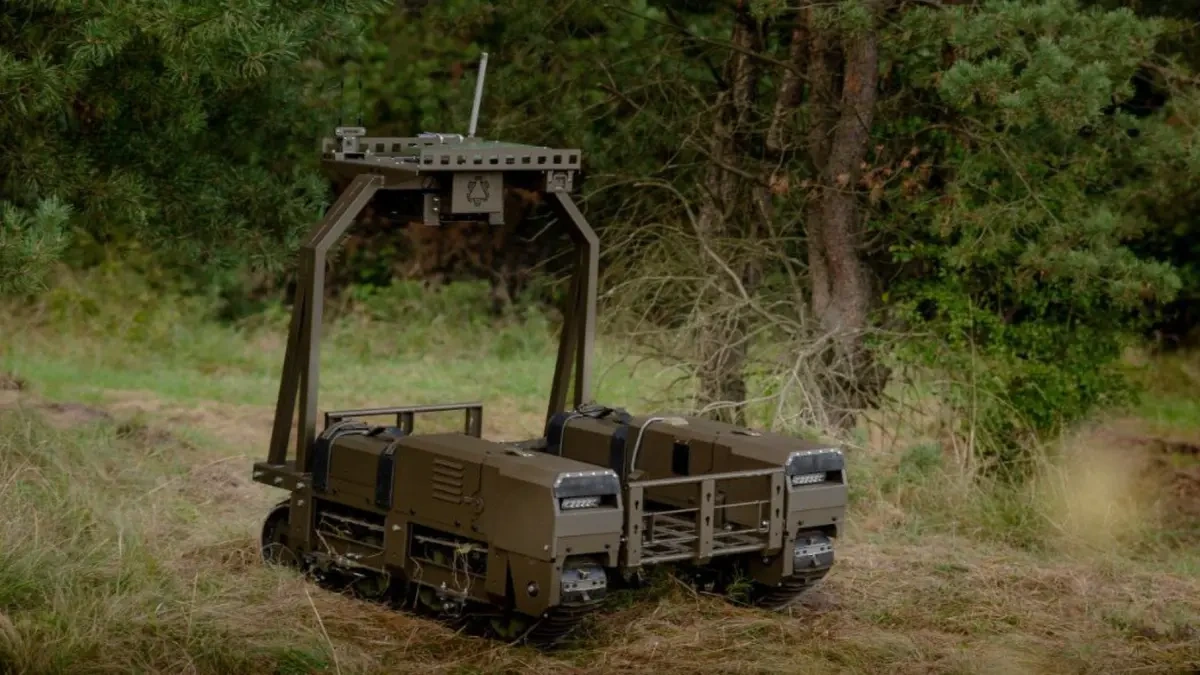
Approved by the Ministry of Defence, the NUMO Battlefield Robot is a versatile tracked platform designed to deliver ammunition, equipment, and supplies directly to troops under combat conditions, reducing the risks faced by soldiers in dangerous environments.
The modular design allows for rapid adaptation with mission-specific add-ons such as weapon mounts, relay masts, wire cutters, and mine-clearing attachments.
Ukrainian defense experts regard the NUMO Battlefield Robot as a significant contributor to the growing use of unmanned systems that help maintain operational tempo while limiting frontline exposure.
Weighing 620 kilograms when fully loaded, NUMO can carry payloads of up to 300 kilograms, making it a flexible option for both combat resupply and evacuation tasks.
The vehicle’s low ground clearance enables it to navigate forests, marshlands, and urban cover without losing mobility.
Deployment takes less than ten minutes from preparation to field use, allowing rapid integration into dynamic combat situations.
Its propulsion system delivers a top speed of 7 kilometers per hour, sufficient for convoy operations and steady supply runs under fire.
With two batteries, NUMO can sustain missions over 25 kilometers, extending to 45 kilometers with four battery modules.
A key strength of the system is its communication network resilience, offering a variety of six connection options including Wi-Fi, DTC, Silvus, Starlink, LTE, and SineLink, allowing operators to maintain control even in environments where electromagnetic interference is intense.
Its remote control range reaches up to 1,500 meters, while the integrated “Droid Box” provides both hardware and software enhancements, including secondary communication layers for redundancy.
NUMO serves as the baseline for Ukraine’s Droid TW system, a reconnaissance and assault variant armed with either a KT‑7.62 PKT machine gun or an M2 Browning heavy machine gun.
The Droid TW‑12.7 configuration, jointly produced by Tank Bureau and DevDroid, is already active in 30 brigades, demonstrating the potential of UGVs not only for logistical roles but also for direct fire support.
This weaponized adaptation allows Ukrainian units to conduct risk‑free probing attacks, suppress enemy positions, and guard key supply routes.
Battlefield reports indicate that Droid TW platforms have been effective in reducing exposure risks during high‑intensity engagements.
The introduction of NUMO expands the Ukrainian military’s growing portfolio of unmanned systems, which now cover aerial, maritime, and ground domains.
By integrating modular control systems and flexible payloads, these robots can quickly switch from transport duties to reconnaissance or combat operations, supporting commanders who need assets adaptable to fluid tactical situations.
Founded in 2024, Tank Bureau operates its own research, production, and maintenance facilities in Ukraine, enabling rapid innovation cycles for unmanned platforms.
The company has announced plans to codify several additional robotic systems before year-end, signaling a broader push to embed UGVs into standard military doctrine.
Company director Nazar Priymak emphasized NUMO’s battlefield value, explaining that ground robotic systems can take over roles too dangerous for soldiers, such as casualty evacuation under fire or supply runs through contested zones.
“NUMO is already proven in missions, and official codification confirms it’s ready for regular military use,” Priymak noted.
Defense experts believe Ukraine’s adoption of NUMO reflects a tactical shift toward robotics amid sustained combat along multiple frontlines.
With persistent artillery strikes and contested supply lines, UGVs like NUMO and its Droid TW variant are becoming vital tools for sustaining both logistics and combat effectiveness.
The move also aligns with global defense trends, where autonomous and remotely operated vehicles are being prioritized to reduce human risk and maintain operational reach.
In Ukraine’s case, the homegrown development ensures compatibility with existing military infrastructure and provides an edge in rapid adaptation to evolving battlefield demands.