Follow Us:
Follow Us:

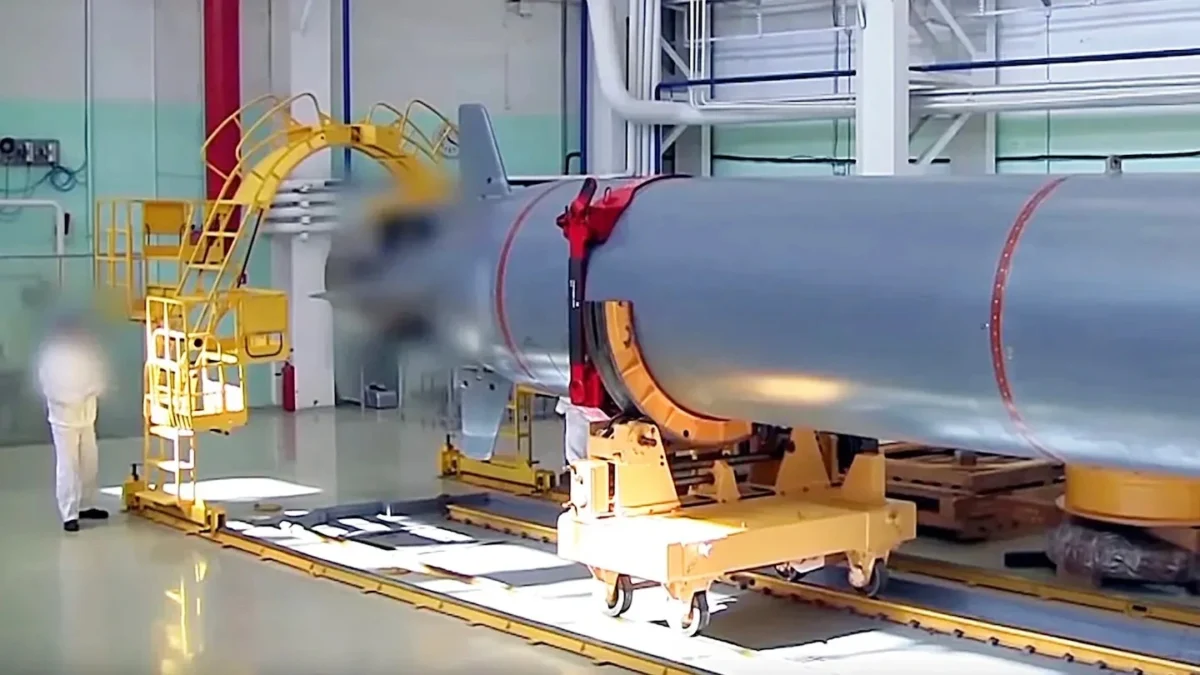
Defense Feeds – Russia has announced a successful test of its Poseidon torpedo, a nuclear-powered underwater weapon that underscores Moscow’s continued push to modernize its strategic arsenal amid intensifying geopolitical rivalry.
The announcement came from President Vladimir Putin during a visit to wounded soldiers in Moscow, marking a new phase in what experts call a renewed nuclear arms race involving the United States, Russia, and China.
This advanced Poseidon nuclear torpedo, described as both a drone and a super torpedo, is reportedly capable of inflicting massive coastal devastation through radioactive ocean waves.
Defense analysts say the Russian nuclear torpedo demonstrates Moscow’s determination to strengthen its sea-based nuclear deterrent and assert strategic dominance beneath the world’s oceans.
The Poseidon weapon, named after the Greek god of the sea, introduces a new class of undersea strategic systems.
Unlike conventional torpedoes or ballistic missiles, the Poseidon torpedo combines autonomous operation with nuclear propulsion, allowing it to operate at extreme distances without surfacing.
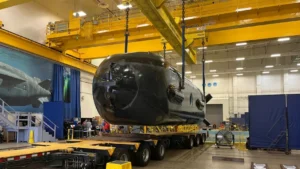
Russian defense sources indicate the system measures 20 meters in length, 1.8 meters in diameter, and weighs around 100 tonnes.
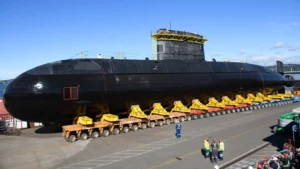
During the latest test on October 28, President Putin highlighted a breakthrough in successfully activating the nuclear propulsion unit on the device from a submarine carrier.
He stated that the Poseidon nuclear torpedo surpasses other strategic systems in both range and destructive power, with a capability of traveling up to 10,000 km at speeds of 185 km per hour.
Analysts estimate it can carry a two-megaton warhead and produce powerful radioactive waves capable of crippling coastal defense networks and naval bases.
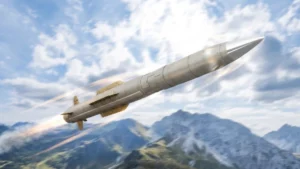
The trial follows another milestone test of the Burevestnik nuclear-powered cruise missile earlier this month.
Together, these projects form part of Russia’s broader response to perceived Western threats, including U.S. missile defense programs and NATO’s advancing military presence near its borders.
For Moscow, the Russia nuclear torpedo program represents both technological innovation and a statement of strategic defiance.
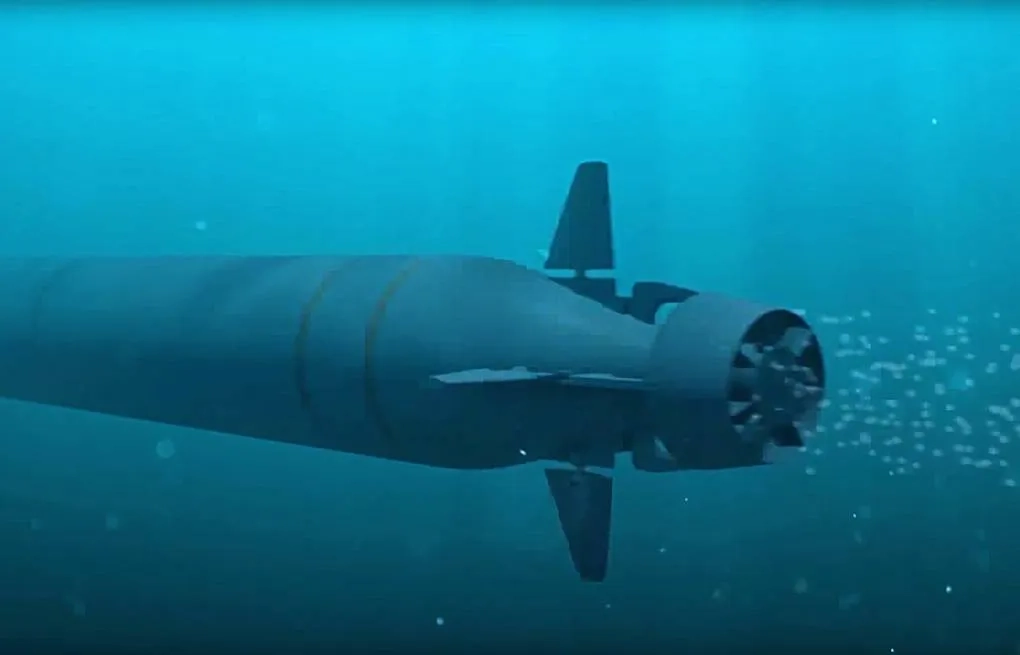
The successful demonstration of the Poseidon weapon is seen not only as a technological accomplishment but also as a strategic declaration.
Its stealth, speed, and nuclear endurance pose a serious challenge to existing missile defense systems and longstanding nuclear control frameworks.
The secrecy surrounding the platform has raised alarm among Western defense communities, who warn that such systems may accelerate an underwater arms race.
President Donald Trump, responding to Russia’s latest tests, described Moscow as a “paper tiger” for its drawn-out campaign in Ukraine.
Yet, the Poseidon nuclear torpedo confirms that Russia remains a formidable military power capable of advancing next-generation nuclear technologies.
Trump has urged Putin to end the Ukraine conflict and resume dialogue over arms control, reflecting Washington’s concern over the growing scope of unconventional nuclear developments.
Military analysts stress that systems like the Russian nuclear torpedo fundamentally shift the framework of deterrence, offering new strike options outside traditional missile pathways.
With a liquid-metal cooled reactor and extended underwater endurance, Poseidon represents a persistent threat that rivals cannot easily counter.

The introduction of the Russia nuclear torpedo and the Burevestnik missile underlines the deepening technological rivalry among the world’s nuclear powers.
The United States, Russia, and China are all advancing in targeted nuclear modernization, aiming to preserve or expand their deterrence credibility amid unstable global security conditions.
While Moscow portrays the Poseidon weapon as a defensive tool to offset Western pressure, international observers argue it heightens the risk of nuclear escalation.
Its long-range autonomous design complicates arms control verification, making future treaties and disarmament deals more difficult to negotiate.
For Western defense planners, the latest Poseidon test signals the urgency of developing new counter-nuclear strategies at sea.
As the Poseidon torpedo moves deeper into advanced testing, the global nuclear deterrence balance is shifting, shaped by new multi-domain systems and evolving warfare technologies.