Follow Us:
Follow Us:

Defense Feeds – NATO Neptune Strike 25-3 has launched its third major naval drill of 2025, bringing together over 10,000 troops from 13 allied nations across key European maritime zones.
Taking place from 22 to 26 September across the Mediterranean, Adriatic, North and Baltic Seas, this NATO maritime exercise highlights the alliance’s increasing focus on securing vital sea lanes and strategic chokepoints.
With growing tensions in Eastern Europe and persistent great power rivalries, NATO Neptune Strike 25-3 serves as a powerful demonstration of NATO naval interoperability, showcasing the alliance’s strength as a unified maritime force ready to defend freedom of navigation in contested waters.
The exercise is directed by Naval Striking and Support Forces NATO (STRIKFORNATO), currently led by U.S. Vice Admiral Jeffrey T. Anderson from Oeiras, Portugal.
Central to Neptune Strike 25-3 is the deployment of a U.S. Navy Carrier Strike Group placed under NATO operational control.
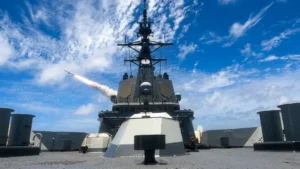
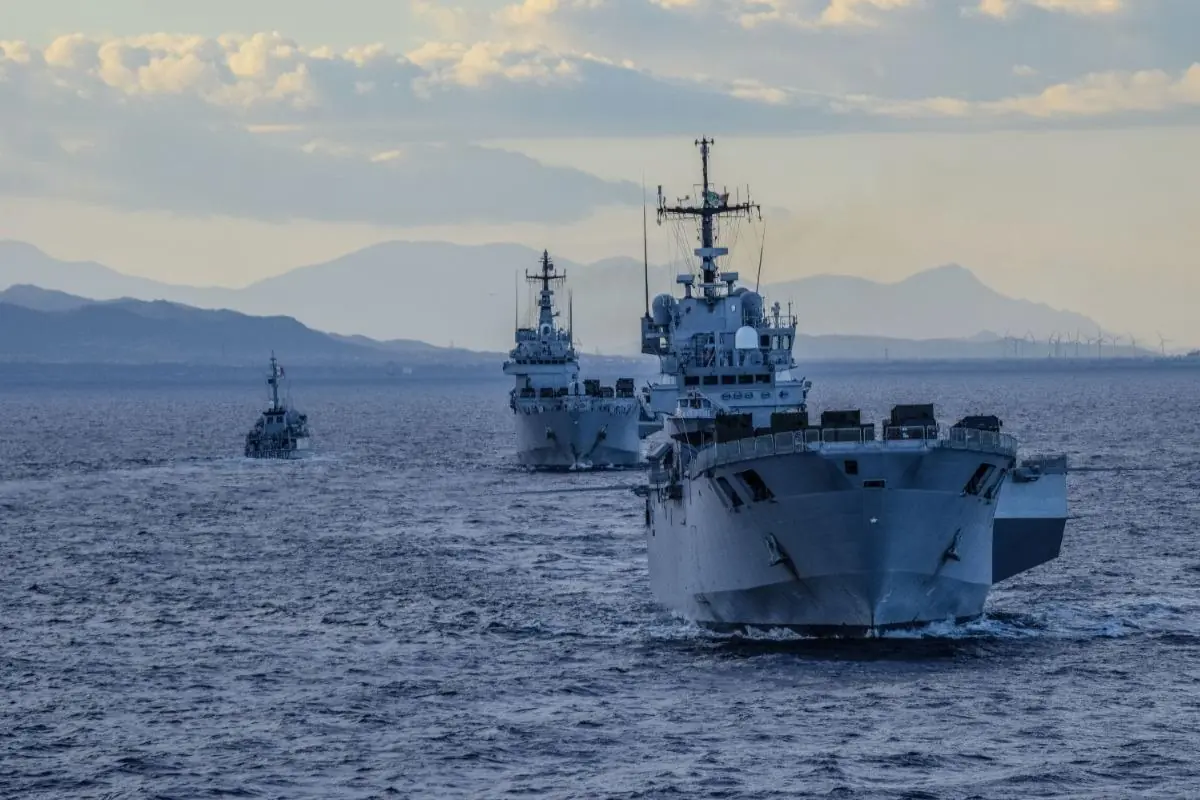
Flagship assets include the nuclear-powered aircraft carrier USS Gerald R. Ford, the amphibious assault ship TCG Anadolu of Türkiye, Italy’s landing ship ITS San Giorgio and the command ship USS Mount Whitney.
These vessels are joined by destroyers, frigates, submarines and aircraft from Denmark, Estonia, Finland, France, Germany, Italy, Lithuania, Norway, Poland, Türkiye, Sweden, the United Kingdom and the United States.
By assembling such a force, NATO demonstrates its capacity to merge different national platforms into a single, unified maritime framework.
The scale of naval and aerial activity underscores NATO’s readiness to guard sea lanes and to respond swiftly in the event of a maritime crisis. Türkiye’s naval contribution is particularly notable this year.
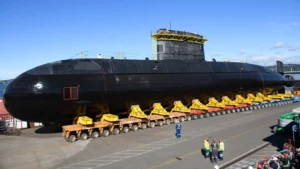
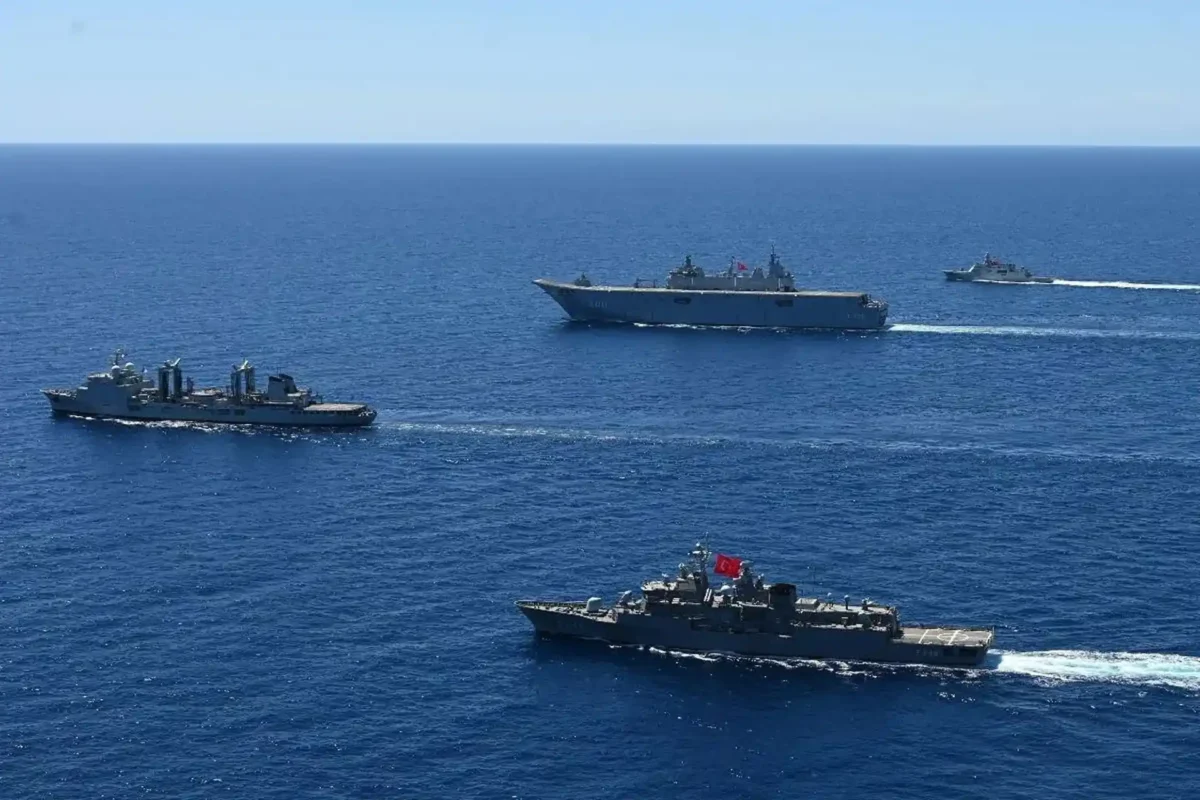
The Anadolu Task Group, also referred to domestically as the Open Sea Task Group, includes the amphibious assault ship TCG Anadolu, the frigate TCG Gökova, the corvette TCG Heybeliada and the submarine TCG I. İnönü.
The group has a record of multilateral participation, including naval cooperation with Spain in 2024, highlighting Türkiye’s growing prominence in NATO’s maritime posture.
By fielding its amphibious capabilities, Ankara underlines the role of NATO navies in power projection, logistics support and coastal security operations.
Neptune Strike is not a new initiative but the product of consistent development under NATO’s Project Neptune, first launched in 2020.
It was designed to enhance allied strike force integration across different naval environments and to keep readiness levels high.
Each exercise since then has built on prior experience, advancing coordination, refining command networks and improving communications among participating nations.
This year alone, Neptune Strike 25-3 is the second iteration, following a similar exercise in July and August. That back-to-back scheduling shows how NATO is prioritizing joint readiness in light of unpredictable security conditions.
It also reflects the alliance’s ability to sustain large deployments across various regions without sacrificing operational strength in other theaters.
The scenarios practiced range from carrier-based air operations and amphibious landing drills to anti-submarine warfare patrols and simulated casualty evacuations.
These activities are not just tactical rehearsals but stress tests for NATO’s broader command-and-control structures.
They verify procedures for rapid crisis response, logistics integration and standardization of operating models among navies that differ in size, equipment and doctrine.
At the tactical level, sailors and aircrews gain vital experience working with allied forces in complex environments.
At the strategic level, NATO leaders ensure that maritime routes vital for trade and military logistics remain secure under any conditions.
Exercises of this magnitude send a political message as much as a military one.
Spanning waters that connect northern and southern Europe, Neptune Strike 25-3 reinforces that NATO is prepared to safeguard chokepoints stretching from the Baltic and North Sea to the Mediterranean corridor.
Its sheer size signals to both partners and competitors that NATO retains the ability to concentrate vast maritime power rapidly across multiple theaters.
The participation of premier naval platforms such as the USS Gerald R. Ford Carrier Strike Group and Türkiye’s modern amphibious force elevates the scale of deterrence.
For allied nations bordering regions of heightened tension, the activity provides assurance that NATO forces are both willing and able to respond effectively to maritime challenges.
In a geopolitical environment shaped by contested seas, disputed trade routes and persistent rivalries in Eastern Europe and beyond, Neptune Strike serves as both a shield and a reminder of NATO’s collective weight.
The alliance is not only rehearsing for potential crises but also demonstrating that it can project stability across critical waters when called upon.
The continuous iterations of Neptune Strike throughout 2025 highlight NATO’s recognition that maritime domains are central to European security.
For the alliance, readiness at sea translates directly to deterrence ashore, since maritime power remains essential in reinforcing allies, moving troops and ensuring supply chains during a crisis.
For NATO members, the benefits extend beyond tactics. These drills are about trust, cohesion and proof that national navies can operate as one.
It is this shared burden and demonstrated unity that form the foundation of NATO’s enduring deterrent posture.