Follow Us:
Follow Us:

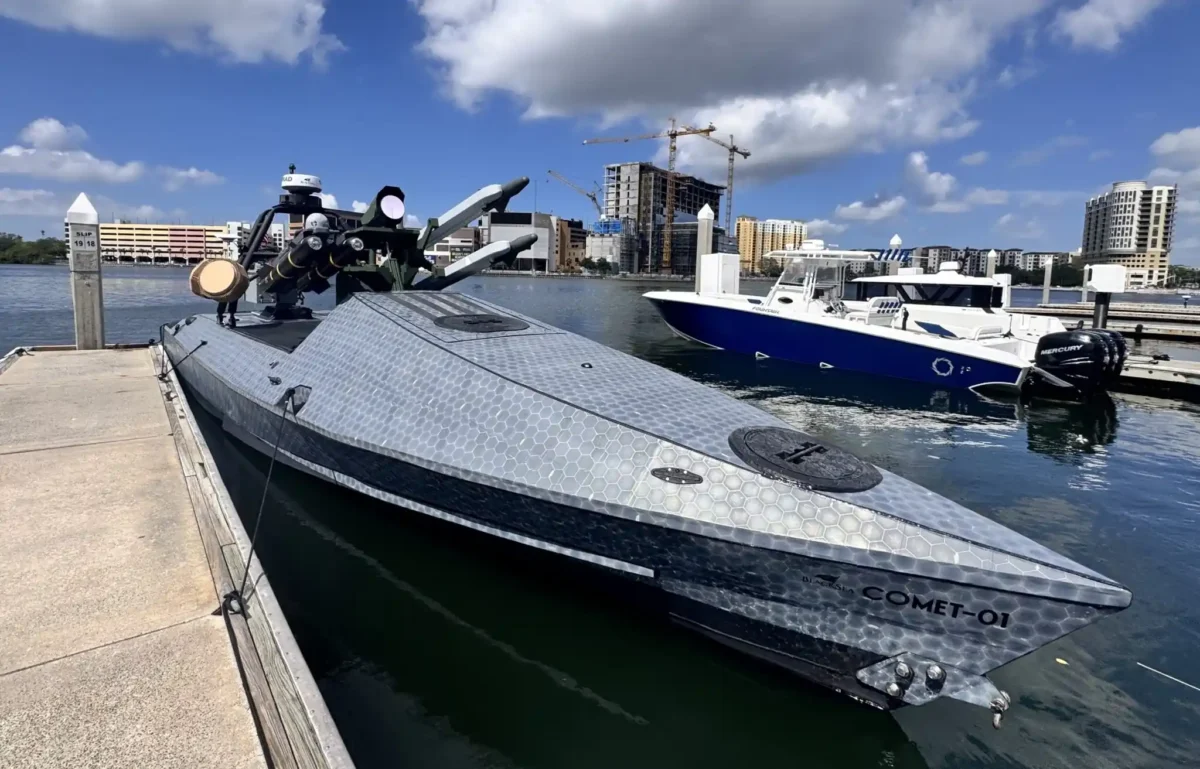
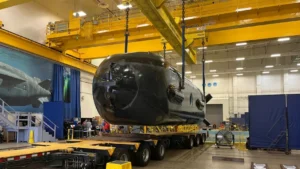
Defense Feeds – Tampa, Florida. The BlackSea Unveils COMET USV for U.S. Special Forces announcement at SOF Week 2026 has drawn growing attention across the defense sector as autonomous maritime warfare continues to evolve at a rapid pace. The newly revealed COMET unmanned surface vessel, or USV, is designed to support special operations missions ranging from intelligence gathering to precision strike operations in contested coastal environments.
Presented by BlackSea Technologies during the annual SOF Week event in the United States, the COMET platform reflects the Pentagon’s increasing focus on smaller autonomous systems capable of operating in dangerous maritime zones without exposing human crews to direct risk. The vessel was specifically introduced as a flexible platform tailored for U.S. Special Operations Forces, particularly in missions requiring stealth, speed and operational adaptability.
The unveiling comes as Western militaries continue studying the growing role of unmanned systems in modern conflicts, especially after the extensive use of naval drones during the war in Ukraine and rising tensions across the Indo-Pacific region.
According to information released during SOF Week 2026, the COMET USV was developed to conduct multiple mission profiles including intelligence, surveillance and reconnaissance operations, electronic warfare support and direct strike missions against maritime or coastal targets.
The vessel features a compact and low-profile design intended to reduce radar visibility while improving maneuverability in shallow coastal waters and contested littoral zones. Defense analysts believe systems like COMET could become increasingly valuable for infiltration missions, reconnaissance tasks and swarm-style operations near hostile coastlines.
Unlike larger unmanned naval platforms currently under development by the U.S. Navy, COMET appears optimized for tactical flexibility and rapid deployment. The USV can reportedly operate autonomously or with remote human control depending on operational requirements.
BlackSea Technologies has not disclosed every technical specification publicly, though the company emphasized modularity as one of the platform’s core strengths. This means payloads and mission systems could potentially be swapped depending on operational demands, allowing the vessel to support reconnaissance equipment, communications systems or kinetic payloads.
Military planners are paying close attention to platforms of this kind because they offer a relatively low-cost way to extend operational reach in dangerous maritime areas. Instead of risking manned patrol craft in heavily defended coastal regions, autonomous vessels can perform surveillance or strike missions while minimizing personnel exposure.
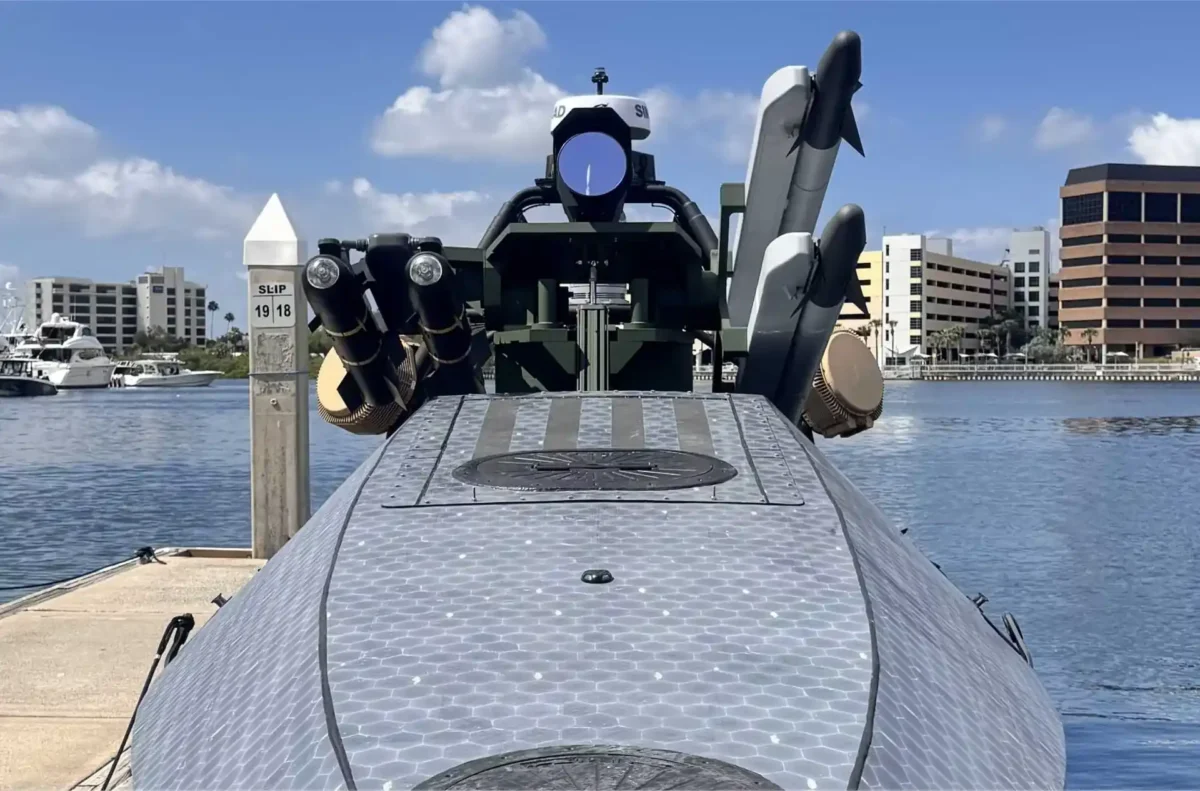
The debut of COMET also reflects a broader shift inside U.S. Special Operations Command toward integrating autonomous systems into future missions.
Special operations forces increasingly require platforms capable of operating discreetly in denied environments where conventional naval assets may struggle to maneuver without detection. Small unmanned surface vessels provide new options for reconnaissance, logistics support and precision attacks in areas where larger ships could face elevated threats from anti-ship missiles, mines or coastal defenses.
The war in Ukraine has accelerated interest in maritime drones globally. Ukrainian forces successfully used explosive-laden unmanned surface vessels against Russian naval assets in the Black Sea, demonstrating how relatively inexpensive autonomous systems can threaten much larger warships.
Those battlefield lessons are influencing procurement strategies across NATO and allied defense industries. Autonomous maritime platforms are now being viewed not simply as experimental technologies but as operational assets capable of shaping future naval engagements.
The Pentagon has already expanded investment into several unmanned naval programs including larger Medium Unmanned Surface Vessels, extra-large autonomous submarines and AI-supported drone networks. COMET appears positioned to complement those larger initiatives by offering a smaller platform tailored for tactical missions and special operations requirements.
Industry observers also note that the growing use of unmanned systems aligns with broader U.S. military efforts to prepare for potential high-intensity conflicts involving China or other near-peer competitors. Distributed autonomous platforms could help complicate enemy targeting while improving operational persistence in contested environments.
The introduction of COMET highlights how quickly autonomous naval warfare is moving from concept to operational reality.
Defense companies worldwide are now competing to develop unmanned systems capable of supporting surveillance, strike operations, electronic warfare and logistics missions across both open-ocean and coastal environments. Advances in artificial intelligence, satellite communications and autonomous navigation are accelerating this transition.
However, important challenges still remain. Autonomous vessels operating near hostile territory could face electronic warfare attacks, communications jamming and cyber threats designed to disrupt navigation or mission control systems. Questions also continue regarding command authority and rules governing autonomous strike operations.
Despite those concerns, military demand for unmanned maritime systems continues to grow. Many defense planners believe future conflicts will involve large numbers of autonomous air, land and naval platforms operating alongside traditional manned forces.
For U.S. Special Operations Forces, systems like COMET may provide a new level of operational flexibility in contested maritime regions where stealth and speed are becoming increasingly important. For the broader defense industry, the unveiling signals that autonomous naval technology is rapidly becoming one of the most important areas of military modernization worldwide.