Follow Us:

Follow Us:

Defense Feeds – Loke Counter-Drone System has officially made its operational debut as Sweden deployed the technology during a NATO mission in Poland.
The advanced counter-drone concept, developed by Saab with support from the Swedish Defence Materiel Administration and the Air Force, was used to secure Malbork Air Base between April and September 2025.
Designed to detect, track, and neutralize small hostile drones, the Loke Counter-Drone System represents a major step in defending allied bases and logistics hubs, including crucial supply routes supporting Ukraine.
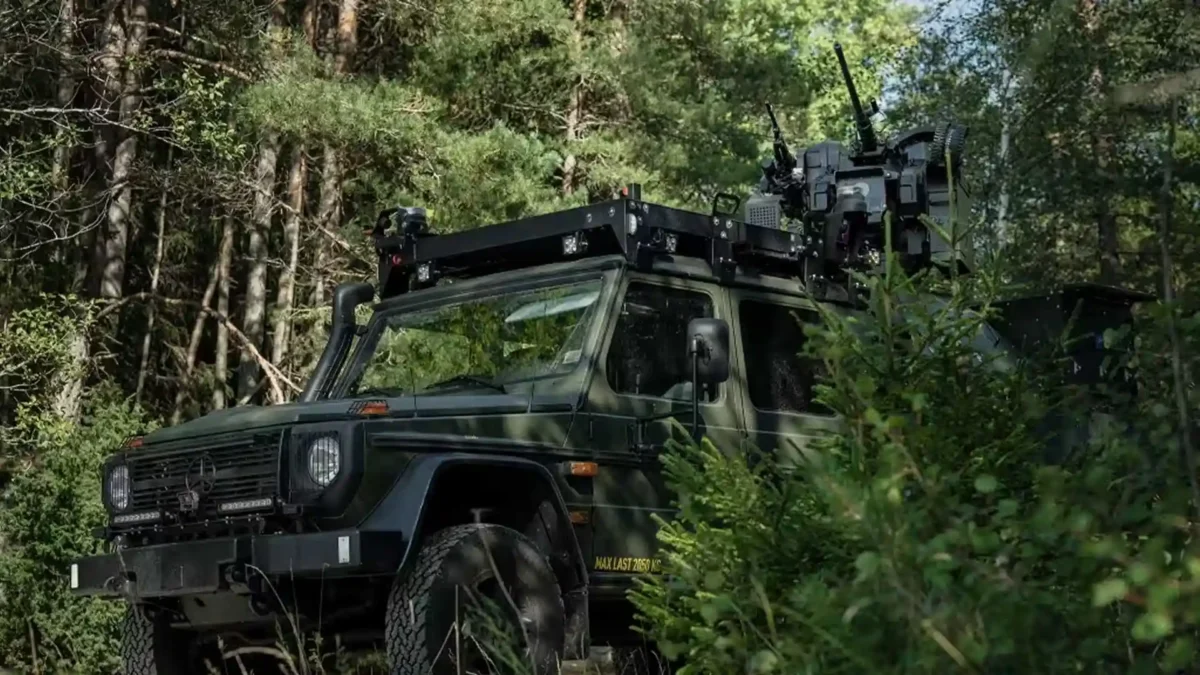
According to Saab, the Swedish defense company that developed the system, the Loke counter-unmanned aerial system (C-UAS) was put into action between April and September 2025 at Malbork Air Base in Poland.
The deployment coincided with the Swedish Air Force’s contribution to NATO air policing and base defense operations.
The base in Malbork served as a central node for allied logistics routes supporting Ukraine, making it a high-value target for hostile drone activity.
Swedish forces from the 21st Wing and later the 17th Wing were tasked with securing the area against small drones that could disrupt operations or threaten personnel.
Lieutenant Colonel Christian Bertilsson, who led the Swedish contingent, stated that the system successfully expanded protection not only for Sweden’s deployed forces but also for NATO partners operating from the facility.
This marks the first live mission use of the system after only months of rapid development and testing.
The project moved from concept to field-ready capability in less than three months, a dramatic shift from conventional multi-year procurement cycles.
Saab and the Swedish Defence Materiel Administration (FMV), in coordination with the Air Force, managed to compress evaluation, trials, and delivery into 84 days, demonstrating a new model for accelerating military innovation under urgent threat conditions.
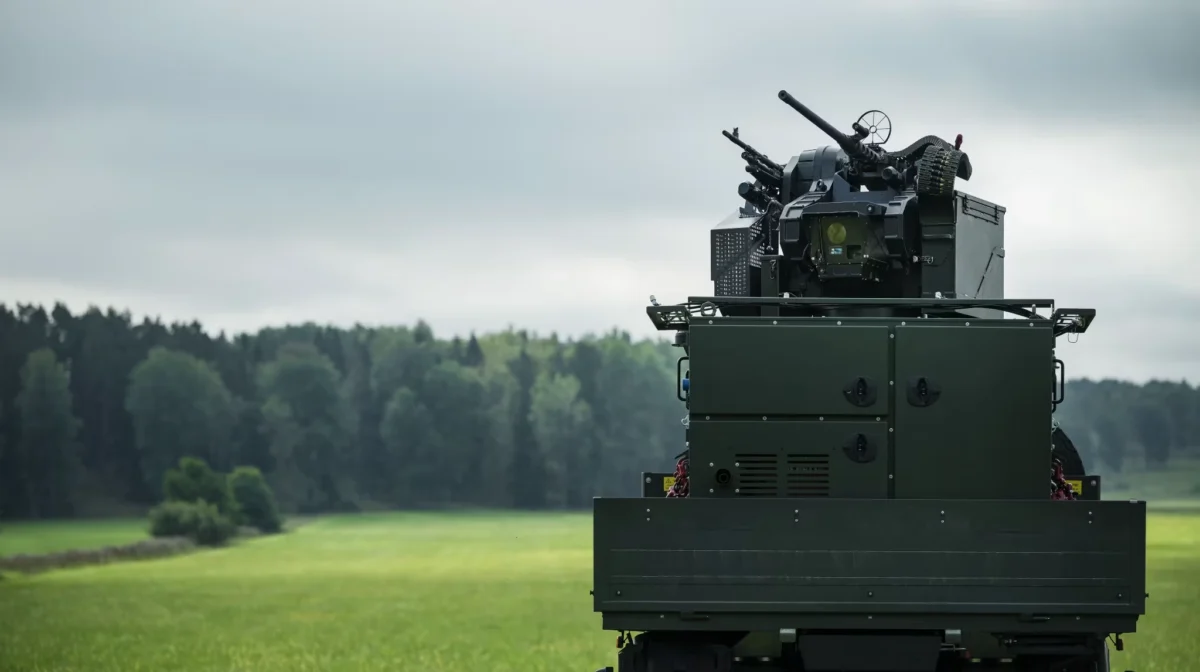
Loke was designed specifically to address the operational gap created by the emergence of small drones, which are difficult to detect and neutralize with legacy air defense systems.
By integrating proven components into a mobile and modular structure, Saab aimed to create a cost-effective solution tailored to defending bases and logistics lines.
At the heart of the system is Saab’s Giraffe 1X radar—a lightweight 3D multi-mission radar system capable of high-speed 360-degree scanning once per second.
Optimized to identify low, slow, and small aerial targets, the radar includes a drone tracker function capable of distinguishing UAVs from birds while minimizing false alarms.
With its compact 150-kilogram weight, it can be mounted on vehicles, trailers, fixed installations, or even lifted by helicopter, allowing flexible deployment across NATO bases.
The engagement role is performed by the Trackfire Remote Weapon Station (RWS), a system already in use on Swedish and Finnish naval platforms.
Trackfire operates with a stabilized independent line of sight, ensuring steady tracking during recoil and enabling continuous target designation with precise ballistic calculation.
Depending on mission requirements, the station can be armed with a range of weapons, from heavy machine guns and grenade launchers to non-lethal options like dazzlers, smoke, or loudspeakers.
The system’s modular design allows operators to adapt quickly, selecting the most cost-effective response to drone threats.
For example, non-lethal disruption might be preferred when tackling unarmed reconnaissance drones, while armed platforms can rapidly neutralize more dangerous UAVs.

Beyond its immediate impact in Poland, the deployment of Loke reflects Sweden’s broader integration into NATO defense structures.
Since the start of 2025, Sweden has been increasing its participation in multinational air operations, with a strong emphasis on improving counter-drone capabilities as both Russia and non-state actors expand their use of UAVs in conflict zones.
During trials and exercises, including the Baltic Trust 2025 drills in Latvia, the Loke system demonstrated effective tracking and engagement of both rotary-wing and fixed-wing drones.
These results led Swedish defense planners to incorporate the concept quickly into their base defense doctrine.
The 21st Wing is now conducting training to operate the system at the platoon level, with full integration into wartime units expected by the end of 2025.
Military officials emphasize that speed was essential. By reusing mature subsystems such as the Giraffe radar and Trackfire station, Saab cut out years of additional development.
This reflects an emerging trend among NATO allies to pursue rapid acquisition of counter-drone systems, particularly as small drones increasingly threaten logistics structures, fuel depots, and command posts.
The deployment in Belgium and Poland in support of NATO’s eastern flank defense is likely to be only the beginning.
Swedish analysts suggest that Loke could become a standard component of air base security in future missions.
Saab has also hinted at potential exports, with interest expected from European partners facing the same challenges in base protection.
From a cost standpoint, Loke offers value by aligning its countermeasures with the relatively low cost of enemy drones.
Unlike deploying expensive missile systems to shoot down drones worth a fraction of the price, Loke provides commanders with scalable options ranging from electronic warfare disruption to direct-fire weapons, ensuring an efficient balance between protection and expenditure.