Follow Us:
Follow Us:


Defense Feeds – US Navy Deployed MQ-4C Triton drones into service even as several technical issues remain unresolved, according to a recent watchdog report.
The move has raised concerns that the long-delayed surveillance aircraft was rushed into operations to meet pressing fleet demands.
A newly released audit by the Department of Defense Inspector General (DoDIG) revealed that the MQ-4C Triton program carries several deficiencies that could limit its ability to accomplish missions.
While the details were redacted in the public version for security reasons, the inspector general made clear that the challenges are serious enough to affect performance.
Instead of completing the evaluation phase, the Navy declared the system at Initial Operational Capability (IOC) as early as September 2023.
IOC certification is a critical stage that normally indicates a platform is tested and ready for early deployment.
In this case, however, the Navy moved forward before completing operational testing, formally known as Initial Operational Test and Evaluation (IOT&E).
Auditors criticized the decision, saying the service had not “effectively managed the operational capabilities” of the Triton fleet.
The report stressed that while the aircraft had some proven value, failure to finish testing risks sending an incomplete capability into mission areas.
According to the watchdog, the service has already invested more than $83 million to upgrade two aircraft to the latest configuration.
Fixing the same issues across the remaining fleet is expected to cost significantly more, meaning delays and additional funding are inevitable.
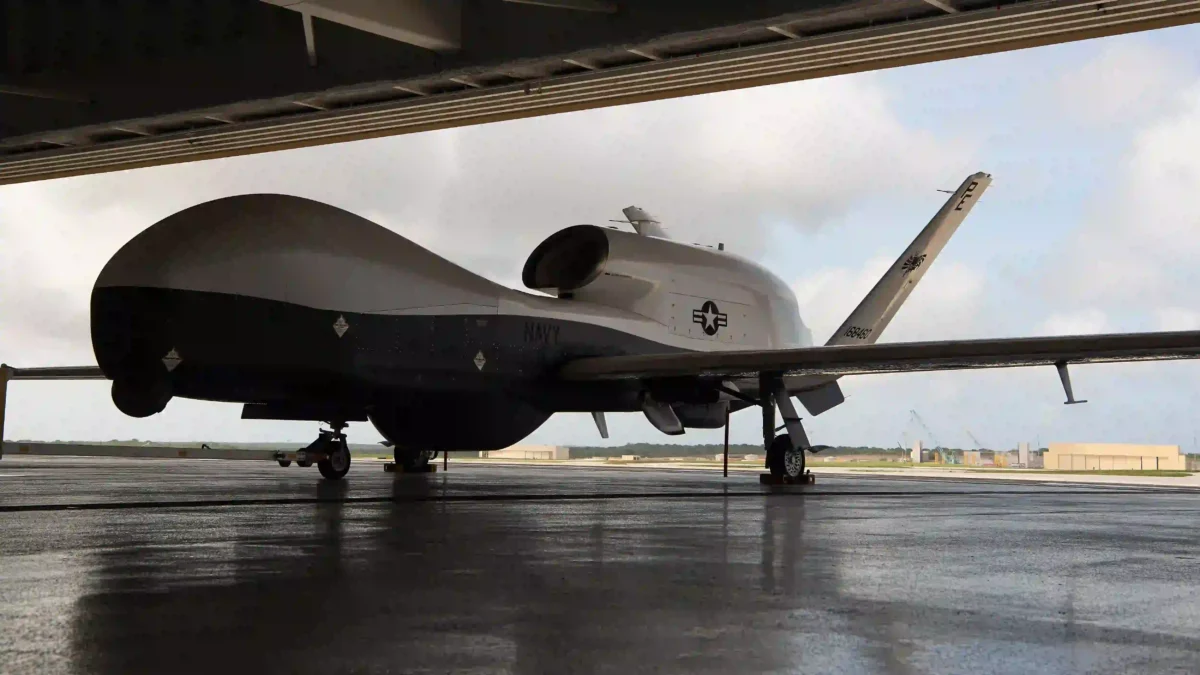
Senior officials defended the decision, stressing that Triton’s capabilities were considered crucial to meet operational requirements in key maritime regions.
Robert Kimble, who oversees Navy air and ground systems, responded to the audit by stating that the service continues to address the remaining deficiencies. He added that IOT&E is on track to conclude by November this year.
Kimble also pushed back on the report’s recommendation that IOC certifications always be completed only after full testing. He argued that current Pentagon policies allow commanders some flexibility to balance urgency against risk.
In this case, leaders assessed that deploying the unmanned aircraft early was more beneficial to the fleet than waiting for a perfect outcome.
The response reflects a wider debate in defense management: whether delay and higher costs from rigid acquisition rules outweigh the risks of fielding systems that are not fully tested.
With the pace of competition in the Indo-Pacific and the need to monitor increasingly crowded sea lanes, the Navy opted to accept some risk in order to put drones in the sky sooner.
The MQ-4C Triton, designed by Northrop Grumman, was conceived in 2008 as part of a transformation to extend U.S. maritime intelligence, surveillance and reconnaissance (ISR) coverage.
Operating at high altitude for over 24 hours at a time, the drone can scan vast ocean spaces, monitor shipping traffic, and track potential military threats.
The aircraft works in tandem with the manned Boeing P-8A Poseidon, which serves as a multi-role maritime patrol jet.
The Triton acts as a persistent sensor in the sky while Poseidon crews focus on anti-submarine warfare and broader ISR missions.
Together, they form a layered surveillance network considered essential for future naval operations.
So far, 20 Tritons have been delivered out of a planned 27-aircraft fleet. The platform’s importance is underscored by its adoption overseas: Australia officially received its first Triton in 2024, adding to its own Pacific surveillance plans.
Despite its promise, the program has been troubled by cost overruns, development delays and technical hurdles ever since its inception.
The Inspector General’s report adds a new chapter to a history that has seen repeated adjustments in schedule and budget.
Still, the aircraft is already being positioned as a core part of the Navy’s evolving maritime domain awareness strategy.
Earlier service statements confirmed plans to integrate Triton into networked surveillance systems, linking data from multiple sensors into a broader operational picture.
However, questions remain whether inadequate infrastructure upgrades at certain bases and unresolved system anomalies could undermine effectiveness.
The Navy’s willingness to prioritize immediate operational needs over deferred testing suggests it views the Triton as too important to keep on the sidelines, despite concerns raised by auditors.