Follow Us:

Follow Us:


Defense Feeds – US Army MV-75 FLRAA developer Bell Textron has selected Marotta Controls to supply the main power inverter system for the next-generation aircraft.
This partnership marks a crucial milestone in advancing future military aviation, combining Bell’s tiltrotor expertise with Marotta’s proven innovation in aerospace power systems.
Together, they aim to deliver a more efficient, resilient, and mission-ready platform to support the Army’s modernization goals.
Based in New Jersey, Marotta Controls will design and manufacture an advanced DC-to-AC power inverter to serve as the backbone of the MV-75’s electrical architecture.
The inverter will supply stable, high-efficiency power to critical systems including avionics, sensors, flight controls, and fuel pumps.
Built for performance and reliability, it will enable optimal energy distribution while maintaining the aircraft’s stringent low-weight and high-power efficiency requirements.
This agreement marks Marotta’s first collaboration with Bell Textron, positioning the company as a new player in one of the most ambitious US defense aviation programs to date.
According to Steve Fox, Senior Vice President for Power and Actuation Systems at Marotta Controls, the partnership represents a “major milestone” in the company’s history.
Fox emphasized that the inverter draws on decades of development in power conversion and thermal management technologies designed for extreme aerospace environments.
Marotta’s system will play a key role in ensuring the MV-75’s electrical resilience under diverse operational conditions.
Its architecture emphasizes efficient energy use, optimal heat control, and extended operational life, which are vital for next-generation aircraft facing intense mission conditions.
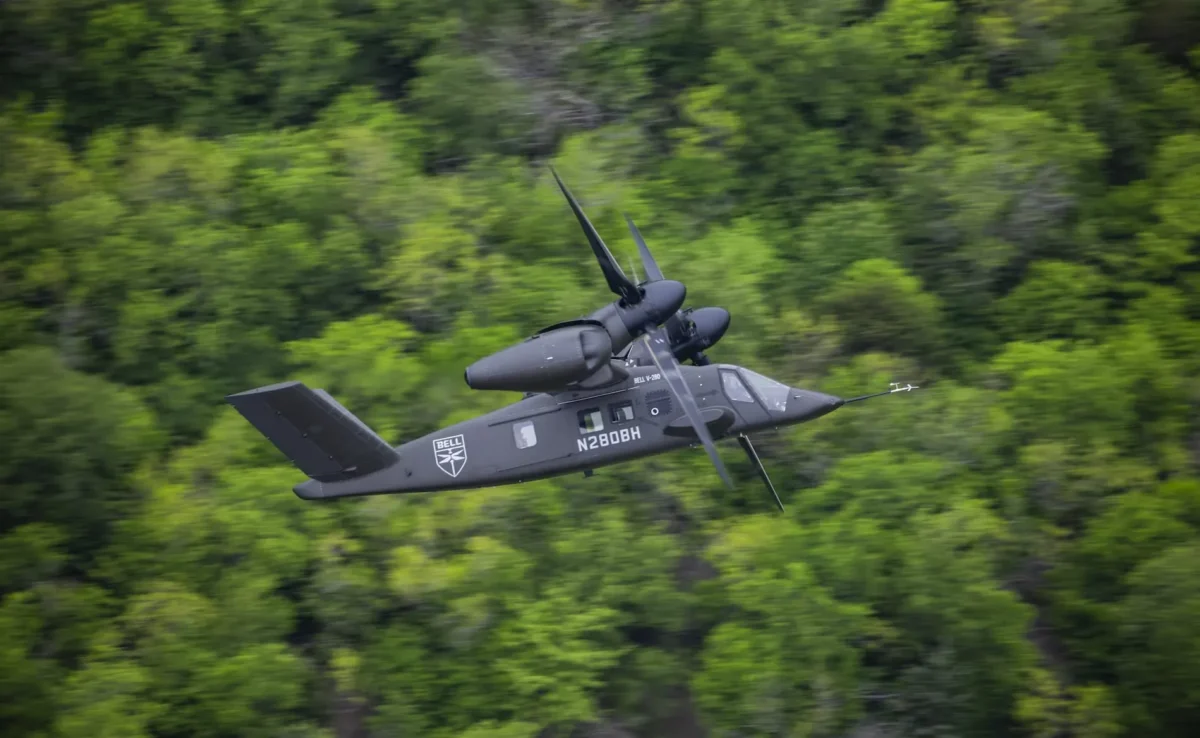
The MV-75 FLRAA is a centerpiece of the US Army’s plan to replace aging UH-60 Black Hawk and AH-64 Apache helicopters.
Developed around a tiltrotor configuration, the MV-75 combines helicopter-style vertical lift with the speed and range of a fixed-wing aircraft.
Measuring roughly 51 feet (16 meters) in length, it can carry troops, cargo, or medical evacuation payloads over long distances at much greater speeds than traditional rotorcraft.
This performance leap represents a significant upgrade in tactical mobility and range, allowing rapid response to missions across extended or contested environments.
The aircraft’s modular design further enables flexible reconfiguration for multiple missions, from assault and transport to logistics and reconnaissance.
Bell’s design builds upon its V-280 Valor prototype, integrating digital flight controls, advanced aerodynamics, and cutting-edge power distribution.
The inclusion of Marotta’s advanced inverter system will enhance the MV-75’s energy use and operational stability, helping sustain mission effectiveness and lowering upkeep needs.
Marotta Controls’ inclusion in the FLRAA program reflects its broader ambition to expand within the defense aerospace power sector.
The company’s inverter design emphasizes compactness, rugged durability, and efficient thermal control, ensuring consistent power delivery even during high-demand operations.
Such innovations contribute not only to improved aircraft endurance but also to a more sustainable and maintainable defense fleet.
“The recognition as part of the MV-75 program aligns perfectly with Marotta’s strategy for growth in advanced aircraft systems,” Fox noted.
“We are proud to support the Army’s modernization of its rotary fleet and to help strengthen the resilience of defense supply chains.”
Industry experts view the Bell-Marotta collaboration as a signal of Bell’s commitment to leveraging specialized partners to refine aircraft performance and reliability.
The integration of Marotta’s power technology is expected to influence future aircraft development across the Department of Defense, especially as sustainability and efficiency become central to next-generation aviation.
As the FLRAA program progresses toward production, the MV-75 stands poised to redefine the future of US military vertical lift.
With Bell’s engineering leadership and Marotta’s advanced power solutions, the aircraft embodies a new era of speed, endurance, and energy management, setting a benchmark for combat aviation in the decades ahead.