Follow Us:
Follow Us:

Defense Feeds – U.S. Air Force Retires T-1A Jayhawk after more than a decade of dedicated service, with its final journey on July 28 from Naval Air Station (NAS) Pensacola to its resting place at Davis-Monthan Air Force Base in Arizona.
This milestone marks a transformational moment in Air Force training strategy, signaling a new era focused on advanced simulation and modernized instruction
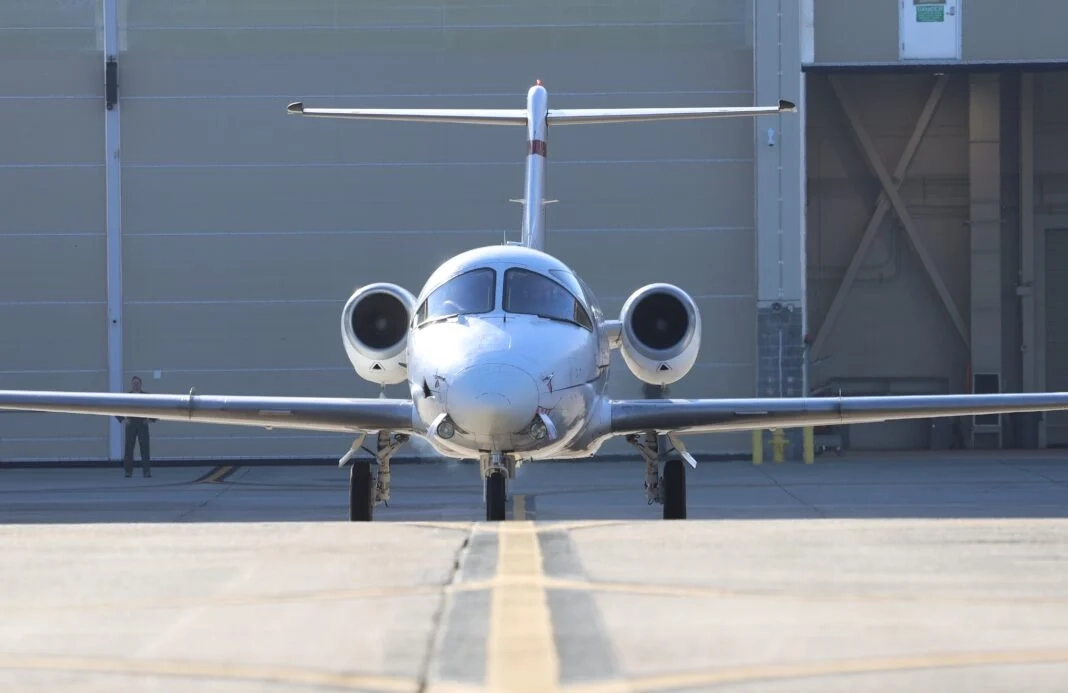
The T-1A Jayhawk, a staple of navigator and systems officer training, embarked on its last operational flight under the command of Col. Shane Muscato, leader of the 479th Flying Training Group.
The aircraft’s destination, the famous 309th Aerospace Maintenance and Regeneration Group (AMARG) — better known as the “Boneyard” — is where it will be carefully dismantled for parts to support other aircraft fleets still in service.
Reflecting on the significance of the Jayhawk’s departure from NAS Pensacola, Col. Muscato shared, “The T-1A has been central to our mission and our legacy here in Pensacola.
It trained thousands of aviators and shaped the future of airpower. This final flight honors that legacy while pointing toward the future of simulation-based training.”
Since its introduction at Pensacola in 2011, the Jayhawk has logged a staggering 112,700 flight hours and completed over 70,000 training sorties, helping develop 3,872 Air Force Combat Systems Officers (CSOs).
The aircraft’s role has been irreplaceable in shaping the next generation of airmen, reinforcing its status as a vital link in America’s air power chain.
The Air Force’s recent decision to phase out the T-1A Jayhawk is rooted in a broader vision for how future aviators are prepared.
As part of a sweeping modernization effort, the service is shifting away from legacy trainers to embrace high-fidelity simulators and digital-centric learning.
This initiative aims to streamline the training pipeline and better prepare CSOs for sophisticated, sensor-driven missions of tomorrow.
The T-1A, adapted from the civilian Beechjet 400A, was originally designed to offer medium-range jet performance and was equipped with advanced avionics.
These features allowed for the replication of complex air-to-air, air-to-ground, navigation, and electronic warfare scenarios, making the aircraft an essential tool for mission systems and sensor operations.
However, advances in technology have rendered traditional stick-and-rudder flight less critical than the ability to manage mission systems and integrate sensors effectively.
Going forward, the T-6A Texan II will remain as the initial flight trainer, but advanced CSO instruction will take place primarily in digital simulators.
This digital transformation is expected to not only enhance the quality and efficiency of training but also suit the evolving operational requirements of next-generation Air Force platforms.
Training will now emphasize sensor fusion, electronic warfare tactics, and systems management, all critical for tomorrow’s intelligence and surveillance operations.
Before its last flight, the T-1A Jayhawk received a touching tribute from the airmen and instructors it served.
The 451st Flying Training Squadron hosted a ceremonial “Sunset Party” on June 6, allowing personnel to sign the aircraft, share memories, and look back at its storied history.
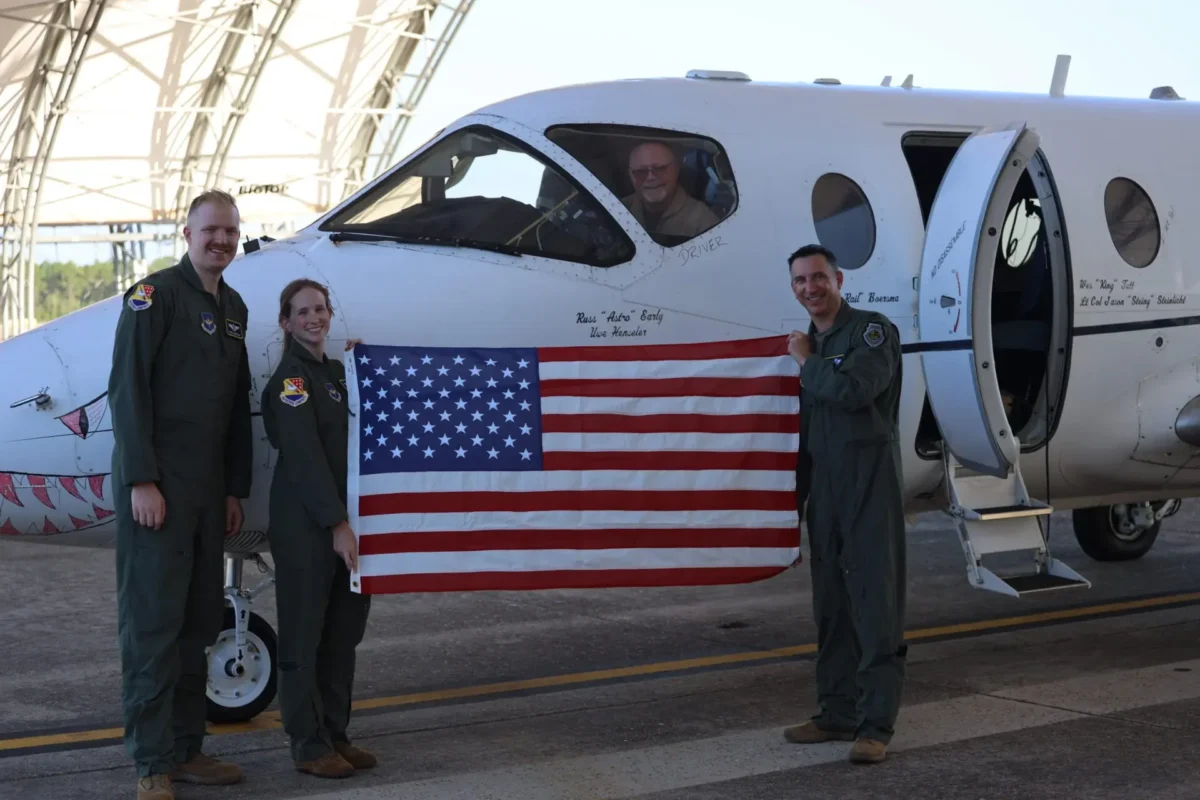
The event featured speeches and a static aircraft display, offering a fitting farewell to a jet that has trained countless aviators at what’s known as the ‘Cradle of Naval Aviation.’
As the Jayhawk now sits at AMARG, its components will support legacy platforms domestically and may assist allied training programs abroad still utilizing the T-1A.
By maximizing parts reclamation, the Air Force demonstrates its commitment to efficient fleet management and sustainment.
While there is no direct successor aircraft for the Jayhawk’s CSO training duties, Air Force leaders are confident that the transition to simulation-based tools will fast-track learning and align instruction with operational demands.
The integration of technology-driven environments is seen as essential for preparing officers for platforms that focus on information dominance, systems integration, and networked warfare.