Follow Us:
Follow Us:


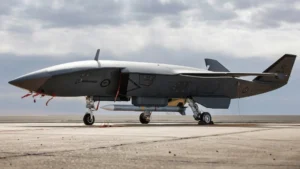
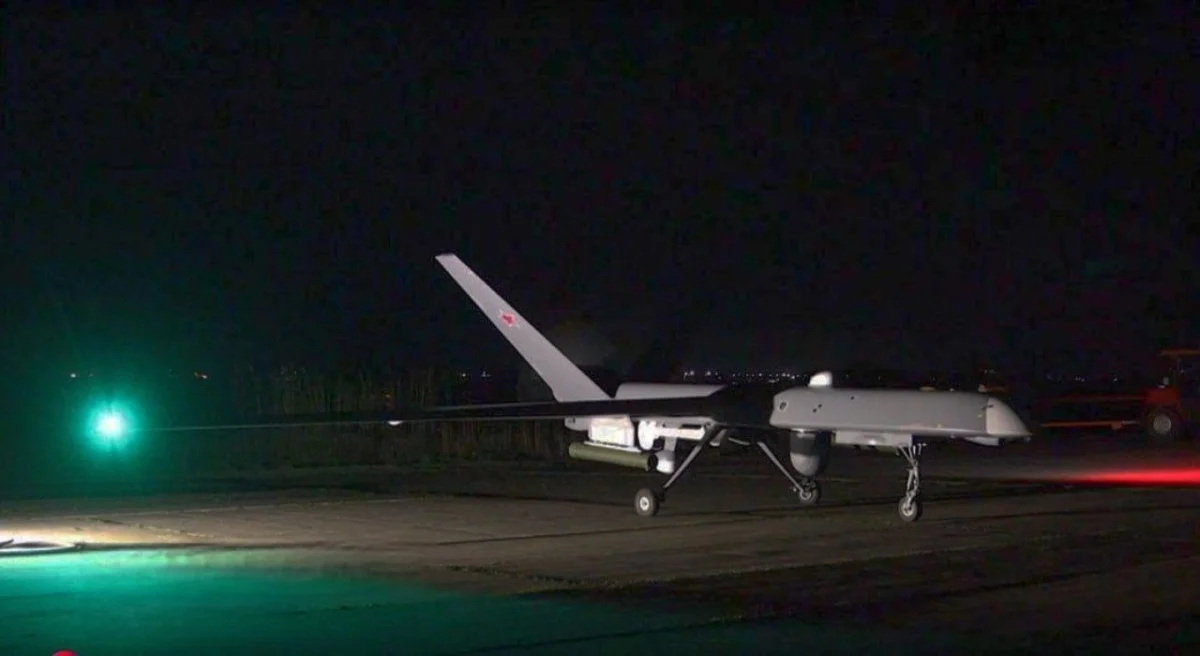
Defense Feeds – Russian Orion Drone represents Russia’s latest step in UAV modernization, as the military unveils a new strike-capable configuration fitted with the Kh-BPLA precision missile system.
The upgraded Russian Orion Drone platform, developed under the High-Precision Systems holding within the state conglomerate Rostec, marks a major advance in Russia’s effort to boost the battlefield effectiveness of its medium-altitude long-endurance (MALE) drone fleet.
This newest version of the Russian Orion Drone, often compared to the American MQ-1 Predator, shifts the aircraft from a predominantly reconnaissance and surveillance platform into a model capable of direct precision strikes.
The configuration, highlighted alongside two advanced lightweight munitions engineered for unmanned operations, underscores Russia’s ongoing investment in drone warfare technology, as first reported by Defence Blog.
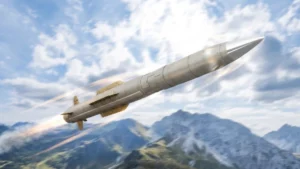
The newly developed Kh-BPLA missile is the product of the Instrument Design Bureau (KBP), noted for designing Russia’s widely used Kornet and Krasnopol weapon systems.
Engineers combined elements from both in order to reduce manufacturing costs and streamline production timelines, making the missile more accessible for mass deployment alongside UAV operations.
The missile uses a semi-active laser homing system, giving it the ability to engage targets illuminated by either airborne or ground-based designators.
With an engagement range estimated between 2 and 8 kilometers, the weapon allows the Orion to perform stand-off precision attacks while avoiding close-range threats from enemy air defenses.
The Kh-BPLA is designed for precision attacks against targets like unarmored vehicles, groups of infantry, and lightly protected structures, where accuracy is more important than raw destructive force.
This new capability positions the Orion as a more versatile combat asset in Russia’s growing drone arsenal.
According to available specifications, the Kh-BPLA missile weighs around 32 kilograms without its launcher and 42 kilograms when mounted.
It carries a 6-kilogram high-explosive fragmentation warhead containing approximately 3.2 kilograms of explosive material.
The missile can be launched from altitudes up to 4 kilometers, allowing UAVs to maintain a safe operating distance while delivering accurate fire support.
The Orion’s integration of such guided munitions significantly boosts its combat profile. Earlier iterations of the drone primarily supported ISR (intelligence, surveillance, reconnaissance) operations.
With the introduction of precision-guided munitions, the UAV is now able to execute targeted strikes on specified ground targets, broadening its operational scope in both tactical and strategic fronts throughout various conflict areas.
Equipping the Orion UAV with the Kh-BPLA reinforces Russia’s wider trend toward hybrid weapon development and cost-efficient modernization.
By borrowing components from existing systems rather than designing from scratch, Moscow accelerates deployment without overburdening its defense budget.
Analysts view this integration as part of Russia’s response to advancements in Western UAV combat technology, particularly in light of extensive combat lessons from the conflicts in Ukraine and Syria.
The addition of laser-guided weapons enables Russian operators to perform low-risk precision engagements, aligning their UAV doctrine more closely with Western models of networked warfare.
Industry observers note that Russia aims to field several variants of the Orion for reconnaissance, attack, and electronic warfare missions.
The armed version will likely play a vital role in supplementing manned aircraft in contested environments, where cost-effectiveness and reduced pilot risk remain key advantages.
The adaptation of the Orion into an armed reconnaissance-strike UAV signals a shift in Russia’s tactical priorities.
It demonstrates growing emphasis on precision engagement, faster manufacturing methodologies, and flexible battlefield utilization.
The addition of these strike functions positions the Orion to redefine its place in Russian aerial strategy, filling the gap between intelligence-gathering drones and dedicated weaponized UAVs.