Follow Us:
Follow Us:

Defense Feeds – Revolutionary U-Hawk Drone represents Lockheed Martin’s latest leap in rotary aviation, as the company’s Sikorsky division unveils a remarkable transformation of its iconic UH-60 Black Hawk helicopter.
Reborn as the S-70UAS “U-Hawk,” this fully autonomous, battle-ready utility drone redefines how legacy airframes evolve into next-generation unmanned systems.
Developed in under a year, the advanced design merges proven airframe durability with state-of-the-art autonomy for extended operational versatility.
The Revolutionary U-Hawk Drone was engineered through an accelerated 10-month development process to meet modern defense and logistics demands across complex battlefields.
Sikorsky’s redesign replaces traditional pilot controls with adaptive autonomy interfaces and smart sensors that empower the aircraft to perform missions entirely without onboard crews.
This groundbreaking shift demonstrates how the U-Hawk is reshaping legacy platforms into future-ready assets within autonomous defense operations.
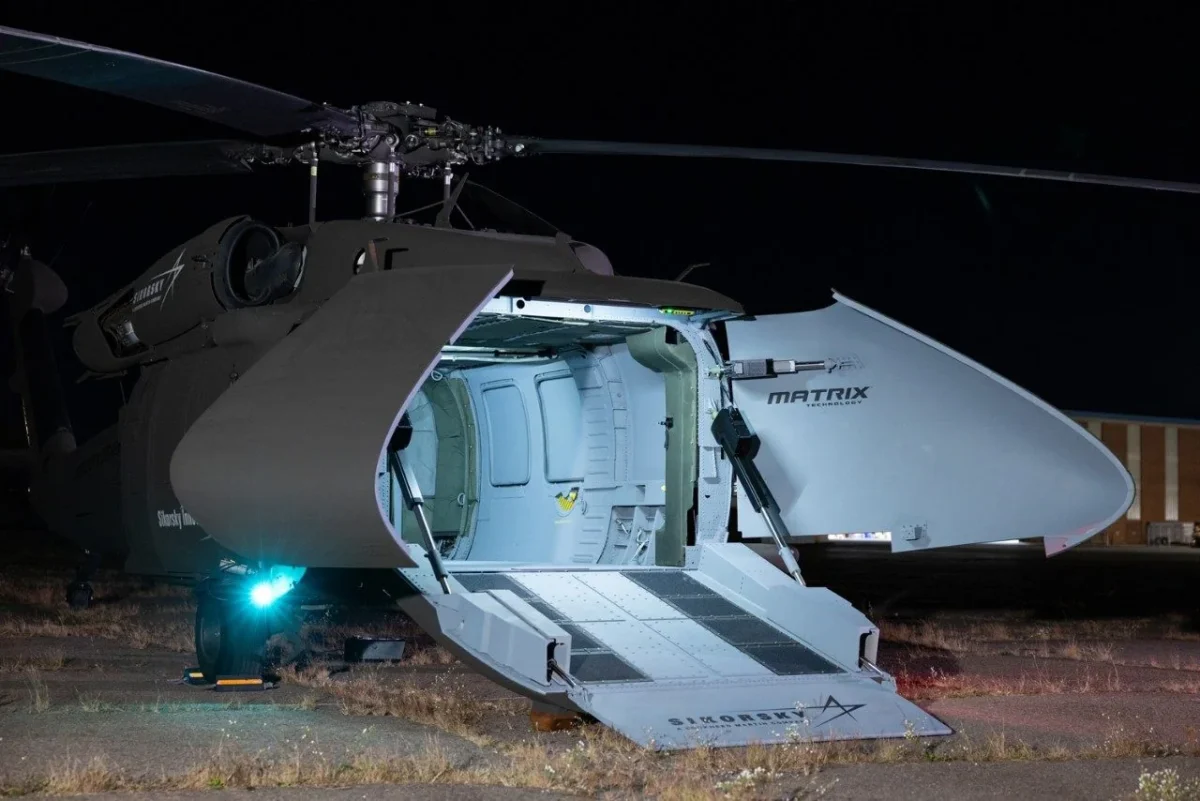
Unlike the conventional manned UH-60L, the U-Hawk features 25 percent more usable internal space.
The former cockpit area has been replaced with actuated clamshell doors and a rear loading ramp, optimizing space for bulky or high-volume cargo.
The redesign boosts performance in supply delivery, medevac operations, and equipment transfers, even under hostile or low-signal conditions.
Sikorsky’s engineers combined the proven fly-by-wire flight control system with the company’s sophisticated MATRIX autonomy suite.
This integration enables the U-Hawk to plan flight paths, navigate complex routes, and land autonomously on unprepared terrain.
It can handle cargo delivery and function as a control center for smaller drones launched during missions, serving as an aerial logistics hub.
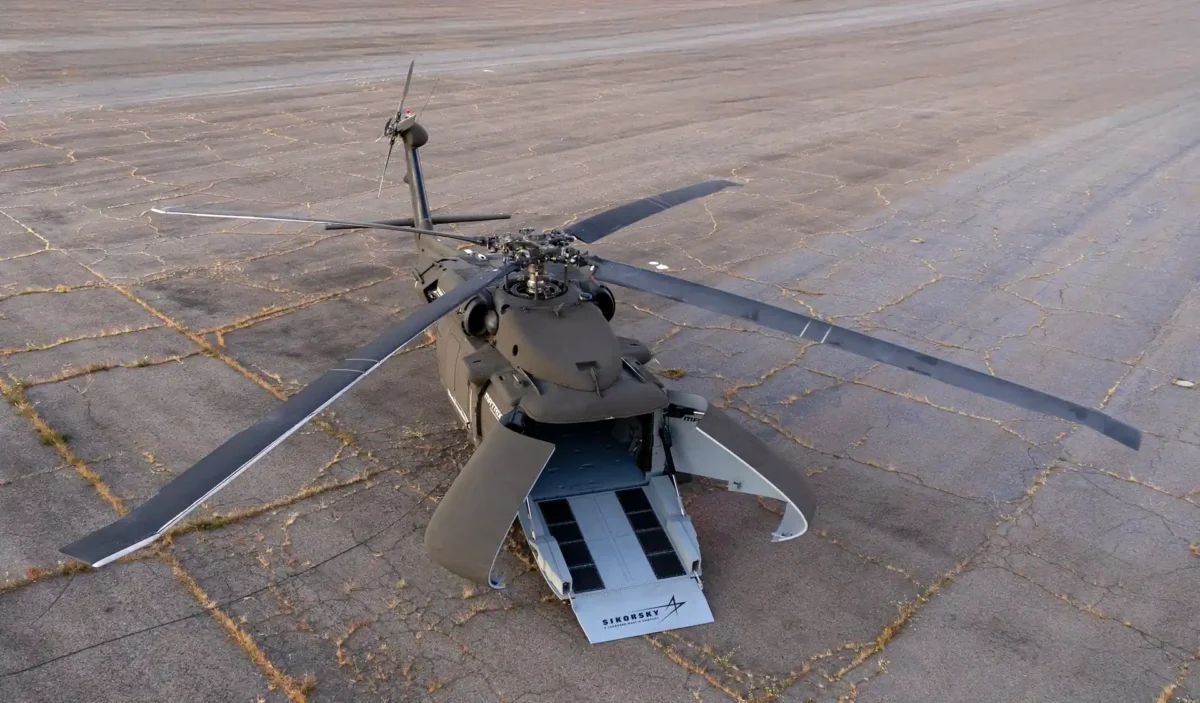
Beyond pure combat logistics, the autonomous U-Hawk is designed to serve multiple mission profiles traditionally executed by manned helicopters.
It can operate in high-risk zones where pilot safety would be compromised, deliver critical equipment in disaster-stricken areas, or conduct long-duration reconnaissance and surveillance.
The ability to adapt the platform for multi-domain operations, whether transporting supplies to forward-deployed units or delivering relief material in post-conflict zones, underscores Sikorsky’s intent to create a flexible workhorse for both military and humanitarian use.
The U-Hawk’s enhanced cargo capacity also supports next-generation autonomous swarming operations, working alongside unmanned ground vehicles and aerial systems in coordinated missions.
According to defense analysts, this move aligns with the U.S. Department of Defense’s increasing reliance on autonomous vertical lift systems to reduce manpower requirements and operational risk.
In an era where autonomy is rapidly redefining battlefield rhythms, Sikorsky’s innovation opens a new frontier in utility drone development.
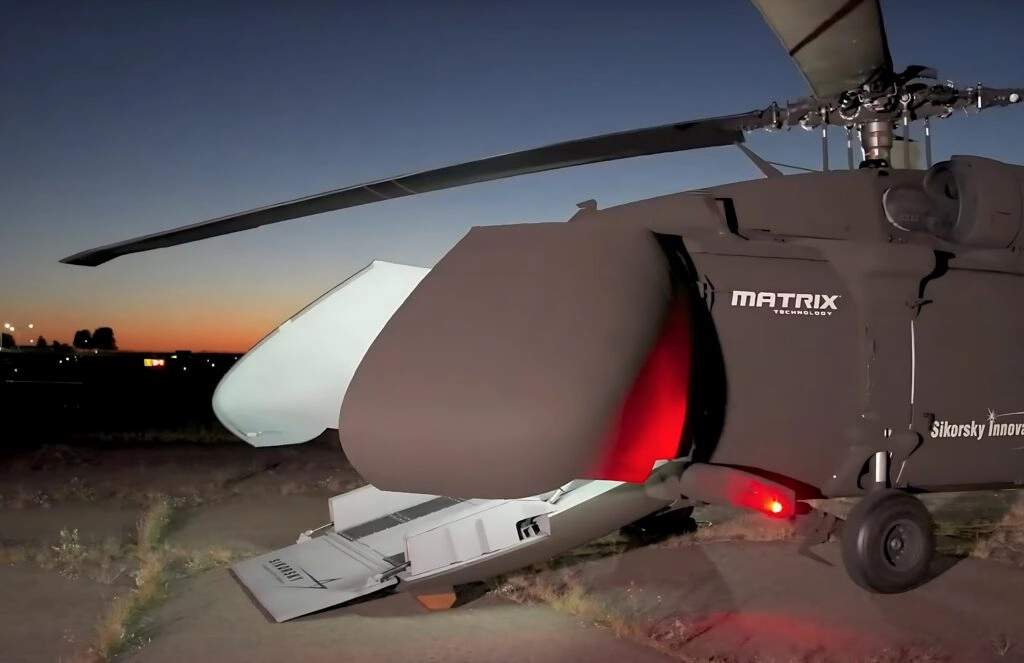
The U-Hawk stands as a proof of concept demonstrating how legacy platforms can transition seamlessly into the unmanned era.
Rather than phasing out older helicopters, Sikorsky’s strategy renews them for active duty by merging proven mechanical strength with AI-powered autonomy.
Industry observers note that the U-Hawk’s modular structure allows potential upgrades, including advanced sensors, countermeasure systems, and adaptive mission payloads.
This adaptability allows it to serve diverse users, from combat forces on the front lines to government bodies managing disaster relief and border operations.
The platform’s design also offers international partners a faster route to field autonomous helicopters without starting from scratch.
Sikorsky’s development of the U-Hawk underscores a broader defense trend: autonomy is no longer a futuristic concept but a core element in next-generation military aviation.
By converting the time-tested Black Hawk into a pilotless utility aircraft, Lockheed Martin is not only preserving a legacy but leading its transformation into a new era of unmanned aerial operations.