Follow Us:
Follow Us:

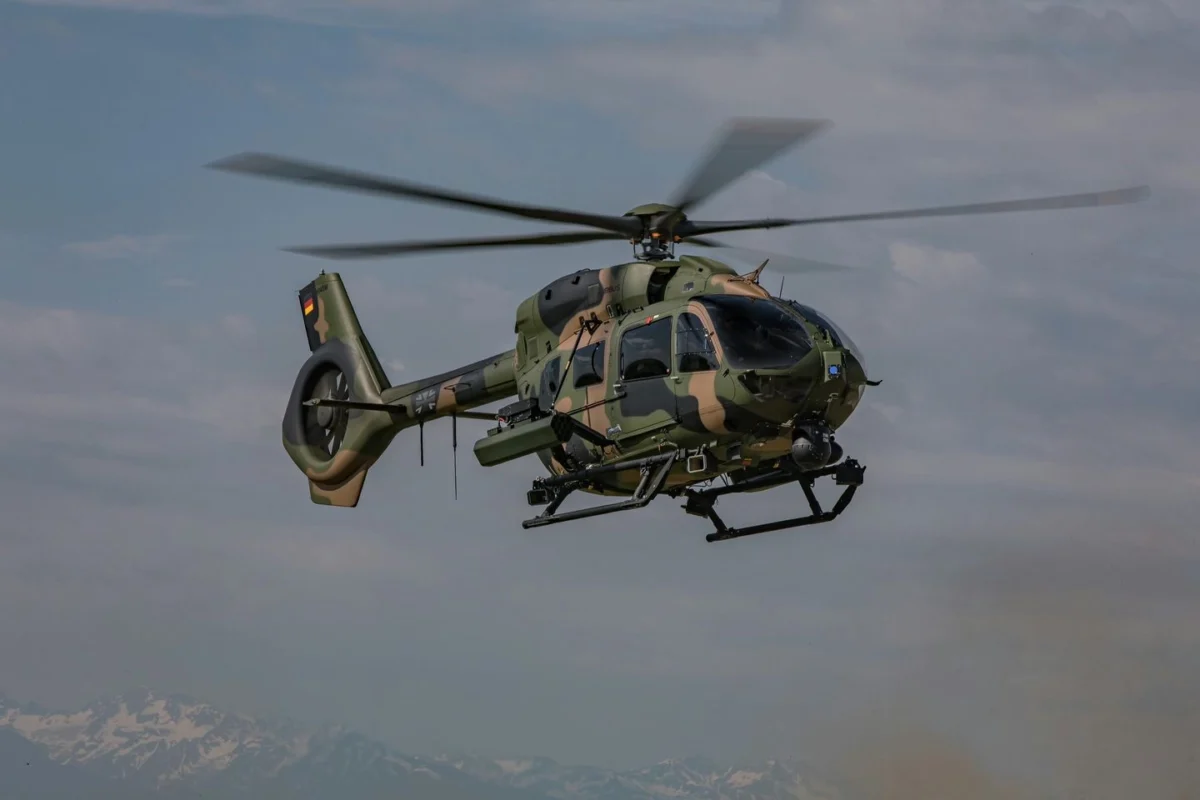
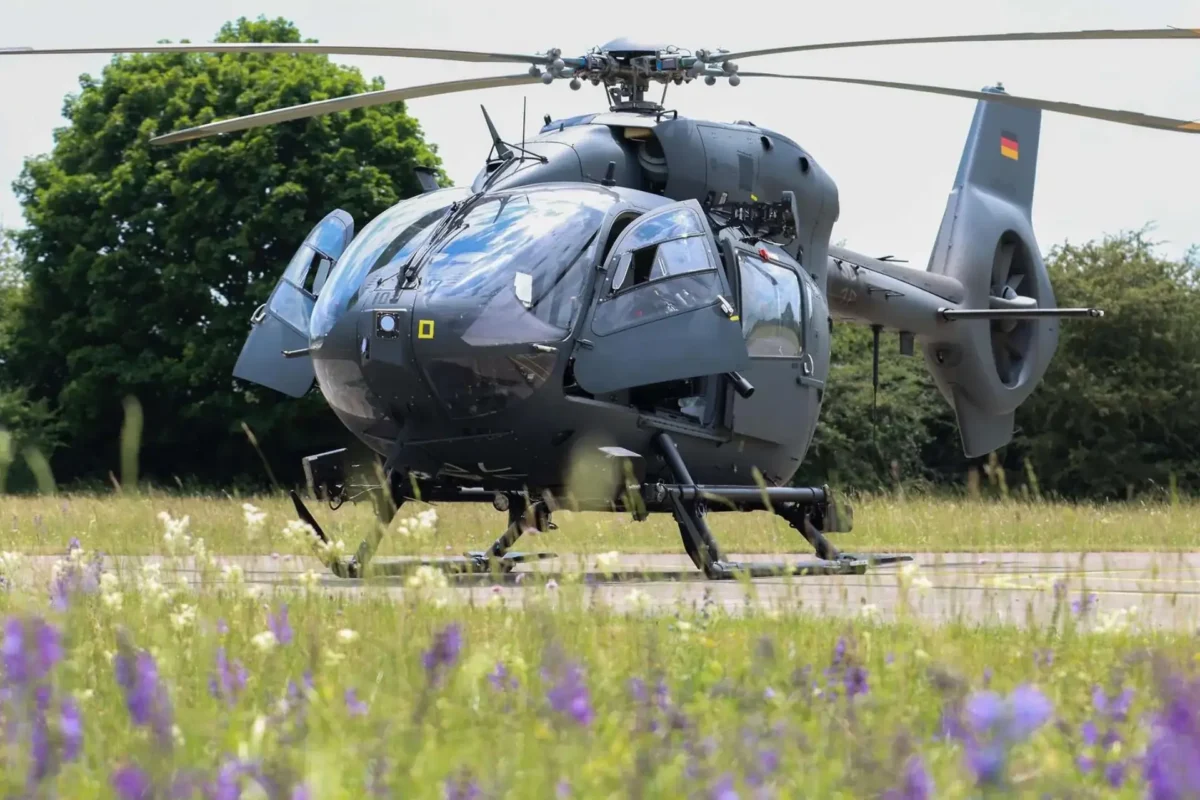
Defense Feeds – Germany Expands H145M Fleet with a contract for 20 additional helicopters worth close to 1 billion euros ($1.2 billion), reinforcing its broader military upgrade program.
This acquisition bolsters Berlin’s operational readiness and NATO contributions amid evolving security threats.
The expanded fleet will improve versatility for training, transport and rapid deployment missions, underlining Germany’s efforts to modernize defense assets after prolonged underinvestment.
The new order builds upon a 2023 framework deal that allows the Bundeswehr to procure up to 82 H145 helicopters in various configurations.
With this latest addition, 62 have now been ordered, marking another milestone in Germany’s plan to enhance its mobility and combat versatility.
Delivery of the new aircraft is scheduled between 2027 and 2029, according to details reported by Reuters.
Government projections estimate that maintaining and operating the full fleet of 82 H145Ms will cost around 3 billion euros ($3.5 billion) through 2048.
The financial breakdown will be reviewed by lawmakers in the coming days as part of Germany’s long-term defense budget.
Unlike the initial batch, this new acquisition focuses more heavily on combat and training roles.
Fifteen helicopters will be configured for combat operations, equipped with weapons and advanced mission systems, while five will serve as dedicated platforms for special forces training.
Funding for the project comes from the 100‑billion‑euro special military fund established in 2022, shortly after Russia’s invasion of Ukraine.
The fund is intended to close long-standing capability gaps and rebuild Germany’s defense posture after years of underinvestment.
This recent agreement supports Chancellor Olaf Scholz’s “Zeitenwende” policy, introduced in early 2022, which marked a significant change in Germany’s defense strategy and funding.
The policy aims to revitalize the German armed forces, improve NATO interoperability, and ensure rapid response capabilities across land, air, and cyber domains.
Beyond the H145M project, Germany has already committed to acquiring 35 U.S.-built F‑35A fighter jets to replace its aging Tornado fleet, enabling continued participation in NATO’s nuclear-sharing mission.
It has also ordered Leopard 2A8 main battle tanks to update its armored forces and strengthen deterrence along NATO’s eastern front.
Berlin’s defense strategy further includes procurement of Patriot missile defense systems to counter emerging aerial threats, including drones and cruise missiles.
The country is also upgrading its digital command networks and cyber defense infrastructure to enhance operational coordination with allied forces.
The Airbus H145M program is expected to deliver not only expanded capabilities for the German military but also economic benefits for the domestic defense sector.
Electronics specialist Hensoldt will supply advanced night-vision and electronic warfare systems for the new helicopters, while other local contractors will manage avionics, communications, and weapons integration.
Defense experts highlight that the H145M, operational in multiple NATO forces, excels in utility and light-attack roles, providing adaptable support for close air combat, reconnaissance, and personnel movement.
Its modular architecture allows rapid reconfiguration for missions ranging from medevac to special forces insertion, a key factor driving Germany’s renewed procurement push.
The expansion of the H145M fleet comes amid broader European efforts to reinforce collective defense capabilities.
Germany, one of NATO’s largest contributors, is also participating in multinational initiatives such as the European Sky Shield Initiative, designed to establish a continent-wide missile defense network.
Officials emphasize that strengthening rotary-wing capacity remains vital for modern expeditionary and homeland operations.
By enlarging its H145M fleet, Berlin reinforces its commitment to the NATO alliance while addressing long-standing logistical and capability gaps that have limited operational resilience in recent years.
As deliveries progress toward 2029, the Airbus deal is expected to play a central role in ensuring that German forces remain agile, well-equipped, and ready for future security challenges across Europe and beyond.