Follow Us:

Follow Us:


Defense Feeds – Finland Secures 405 AIM-120D-3 Missiles in a proposed U.S. Foreign Military Sale (FMS) worth up to $1.07 billion, aimed at significantly strengthening its air combat capability.
Announced by the U.S. Defense Security Cooperation Agency (DSCA) on September 10, 2025, the deal supports Helsinki’s effort to modernize its air force as it transitions from F/A-18 Hornets to the advanced F-35A Lightning II fighter program.
This acquisition places Finland among a small group of European nations approved to operate the latest AMRAAM variant.
The AIM-120D-3 features advanced navigation, greater maneuverability and updated guidance systems designed to ensure effectiveness in modern beyond-visual-range engagements.
The Finnish Air Force is preparing to integrate the AIM-120D-3 into its incoming fleet of 64 F-35A fighters, which will replace the aging F/A-18C/D Hornets.
The first jets are scheduled for delivery by the end of 2025, with initial training to take place at Ebbing Air National Guard Base in Arkansas before returning to Finland.
Full operational deployment from northern bases in Lapland is expected by 2028, while complete combat readiness is projected by 2030. The missile package is not limited to the munitions themselves.
Alongside the 405 AIM-120D-3s, Finland has requested eight guidance sections equipped with the latest GPS M-Code anti-jamming capability.
Additional items include missile containers, adaptors, spare parts, training and testing equipment, transport support, technical assistance, and classified documentation. Raytheon’s defense subsidiary RTX Corporation will serve as the prime contractor.
U.S. authorities emphasized that the sale will not alter the regional military balance or require American forces to be stationed in Finland.
Rather, the move supports deeper NATO cooperation only months after Finland formally joined the alliance in response to heightened security concerns along its eastern border with Russia.
At the same time, Finland has signaled its intention to complement its future F-35 arsenal with AGM-158B JASSM-ER long-range cruise missiles and AGM-88G AARGM-ER anti-radiation missiles.
These acquisitions underline Helsinki’s ambition to field a multi-layered strike and defense capability covering air combat, precision strike, and electronic warfare suppression.
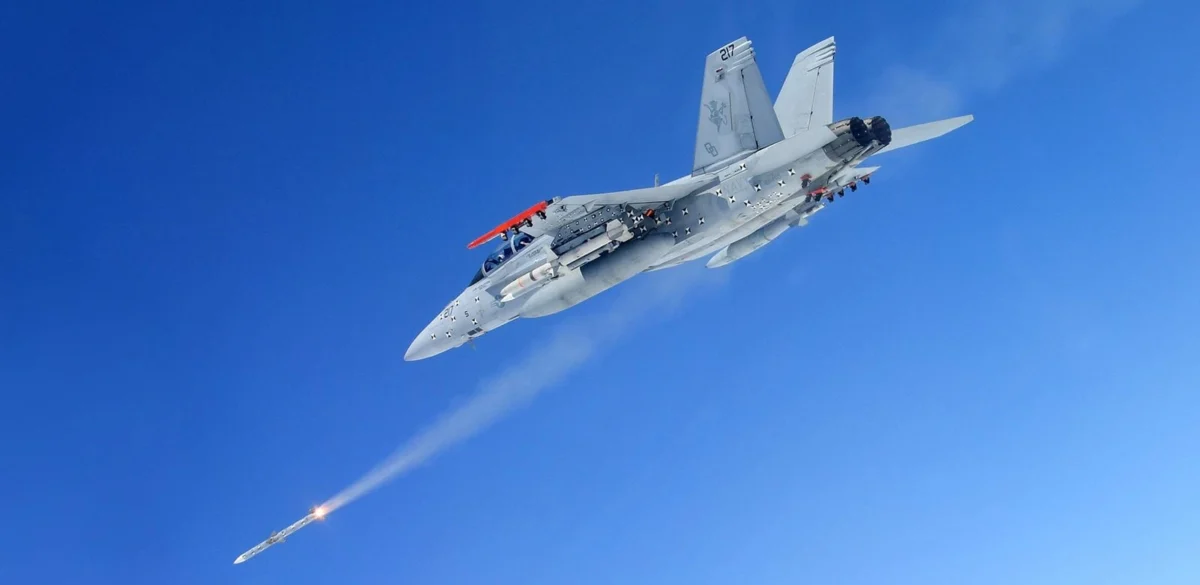
The AIM-120D-3 is the most advanced export-approved version of the AMRAAM family, developed as part of the Form, Fit, Function Refresh (F3R) upgrade program.
Compared to the widely used AIM-120C-7, the D-series provides extended reach, higher agility, and more resilient guidance against electronic countermeasures.
Key features of the AIM-120D-3 include:
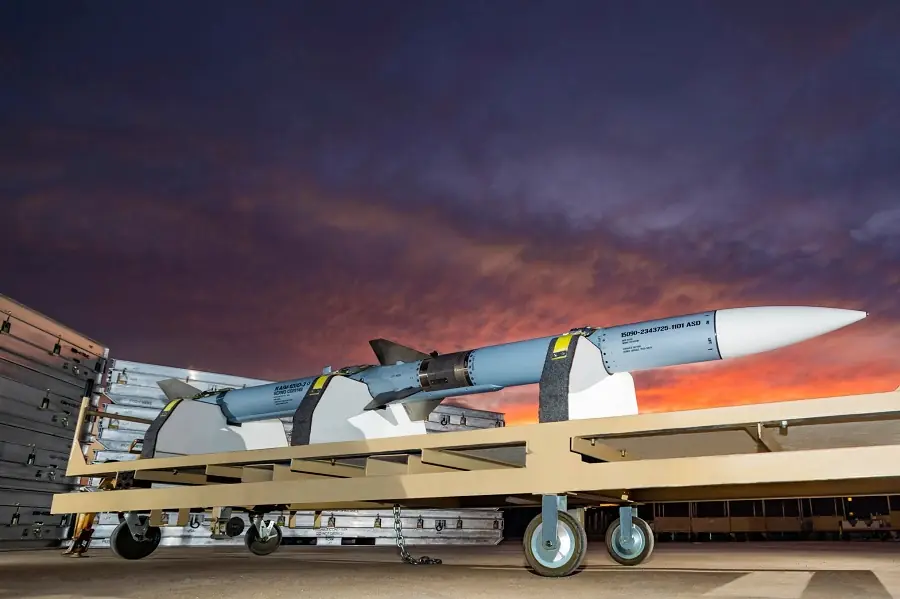
Measuring approximately 3.65 meters in length and weighing around 162 kilograms, the AIM-120D-3 is powered by a solid-fuel rocket motor that pushes it to speeds near Mach 4.
It carries a 20–23 kilogram fragmentation warhead designed to destroy both maneuvering aircraft and larger airborne targets.
Since its introduction in the early 1990s, the AMRAAM has become the standard BVR air-to-air weapon for the U.S. and allied nations, replacing the AIM-7 Sparrow.
The D variant launched in the 2010s represented a leap forward in range and effectiveness, and the D-3 continues that evolution.
Importantly, AMRAAM is not confined to fighter aircraft — the missile also serves as the core interceptor for NASAMS (National Advanced Surface-to-Air Missile System), operated widely across NATO and notably deployed in Ukraine with reported interception success rates above 90 percent.
Even as the U.S. pursues the AIM-260 Joint Advanced Tactical Missile (JATM) for the next generation of long-range air combat, the AMRAAM remains in exceptionally high demand.
In 2024, the U.S. awarded Raytheon its largest-ever AMRAAM contract, Lot 38, which covered production for 19 customer nations.
By 2025, annual output had been boosted to 1,200 missiles, and further expansions are underway, with partner companies such as Nammo in Norway and Japanese industry contributing to rocket motor and licensed production.
Finland’s order underscores the continued relevance of the D-3 variant as NATO adapts to evolving regional threats.
The missile’s combination of high range, maneuverability, and adaptability ensures it will remain a crucial force multiplier for years, bridging the gap until newer systems like the AIM-260 reach broader allied service.
For Helsinki, the acquisition also provides strategic consistency. Operating AMRAAM both on its future F-35 fleet and within NASAMS batteries will streamline logistics and sustainment while reinforcing deterrence credibility.
By the end of this decade, Finland expects its air defenses to integrate stealth aircraft, precision-guided standoff munitions, and advanced BVR missiles — a clear overhaul designed to guarantee airspace control even in contested environments.