Follow Us:
Follow Us:

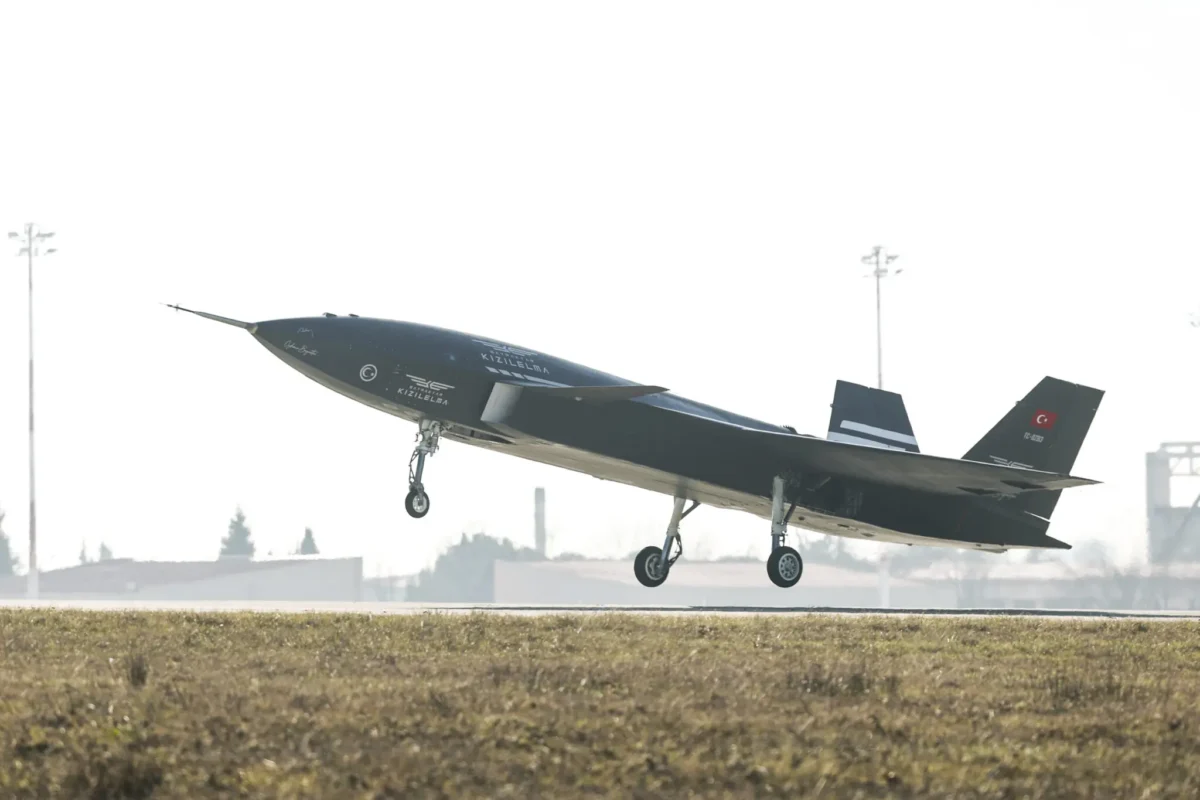
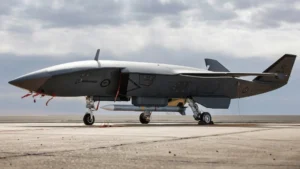
Defense Feeds – Baykar Kızılelma Combat Drone has officially entered mass production in Turkey, marking a major leap in the country’s defense industry.
Developed by Baykar Technologies, the next-generation unmanned combat aerial vehicle (UCAV) is designed as a multi-role platform capable of executing complex air-to-air and air-to-ground missions while strengthening Turkey’s long-term defense modernization goals.
Baykar’s chairman and chief technology officer, Selçuk Bayraktar, announced that the sixth prototype is already under assembly, signaling the program’s accelerated move from testing to serial manufacturing.
The Kızılelma conducted its maiden flight in December 2022 and continued to undergo upgrades, with a significant flight test earlier this year that validated improvements in avionics architecture and flight performance.
The company expects the combat drone to officially join the Turkish Armed Forces by 2026, adding a stealth-capable unmanned solution to Turkey’s growing aerial fleet.
The UCAV’s entry into serial production is viewed as not only a milestone for Turkey but also a groundbreaking development for the global UAV industry.
Bayraktar emphasized that with this achievement, Turkey has become the world’s first nation to initiate mass production of advanced unmanned combat aircraft while holding 65 percent of the global UAV market in 2025.
The milestone underscores Turkey’s determination to reduce dependence on foreign suppliers and expand its domestic production capabilities, especially in the field of next-generation aerial systems.
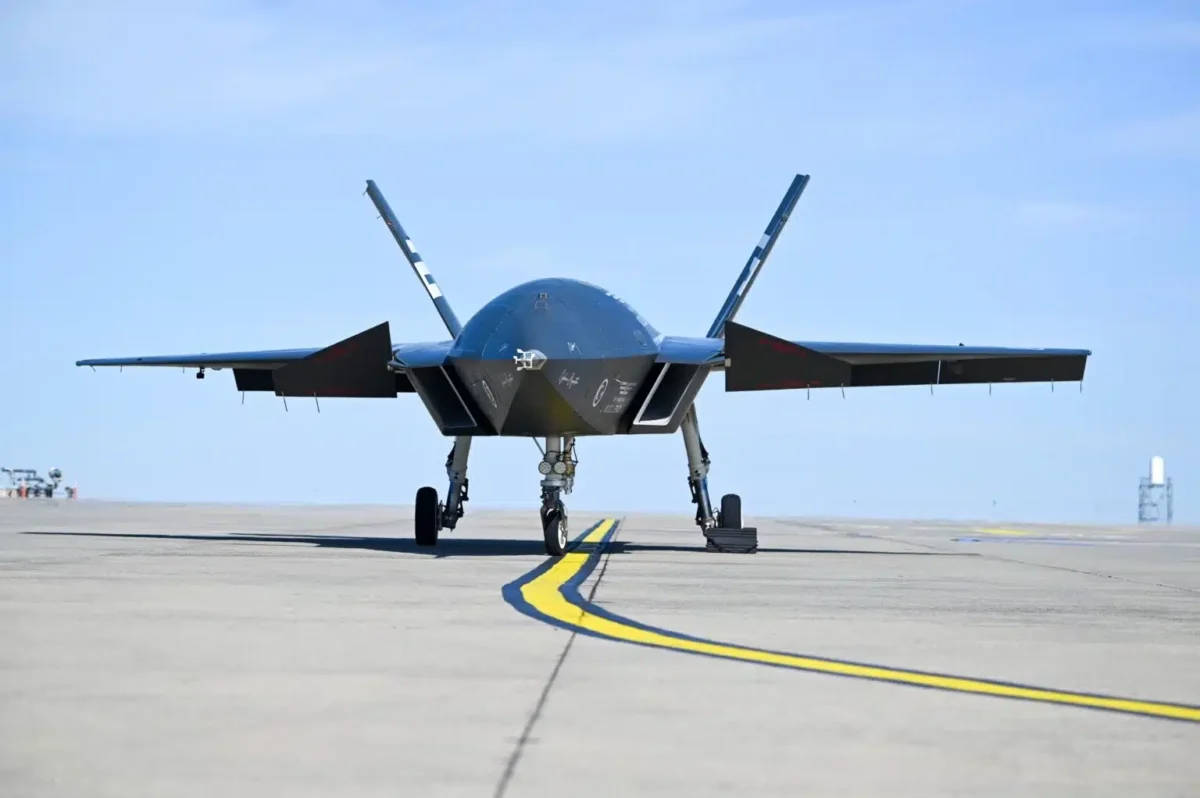
Designed to fill a capability gap between traditional drones and manned fighter aircraft, the Kızılelma UCAV combines stealth design, high payload flexibility, and multi-mission versatility.
Its sleek low-observable airframe reduces radar detectability, making it suitable for contested airspace environments.
Equipped with an advanced active electronically scanned array (AESA) radar system, the UCAV can track and engage multiple threats simultaneously, significantly enhancing Turkey’s aerial combat reach.
The combat drone is powered by a modified AI-322F turbojet engine originally developed in Ukraine.
This engine gives the aircraft a cruising speed of Mach 0.6 with the ability to push up to Mach 0.9.
While slower than fifth-generation fighter jets, the speed is considered optimal for long endurance missions without compromising stealth and payload capacity.
Kızılelma boasts a combat radius of around 500 nautical miles (926 kilometers), enabling it to conduct operations far beyond Turkey’s borders.
It can reach a service ceiling of 25,000 feet and sustain flights for over three hours at a time.
With a payload capacity of 1,500 kilograms, the UCAV can carry a diverse range of precision-guided munitions, including laser-guided bombs, standoff cruise missiles, and potentially air-to-air weapons.
Importantly, the Kızılelma has been engineered for short takeoff and landing operations, allowing integration with Turkey’s first light aircraft carrier, TCG Anadolu.
This carrier-based capability adds a naval strike dimension to the UCAV’s role, extending its operational flexibility in regional and overseas deployments.
The deployment of the Kızılelma marks a strategic leap for Ankara’s defense ambitions. Turkey has already established itself as one of the leading players in the global UAV market, with its Bayraktar TB2 drones achieving combat-proven status in multiple conflicts including Libya, Syria, and Ukraine.
However, the Kızılelma represents a much higher tier of unmanned combat capability that edges closer to the role traditionally reserved for manned fighter aircraft.
Defense analysts argue that the Kızılelma is part of Ankara’s broader strategy to create an independent defense ecosystem while reducing barriers posed by export restrictions on Western technology.
By investing in indigenous design and integrating foreign components, particularly Ukrainian engine technology, Turkey has managed to bridge gaps in propulsion systems while ensuring technological growth at home.
The UCAV’s versatility makes it not only a critical asset for national defense but also a promising export product.
In recent years, Baykar drones have attracted significant overseas demand, with several countries in Europe, Africa, and Asia showing interest in acquiring Turkish UAVs.
The Kızılelma may soon follow the same trajectory, solidifying Turkey’s defense export leadership.
Analysts also highlight the symbolic timing of the drone’s production, as regional security challenges continue to intensify.
With NATO realignments, tensions in the Black Sea, and instability in the Middle East, the Kızılelma provides Ankara with enhanced deterrence and operational flexibility.
Its ability to operate from land bases as well as the TCG Anadolu extends its value in power projection across both Europe and the Eastern Mediterranean.
The UCAV’s introduction could shift the balance of unmanned capabilities, setting a precedent for future airpower development.
While the United States and China are pursuing advanced stealth drones, Turkey has become the first to announce and implement serial production, positioning itself as a serious contender in the UAV arms race.