Follow Us:

Follow Us:

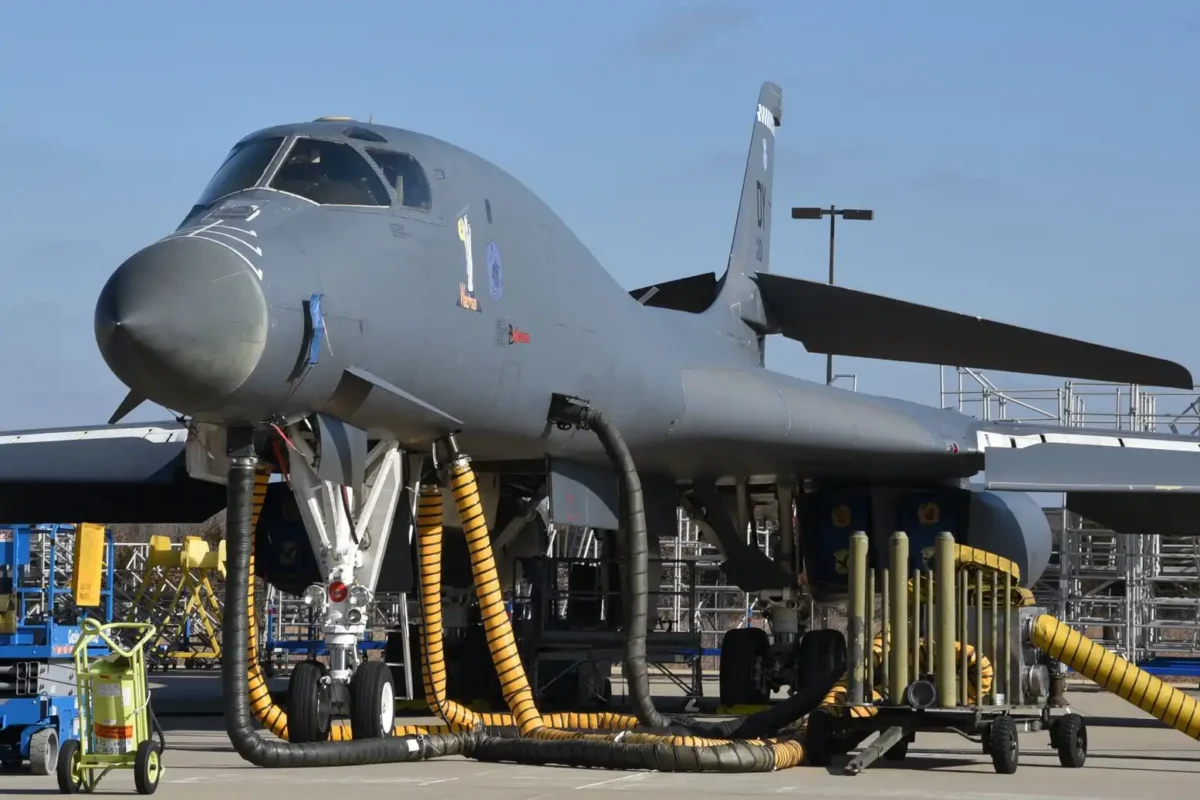
Defense Feeds, Edwards Air Force Base – The B-1B LRASM integration has officially entered operational service, giving the U.S. Air Force a significantly stronger long-range maritime strike capability at a time when naval competition is becoming an increasingly important part of military planning.
By certifying the Long Range Anti-Ship Missile (LRASM) on the B-1B Lancer, the Air Force has transformed one of its most capable conventional bombers into a platform designed not only to attack targets on land but also to threaten hostile warships hundreds of kilometers from the coastline.
For years, the B-1B has served as the Air Force’s largest conventional payload carrier. Now, with LRASM fully integrated, the aircraft is positioned to play a much larger role in joint maritime operations, particularly across the vast distances of the Indo-Pacific.
The B-1B LRASM integration represents another step in the Lancer’s steady evolution. Originally designed during the Cold War as a strategic nuclear bomber, the aircraft has spent much of the past two decades conducting conventional strike missions in conflicts ranging from Afghanistan to the Middle East.
Today’s security environment demands something different. Rather than focusing exclusively on fixed targets ashore, military planners increasingly need aircraft capable of challenging heavily defended naval forces operating far from friendly bases.
Integrating LRASM answers that requirement.
Unlike many legacy anti-ship weapons, LRASM was built to survive in contested environments where satellite navigation may be disrupted and electronic warfare is widespread. The missile combines passive sensors, autonomous target recognition and advanced mission planning software, allowing it to identify and engage hostile ships with minimal reliance on external guidance after launch.
Completing the integration required extensive software validation, flight testing and compatibility assessments to ensure the bomber and missile could function together across a wide range of operational scenarios.
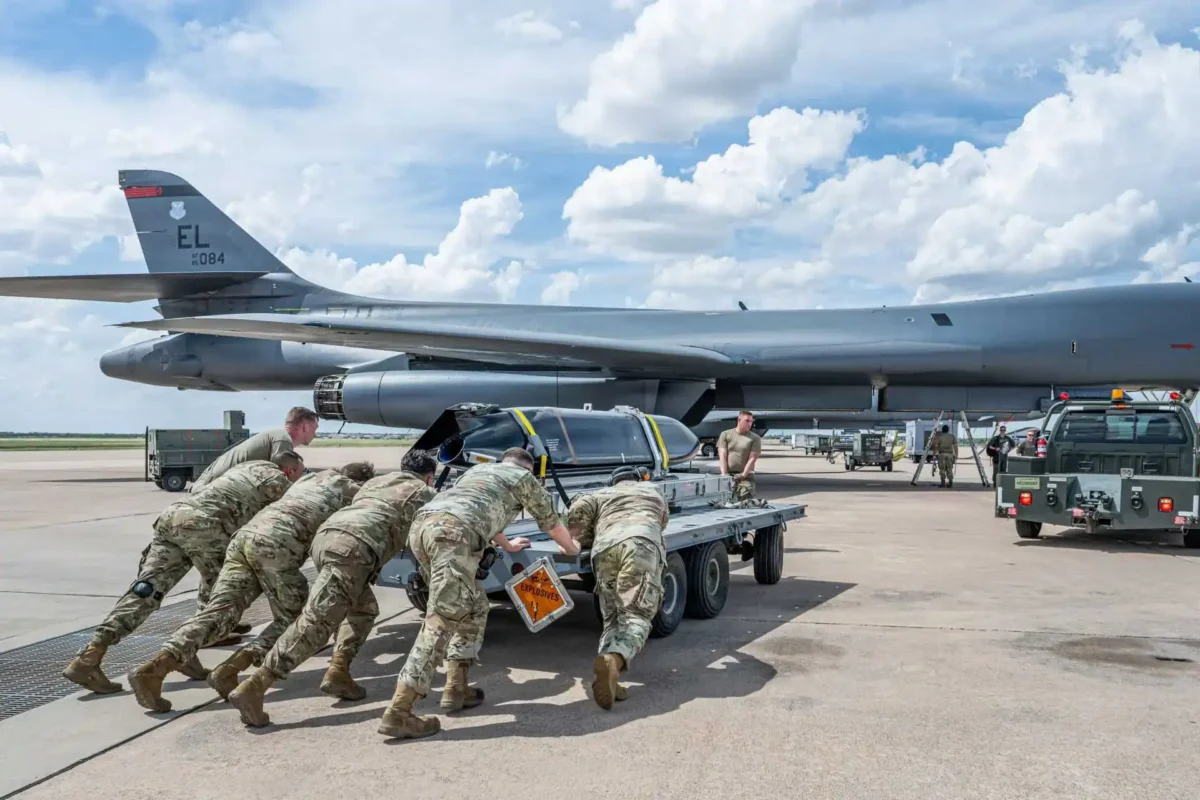
What makes this capability particularly valuable isn’t simply the missile itself—it’s the aircraft carrying it.
The B-1B can transport one of the largest conventional weapons loads in the U.S. Air Force inventory. Equipped with LRASM, a single bomber can threaten multiple surface combatants during one mission, creating operational challenges for opposing naval forces.
That changes the planning calculus for any fleet operating inside contested waters.
Instead of worrying only about submarines or carrier-based aircraft, naval commanders must also consider long-range bombers capable of launching precision weapons from well outside many ship-based air defense systems.
This stand-off approach reduces risk to aircrews while allowing commanders to hold high-value naval assets at risk across enormous distances. In regions such as the Pacific, where geography often determines military options, that added reach could prove particularly valuable.
The combination of endurance, payload capacity and advanced weapons also gives the Air Force greater flexibility during joint operations with the Navy, creating additional avenues for distributed maritime strikes.
The B-1B LRASM integration is part of a much broader modernization effort taking place across the U.S. military. Rather than waiting for entirely new aircraft to enter service, the Pentagon continues upgrading proven platforms with next-generation weapons that address emerging operational challenges.
That strategy is especially relevant as the Air Force prepares for the gradual arrival of the B-21 Raider. Although the stealth bomber will eventually assume many strategic missions, the B-1B remains an important part of the current bomber force and still offers capabilities that are difficult to replace quickly.
Military planners increasingly expect future conflicts to involve highly contested maritime environments where long-range precision weapons, distributed operations and rapid decision-making will determine operational success.
Adding LRASM to the B-1B directly supports that vision. It provides commanders with another option for projecting combat power without relying exclusively on carrier aviation or surface-launched missiles.
Just as importantly, the integration demonstrates how existing aircraft can remain operationally relevant through targeted modernization rather than wholesale replacement.
With the B-1B LRASM integration now complete, the Lancer enters the next stage of its service life with a mission profile that looks very different from the one envisioned decades ago. Instead of serving solely as a conventional strike bomber, it is becoming an increasingly important contributor to long-range maritime deterrence—an evolution that reflects the changing priorities of modern air and naval warfare.