Follow Us:
Follow Us:

Defense Feeds, Washington, D.C. – U.S. Army awards P550 eVTOL drone production contract, approving a $117 million agreement with AeroVironment for the first full-rate production of the company’s P550 unmanned aircraft system. The contract covers the delivery of 82 P550 eVTOL drones, marking the platform’s transition from testing and evaluation into operational procurement.
The award reflects the Army’s continued investment in autonomous aviation as it seeks to improve battlefield reconnaissance, logistics and mission flexibility through increasingly capable unmanned aircraft.
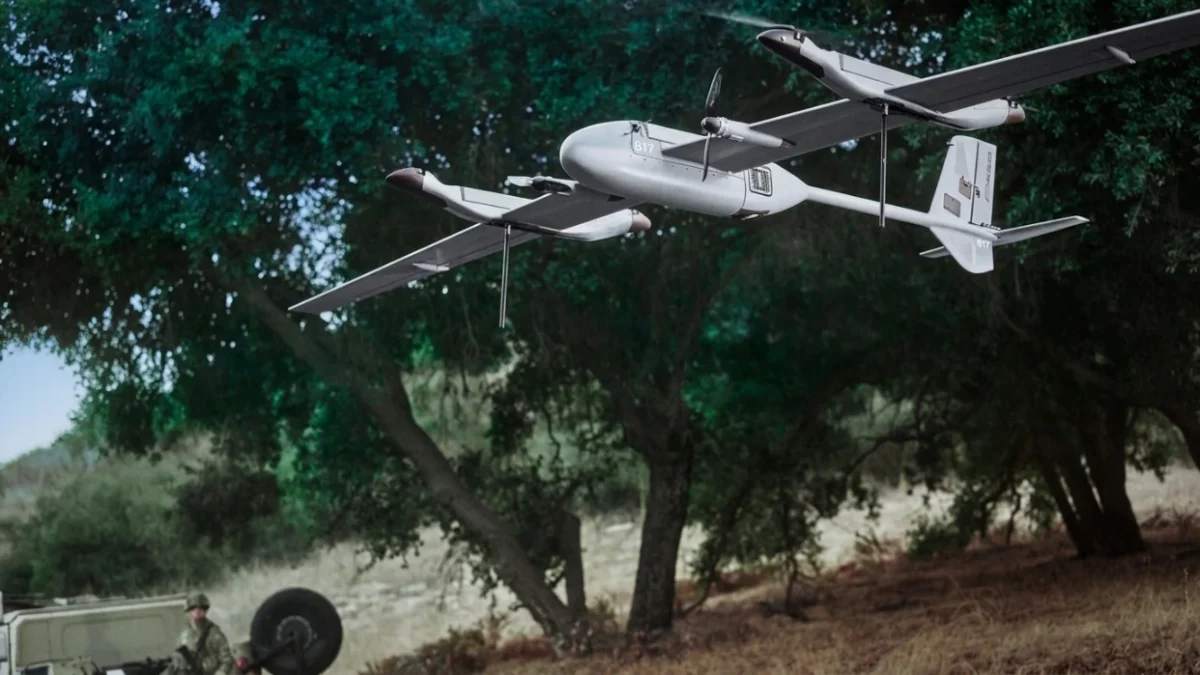
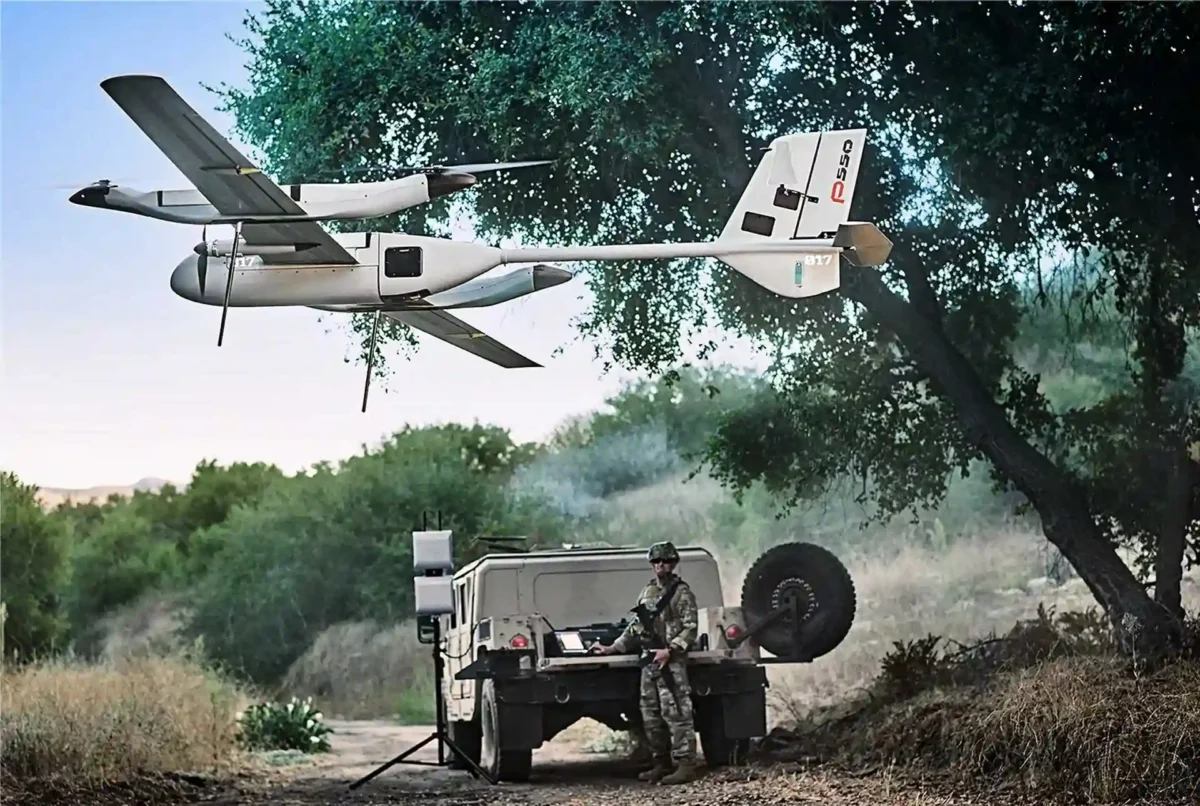
The decision in which the U.S. Army awards P550 eVTOL drone production contract represents an important milestone for AeroVironment’s P550 platform. Designed with electric vertical takeoff and landing (eVTOL) capability, the aircraft combines helicopter-like launch flexibility with the efficiency of fixed-wing flight, allowing it to operate without conventional runways while covering longer distances than many traditional multirotor drones.
Receiving the first full-rate production contract demonstrates that the platform has progressed beyond developmental testing and has met the Army’s requirements for operational fielding. The procurement includes not only aircraft but also associated equipment and support needed for deployment across Army units.
The P550’s modular architecture enables it to support multiple mission sets depending on payload configuration, including intelligence, surveillance, reconnaissance, communications support and cargo delivery. Its ability to launch from confined locations also increases operational flexibility for units operating in dispersed or infrastructure-limited environments.
Electric vertical takeoff and landing aircraft are becoming an increasingly important segment of military unmanned aviation. By combining vertical launch capability with efficient forward flight, these platforms offer commanders greater flexibility than systems limited to either rotary-wing or fixed-wing operations.
For tactical forces, eVTOL drones can be deployed rapidly from temporary bases, urban environments or rugged terrain where conventional runways are unavailable. Their adaptability makes them suitable for missions ranging from reconnaissance and battlefield observation to communications relay and logistical support.
The P550 program aligns with the Army’s broader effort to integrate autonomous aircraft into everyday operations while reducing the workload placed on crewed aviation assets. As battery technology, autonomous navigation and sensor integration continue to improve, eVTOL platforms are expected to play an increasingly prominent role across tactical formations.
The transition to full-rate production suggests confidence in the platform’s maturity and its ability to support operational requirements.
Another advantage of the P550’s eVTOL design is its ability to support operations in areas where traditional aviation infrastructure is unavailable or impractical. Units deployed in remote locations or rapidly changing operational environments can launch and recover the aircraft from confined spaces, reducing dependence on prepared airfields and increasing responsiveness during time-sensitive missions.
The move to full-rate production also provides the Army with an opportunity to standardize training, maintenance and sustainment procedures as the platform enters wider service. Establishing a stable production line can improve fleet availability, simplify logistics planning and create a foundation for future software and payload upgrades as mission requirements continue to evolve.
The announcement that the U.S. Army awards P550 eVTOL drone production contract reflects the growing emphasis on autonomous systems within the Army’s modernization strategy. Rather than replacing crewed aircraft, unmanned platforms are increasingly being used to complement existing capabilities by extending operational reach and improving battlefield awareness.
Investments in systems such as the P550 support the Army’s objective of building more distributed and resilient formations capable of operating across complex environments. Autonomous aircraft can provide persistent surveillance, transport critical supplies and relay communications while reducing risks to personnel.
The contract also reinforces AeroVironment’s position as a key supplier of tactical unmanned systems to the U.S. military. Moving into full-rate production provides a foundation for future capability enhancements and potential expansion into additional domestic and international programs.
The fact that the U.S. Army awards P550 eVTOL drone production contract highlights how autonomous aviation is moving from experimental programs to mainstream military procurement.
As operational concepts continue to evolve, eVTOL aircraft are expected to become an increasingly valuable component of future battlefield operations, offering commanders greater flexibility across reconnaissance, logistics and multi-domain missions.