Follow Us:
Follow Us:

Picture a place so vast that you could drive for miles without ever leaving its boundaries. There are Army installations in the United States that stretch across hundreds of thousands, even millions, of acres, with their own neighborhoods, airfields, hospitals, schools, training grounds, and enough infrastructure to resemble small cities. Calling them a simple “base” hardly does them justice.
When people search for the biggest Army Base in America, they’re often thinking about sheer size. But acreage tells only part of the story. A truly significant Army base is measured not just by the land it occupies, but by the soldiers it trains, the missions it supports, and the role it plays in protecting national security.
Some installations prepare elite airborne units for rapid deployment. Others test next-generation combat systems or coordinate massive logistics operations that keep military forces moving around the globe.
What’s fascinating is that no two major Army bases are built for exactly the same purpose. One may dominate in land area, providing endless space for live-fire exercises and armored maneuvers.
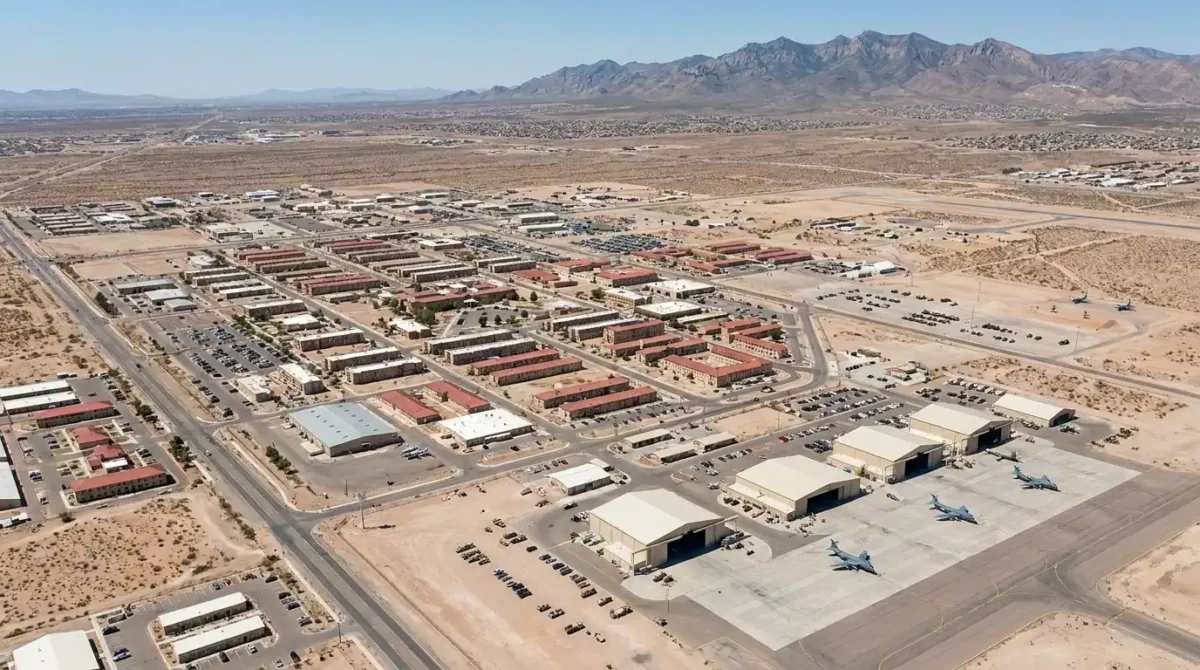
Another may be smaller on the map yet serve as the nerve center for some of the U.S. Army’s most critical operations. That’s why the phrase biggest Army base means more than just “largest”, it also reflects influence, capability, and strategic value.
In this post, you’ll discover the top five biggest Army bases in the United States, how they compare in size, what makes each one unique, and why they remain indispensable to America’s military readiness.
Before diving into the list, it’s worth answering one simple question: what actually makes a base the biggest Army base? It sounds straightforward, but the answer depends on which yardstick you’re using.
Some military installations dominate because they cover an enormous amount of land. Others stand out because they host tens of thousands of soldiers, civilians, and family members every day. A few manage to excel in both.
For this ranking, we didn’t rely on acreage alone. Instead, we looked at six factors that paint a much more complete picture of each installation’s importance.
First came land area. Large training ranges are essential for live-fire exercises, armored vehicle maneuvers, aviation operations, and realistic combat simulations. Bases like Fort Bliss have enough open space to support activities that simply wouldn’t fit elsewhere.
Next, we considered military population. An installation with thousands of active-duty soldiers, reserve personnel, civilian employees, contractors, and military families functions almost like a self-contained city. Population often reflects how central a base is to Army operations.
Read also: Top 5 Biggest US Military Bases in 2026: By Size, Troops & Impact
Mission also mattered. Some of the largest Army bases in America specialize in armored warfare, while others focus on airborne operations, air assault, logistics, or rapid global deployment. These unique missions determine how frequently a base supports real-world operations.
We also evaluated the presence of major commands and elite units, the scale of training facilities, and each installation’s long-term strategic value. Bases positioned near major transportation hubs, ports, or international deployment routes naturally play a bigger role in national defense.
Finally, we considered economic impact. The biggest Army base isn’t just a military asset, it can be the economic heartbeat of an entire region, generating billions of dollars in annual activity and supporting thousands of civilian jobs.
By combining size, personnel, mission, infrastructure, and strategic influence, this ranking goes beyond simple square mileage. It highlights the Army installations that aren’t just the biggest on a map, but the ones that matter most to the United States today.
When people ask, “What is the biggest Army Base in the U.S.?”, the answer is almost always Fort Bliss. Spanning roughly 1.12 million acres across western Texas and southern New Mexico, this military installation is so large that parts of it stretch into different states and ecosystems.
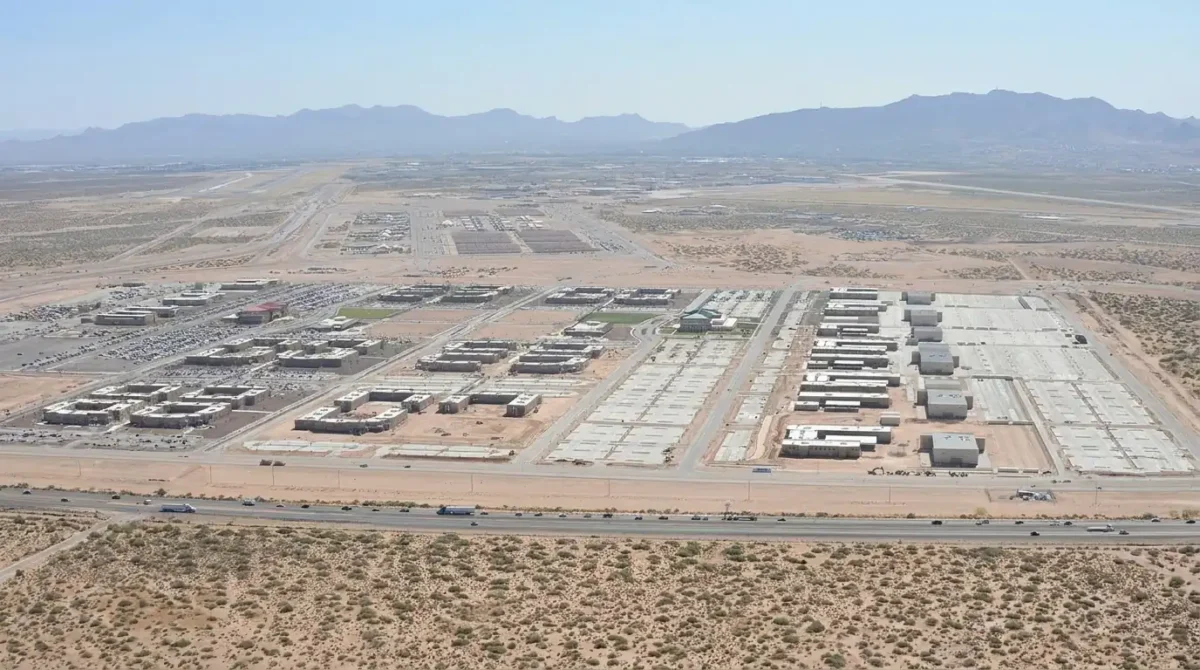
From rugged desert valleys to mountain terrain, it offers a training environment that closely resembles many of the regions where U.S. forces have operated over the past several decades.
But Fort Bliss is much more than a patch of vast desert. Think of it as a military city with a mission. Thousands of active-duty soldiers, civilian employees, contractors, and military families live and work here every day.
The installation features housing communities, medical facilities, schools, shopping centers, maintenance depots, airfields, and extensive logistics infrastructure, all designed to keep one of the Army’s busiest installations running around the clock.
| Feature | Details |
| Location | Texas and New Mexico |
| Approximate Size | 1.12 million acres |
| Primary Mission | Air defense, armored warfare, large-scale combat training |
| Major Units | 1st Armored Division, 32nd Army Air and Missile Defense Command |
| Known For | Largest Army installation by land area in the U.S. |
One reason Fort Bliss stands apart is its ability to support large-scale, realistic military exercises. Tank battalions can maneuver across expansive training ranges while artillery, helicopters, and air-defense units operate simultaneously, something that would be difficult at more compact installations.
This allows commanders to rehearse complex battlefield scenarios under conditions that closely mirror real-world operations.
The base also serves as a hub for air and missile defense, a mission that has become increasingly important as modern warfare evolves.
Soldiers stationed here train to detect, track, and defend against a wide range of aerial threats, making Fort Bliss a key contributor to the Army’s future readiness.
Perhaps the most impressive thing about Fort Bliss isn’t just its size, it’s what that size enables. The enormous training grounds give military planners room to test new equipment, refine tactics, and prepare entire brigades for deployment without compromising realism.
In many ways, Fort Bliss isn’t simply the biggest Army base in America; it’s one of the Army’s most versatile proving grounds, where today’s soldiers prepare for tomorrow’s challenges.
If Fort Bliss is known for its vast landscape, Fort Bragg has earned its reputation through speed, readiness, and global reach.
Covering approximately 251 square miles (about 161,000 acres) in North Carolina, it remains one of the most influential Army installations in the country.
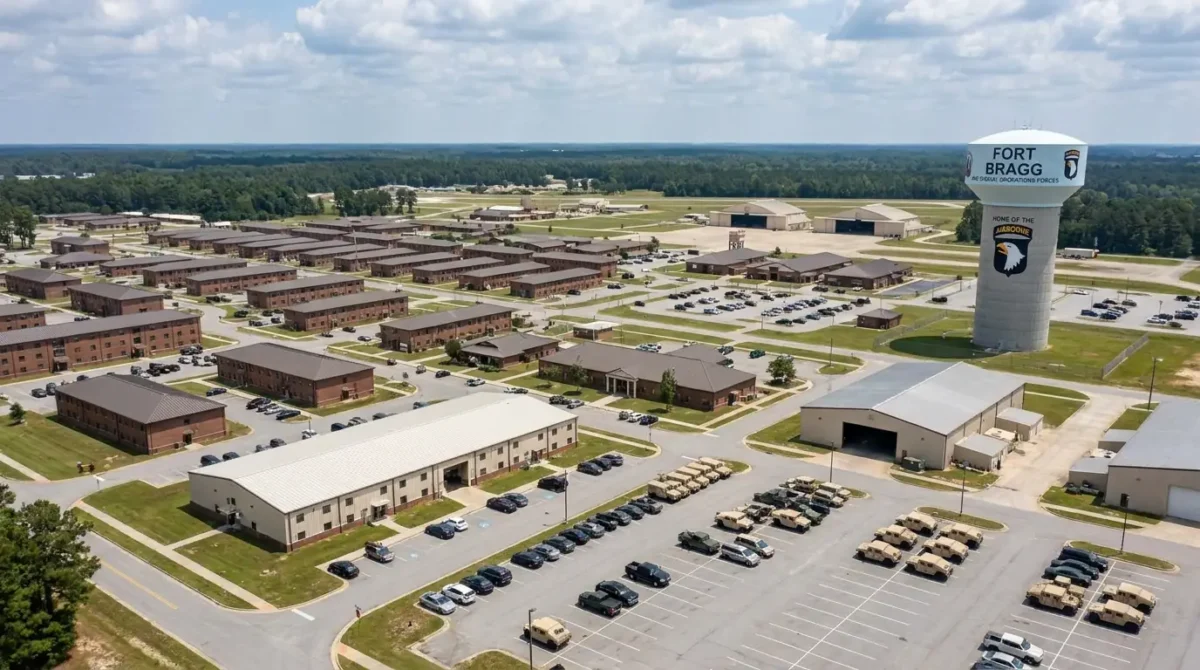
While it isn’t the largest Army base by acreage, few can match its concentration of elite combat units and its ability to project military power on short notice.
One of Fort Bragg’s defining characteristics is its role as the headquarters of the XVIII Airborne Corps and the legendary 82nd Airborne Division.
These forces are trained to deploy anywhere in the world within hours, whether the mission involves combat operations, disaster relief, humanitarian assistance, or emergency evacuations. That level of preparedness makes the installation a cornerstone of U.S. military strategy.
| Feature | Details |
| Location | North Carolina |
| Approximate Size | 251 square miles (161,000 acres) |
| Primary Mission | Airborne operations and rapid global deployment |
| Major Units | XVIII Airborne Corps, 82nd Airborne Division |
| Known For | Airborne readiness and expeditionary operations |
Life at Fort Bragg rarely slows down. Large-scale parachute jumps, helicopter exercises, convoy training, and command post simulations are part of the daily routine. The base’s location also provides access to extensive training areas and nearby airfields, allowing airborne units to practice realistic deployment scenarios throughout the year.
Another factor that sets Fort Bragg apart is its role in joint military operations. Army units stationed here regularly train alongside the Air Force, Marines, and allied forces from partner nations. These multinational exercises improve coordination and ensure troops are prepared to operate seamlessly during real-world missions.
Although Fort Bragg occupies only a fraction of the land area of Fort Bliss, its strategic value is immense. It serves as one of the Army’s primary launch points for crisis response, reinforcing allies, and supporting operations across Europe, the Middle East, Africa, and the Indo-Pacific.
Read also: US Military Bases in the Middle East: Map and Strategic Locations
In other words, when speed matters more than distance, Fort Bragg often becomes the first place the Army turns. That’s precisely why it remains one of the most important, and recognizable, Army installations in the United States.
When it comes to tanks, armored vehicles, and large-scale ground combat training, Fort Cavazos stands in a class of its own. Located in central Texas and covering approximately 214,000 acres, it is one of the biggest Army bases in the United States and a vital center for preparing heavy combat forces.
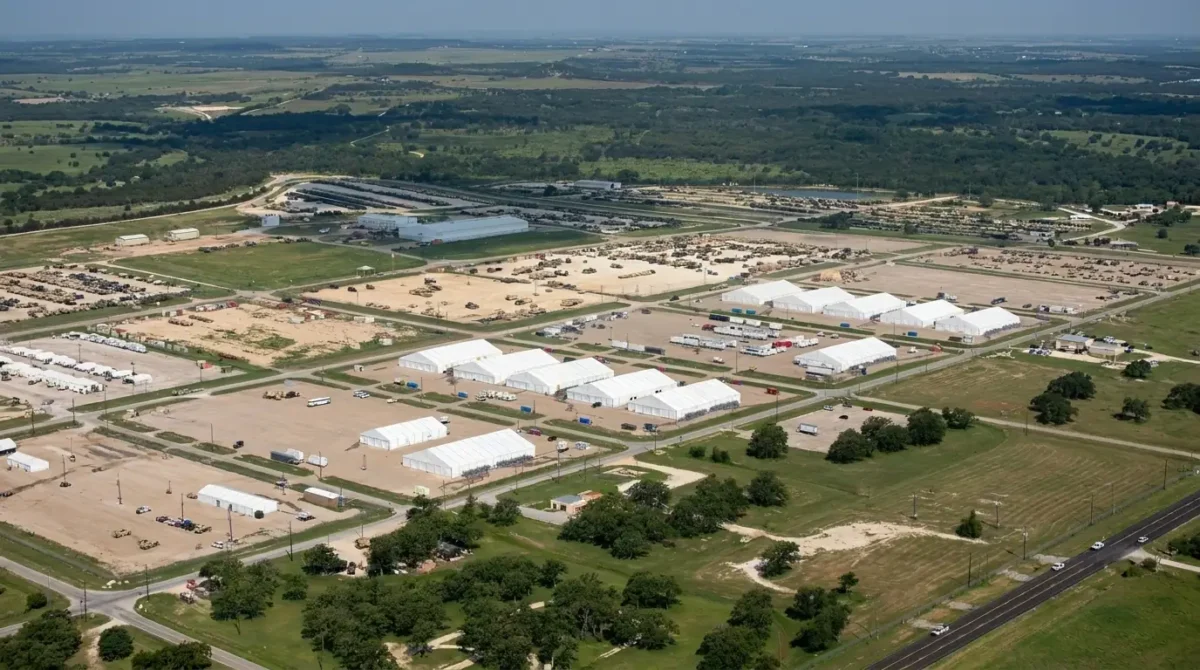
Although the installation was known for decades as Fort Hood, its mission has remained constant: building combat-ready units capable of deploying anywhere in the world.
The size of Fort Cavazos is no accident. Modern armored warfare demands room to move. Main battle tanks, infantry fighting vehicles, self-propelled artillery, and engineering equipment require expansive maneuver areas where crews can train under realistic battlefield conditions.
The installation’s extensive ranges allow entire brigades to conduct coordinated exercises that closely resemble real combat operations.
| Feature | Details |
| Location | Texas |
| Approximate Size | 214,000 acres |
| Primary Mission | Armored warfare and large-scale combat training |
| Major Units | III Armored Corps, 1st Cavalry Division |
| Known For | Heavy armored forces and operational readiness |
Fort Cavazos is home to the III Armored Corps, one of the Army’s principal operational headquarters. Alongside it is the renowned 1st Cavalry Division, a unit with a distinguished history dating back to the early 20th century.
Together, they oversee training that blends traditional battlefield skills with modern technologies, including unmanned systems, digital command networks, and advanced targeting capabilities.
One aspect that often goes unnoticed is the base’s enormous logistical operation. Preparing an armored brigade for deployment involves far more than training soldiers. Thousands of vehicles must be inspected, repaired, fueled, and transported. Ammunition, spare parts, medical supplies, and communications equipment all move through the installation in carefully coordinated cycles, making Fort Cavazos a logistical powerhouse as well as a combat training center.
As warfare continues to evolve, so does the installation. New simulation systems, upgraded ranges, and integrated training exercises are helping soldiers prepare for increasingly complex battlefields where drones, electronic warfare, and cyber operations work alongside traditional armored forces.
Fort Cavazos proves that being one of the largest Army bases in America isn’t simply about occupying a large footprint on the map. It’s about having the space, infrastructure, and expertise to transform thousands of soldiers into cohesive fighting forces capable of responding to global challenges at a moment’s notice.
Perched in the Pacific Northwest, Joint Base Lewis-McChord (JBLM) occupies a uniquely strategic position among the biggest Army bases in the United States.
Covering more than 414,000 acres of training land and facilities, the installation combines Army and Air Force operations under one command, creating a level of coordination that’s difficult to replicate elsewhere. That joint structure isn’t just efficient, it reflects how modern military operations are increasingly conducted across multiple service branches.
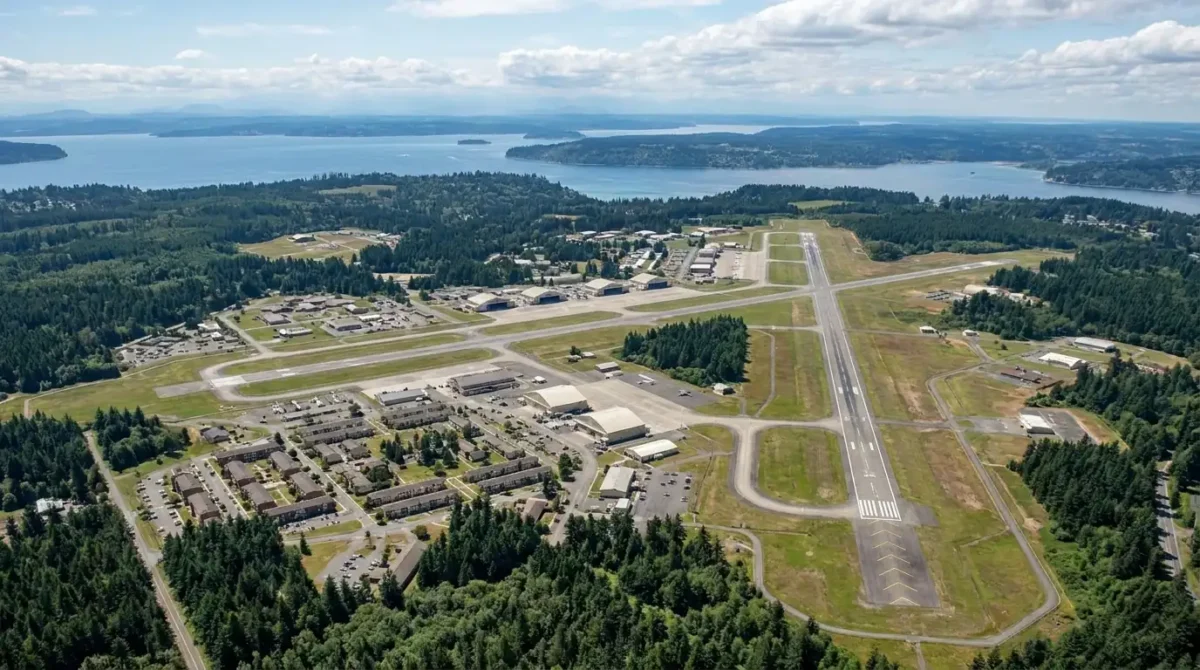
Geography is one of JBLM’s greatest strengths. Located near the Port of Tacoma, major rail lines, interstate highways, and international airports, the base can rapidly move troops and equipment across the Pacific.
In an era when the Indo-Pacific region has become a central focus of U.S. defense strategy, that location gives the installation exceptional operational value.
| Feature | Details |
| Location | Washington |
| Approximate Size | 414,000+ acres |
| Primary Mission | Joint operations, logistics, and Indo-Pacific readiness |
| Major Units | I Corps, 7th Infantry Division |
| Known For | Army-Air Force integration and strategic Pacific access |
Unlike installations that specialize in a single combat role, JBLM supports a wide spectrum of missions. Soldiers train for infantry operations, logistics, aviation support, disaster response, and multinational exercises with allies from countries such as Japan, South Korea, Australia, and Canada. These partnerships strengthen interoperability, an essential advantage when coalition forces operate together during crises.
The installation is also home to I Corps, a headquarters responsible for planning and coordinating large-scale operations. Rather than focusing solely on tactical training, I Corps oversees missions that involve multiple divisions, allied militaries, and joint forces. It’s a reminder that successful military campaigns depend as much on planning and coordination as they do on battlefield skill.
What makes JBLM especially valuable is its flexibility. One week, soldiers may be conducting live-fire exercises in forested training areas. The next, they could be preparing humanitarian assistance missions or participating in multinational drills designed to improve regional stability.
Among the largest Army bases in America, Joint Base Lewis-McChord stands out not because it has the most tanks or the largest population, but because it connects people, equipment, and strategy.
In many ways, it’s the bridge between America’s military strength at home and its commitments across the Pacific, making it one of the country’s most strategically important installations.
Straddling the Kentucky–Tennessee border, Fort Campbell may be the smallest installation on this list by land area, but don’t let that fool you. Covering roughly 105,000 acres, it has earned a reputation far bigger than its footprint.
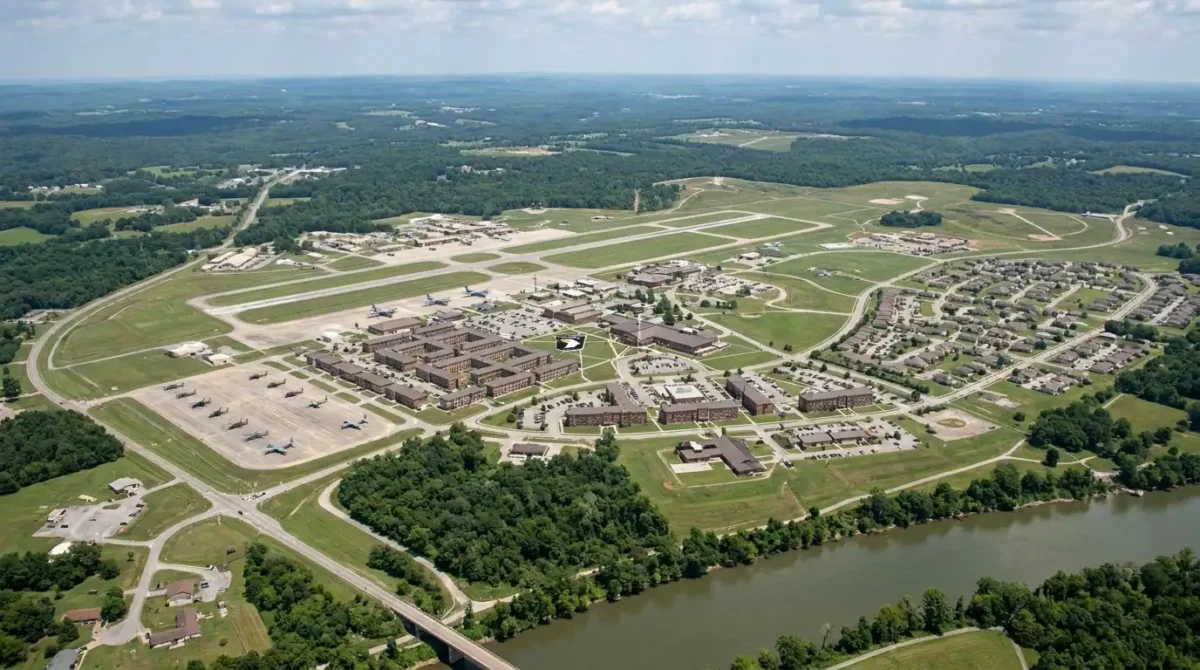
The base is internationally recognized as the home of the 101st Airborne Division (Air Assault), one of the U.S. Army’s most decorated and rapidly deployable combat divisions.
Unlike traditional airborne units that parachute into combat, the 101st specializes in air assault operations. Helicopters, not parachutes, are the stars of the show here.
Soldiers train to move quickly across the battlefield using helicopters to insert troops, deliver supplies, evacuate casualties, and launch surprise attacks. That ability to move with speed and precision has made Fort Campbell a cornerstone of modern Army doctrine.
| Feature | Details |
| Location | Kentucky and Tennessee |
| Approximate Size | 105,000 acres |
| Primary Mission | Air assault operations and expeditionary warfare |
| Major Units | 101st Airborne Division (Air Assault) |
| Known For | Helicopter-based combat operations and rapid deployment |
A typical training day at Fort Campbell is anything but ordinary. Helicopters thunder overhead while soldiers practice fast-rope insertions, sling-load operations, and coordinated assaults on mock objectives. These exercises are designed to replicate the unpredictable nature of modern combat, where speed and adaptability often determine success.
Beyond combat readiness, Fort Campbell has played a major role in humanitarian missions and disaster response. Units based here have supported evacuation efforts, delivered emergency aid after natural disasters, and assisted allies during international crises. The same mobility that makes the division effective in combat also allows it to respond quickly when lives are at stake.
Another defining feature of Fort Campbell is its strong military community. Decades of service have shaped nearby towns, creating close ties between local residents and military families. Businesses, schools, healthcare providers, and community organizations have grown alongside the installation, making it an integral part of the region’s identity.
While it may not claim the title of the biggest Army base by acreage, Fort Campbell proves that influence isn’t measured only in square miles. Its unmatched expertise in air assault operations, rapid response capabilities, and history of distinguished service ensure it remains one of the most respected and strategically valuable Army installations in the United States.
One of the biggest misconceptions about the biggest Army base in the United States is that the largest installation must also have the most soldiers. In reality, those are two completely different measurements.
Think of it like comparing a national park to a bustling city. A national park may cover an enormous area with relatively few people, while a city can hold millions of residents within a much smaller footprint.
Army installations work in much the same way. Some need vast open ranges for artillery, tanks, missile testing, and aviation exercises. Others prioritize command centers, housing, medical facilities, and operational headquarters, allowing them to support a much larger daily population.
The distinction matters because a base’s mission often determines whether it needs more land or more people.
| Army Base | Approx. Land Area | Estimated Military Population* | Largest By |
| Fort Bliss | ~1.12 million acres | 30,000+ | Land area |
| Fort Bragg | ~161,000 acres | 50,000+ | Active-duty personnel |
| Fort Cavazos | ~214,000 acres | 35,000+ | Armored operations |
| Joint Base Lewis-McChord | 414,000+ acres | 40,000+ | Joint operations |
| Fort Campbell | ~105,000 acres | 30,000+ | Air assault capability |
This comparison reveals an interesting pattern. Fort Bliss dominates in sheer size, offering enough space for extensive live-fire exercises and large-scale maneuver training. Meanwhile, Fort Bragg supports one of the Army’s largest concentrations of active-duty personnel because of its role as a hub for airborne and expeditionary forces.
Another factor is infrastructure. A base with more soldiers requires additional housing, schools, hospitals, fitness centers, maintenance facilities, and administrative offices. By contrast, an installation with fewer personnel may dedicate much of its land to training ranges, restricted airspace, and conservation areas.
So, if someone asks, “What’s the biggest Army base?” the best answer is another question: Biggest by what measure? If you’re talking about acreage, Fort Bliss leads by a wide margin. If you’re referring to the number of soldiers and operational activity, Fort Bragg consistently ranks among the busiest.
Looking at both metrics together provides a much more accurate understanding of the Army’s largest and most important installations.