Follow Us:
Follow Us:

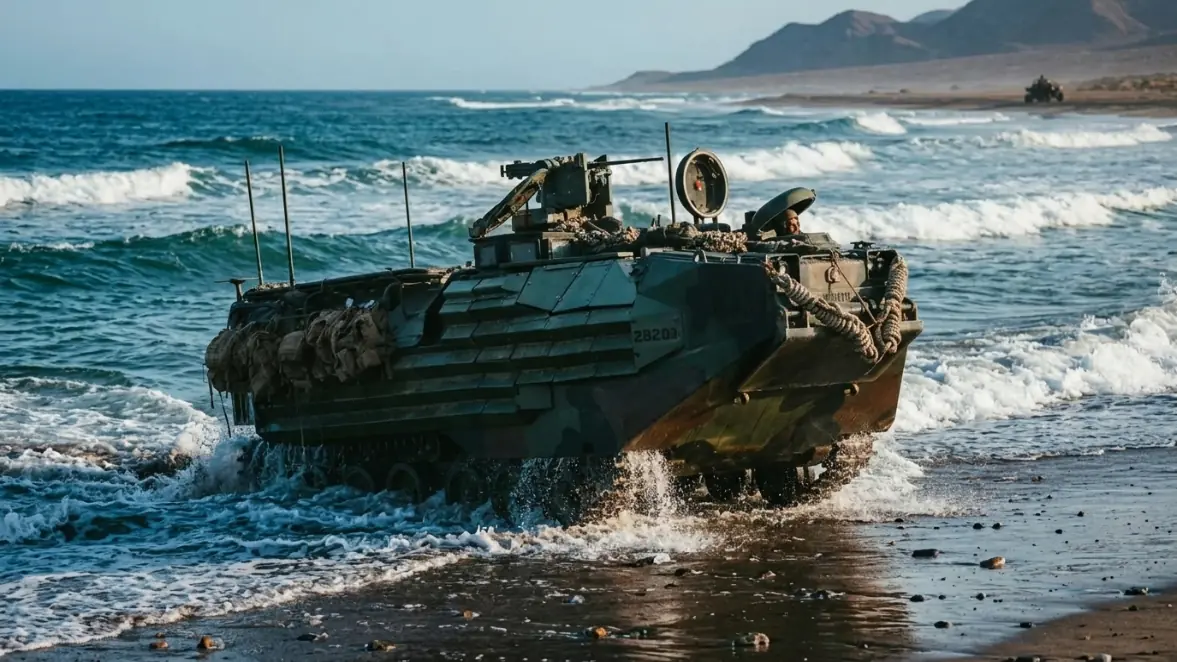
Defense Feeds – Rome. The Italy Moves to Acquire Retired U.S. Marine Corps AAVs program highlights Rome’s ongoing efforts to enhance amphibious warfare capabilities as European militaries continue adapting to evolving security challenges across the Mediterranean and NATO’s southern flank.
Italy is seeking to purchase retired Amphibious Assault Vehicles (AAVs) formerly operated by the U.S. Marine Corps through a Foreign Military Sales (FMS) arrangement valued at approximately $30 million. The proposed acquisition would provide the Italian Armed Forces with additional armored amphibious transport capabilities while supporting future expeditionary and maritime operations.
The move comes as NATO members increasingly focus on improving rapid deployment forces capable of operating across coastal, littoral and amphibious environments. For Italy, whose strategic position places it at the center of the Mediterranean, maintaining strong amphibious capabilities remains an important element of national defense planning.
Military analysts view the potential acquisition as a practical and cost-effective way to reinforce operational readiness while extending the service life of proven military platforms.
The Amphibious Assault Vehicle has served as one of the most recognizable platforms within the U.S. Marine Corps for decades.
Designed to transport troops from ships directly to shore, the vehicle combines armored protection with amphibious mobility, allowing forces to conduct beach landings and coastal operations while maintaining combat effectiveness. The platform has participated in numerous military operations and exercises worldwide, establishing a long operational record across diverse environments.
Although the U.S. Marine Corps is gradually replacing older AAVs with newer systems such as the Amphibious Combat Vehicle, many of the retired vehicles remain capable of supporting military operations after refurbishment and modernization.
For Italy, acquiring former Marine Corps vehicles could provide a relatively quick method of increasing amphibious transport capacity without the lengthy timelines associated with developing or purchasing entirely new platforms.
Defense experts note that proven military equipment often remains attractive to allied nations due to established maintenance procedures, available spare parts and extensive operational experience.
The acquisition would also complement Italy’s existing naval infantry and amphibious warfare forces, helping support missions ranging from military operations to humanitarian assistance and disaster response.
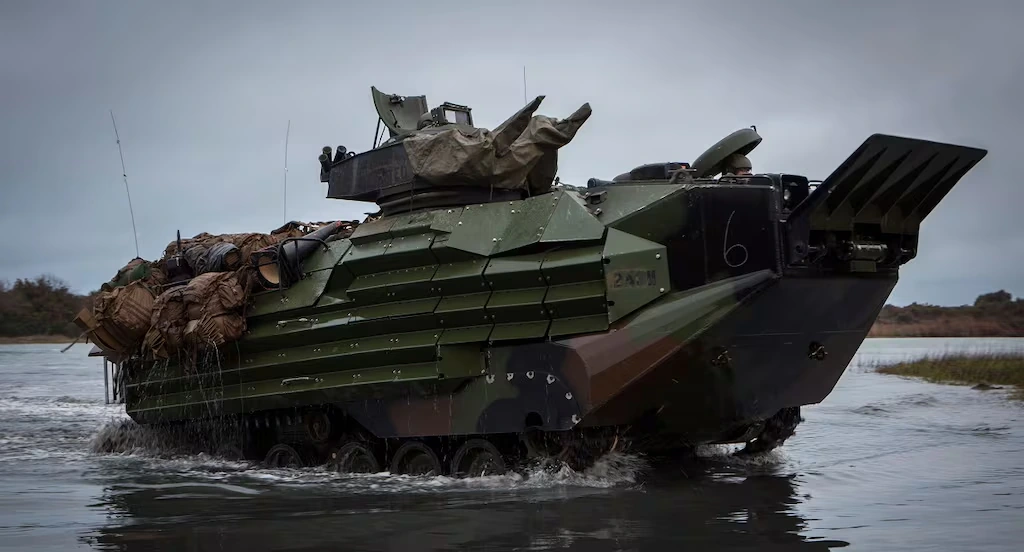
Italy’s interest in additional amphibious vehicles reflects broader regional security considerations.
The Mediterranean remains a strategically important region where military forces must be prepared to respond to a variety of challenges, including regional instability, maritime security threats and potential crisis-response operations. Amphibious forces provide governments with flexible options for deploying personnel and equipment rapidly across coastal environments.
Italian defense planners have consistently emphasized the importance of maintaining expeditionary capabilities capable of supporting both national and alliance missions. Amphibious platforms play a central role in that strategy because they enable forces to project power from the sea while maintaining mobility and protection.
The proposed purchase also aligns with NATO’s continuing focus on readiness and interoperability among allied militaries. Equipment acquired through U.S. Foreign Military Sales programs often facilitates closer operational cooperation by ensuring compatibility with American systems and procedures.
Military observers note that amphibious operations remain relevant despite rapid advances in missile technology, drones and precision-guided weapons. Modern armed forces still require the ability to move troops and equipment from sea to shore under a variety of operational scenarios.
As a result, many NATO countries continue investing in amphibious platforms even as they modernize other areas of their military forces.
The potential transfer of retired U.S. Marine Corps AAVs highlights a common approach used by allied nations seeking to strengthen military capabilities efficiently.
Rather than waiting years for new production programs, countries often acquire proven equipment from partners as an interim or supplementary solution. Such transfers can significantly reduce costs while accelerating force modernization efforts.
For Italy, the acquisition could provide valuable operational flexibility at a time when defense budgets across Europe are increasingly focused on readiness, sustainability and capability expansion.
The broader geopolitical environment is also encouraging European nations to reassess military requirements. Russia’s war in Ukraine and growing instability in several regions have reinforced the need for adaptable forces capable of responding to a wide range of contingencies.
Amphibious units remain particularly useful because they can support combat operations, evacuation missions, humanitarian assistance and disaster relief efforts. Their versatility makes them an important asset for countries with significant maritime interests.
If approved, the AAV purchase would strengthen Italy’s ability to conduct amphibious operations while reinforcing defense cooperation with the United States. More broadly, the deal reflects how NATO allies continue leveraging existing military resources to improve readiness and address emerging security challenges in an increasingly complex strategic environment.