Follow Us:

Follow Us:

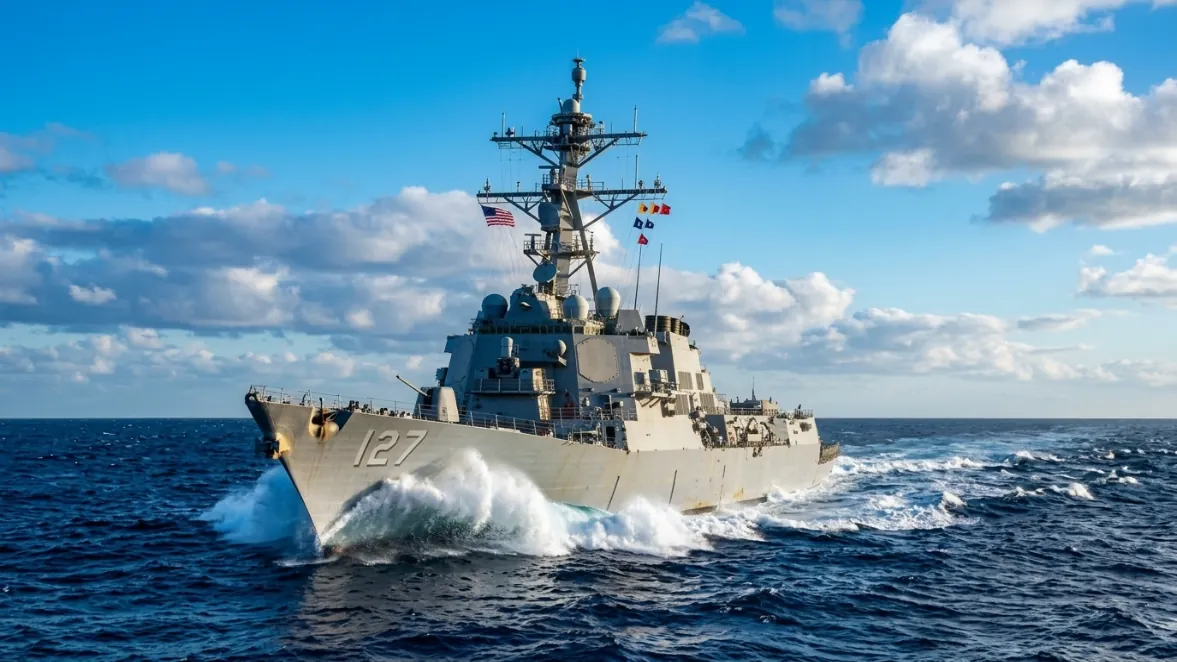
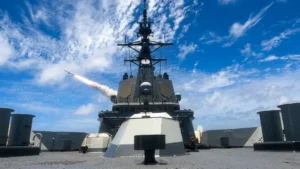
Defense Feeds – Pascagoula, Mississippi. The USS Patrick Gallagher Joins Fleet as Final Flight IIA Destroyer milestone marks the conclusion of a major chapter in U.S. Navy surface warfare modernization as the service prepares to transition toward more advanced variants of its proven Arleigh Burke-class destroyer fleet.
The U.S. Navy has officially taken delivery of USS Patrick Gallagher (DDG-127), the last Flight IIA destroyer to be built under the long-running Arleigh Burke-class program. Constructed by HII Ingalls Shipbuilding, the warship represents the final vessel in a production line that has served as the backbone of American naval power for decades.
Named in honor of Marine Corps Lance Corporal Patrick Gallagher, who was posthumously awarded the Navy Cross for his actions during the Vietnam War, the destroyer enters service at a time when the Navy faces increasing demands across the Indo-Pacific, Europe and the Middle East.
Military analysts view the ship’s delivery as both an operational boost and a symbolic transition point as the Navy shifts attention toward newer Flight III destroyers equipped with enhanced radar and missile defense capabilities.
The Flight IIA variant played a critical role in expanding the capabilities of the Arleigh Burke-class fleet. Introduced as an evolution of earlier destroyer designs, the ships incorporated significant upgrades including aviation facilities capable of supporting embarked helicopters, improved command systems and enhanced multi-mission flexibility.
Over the years, Flight IIA destroyers have participated in missile defense operations, maritime security missions, carrier strike group deployments and combat operations around the world. Their versatility has made them one of the most heavily utilized classes of warships in the U.S. Navy.
The USS Patrick Gallagher continues that legacy. Like its sister ships, the destroyer is equipped to conduct anti-air warfare, anti-submarine warfare, anti-surface warfare and ballistic missile defense missions.
Defense experts note that the Arleigh Burke-class has proven remarkably adaptable despite entering service more than three decades ago. Continuous modernization has allowed the platform to remain relevant against emerging threats while supporting evolving naval doctrine.
The completion of DDG-127 effectively closes the Flight IIA production era while preserving a design that remains central to American maritime strategy.
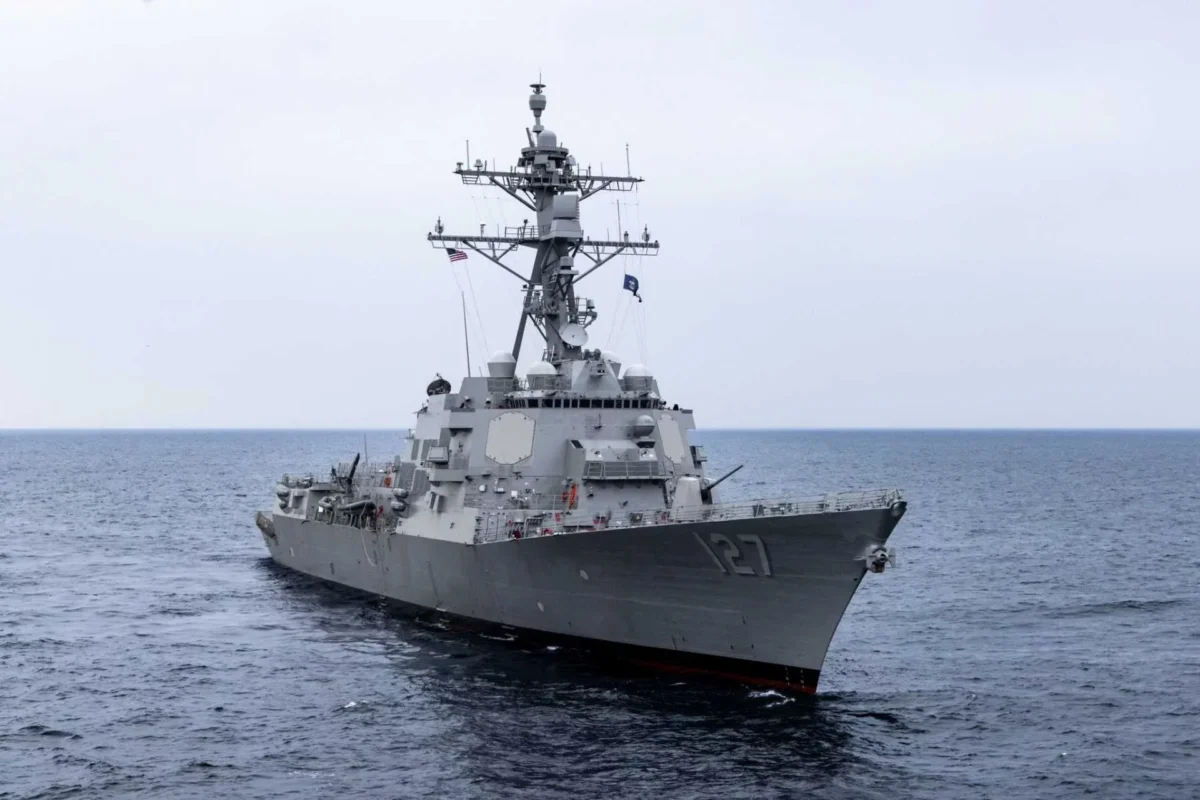
With the delivery of USS Patrick Gallagher, the Navy’s destroyer procurement strategy is increasingly centered on the newer Flight III configuration.
The Flight III variant introduces substantial technological improvements, most notably the AN/SPY-6 radar system, which significantly enhances the fleet’s ability to detect and track advanced airborne and missile threats. These upgrades are intended to strengthen integrated air and missile defense capabilities as adversaries field more sophisticated weapons.
The transition reflects broader changes in naval warfare. Modern warships must contend with hypersonic missiles, long-range precision strike systems, drones and increasingly capable electronic warfare threats. As a result, sensors and networked combat systems are becoming just as important as traditional firepower.
The U.S. Navy sees Flight III destroyers as a critical component of future fleet architecture, particularly in regions where missile defense and situational awareness are essential.
Despite the focus on newer variants, Flight IIA ships will continue serving alongside Flight III vessels for decades. Together, they will form the core of the Navy’s destroyer force as older cruisers gradually leave service.
Military planners expect these warships to remain heavily involved in Indo-Pacific operations, where maintaining maritime superiority remains a top strategic priority.
The delivery of USS Patrick Gallagher arrives during a period of intense naval competition and fleet modernization among major powers.
China continues expanding the capabilities of the People’s Liberation Army Navy, while Russia maintains investments in submarines, missile systems and surface combatants. These developments are driving continued U.S. efforts to modernize both existing fleets and future force structures.
Destroyers remain among the most important assets in that strategy. Their ability to perform multiple mission sets while integrating with carrier strike groups, amphibious forces and allied navies makes them indispensable to modern naval operations.
The USS Patrick Gallagher also highlights the enduring importance of America’s shipbuilding industry in supporting national defense requirements. Maintaining a steady pipeline of advanced warships remains critical as the Navy balances current operational commitments with future modernization goals.
As the final Flight IIA destroyer enters service, it closes a successful chapter in U.S. naval history while paving the way for the next generation of surface combatants. For the Navy, the delivery represents both a celebration of a proven design and a reminder that maritime competition continues to evolve, demanding constant innovation and readiness.