Follow Us:
Follow Us:

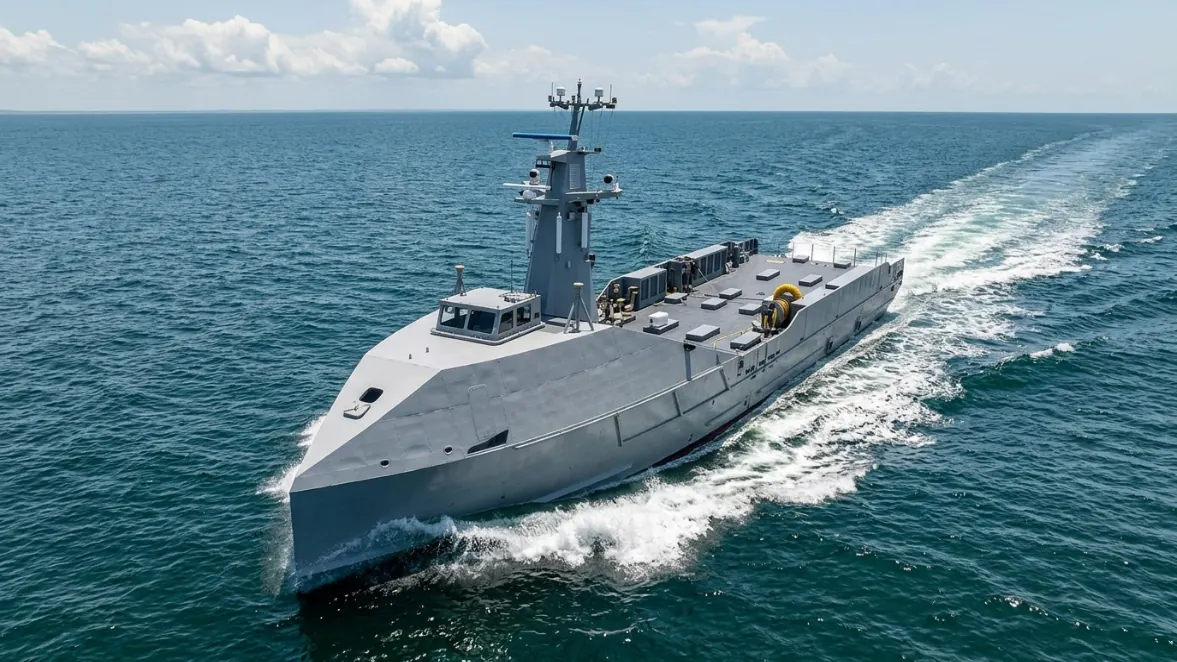
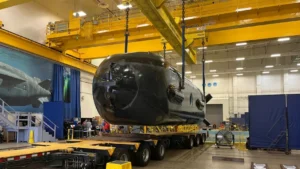
Defense Feeds – Washington. The U.S. Navy Prepares Marauder MR-001 Drone Vessel for Sea Trials milestone marks another significant step in the service’s effort to integrate autonomous platforms into future maritime operations as the Pentagon accelerates development of unmanned naval technologies.
The Marauder MR-001 Medium Unmanned Surface Vessel (MUSV) is scheduled to begin sea trials as part of a broader U.S. Navy initiative aimed at evaluating how autonomous ships can support future fleet operations. The upcoming tests are expected to provide valuable insights into the vessel’s performance, operational reliability and potential role within an increasingly networked naval force.
As global naval competition intensifies, particularly in the Indo-Pacific, military planners are placing greater emphasis on unmanned systems capable of conducting surveillance, reconnaissance and support missions without exposing sailors to direct danger.
The Marauder program reflects the Navy’s long-term vision of combining traditional warships with autonomous platforms to create a more flexible and resilient force structure. Defense analysts believe the sea trials could help shape future procurement decisions as the Navy continues refining its approach to unmanned maritime warfare.
The Marauder MR-001 belongs to a growing category of Medium Unmanned Surface Vessels being developed to support a wide range of military missions.
Unlike traditional crewed ships, the vessel is designed to operate with a high degree of autonomy while remaining integrated into broader naval command networks. Such platforms can perform intelligence gathering, maritime surveillance, communications relay and other support functions while reducing risks to personnel.
The upcoming sea trials are expected to evaluate navigation systems, endurance, autonomous control technologies and overall operational effectiveness in realistic maritime conditions. These assessments are considered essential before any future decisions regarding larger-scale deployment or procurement.
Military officials increasingly view autonomous vessels as force multipliers capable of extending fleet reach without requiring the manpower associated with conventional warships. The ability to deploy unmanned platforms across vast maritime areas is particularly attractive in regions where persistent monitoring and situational awareness are critical.
The Navy has spent years experimenting with unmanned surface vessels of various sizes, seeking to determine how they can best complement destroyers, cruisers and other major fleet assets.
The Marauder program represents part of that ongoing effort to transition autonomous technologies from experimental concepts into practical operational tools.
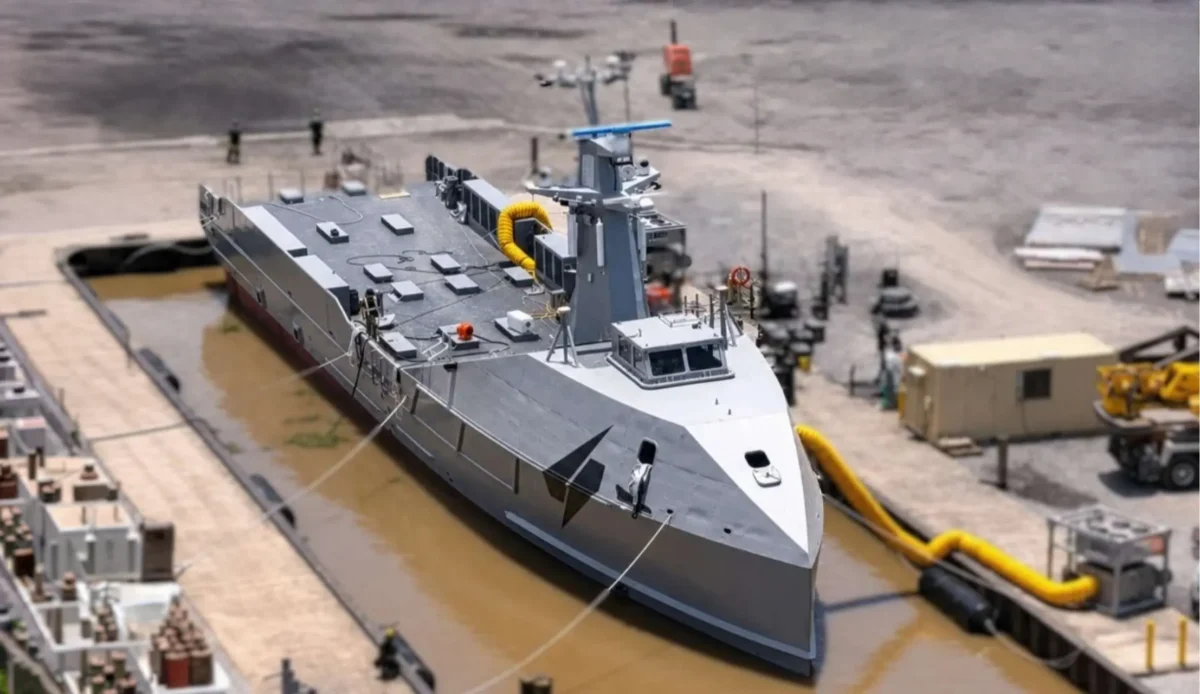
The rise of autonomous maritime systems is closely tied to evolving strategic challenges in the Indo-Pacific region.
The United States faces increasing competition from the growing capabilities of the People’s Liberation Army Navy, which has expanded rapidly over the past decade through the introduction of new warships, submarines and missile systems. Maintaining awareness across such a vast maritime theater requires significant resources and persistent surveillance capabilities.
Unmanned surface vessels offer a potential solution by allowing commanders to monitor large areas without committing high-value crewed ships to every mission. These platforms can gather information, support targeting networks and help create a more distributed operational posture.
Military planners also see autonomous systems as a way to complicate adversary targeting efforts. A fleet composed of both crewed and uncrewed vessels presents a more complex challenge for opponents attempting to track and engage naval forces during a conflict.
The Navy’s growing investment in unmanned platforms aligns with broader defense initiatives focused on artificial intelligence, distributed operations and advanced networking technologies.
Analysts note that future maritime competition is likely to depend not only on the size of fleets but also on how effectively autonomous systems can be integrated into operational planning.
The forthcoming Marauder sea trials arrive at a time when the Navy is actively reassessing the composition of its future force structure.
Traditional warships remain indispensable for many missions, but budget pressures, manpower challenges and technological advances are encouraging greater exploration of autonomous alternatives. Unmanned vessels may help fill capability gaps while providing additional flexibility for commanders operating in contested environments.
The lessons learned from the Marauder MR-001 program could influence future decisions regarding procurement, doctrine and operational concepts. Successful testing would strengthen arguments for expanding the role of autonomous vessels across the fleet, while also helping identify areas requiring further development.
Challenges remain, including cybersecurity concerns, communications reliability and the need to ensure autonomous systems can operate effectively under contested conditions. Nevertheless, military officials continue to view unmanned technologies as an increasingly important component of future naval operations.
For the U.S. Navy, the Marauder MR-001 represents more than a technology demonstrator. It is part of a broader effort to define how autonomous platforms will contribute to maritime power in the decades ahead.
As sea trials begin, defense planners and industry observers alike will be watching closely. The results could help shape the next generation of naval warfare and determine how unmanned vessels fit into the future structure of the world’s most powerful navy.