Follow Us:
Follow Us:

When the USS Enterprise (CVN-65) first joined the U.S. Navy in 1961, it marked a turning point. Sailors quickly nicknamed it the “Big E,” and the name stuck, partly because nothing else looked or operated quite like it.
This was the world’s first nuclear-powered aircraft carrier, and for a while, the largest ship ever built. Instead of depending on fuel oil like every other carrier before it, the Enterprise ran on eight A2W nuclear reactors. That setup gave it something unheard of at the time; the ability to stay at sea for years without refueling.
The Enterprise wasn’t part of a class; it was a one-off experiment that ended up defining what came next. Later designs borrowed its ideas, but the CVN-65 always stood apart.

Across five decades of service, the Big E showed up almost everywhere: the Cuban Missile Crisis, Vietnam, the Persian Gulf, Afghanistan. It became a symbol of American reach. Even in retirement, it still carries that aura of something ahead of its time.
When the Enterprise first took to sea, it was proof that the Navy was stepping into a different era. Up until then, carriers lived and died by their fuel supply. But this one? It didn’t need to stop for gas. With its eight A2W nuclear reactors, the Enterprise could sail for years at a time, limited mostly by the crew’s endurance and the food on board. That kind of freedom changed how navies thought about range, speed, and presence.
Being the first nuclear-powered aircraft carrier made the Big E a statement as much as a ship. During the Cold War, that mattered. The U.S. suddenly had a floating airbase that could circle the globe without depending on refueling tankers or friendly ports. It gave Washington a tool to project power almost anywhere, quietly but unmistakably.
You could say the Enterprise made a name for itself almost immediately. Around 1962, it was involved in the Cuban Missile Crisis. It was one of those moments when the world seemed to hang by a thread. It’s hard to imagine now, but back then, sailors were part of a blockade that could have turned global very quickly.
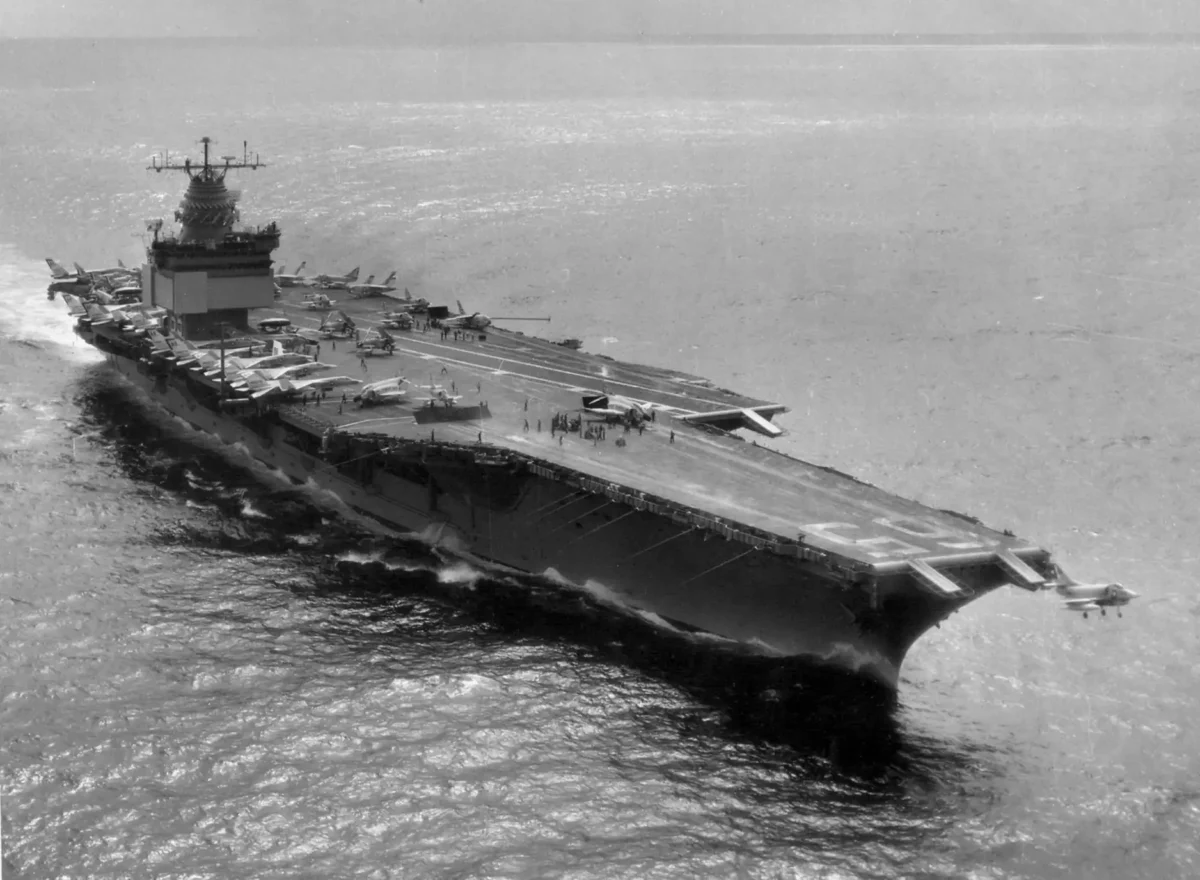
Soon after, the ship was heading into Vietnam. Imagine standing on that deck, watching jets take off into the Gulf of Tonkin, day after day. Over time, the Big E seemed to be everywhere: the Persian Gulf, the Middle East, even after 9/11. It didn’t just carry planes; it carried stories, lessons, and a reputation.
For those who served on her, it wasn’t just another ship. Maybe it was the size, maybe it was the nuclear power, maybe just being the first of its kind, whatever it was, the Enterprise felt like a legend under your feet. Even now, with newer carriers taking the stage, you can still see her influence in every launch, every flight deck, every sailor’s story.
What really made the Enterprise stand out wasn’t just the size of the flight deck or the number of planes on board. It was what was happening below the deck. Most carriers at the time were still running on oil, but the Big E had eight nuclear reactors tucked into its hull, which sounds like a lot and it was.
Today’s nuclear carriers manage with just two, but back then the Navy was still figuring out the right balance between power, safety, and performance. Those reactors gave the ship an almost endless range; it could cruise for years without refueling. For a Cold War Navy that wanted to stay ready anywhere on the planet, that was a game-changer.
The flight deck seemed almost endless, stretching roughly a thousand feet and able to hold what felt like dozens of aircraft, from heavier bombers to smaller fighters.
The island, the tall control tower on the starboard side, was set farther back than usual, creating more space for operations. It wasn’t perfect, and coordinating so many planes must have been complicated, but every design choice seemed aimed at keeping operations smooth, fast, and continuous.
Throughout its service, the Enterprise relied on a mix of missiles, guns, and radar, all of which were upgraded over time.
Later improvements added digital combat systems and communication links, connecting it more seamlessly with other units. Many of the practices seen on modern carriers, from energy management to flight deck coordination, can be traced back to the Big E’s early, sometimes daring, design choices.
| Category | Details |
| Class | Enterprise-class (unique, no sister ships) |
| Type | Nuclear-powered aircraft carrier |
| Commissioned | November 25, 1961 |
| Decommissioned | February 3, 2017 |
| Displacement | Approx. 94,000 tons (full load) |
| Length | 1,123 ft (342 m) — the longest naval vessel ever built |
| Beam (Width) | 132 ft (40 m) at waterline |
| Draft | 39 ft (12 m) |
| Propulsion | Eight × A2W nuclear reactors powering four shafts |
| Speed | Over 33 knots (≈ 61 km/h) — remarkably fast for its size |
| Aircraft Capacity | Around 85–90 aircraft |
| Crew | About 4,600 (when fully staffed) |
When the Enterprise hit the water, it was the largest and fastest warship on Earth, and those records held for decades. Its 33-knot top speed was unheard of for something that weighed nearly 100,000 tons. That speed, combined with nuclear endurance, meant it could sprint anywhere in the world without ever stopping to refuel. It was a strategic advantage for the U.S. Navy that it leaned on throughout the Cold War.
Read also: USS Abraham Lincoln (CVN-72): Capabilities, Missions, and Tech
Sailors called it a “floating city,” and that wasn’t an exaggeration. With nearly 5,000 people on board, the Enterprise had its own post office, barber shop, dentist, chapel, and even a newspaper called The Big E News. The ship made its own fresh water and electricity, and its kitchens served thousands of meals a day.
But with that size came complexity. Moving from one end to the other could take half an hour, and finding your way around the maze-like interior was a skill in itself.
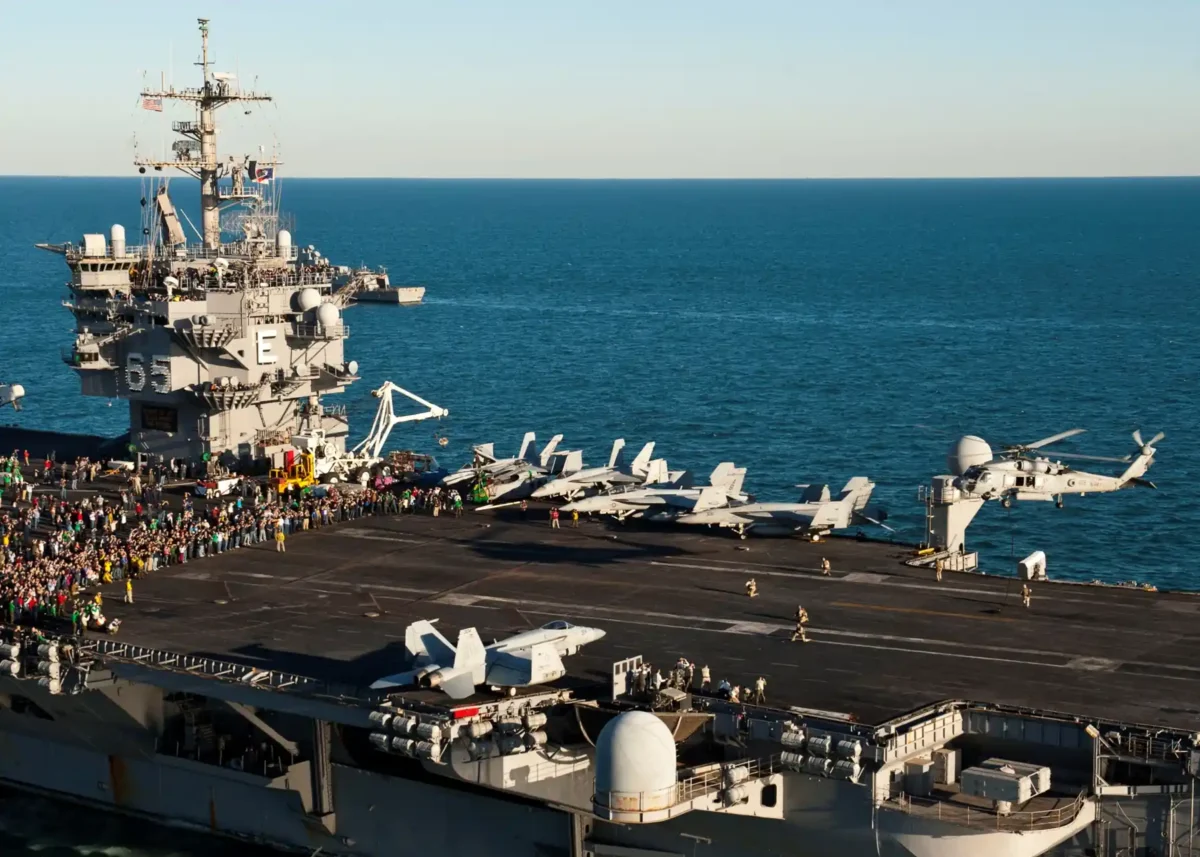
The nuclear systems demanded constant vigilance, and the crew underwent some of the Navy’s most rigorous training. Reactor specialists had to manage everything from radiation safety to electrical output, one wrong reading could mean a full systems check.
Those familiar with the Enterprise sometimes describe it less as a ship and more as a milestone. Reports suggest that roughly 4,500 people were on board at any one time, managing daily life alongside constant flight operations. Its scale and technological achievements, including what were reportedly eight nuclear reactors, gave the ship a reputation that extended beyond mere numbers, influencing generations of sailors and earning it the nickname “Big E.”
When people talk about the Enterprise, they often bring up its long and busy career. Back in 1962, during the Cuban Missile Crisis, the ship was part of the naval presence off Cuba, keeping a close eye on Soviet ships, at least that’s what reports from the time suggest. A few years later, it seems it was the first nuclear-powered carrier to send aircraft into combat over Vietnam.
Through the 1980s and 1990s, the Enterprise kept showing up where it was needed; missions over Lebanon, Libya, and Iraq are all mentioned in crew recollections, including the Desert Fox operation in 1998. After 2001, it was reportedly among the first carriers launching strikes against the Taliban.
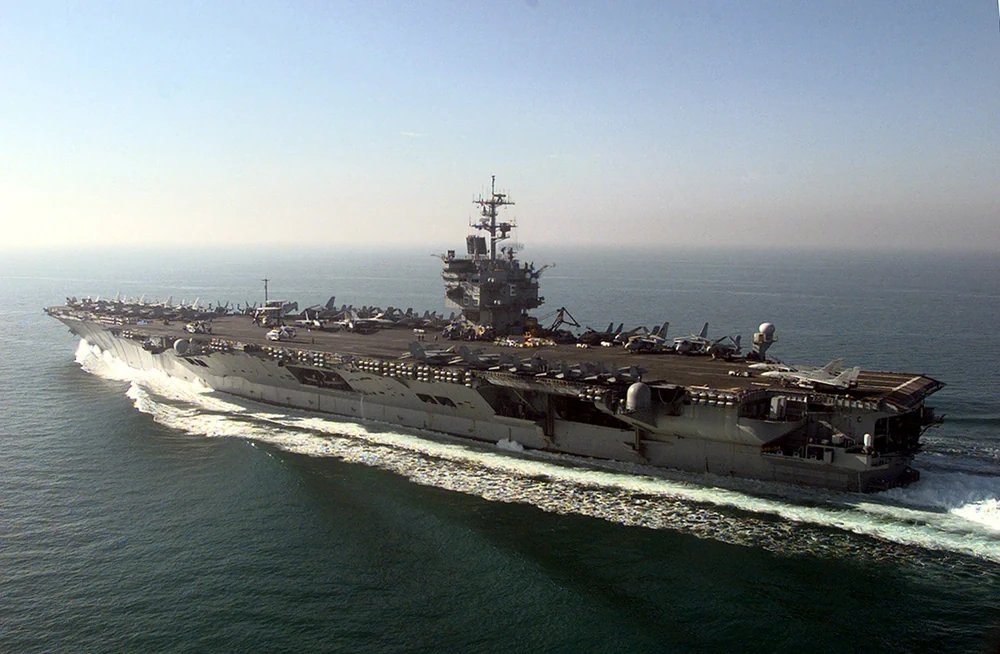
Not everything went smoothly. In 1969, there was a fire caused by a rocket accident that sadly killed about two dozen sailors and damaged part of the flight deck. Crew stories often recall how tense that period was, but the Enterprise returned to duty and kept going for decades, earning a reputation for resilience along the way.
Over more than fifty years of service, the Enterprise seemed to gather stories wherever she went. Sailors often joked that every bulkhead had a tale, and from what veterans recall, that wasn’t far from the truth.
One story that comes up often dates back to 1962, on one of the ship’s early major voyages. Apparently, the Enterprise drew global attention when President John F. Kennedy came aboard to watch flight operations. Crew members at the time remember it as a mix of excitement and nerves. He was fascinated by how a 90,000-ton nuclear ship could handle jet launches with such precision. The crew later said Kennedy couldn’t stop asking technical questions, the kind that made even senior officers sweat a little.
During the Cuban Missile Crisis, the Enterprise was reportedly part of the naval line trying to keep Soviet ships from approaching Cuba. Crew members later described the decks as unusually quiet, with everyone aware that the situation could escalate at any moment. “You could hear the wind over the deck and that was it,” one veteran said years later. “No one knew if we’d be going home or straight into history.”
Back in 1969, the Enterprise faced a serious deck accident. Reports indicate that a rocket from an F-4 Phantom accidentally launched, triggering fires that the crew had to control. It looks like it took several hours to stabilize everything, and observers have suggested that moments like this demonstrated the real risks involved in running a ship of this size and complexity. They did survive, but 27 men lost their lives.
The Navy later called it one of the most heroic damage-control efforts ever recorded at sea. Even decades later, veterans who served on the Enterprise would still refer to that day simply as “the fire.”
Despite those somber moments, the ship also saw her fair share of light-hearted legends. During one deployment, the crew supposedly baked the world’s largest cake at sea for the carrier’s anniversary, big enough that they needed forklifts to move the layers.
On another occasion, sailors swore they saw a phantom figure wandering the hangar bay late at night. This story has become a running joke for years. Some said it was the spirit of a lost mechanic, others said it was just a guy on night shift who got too good at hiding.
Over the years, the Enterprise hosted a long list of famous faces. Bob Hope performed on deck for the troops in Vietnam, and in later decades, actors and politicians alike came aboard for tours. Even Tom Cruise’s crew visited during the making of Top Gun, drawing inspiration for the film’s carrier scenes (though they filmed mostly on other ships). Sailors loved to tease visiting celebrities by giving them temporary call signs like “Hollywood,” “Radar,” or “Doesn’t Know Port from Starboard.”
By the time it was decommissioned in 2017, the Enterprise had logged more than a million nautical miles, served in nearly every major U.S. conflict since the Cold War, and earned the nickname “The Big E.”
To this day, veterans still gather at reunions wearing “Big E” caps, swapping stories that grow a little taller each year. Maybe that’s fitting because for a ship that broke every record and changed how carriers were built, the line between myth and memory was always a little blurry.
The USS Enterprise, CVN-65, isn’t sailing anymore, but you can still see bits of it in the carriers today. Ships like the Nimitz and Ford classes borrowed some of the ideas first tested on her.

Back in the early ’60s, nuclear power on a carrier sounded almost impossible. People were worried it might be too expensive, or maybe it just wouldn’t work at all. And you can see why; eight reactors on one ship, that was unheard of.
But eight A2W reactors later, the Navy had a ship that could circle the globe without ever refueling. That single innovation completely changed how the Navy thought about range and endurance. Today’s carriers only need two reactors instead of eight, but the idea came straight from the Big E.
Its long service life also gave the Navy something you can’t design in a lab: experience. The Enterprise saw almost every kind of mission imaginable; Cold War patrols, Vietnam strikes, peacekeeping ops, and Middle East conflicts.
Each deployment taught lessons about maintenance, logistics, crew fatigue, and even shipboard culture. When the Navy began work on the Nimitz-class, it already had a blueprint of what to do and what to avoid. Thanks to the Enterprise’s long service record.
Even with all the advanced systems that came later, many who served still say the Big E had a spirit of its own. It might be because it broke new ground, or simply because so many people spent their best years serving on it. Even now, veterans talk about the Big E with a spark in their eyes.
When it was finally decommissioned in 2017, there was a real sense of the end of an era. Some of its parts were recycled into later carriers, and there’s talk of preserving sections for museums. It’s fitting, really, a ship that once symbolized the future now becoming part of history.
The Navy is already building a new USS Enterprise (CVN-80), the ninth ship to carry that name. It’ll have more automation, more advanced reactors, and technology that the original crew could barely imagine. But in a way, it’s all connected, every Enterprise has carried a piece of the last one forward.
She’s no longer cutting through the waves, but the Big E left something behind, not just technology, but a sense of pride. Everyone who served on her carries a piece of that story. For a vessel that began as an experiment, she ended up rewriting history.