Follow Us:
Follow Us:

Sweden started working on the Gripen back in the late 1970s with a simple goal in mind. It didn’t need the fastest jet or the one carrying the most weapons. It needed something it could build and maintain on its own.
The idea was about practicality and independence more than prestige. Decades later, that same thinking led to the Gripen E, the newest and most capable version in Saab’s lineup.
The first JAS 39 Gripen E flew in 2017, and Sweden started bringing it into service in 2023, with Brazil joining soon after. This model marks a clear step forward from the older ones. It has a more powerful engine, greater range, and a completely new radar and electronic warfare setup.
Saab describes it as a “smart fighter,” and while that term might sound a bit like marketing, it reflects a shift toward data fusion, network-centric operations, and adaptability.
The JAS 39 Gripen E hasn’t faced a major combat test yet, so its real-world record is still taking shape. Even so, some analysts think its design could make it one of the more balanced fighters flying today. It’s not in the same category as fifth-generation jets like the F-35, but it offers something different; solid capability at a much lower cost.
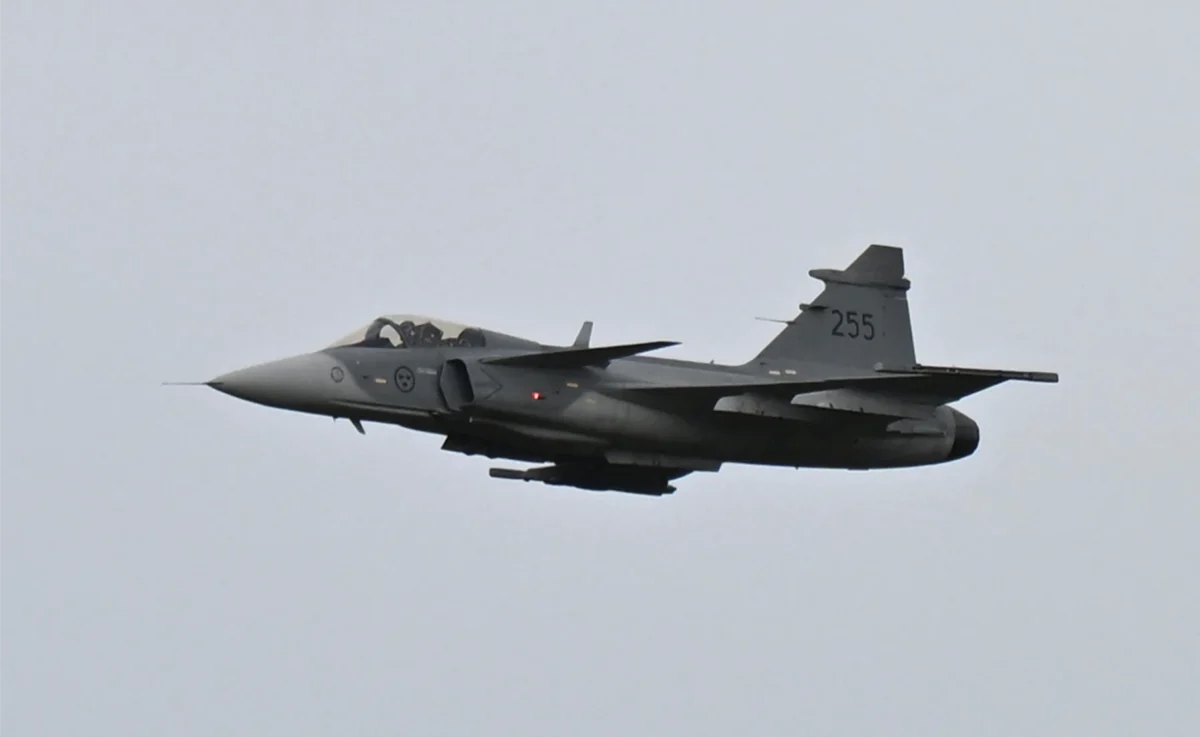
The real question is whether a refined “4.5-generation” aircraft can keep up as stealth and artificial intelligence begin to reshape air combat.
By the 1980s, the story of the Saab JAS 39 Gripen starts with restraint. While many countries chased bigger, faster fighters, Sweden went the other way.
Saab’s designers were asked to create something that could defend the country without draining it. The result was a small, efficient aircraft that didn’t try to dominate the world stage, it just had to protect home turf, and do it well.
A few decades on, the Gripen E took that story further. The world had changed, and the old versions were starting to run into limits. Instead of creating a completely different aircraft, Saab chose to evolve the one it already knew inside out. The result was a jet with stronger systems, sharper sensors, and better ways to share data in real time.
JAS 39 Gripen E Specs in detail
| Category | Specification | Notes / Context |
| Role | Multirole fighter (air-to-air, air-to-ground, reconnaissance) | Designed for flexible missions and quick turnaround. |
| Crew | 1 | Single-seat (Gripen F is the two-seat variant). |
| Powerplant | 1 × General Electric F414-GE-39E turbofan | Custom version of the F/A-18E/F Super Hornet engine. |
| Thrust | ~22,000 lbf (98 kN) | Provides a higher thrust-to-weight ratio than earlier Gripen models. |
| Maximum Speed | Mach 2.0 (≈2,470 km/h) | Comparable to most 4.5-generation fighters. |
| Combat Range | ~1,500 km (930 mi) | Extended by 40% over the Gripen C due to larger fuel capacity. |
| Ferry Range | ~4,000 km (2,485 mi) | With external fuel tanks. |
| Service Ceiling | 16,000 m (52,500 ft) | High-altitude performance suited for air-superiority missions. |
| Weapons Payload | Up to 6,500 kg (14,300 lb) | Across 10 hardpoints for air-to-air and air-to-ground weapons. |
| Radar System | Leonardo Raven ES-05 AESA radar | Offers a wide field of regard and multi-target tracking. |
| IRST System | Skyward-G | Passive infrared detection for stealth or non-emitting targets. |
| Avionics & Displays | Panoramic cockpit display + Helmet-Mounted Display (HMD) | Provides flexible situational awareness and data fusion. |
| Data Link | TIDLS (Tactical Information Data Link System) | Enables real-time sharing between Gripen units and command networks. |
| Operational Cost | Estimated at USD $4,700–5,000 per flight hour | Considered one of the lowest among modern fighters. |
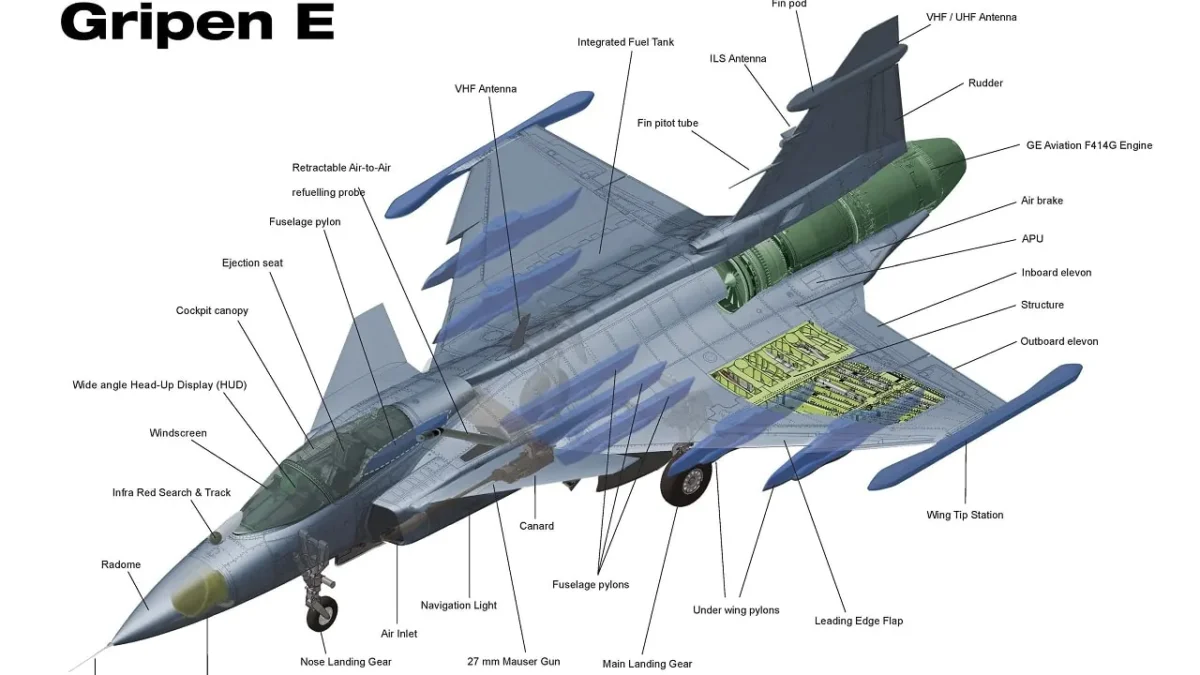
The JAS 39 Gripen E isn’t built to impress through stealth, but it’s no lightweight either. Its General Electric F414 engine, borrowed from the Super Hornet, puts out close to 22,000 pounds of thrust and pushes the jet to about Mach 2. It can haul around six and a half tons of weapons, with enough range, roughly 1,500 kilometers, before needing to refuel.
Still, what makes it stand out isn’t just power, but how it uses information. Its Raven ES-05 radar can track several targets simultaneously, and its Infrared Search and Track (IRST) sensor lets it detect opponents quietly, without relying on radar.
The cockpit design also gets a lot of praise for its simplicity; one wide, touch-sensitive display that pilots can customize like a smartphone screen.
People use the phrase “fifth-generation fighter” all the time, but if you asked a room full of experts what it really means, you’d probably hear a dozen slightly different answers. It isn’t an official term; more of a loose way to describe a wave of technology that started coming together in the early 2000s.
In broad terms, these jets aim to do three things: stay hidden, stay linked, and strike before they’re spotted. The F-22 Raptor was the first real example of that idea — stealthy, fast, and still capable of a good dogfight. Then came the F-35 Lightning II, which took the concept further. It’s less about speed and more about awareness, acting like a flying sensor network that feeds information to everything around it.

Russia’s Su-57 often comes up in the same discussions, though people don’t always agree on whether it fully counts as a fifth-generation jet. It has some stealth features and updated systems, yet maybe not the same depth of integration found in U.S. designs. Even so, it shows that every country has its own version of what a modern fighter should be.
What really defines fifth-generation fighters is how they handle information. They’re designed to spot threats first, stay hidden, and act before the other side can react. Their smooth shapes and special coatings are meant to make them harder to pick up on radar.
Inside the cockpit, sensors and radar feeds are blended together so the pilot doesn’t have to switch between screens or guess what each signal means. Ideally, it all appears as one picture, giving a clearer sense of what’s going on around them, at least that’s how it’s meant to work.
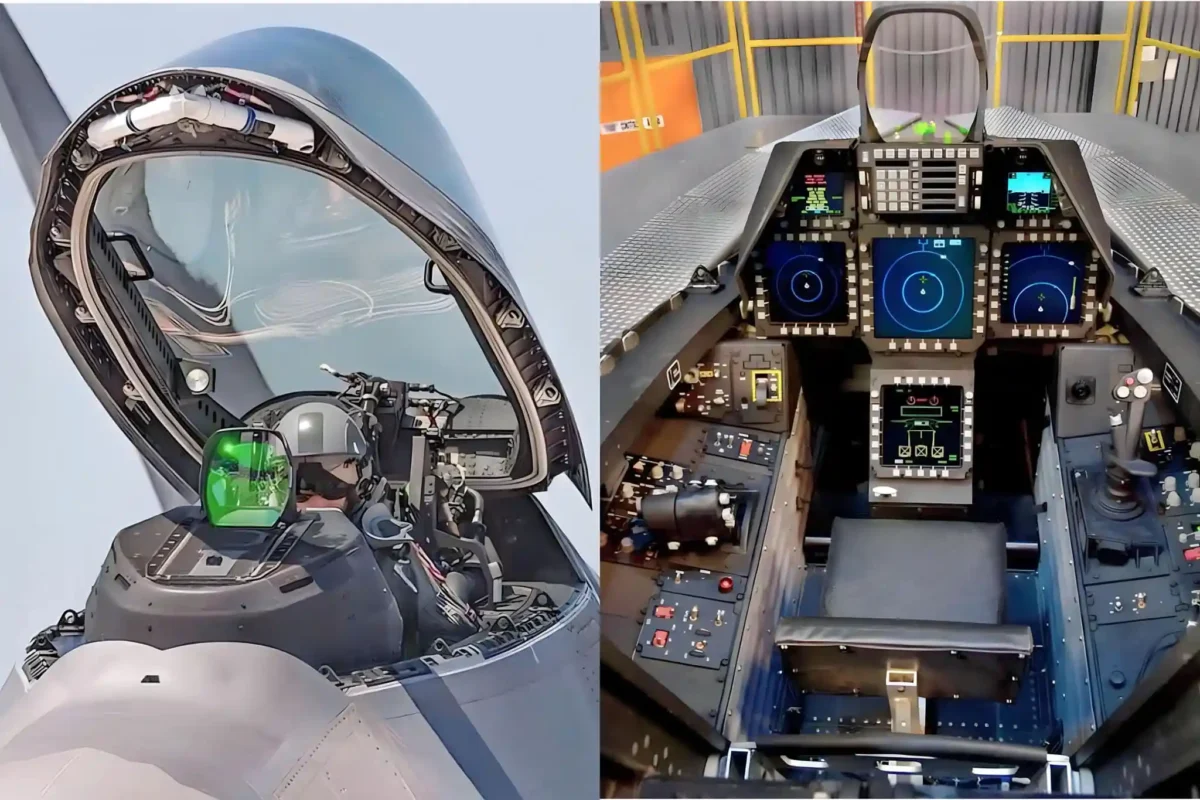
Of course, none of this comes cheap or easy. Stealth coatings need constant care, and the software that makes everything “smart” can also make it fragile. So while fifth-generation fighters may represent the cutting edge, they’re not necessarily the most practical solution for everyone.
That’s why some air forces, including Sweden included, took a different route. Rather than chasing full stealth, they focused on building a fighter that could survive and adapt in a high-tech world without costing a fortune. And that’s where the JAS 39 Gripen E starts to make its case.
When people compare the Gripen E and the F-35, it’s tempting to treat them like rivals. In truth, they were built for very different purposes. The F-35 is a fully stealth, high-tech platform meant to operate in heavily defended airspace. The JAS 39 Gripen E, on the other hand, was designed to give smaller nations access to near–fifth-generation capability without the massive price tag or logistical demands that come with it.
In terms of speed and agility, the Gripen E might actually have an edge. It can reportedly reach around Mach 2, slightly faster than the F-35’s top speed of about Mach 1.6. The Gripen’s lighter airframe and aerodynamic design could make it more nimble in close combat, though the F-35’s stealth and sensor reach mean it’s unlikely to get into a traditional dogfight in the first place.
When it comes to stealth, there’s really no contest. The F-35 was built from the ground up to minimize its radar cross-section. Its internal weapons bays and radar-absorbent materials make it extremely hard to detect, at least from the front. The Gripen E does include some radar signature reduction, but it’s not a stealth jet in the same sense. It’s more about reducing visibility rather than disappearing.
Their weapons and payloads also reflect different philosophies. The F-35 carries fewer weapons internally when flying in stealth mode (usually four air-to-air missiles), but it can load up external pylons for heavier strikes once stealth isn’t needed. The Gripen E can carry up to ten external hardpoints and supports a wide mix of NATO-standard missiles and bombs, including the Meteor beyond-visual-range missile, one of the most advanced of its kind.
In the avionics and sensor department, the F-35 still sets the standard. Its sensor fusion, helmet display, and electronic warfare suite are deeply integrated. The JAS 39 Gripen E, though, seems to follow the same idea, just in a more modular way. Its Raven ES-05 AESA radar, Skyward-G infrared sensor, and advanced data links allow it to share and process information quickly, though probably not as seamlessly as the F-35’s closed ecosystem.
The biggest difference, though, might be cost and maintenance. Operating an F-35 reportedly costs around $30,000–40,000 per flight hour, and its maintenance cycle can be demanding. The Gripen E is often cited at under $5,000 per hour. Saab designed it for quick turnaround, even allowing ground crews to refuel and rearm it in under ten minutes. For air forces that can’t afford a large logistics footprint, that makes a big difference.
Perhaps the Gripen E’s biggest strength is its affordability. It’s not the flashiest jet around, but it seems to offer solid capability for what it costs. Saab has suggested that its operating expenses are a fraction of the F-35’s, possibly less than one-sixth, and that claim appears to align, at least loosely, with a few outside estimates.
For smaller air forces, that matters. A country might afford to own a stealth jet, but keeping one flying every day is another story. The Gripen’s low operating costs and quick maintenance mean more jets in the air, more often and that’s often what decides real-world readiness.
Then there’s versatility. The JAS 39 Gripen E can reportedly switch from air defense to ground attack or reconnaissance in a matter of minutes, thanks to its modular mission systems. It also works well in dispersed operations.
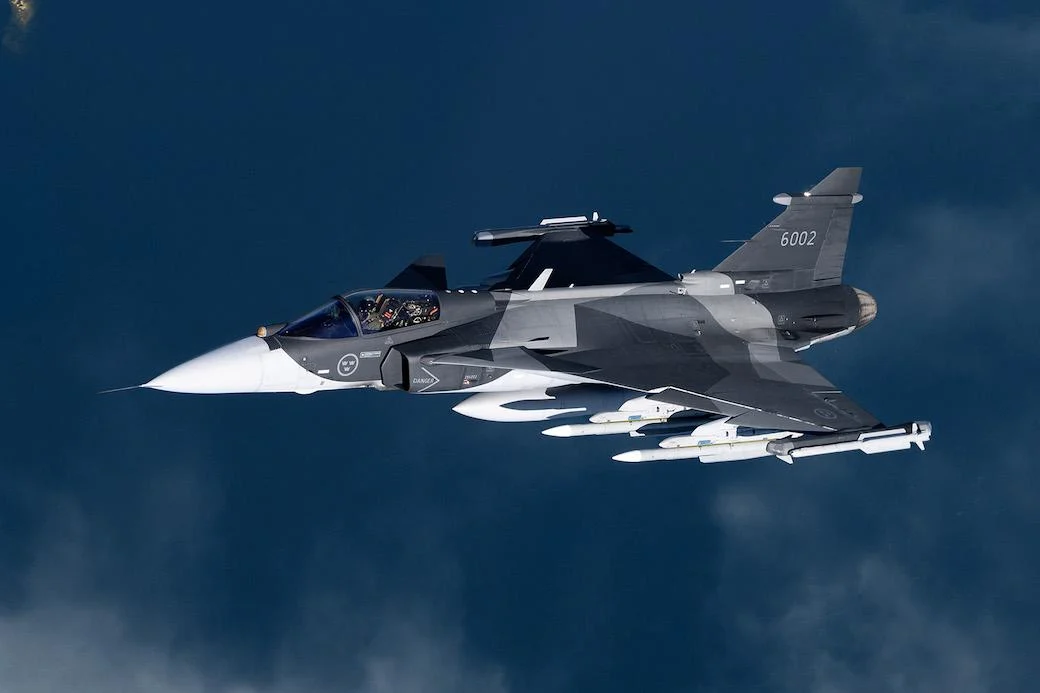
Saab appears to have focused on making the Gripen E adaptable. It can operate from short or rough runways and doesn’t need a large support crew to get back in the air. That could be crucial if main airbases were attacked or disabled.
But the design does come with trade-offs. The Gripen E doesn’t have true stealth features, which limits how invisible it can be in high-threat environments. Its radar signature is smaller than older jets, but it’s still detectable by modern sensors. It also lacks the deep integration and automation found in something like the F-35’s system, which combines radar, infrared, and electronic data into a single unified picture. The Gripen can share and process information quickly, but it may not achieve that same “one-jet-does-it-all” level of awareness.
Another potential limitation is scale. Because not many air forces have adopted the Gripen E yet, its ecosystem might take longer to mature. Training systems, logistics, and upgrades usually move faster when there’s a large user base, and here the F-35 clearly has the edge. Still, that doesn’t make the Gripen a bad bet, it just means its future may hinge more on how much its current users keep investing in it.
It’s easy to say the JAS 39 Gripen E can’t really go head-to-head with a fifth-generation jet like the F-35, and honestly, that might be true in some ways. The F-35 was built to hide, to see everything, and to link whole battle networks together. The Gripen wasn’t made for that kind of fight. But maybe that’s the point.
It would be fair to say the Gripen E borrows parts of the fifth-gen playbook (like advanced sensors and electronic warfare tools), but applies them differently. Saab didn’t chase total stealth. It’s more about outsmarting it through jamming, decoys, and real-time data links.
Some people call it a “4.5-generation” jet, which sounds like the label fits better than it sounds. It sits right between generations, not a relic, but not fully fifth-gen either. It doesn’t chase perfection. What it offers instead is balance: modern capability without the price tag or maintenance nightmare that comes with more complex jets.