Follow Us:
Follow Us:

Few weapons capture Europe’s defense dilemma as clearly as the CAESAR howitzer. It was never built for a large-scale war, certainly not for the kind unfolding in Ukraine. Designed as a practical, mobile gun for low-intensity missions, the CAESAR has found itself at the center of an industrial and strategic test that Europe wasn’t ready for.
They call it “the French ghost.” In the Ukrainian front, this wheeled cannon fires five quick rounds, then disappears before enemy drones can spot it. Its strengths are obvious: fast to deploy, accurate, and far easier to maintain than heavier systems.
Ukrainian forces have used it to great effect, often outmaneuvering Russian artillery with quick strikes and rapid relocation. But its success has also exposed deeper weaknesses; shortages of ammunition, limited production capacity, and a defense industry still tuned to peacetime rhythms.
CAESAR looks like many self-propelled guns: 155 mm calibre, wheeled chassis, high mobility. But what’s surprising is how quickly it has become a linchpin in the Ukraine war and how deeply it has plugged France into the conflict.
In 2025, France pledged that every CAESAR built would go to Ukraine. Meanwhile, over 90 % of the barrels produced by KNDS are now channeled to that war effort.
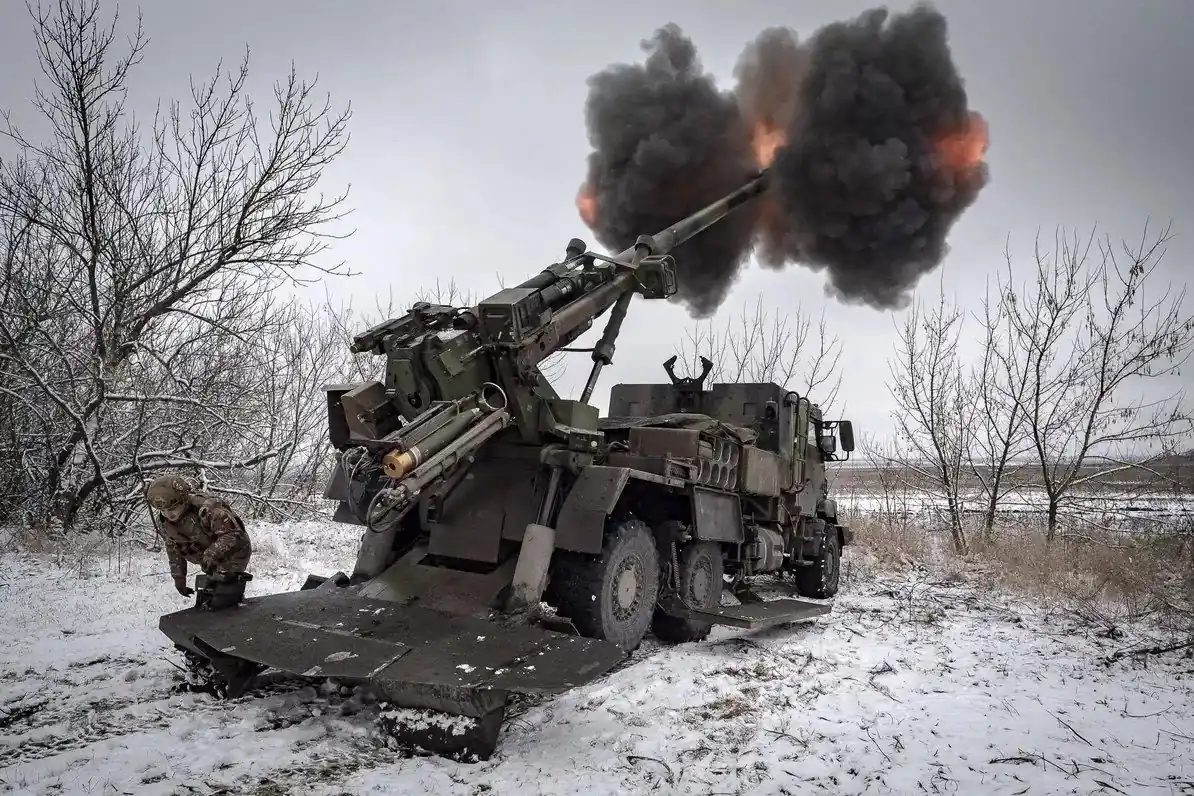
The CAESAR is, at its core, a 155 mm gun mounted on a truck. It sounds almost crude when put that way, but that simplicity is the point. Where most self-propelled howitzers roll on heavy tracks and wear thick armor, the CAESAR relies on speed and flexibility. It’s built to move quickly, fire accurately, and disappear before anyone can shoot back.
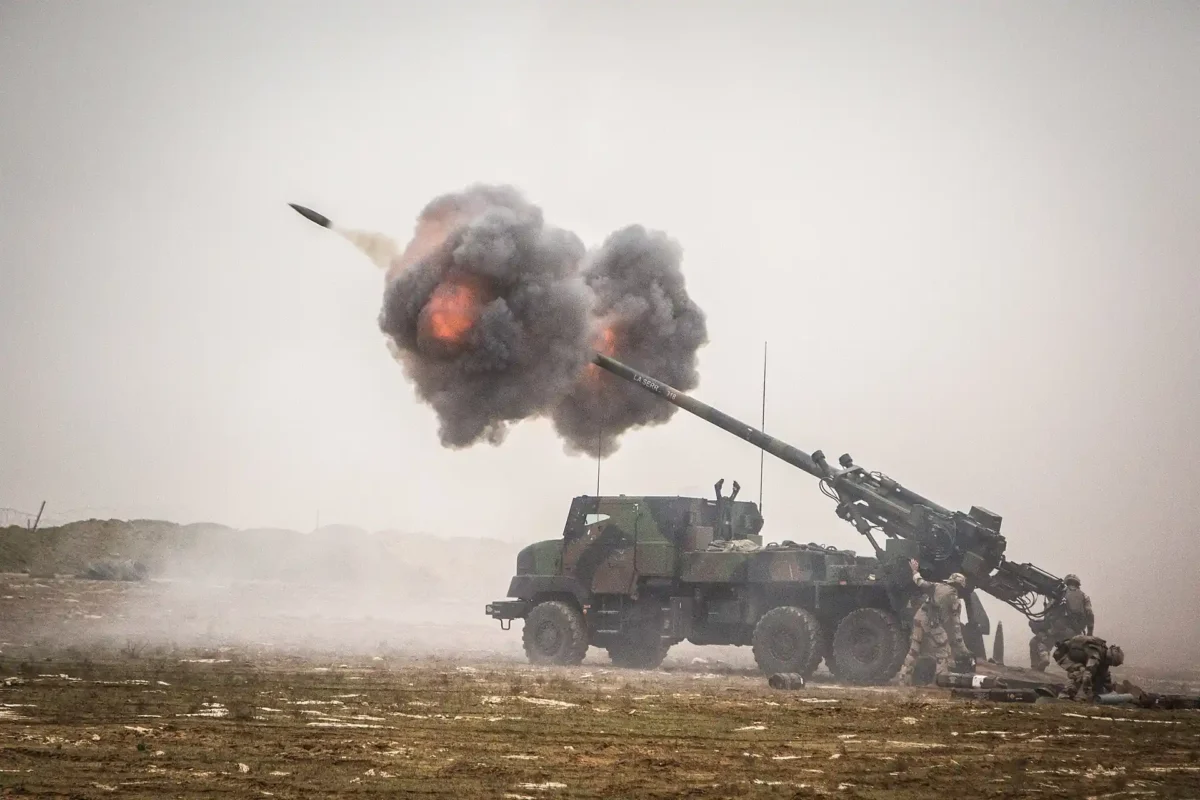
If a tracked howitzer is built to survive punishment, CAESAR is built to avoid punishment. That changes how armies use artillery: instead of digging in and exchanging fire, crews use CAESAR for quick strikes, then relocate. That makes it well-suited to “shoot-and-scoot” tactics, convoy logistics, and theaters where road mobility matters more than heavy protection.
The story of CAESAR began in France in the late 1990s, when Nexter, now part of the Franco-German defense group KNDS, set out to build an affordable, export-friendly alternative to traditional tracked guns.
Read also: RCH 155 Howitzer: Germany’s Advanced Wheeled Artillery System
At that time, France needed something its expeditionary forces could actually move by road or aircraft, something that could operate in deserts or on rough terrain without the logistics burden of heavy armor.
The result was a straightforward design: a long 155 mm/52-caliber gun fitted onto a standard military truck chassis, with a small crew and digital fire controls to keep things simple.
There’s an understated intelligence in how it works. The CAESAR can be driven into position, calculate its own firing data through GPS and inertial navigation, aim electronically, and deliver six precision shots in under a minute.
Crews handle the ammunition manually, but everything else, like the navigation, aiming, ballistic calculation, is automated enough to keep operations fast and predictable. It’s a mix of old-school gunnery and modern computing, stripped down to what’s necessary.
Different versions have appeared over time. The original 6×6 model, which balances speed and light weight, and the larger 8×8 variant, which carries more ammunition and offers greater stability when firing. Both rely on mobility as their greatest protection.
Of course, it’s not without limits. The truck chassis can’t handle the same punishment as a tracked vehicle, and its rate of sustained fire depends heavily on resupply and crew endurance. Yet those trade-offs make it exactly what many militaries need; a weapon that works in the real world, not just on paper.
In mid-2022, as the war in Ukraine entered a new phase, the CAESAR trucks started arriving, initially a handful of 6×6 models donated or purchased, then later 8×8 versions from Danish-backed transfers.
France announced a plan to deliver 78 units in 2024 alone, on top of earlier deliveries. By early 2025, the manufacturer reported that 90 % of the new barrels for these howitzers were being directed to Ukraine.
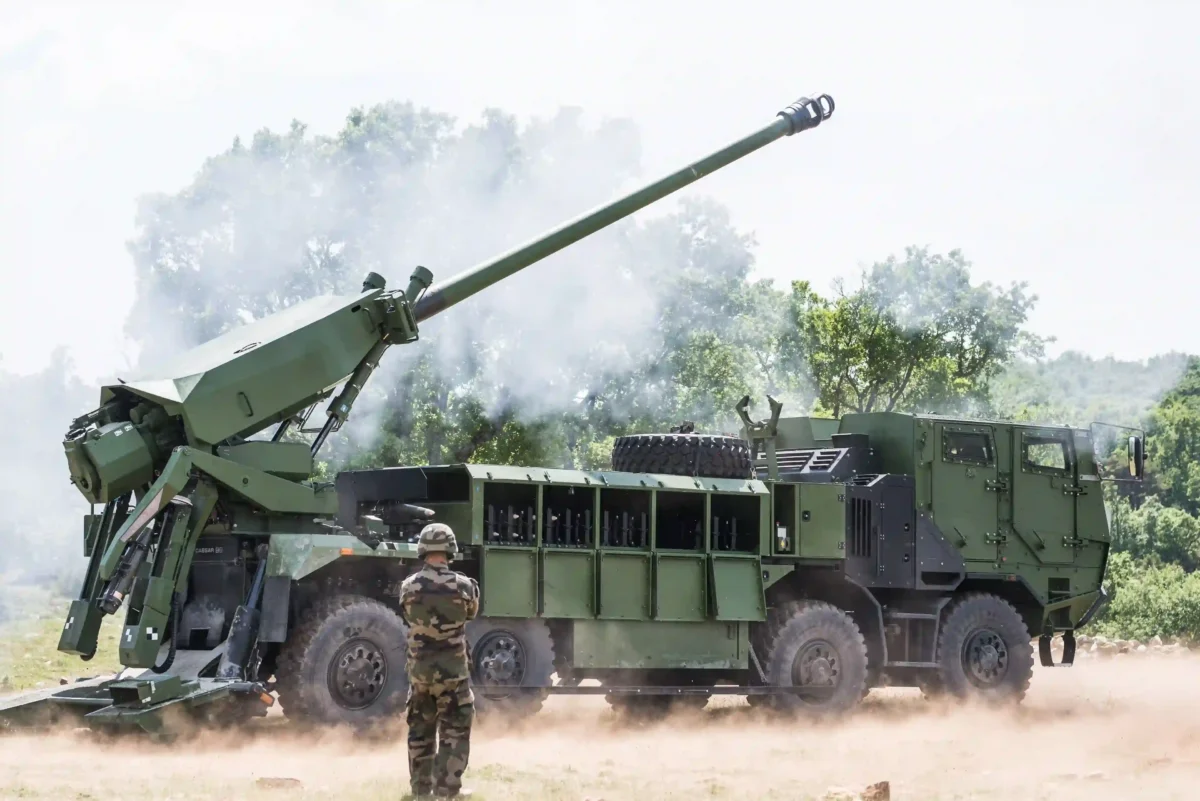
Once they were in the country, things accelerated. By around mid-2023, one report put the figure for the 19 Danish-supplied CAESAR 8×8 systems at over 40,000 rounds fired collectively in about two years.
Ukrainian crews quickly integrated them into their “shoot-and-scoot” operations: move into position, fire quickly, relocate before Russian counter-battery measures could lock on. The mobility of the wheeled chassis proved an advantage in a war where static artillery positions were vulnerable.
But data also reveal a more nuanced picture. On losses, in a comparative report, it was noted that fewer than 10 % of CAESARs delivered to Ukraine had been lost (destroyed or taken out of service), in this case, about seven units out of a planned total of 78. Operational availability was estimated at around 60 % combat-ready after five months of use (for CAESARs in Ukraine) versus ~32 % for a tracked German alternative in similar conditions.

Then there’s the industrial and logistical side. Production of CAESARs was ramped up from about two units per month before the war, to six or more per month in 2024, with a target of twelve per month by late 2025. But the question of ammunition, spare parts, barrel wear, and long-term sustainment remains visible. The heavy firing tempo in Ukraine, individual systems firing dozens of rounds per day, accelerates maintenance burdens.
What this suggests…
The CAESAR’s strong showing in Ukraine highlights how mobility, digital fire control, and integration into modern targeting networks (e.g., drones, radar) can matter more than raw armor or size. Ukrainian units using CAESARs appear to have gained tactical advantages, especially in counter-battery roles and mobile operations.
Yet the story also prompts caution. Can the production and logistics tail keep up? If a system is so valued that nearly all new production is committed to Ukraine, what happens to reserves, domestic readiness, or long-term repair chains? What happens when barrel wear spawns delays or spares back-up slows?
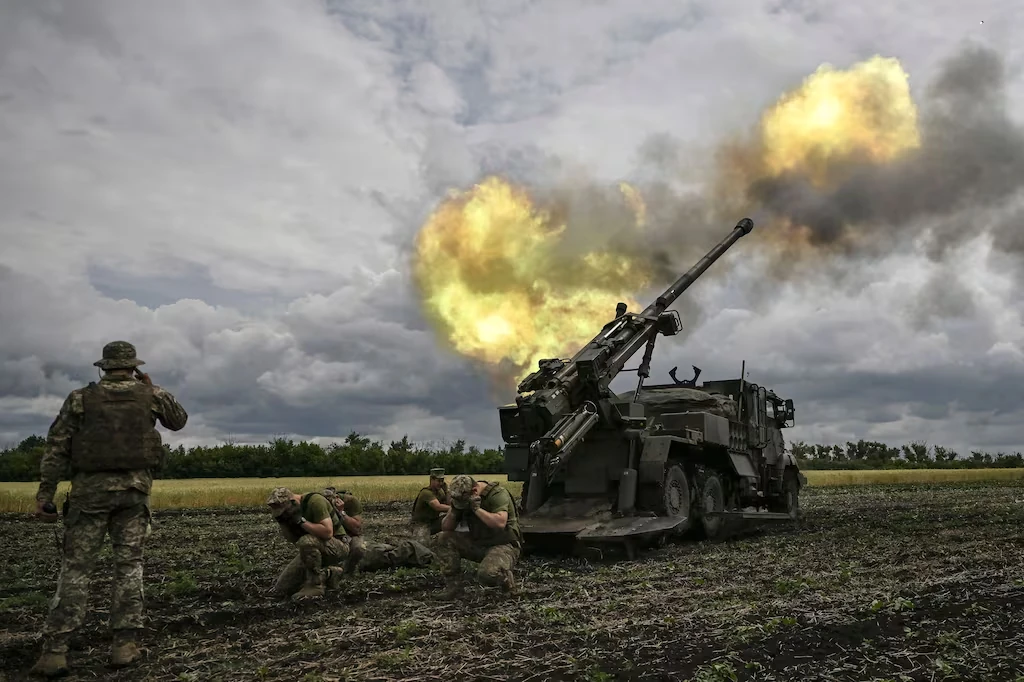
The relatively low loss rate is encouraging, but it also depends on operating in conditions where mobility and concealment are feasible; if the war shifts to more entrenched positions, the vulnerabilities of a wheeled system may become more acute.
Think of the CAESAR more like a fast, clever tool than a heavy machine of war. Its greatest advantage is simple “it can move”. That mobility makes concealment and shoot-and-scoot tactics not just possible but practical.
Crews can slip onto a road, fire a quick sequence of rounds, and be off before counter-battery systems finish their calculations. That pattern seems to reduce direct hits and keeps the system usable where a static gun would be hunted down, which helps explain why it’s been prized in a conflict where standing still is often deadly.
At the same time, the CAESAR’s range and accuracy typically outclass much of the Soviet-era artillery it faces. Because it uses a 155 mm/52-caliber barrel and modern fire-control, it can deliver more precise effects at longer distances than older systems built around 152 mm doctrine.
In practice that means fewer wasted rounds and more opportunities to hit chosen targets rather than blanket an area. But it’s not a magic bullet, the advantage depends on high-quality ammo, good targeting data, and crews who know how to exploit the system.
That reliance on inputs is where limitations show up. CAESARs are fairly maintenance-friendly compared with some tracked howitzers, but heavy use speeds up barrel wear and stresses logistics chains. If crews are firing dozens of rounds a day, barrels need replacing more often and spare parts must flow reliably.
Ammunition supply is the real Achilles’ heel: a highly capable gun is only as useful as the shells available to it. So the tactical edge can erode quickly if resupply lags or production struggles to keep up.
There are also hard limits built into the design. The truck chassis gives speed but little protection; crews are exposed in high-risk zones and the vehicle can’t shrug off direct hits like a tracked, armored platform might.
The fire-control and automation on CAESAR are modern and helpful, yet they introduce complexity: software, electronics, and data-links create new failure modes and demand trained technicians.
Finally, even if the gun itself is solid, its usefulness is bounded by supply constraints. If most production and barrel output are committed to a single theatre, domestic reserves thin, and allied readiness can suffer.
| Feature | CAESAR (France) | PzH 2000 (Germany) | Archer (Sweden) |
| Caliber / Barrel | 155 mm / 52 cal | 155 mm / 52 cal | 155 mm / 52 cal |
| Chassis | Wheeled (6×6 or 8×8) | Tracked, heavily armored | Wheeled (6×6, Volvo A30) |
| Crew | 4–5 | 5 | 3–4 |
| Weight | ~18–32 tons (variant dependent) | ~57 tons | ~33 tons |
| Range (standard / extended) | 30–42 km / 50+ km (RAP) | 30–40 km / 50+ km (RAP) | 30–40 km / 50+ km (RAP) |
| Rate of fire | 6 rounds/min | 10 rounds/min (burst), 3 sustained | 8–9 rounds/min (auto) |
| Shoot-and-scoot time | <2 minutes | 2–3 minutes | <1 minute (high automation) |
| Protection | Light / minimal armor | Heavy armored turret | Medium armor cab |
| Mobility / Road Speed | Very high (~80–100 km/h) | Moderate (~60 km/h) | High (~70 km/h) |
| Maintenance burden | Low–moderate | High | Moderate–high |
| Combat-proven in Ukraine | Yes | Yes | Limited |
| Approx. unit cost | $5–7 million | $12–15 million | $10–12 million |
What does this mean…
Looking at these systems side by side, the CAESAR feels like it was built for a different kind of war. Compared to Germany’s PzH 2000, it’s much lighter and far less protected, but that’s also what makes it quicker to move and easier to keep running. In Ukraine, that balance seems to have worked in its favor. Crews can roll in, fire a few shells, and disappear before counter-battery radar finds them.
The PzH 2000, on the other hand, feels almost over-engineered for these conditions. It’s incredibly accurate and powerful, but also heavy and maintenance-hungry. It can fire longer bursts and absorb punishment that would disable a truck-based gun, yet it also breaks down more easily under sustained wartime use.
Some reports suggest that in Ukraine’s muddy, shifting front lines, keeping it operational has been a challenge; it needs frequent barrel changes and deeper maintenance cycles. So, it seems that it shines in short, planned missions; less so when constant movement and rough terrain are the norm. It’s a brilliant howitzer in theory, but perhaps a little too delicate for a war that punishes complexity.
Then there’s the Swedish Archer, which tries to merge automation with protection. On paper, it’s a dream system; fast setup, quick firing, minimal crew exposure. But it’s also expensive and rare, and not yet battle-tested at scale. Some analysts see it as the next step in self-propelled artillery, others as an example of how sophistication can limit flexibility.
In that sense, CAESAR’s edge might simply be that it accepts imperfection. It’s not the most powerful gun compared to others, but it’s enough gun — good range, quick to move, easy to fix, and cheap enough to field in numbers.
Where the PzH 2000 or Archer might deliver perfection in limited doses, the CAESAR offers consistency and scale. Still, it’s not without trade-offs. Its crews operate with little protection, and the system depends heavily on good logistics, skilled gunners, and a steady flow of spare parts.
So maybe that’s the real story here; each of these guns reflects a different idea about what modern artillery should be. The PzH 2000 is about power and precision; the Archer, about automation and safety; the CAESAR, about mobility and practicality. None of them is perfect, but in Ukraine, where adaptability often counts more than perfection, the CAESAR seems to have found its moment.
So, is the CAESAR really a “game-changer”? It’s a tempting label, one that gets used a lot whenever a new weapon seems to make a visible difference. But if we’re honest, that term might say as much about perception as performance. In war, something is only a game-changer if it shifts the balance (not just in a battle, but in how both sides fight and think).
By that measure, the CAESAR has probably been a changer, if not the one. Its presence on the battlefield gave Ukrainian forces a new rhythm: faster engagements, fewer counter-battery losses, and more precise strikes.
Soldiers often mention the psychological comfort of having reliable, accurate artillery that can move and survive. That kind of confidence matters. It shapes morale and, in small but steady ways, helps keep a defense line coherent under pressure.
Still, the picture is more complicated. The CAESAR didn’t singlehandedly transform the war (no single system could). Its impact has been significant but situational: it shines when used smartly, with good intelligence and logistics, not as a blunt instrument. And while its efficiency stands out, it’s also a reminder that Western artillery’s strength lies in coordination; drones spotting, GPS-guided shells adjusting, and supply chains keeping the guns fed.
Scalability is another question. A few dozen CAESARs can make a tactical difference, but can they alter strategy across a thousand-kilometer front? Probably not on their own. Attrition is real; barrels wear out, crews rotate, and ammunition stocks tighten. Meanwhile, technology keeps moving: loitering munitions, counter-battery radars, and cheap drones are changing how artillery is found and fought.
So perhaps it’s more accurate to say that CAESAR hasn’t rewritten the game, instead it’s helped Ukraine play it better. It represents a shift in how modern armies think about artillery: not as static firepower, but as a living, moving network. If the word “game-changer” still applies, it might be because CAESAR proved that agility, not just firepower, can decide who endures longer.