Follow Us:
Follow Us:

Not long ago, grainy photos started spreading online of what looked like a brand-new Chinese fighter jet. At first, many people dismissed them as clever digital edits. But by early 2025, reports began piling up that the aircraft was real, and that it might be the long-rumored Shenyang J-50.
What makes this story unusual is how little anyone seems to know for sure. Some defense writers call it China’s first real attempt at a “sixth-generation” design, while others warn it could just be a dressed-up prototype with more questions than answers. Either way, the fact that it even appeared has sparked a flood of speculation: does the J-50 signal a leap ahead, or is it mostly for show?
That uncertainty is what makes the J-50 so fascinating. If the claims are true, things like hidden weapon bays, new stealth coatings, or even futuristic sensor systems, then we may be watching the early moves in a race with the U.S. over who fields the first true 6th-gen jet. And yet, nobody outside a small circle in Beijing really knows how far along this project is.
So, what exactly is the Shenyang J-50? That’s the tricky part; nobody outside official circles in China seems to know for certain.
What we do have are scattered leaks, photos taken at odd angles, and a lot of excited guessing from defense bloggers and aviation watchers. In other words, the “reality” of the J-50 is still buried under layers of rumor.
The origins of the Shenyang J-50 are murky, and that’s putting it lightly. Unlike the J-20, which had a slow but fairly visible development path, the J-50 seems to have appeared almost out of nowhere.
The first “evidence” came in the form of blurry images and satellite captures shared on Chinese social media and military forums. Some of these showed what looked like a large, delta-shaped airframe parked at an airfield linked to Shenyang Aircraft Corporation.
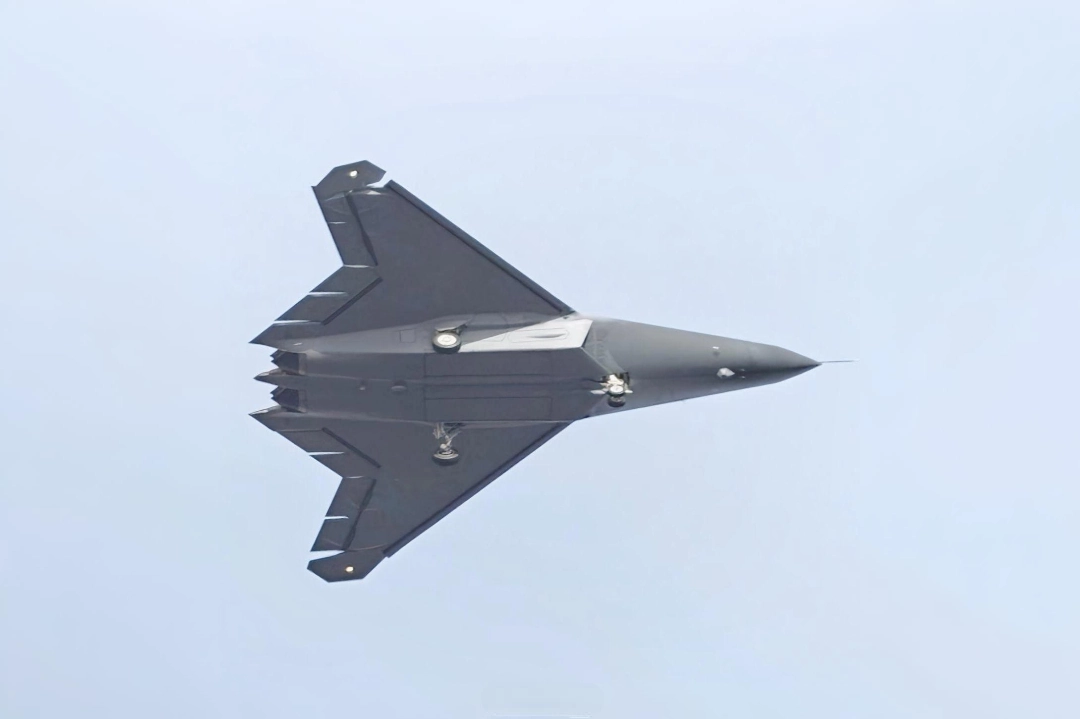
On their own, these photos don’t prove much; they could be prototypes, mock-ups, or even unrelated testbeds. But taken together, they do suggest that something new is being tested.
The second layer of clues comes from China’s broader defense strategy. Beijing has openly stated that it doesn’t want to fall behind in the next generation of air combat.
The U.S. has its NGAD program underway, and Europe is working on the FCAS and Tempest projects. It wouldn’t be surprising if China had its own parallel effort, and Shenyang, as one of its premier fighter builders, would naturally be involved. In that sense, the “existence” of a J-50-type project seems plausible.
That said, the reliability of the information is shaky at best. Many of the reports we have come from unofficial sources, often repeated by outlets that specialize in hyping new military hardware. For example, several of the most widely shared “J-50” photos lack independent verification.
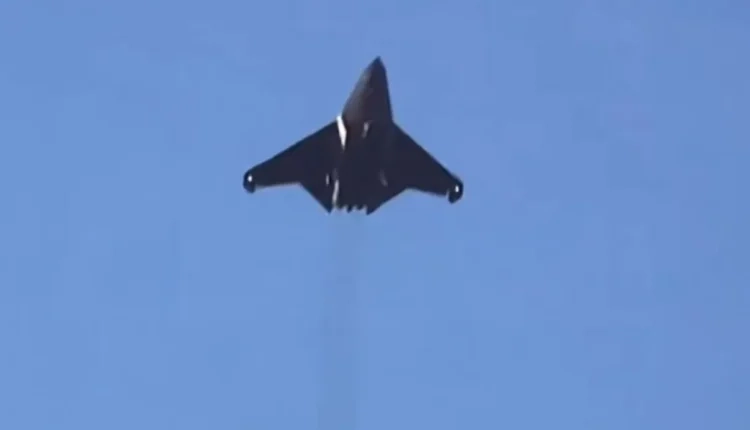
Aviation experts have pointed out inconsistencies; like odd shadows, mismatched scale, or features that don’t line up with known stealth design practices. Some even suspect a few images we’re seeing isn’t the “J-50” at all, but a tech demonstrator wearing that label because the name sounds believable (or it may have been digitally altered to stir buzz).
The secrecy around it has fueled wild timelines too. Depending on who you read, the J-50 is either still years away from a prototype phase or if the optimistic crowd is right, already flying in limited test runs. The truth is probably somewhere in between, but that lack of clarity keeps the mystery alive.
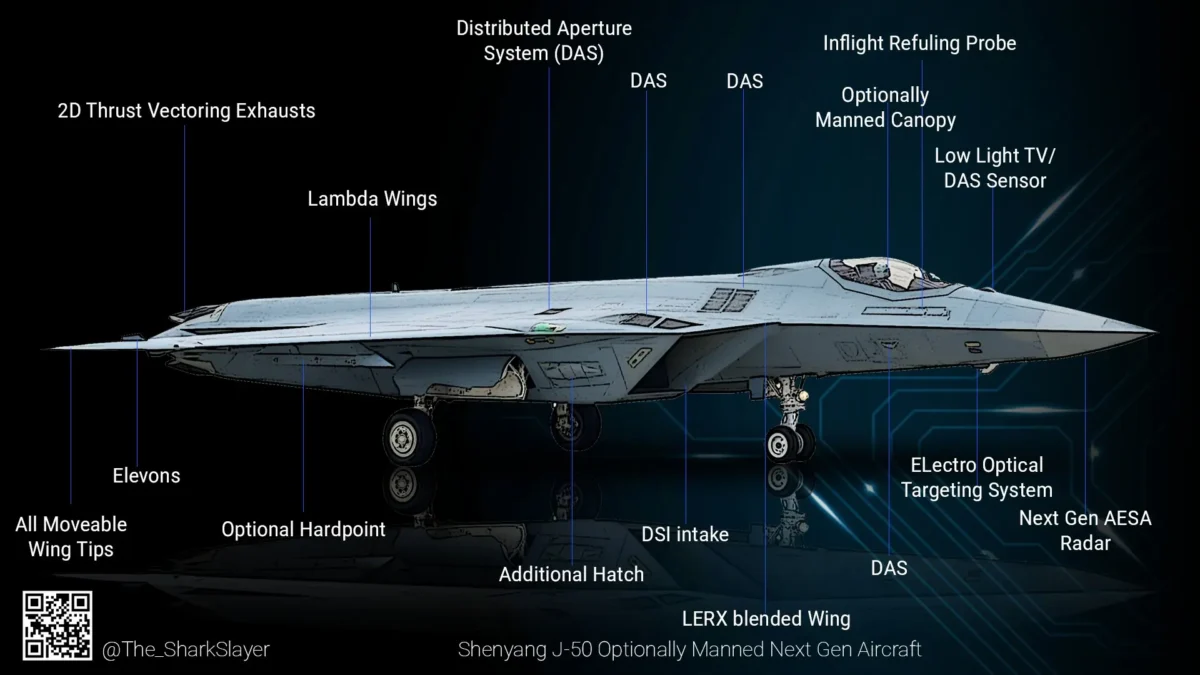
The photos and artist mock-ups floating around show a jet with clean, tailless lines and what look like internal weapon bays; both hallmarks of stealth thinking.
Some claim it borrows heavily from American concepts, almost like a blend of the F-22 and upcoming NGAD sketches. Others point out details that seem less convincing, like air intakes that don’t quite match up with true stealth standards.
There’s also chatter about advanced coatings, radar-absorbing materials, and possibly even new engine nozzles designed for thrust vectoring. But again, most of this comes from speculation or second-hand analysis. It’s worth remembering that what looks futuristic on paper doesn’t always work out in real flight condition
When people call the Shenyang J-50 a “sixth-generation” fighter, it’s worth pausing and asking: what does that even mean? Unlike the jump from fourth to fifth generation (which was mostly about stealth, sensors, and data fusion), the leap to sixth gen hasn’t been clearly defined.
The U.S., Europe, and Russia all use the label, but each seems to mean something slightly different. That makes it tricky to place China’s ambitions in context.
The most obvious point of comparison is America’s Next Generation Air Dominance (NGAD) program. The U.S. has already acknowledged building and flying at least one full-scale demonstrator, though details remain tightly classified.
What we do know suggests NGAD isn’t just a single jet but a “system of systems,” a manned fighter working in tandem with drones, advanced sensors, and long-range weapons. The philosophy here is less about one aircraft being unbeatable and more about how it connects with a whole network.
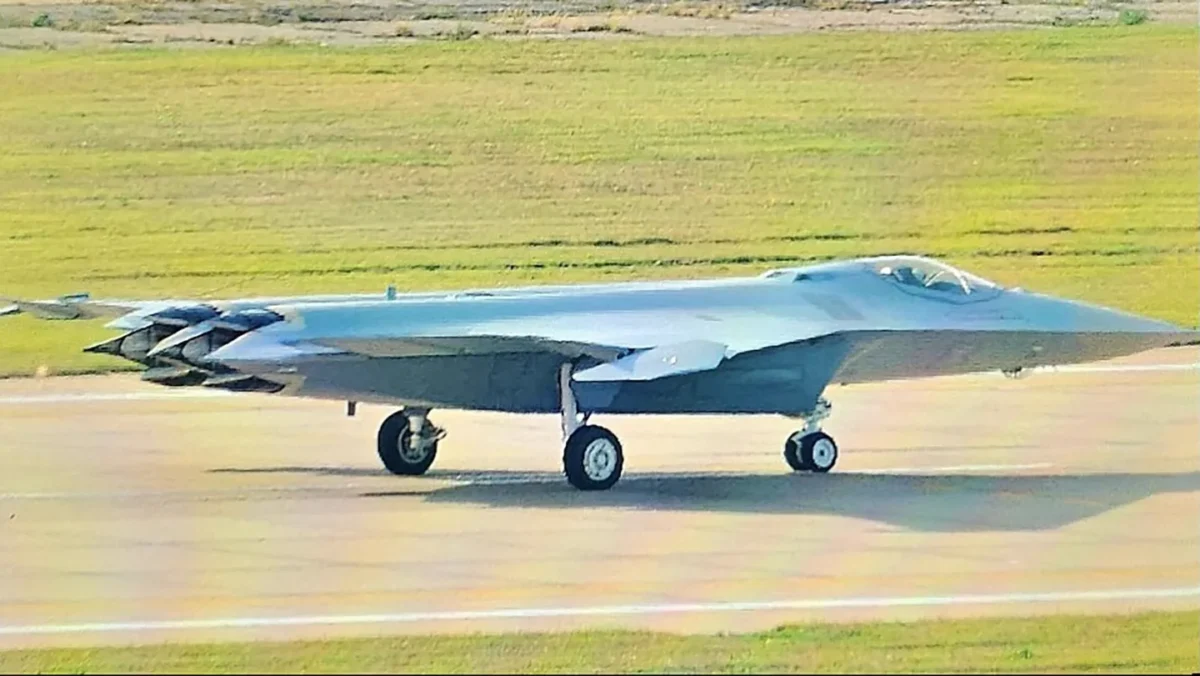
If the J-50 is real, China may be aiming at something similar. But the key question is whether Beijing is pursuing a true networked system, or simply trying to build a stealthier, faster, and more advanced fighter than the J-20 fighter.
On paper, the latter is much easier to attempt; copying design cues from NGAD mock-ups, experimenting with tailless shapes, and refining stealth coatings. But building the whole ecosystem (loyal wingman drones, next-gen sensors, secure data-sharing) requires a depth of technology that China is still racing to master.
In that sense, calling the J-50 a direct rival to NGAD feels premature. Even if the jet looks futuristic, the gap in supporting infrastructure may keep it from being a full sixth-gen competitor.
The Russian case is a little different. Moscow has heavily promoted the Su-75 “Checkmate” as a cheap, export-friendly stealth fighter. But so far, it has remained mostly a mock-up, with uncertain funding and few international buyers willing to gamble on it. The Su-75’s pitch has been affordability and mass production, not revolutionary new capabilities.
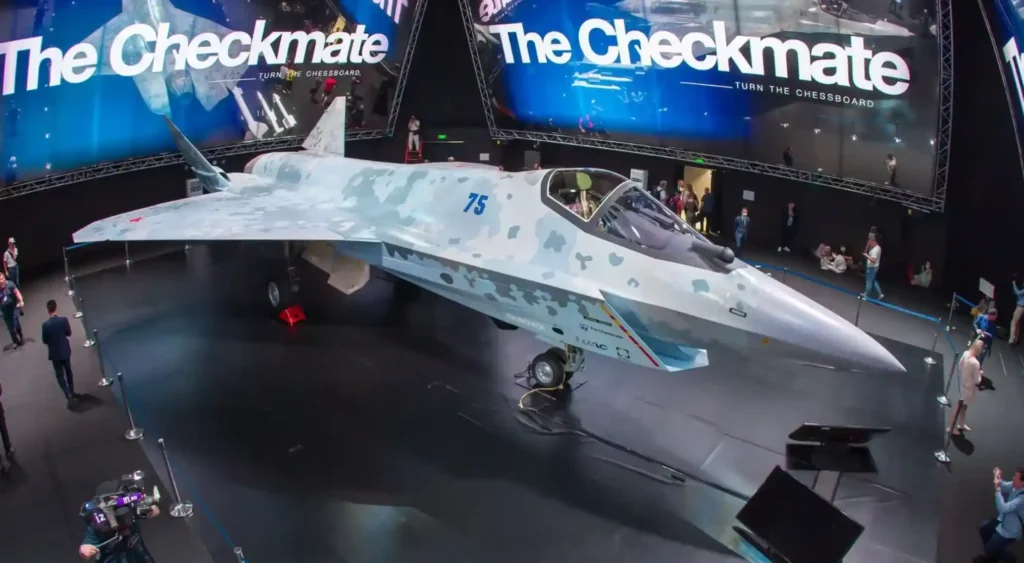
If the J-50 is indeed China’s answer to next-gen air combat, it likely sits in a different category altogether. Beijing isn’t marketing it to the outside world, at least not yet. Instead, it appears aimed at closing the gap with the U.S., not filling export orders.
That distinction matters. Whereas Russia has leaned on flashy air show unveilings and marketing campaigns, China has kept its cards much closer to its chest, which suggests a more inward-focused, strategic approach.
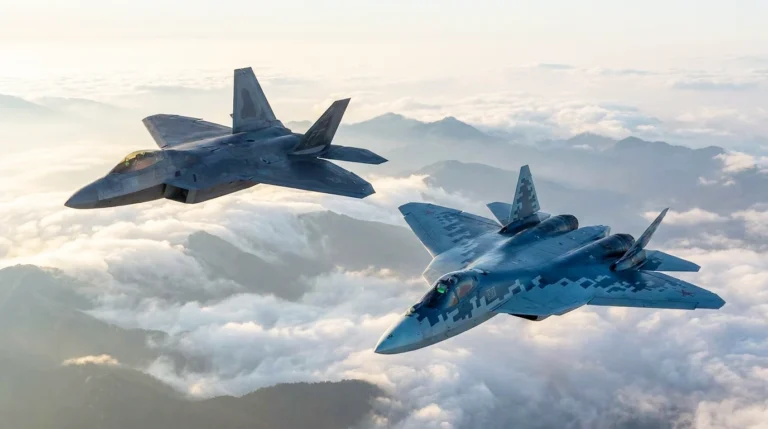
Still, there’s a cautionary note here. Russia once hyped the Su-57 as its great fifth-gen breakthrough, but slow production, cost issues, and reliability problems kept it from matching the F-22 or F-35 in practice. China could fall into a similar trap if the J-50 proves too ambitious to deliver at scale.
So where does that leave China? Compared to the U.S., its sixth-gen ambitions may be real but incomplete. Compared to Russia, it looks more serious and better funded, but also burdened by the same risks of overpromising and underdelivering.
If the Shenyang J-50 really is the centerpiece of China’s next-gen push, it has to be more than just a sleek airframe. It has to prove it can operate as part of a wider system, and that’s the hardest part to judge right now.
| Capability | Reported/Speculated Feature | Reliability of Claim |
| Stealth and radar-evading technology | Tailless design, internal weapon bays, radar-absorbing coatings | Moderate – some visual evidence, but no proof of performance |
| Hypersonic weapon integration | Ability to carry new high-speed missiles, possibly air-launched hypersonic glide weapons | Low – mostly speculative, no verified tests |
| AI and unmanned teaming potential | Talk of integration with drones or “loyal wingmen” for surveillance and strike | Very Low – no evidence yet, based on global trends not Chinese leaks |
What does this mean?
If the images are accurate, the J-50 seems to follow the same stealth design cues as the U.S. NGAD prototypes; smooth edges, no tail fins, and concealed weapon bays.
In theory, this should reduce radar cross-section significantly compared to the J-20. The use of radar-absorbing coatings is also widely assumed, though coatings are notoriously difficult to evaluate without close-up technical data.
It suggests China is doubling down on stealth as the central feature of the J-50. The critique, though, is that stealth alone doesn’t guarantee superiority. The U.S. learned from the F-35 that maintaining coatings and surfaces in real-world conditions is an enormous challenge. Without proven durability, stealth might look good in theory but fade fast in practice.
One of the more exciting and perhaps exaggerated claims is that the J-50 will be able to carry hypersonic missiles. These could, in theory, give the fighter a first-strike advantage against well-defended targets. But mounting hypersonic weapons on a stealth aircraft is not simple. The missiles are typically bulky, generate heat, and may not fit cleanly into an internal bay without compromising stealth.
If true, it would put China ahead of both the U.S. and Russia in combining stealth platforms with hypersonic strike options. But the likelihood is low right now, even the U.S., with far more experience in both stealth and hypersonics, hasn’t shown a working example of this combination. Until flight tests are confirmed, this feels more like ambition than reality.
Another idea often linked to the J-50 is its role in teaming with drones or even flying semi-autonomously. This mirrors trends in U.S. and European programs, where “loyal wingman” drones extend the reach and survivability of a manned fighter. For China, this would mean combining the J-50 with swarms of unmanned aircraft for scouting, jamming, or even missile delivery.
If Beijing can pull it off, it would push the J-50 into true sixth-gen territory. But so far, there’s no concrete evidence China has fielded reliable AI-driven teaming systems. Even the U.S., with its advanced test programs, admits this technology is experimental. For China, this likely remains more of a long-term goal than an immediate capability.
The biggest question hanging over the Shenyang J-50 is whether it could really stand toe-to-toe with America’s sixth-generation project, the NGAD.
Some of the J-50’s rumored advantages like a tailless shape meant to cut its radar signature, advanced electronics, and even speculation about pairing with unmanned aircraft. If those pieces ever come together in practice (a big “if”)it could make the jet a noticeable upgrade over the J-20 and a clear statement of intent from China.
The problem is that the U.S. isn’t just designing another fighter. NGAD is being built as a whole ecosystem; drones acting as partners, secure networks tying everything together, and sensors spread across multiple domains.
The J-50, even if it nails the stealth design, may struggle to plug into that kind of system. China has made big progress in missiles and surveillance gear, no question, but when it comes to engines, high-end electronics, and secure networking, it still seems a step behind, and those gaps don’t close overnight. On paper the J-50 looks like a rival, but the bigger framework around it might not keep pace.
In some ways, what really matters here isn’t the hardware so much as the message it sends. If it looks like China is fielding something close to NGAD, allies in the Pacific might get nervous.
Countries like Japan, South Korea, and Australia are likely keeping a close eye on all this. If China really does field a fighter that looks convincing, it could push them to lean more on Washington for security.
On the other side, it could also make Beijing think it’s ready to press harder against American forces near Taiwan or in the South China Sea.
The real critique, then, is not whether the J-50 is equal to NGAD—most evidence suggests it is not, at least for now—but whether it can project the appearance of equality.
In strategic terms, perception can shape behavior just as strongly as raw capability. That means the J-50, even in an early or limited form, could still shift the balance of confidence, which in turn forces Washington and its allies to react.