Follow Us:
Follow Us:

There’s something strangely poetic about a missile designed to chase radio waves.
The AGM-88 HARM (High-Speed Anti-Radiation Missile) isn’t just another piece of military hardware, it’s a weapon that listens, hunts, and punishes. Instead of targeting tanks or bunkers, it zeroes in on something far less tangible: the invisible signals of radar systems.
Think about that for a second. Modern air defense networks are built on radar, the “eyes” that spot enemy aircraft and guide missiles. Without them, even the most advanced surface-to-air systems are blind.
And that’s exactly where the HARM comes in. It was born out of a simple but urgent question from U.S. pilots back in the late Cold War: How do you survive against radar-guided defenses that can shoot you out of the sky before you’re close enough to fire back?
The answer was a missile that homes in on radar beams like a moth to a flame. Fire it from a fast jet, and it will ride those electromagnetic signals straight to their source, smashing the emitter and crippling the enemy’s ability to fight back. That’s why HARM isn’t just a missile—it’s a tactical equalizer.
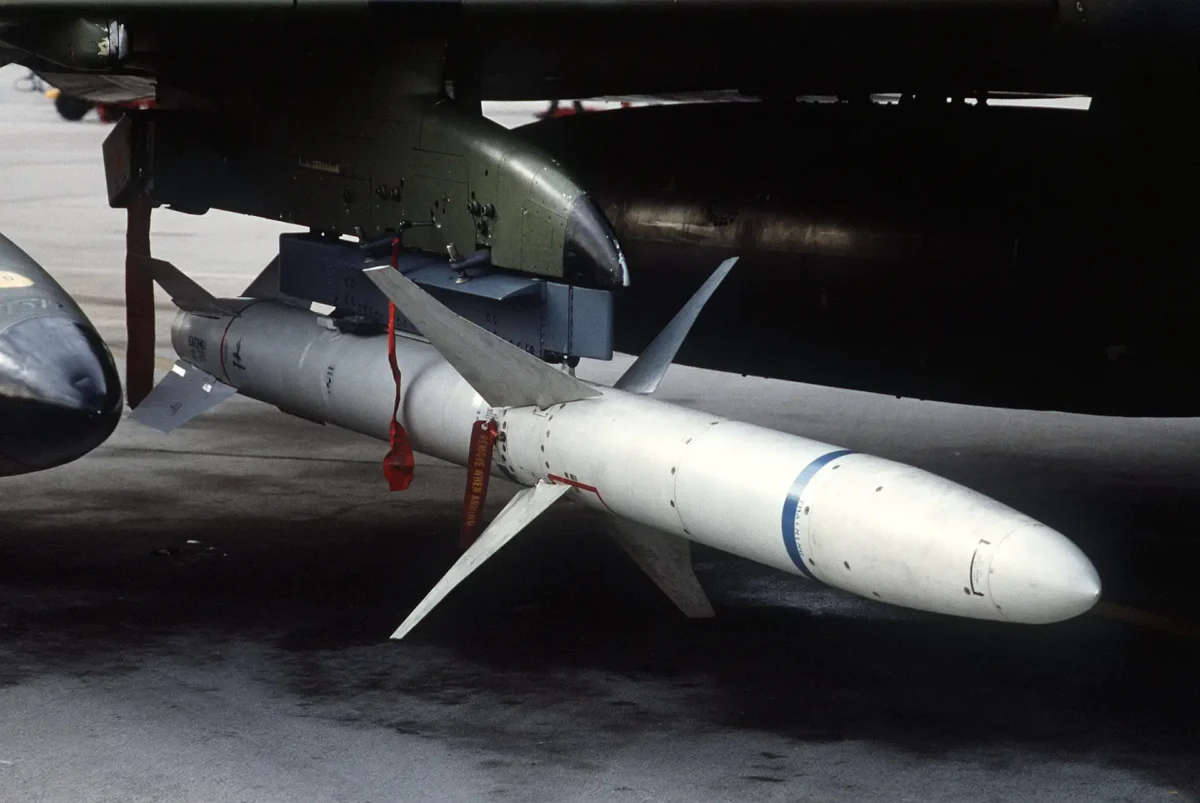
And today? It’s still making headlines, especially in unexpected places like Ukraine, where aging Soviet-era fighters have been jury-rigged to carry a missile designed decades later. The story of the AGM-88 isn’t just about technology; it’s about adaptation, survival, and the chess game of electronic warfare.
At its core, the AGM-88 HARM is an air-launched anti-radiation missile designed to hunt down and destroy enemy radar systems. But that description alone doesn’t really capture its character.
Unlike most missiles, which lock onto solid, physical targets, the HARM is guided by something intangible—electromagnetic emissions. If a radar switches on and starts scanning the skies, the HARM can “hear” that signal, fix on it, and then race toward the source at supersonic speed.
The program first took shape in the late 1970s, during a time when U.S. pilots were learning hard lessons over Vietnam.
Enemy radar-guided SAMs (surface-to-air missiles) had proven devastating, and the U.S. military needed something far more reliable than the earlier AGM-45 Shrike and AGM-78 Standard ARM. Those older missiles were limited, often fooled if the radar shut down mid-flight.
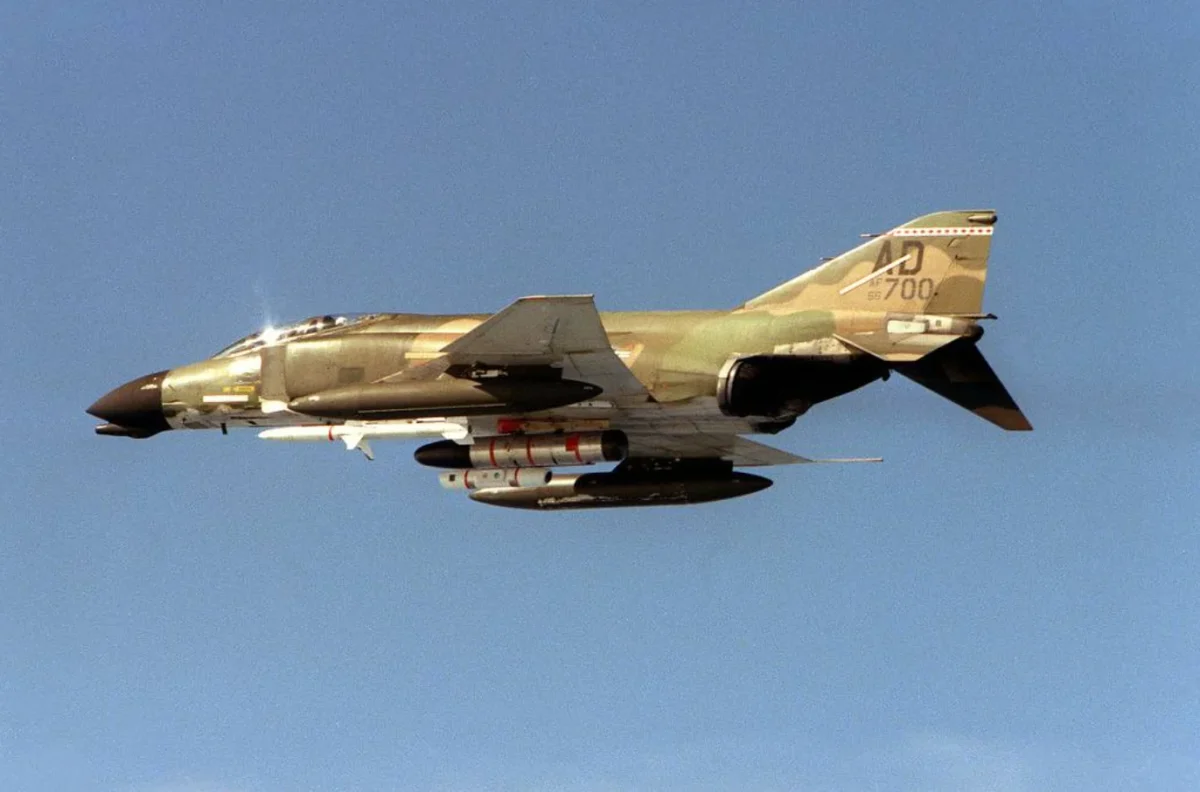
Engineers at Texas Instruments (later joined by Raytheon) sought a weapon with sharper “ears,” faster response, and a smarter brain. By 1985, the AGM-88A HARM was officially in service, ready to fly from Navy F/A-18s and Air Force F-4G “Wild Weasel” jets.
When people first hear about the AGM-88 HARM, they often picture some mysterious black-box weapon that magically homes in on radar beams. In reality, it’s a very physical machine—long, lean, and built for speed. Its design balances brute force with the precision needed to find a target that, to the naked eye, doesn’t even exist.
The original AGM-88A measured just over four meters in length (about 13 feet), with a diameter of 10 inches and a wingspan of 3.5 feet. It weighs roughly 360 kilograms (around 800 pounds), a size that makes it compatible with a wide variety of fighter aircraft without slowing them down too much.
Despite that weight, the HARM can hit speeds of over Mach 2, giving radar operators little time to react once it’s in the air.
But the numbers only tell part of the story. The heart of the system is its guidance package, which has steadily evolved. Early models used a simple passive radar seeker—basically an antenna tuned to enemy radar frequencies.
If the radar shut down, however, the missile could lose track. Later blocks added inertial navigation and GPS updates, allowing the weapon to “remember” where the signal came from and keep flying toward it.
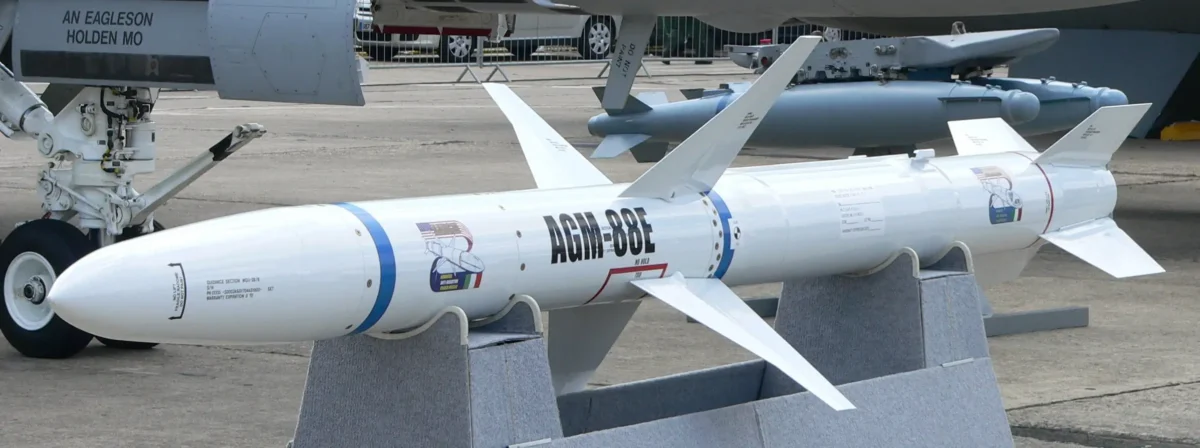
The newest versions, like the AGM-88E AARGM, layer in millimeter-wave radar for terminal guidance, meaning the missile can prosecute a target even if the radar goes dark.
Here’s a simplified breakdown for quick reference:
| Specification | AGM-88 (Baseline) | Upgraded Variants (C/E/G) |
| Length | 13 ft (4.1 m) | ~13.5 ft (4.1–4.3 m) |
| Diameter | 10 in (25.4 cm) | Same |
| Weight | ~360 kg (800 lb) | ~355–370 kg |
| Speed | Mach 2+ | Mach 2+ (faster boost on ER) |
| Guidance | Passive RF seeker | Passive RF + GPS/INS + radar |
| Range | ~48–150 km (variant-dependent) | Up to 300 km (AARGM-ER est.) |
| Warhead | Blast-fragmentation | Blast-fragmentation (improved) |
What makes these specs so important is not just the raw performance but how adaptable they are. The HARM isn’t a “one-size-fits-all” missile. Its variants allow different aircraft—whether an F-16CJ Wild Weasel or a stealthy F-35—to carry a version tailored for the mission at hand.
On paper, the AGM-88 HARM is described as a “high-speed anti-radiation missile.” Sounds clinical, almost boring. But the way it actually works is closer to science fiction than engineering jargon. This is a missile that literally hunts invisible energy, chasing the electromagnetic whispers of enemy radar across the sky.
At its simplest, the HARM follows a three-step logic: detect, lock, destroy. The seeker in its nose is tuned to the frequencies used by enemy radars.
The moment a radar beam lights up, the missile’s brain recognizes it and plots a path toward the source. Once fired, the HARM rides those signals all the way home, closing the distance at over twice the speed of sound.
That sounds straightforward until you consider the chess match going on in the background. Enemy radar operators aren’t fools, they know HARMs are out there. One common tactic is the “blink defense,” where radar operators shut off their system as soon as they detect a HARM launch.
Early versions of the missile struggled with this, sometimes losing track if the signal disappeared mid-flight. Pilots joked that HARMs could be tricked like bloodhounds losing a scent trail.
But later upgrades changed the game. GPS and inertial navigation were added, giving the missile a kind of memory. If the radar shut down, the HARM could keep flying to where the emitter had been.

The AARGM variant went even further, adding an active radar seeker in the final stage of flight. That meant even if the radar stayed off, the missile could still “see” and hit the radar vehicle itself.
Think of it like this: the early HARM was a guard dog that chased the sound of an intruder’s footsteps. Modern HARMs, though? They’re guard dogs that can follow the footprints, sniff the air, and then still tackle the intruder even if he goes quiet.
This blend of speed, memory, and multi-sensor guidance makes the HARM not just a missile, but a constant threat to any radar crew daring to switch on their system.
The story of the AGM-88 HARM is really a story of reinvention. Each new variant reflects a response to smarter enemies, trickier defenses, and the relentless cat-and-mouse of electronic warfare. What began in the 1980s as a straightforward “radar killer” has since branched into a family of weapons, each more cunning than the last.
The early models, AGM-88A/B/C, were the workhorses of the Cold War and beyond. They carried a passive radar seeker, a fragmentation warhead, and enough speed to make radar crews sweat.
The “C” model introduced software refinements, better memory, and options for different warhead fuzing, making it far less forgiving to targets that tried to play hide-and-seek by switching off their emitters. These versions were used extensively in conflicts like Desert Storm and Kosovo, where suppressing Soviet-built SAM systems was a daily priority.
Then came the AGM-88D, which layered in GPS guidance. That addition may sound small, but it solved one of the missile’s biggest problems: what to do when the radar signal vanished. With GPS, the missile could continue toward the emitter’s last known location, drastically increasing the odds of a hit.
The real leap, however, arrived with the AGM-88E AARGM (Advanced Anti-Radiation Guided Missile). Developed by Northrop Grumman, this version fused multiple sensors—passive radar, GPS/INS, and a terminal active radar seeker.
Imagine a missile that doesn’t just follow a radar signal but can positively identify the radar vehicle itself, even if it tries to “go dark” or drive away. It turned the HARM from a specialist tool into a true hunter-killer.
And then came the AGM-88G AARGM-ER (Extended Range). This wasn’t just an upgrade; it was practically a new missile. A bigger motor and a reshaped airframe extended its reach dramatically, giving pilots the ability to launch from well outside the danger zone.
It’s also designed with stealth-era platforms in mind, fitting inside the weapons bay of the F-35. With AARGM-ER, the U.S. and allies now have a radar-killer that matches the speed, range, and survivability demanded by 21st-century air combat.
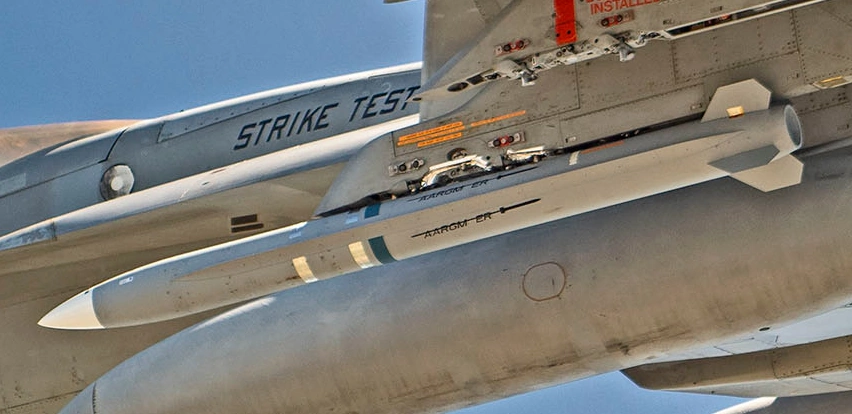
In short, the HARM has grown from a sharp spear into a versatile toolkit—one that continues to evolve as air defense systems get more advanced.
One of the biggest reasons the AGM-88 HARM became so enduring is its flexibility. Unlike some specialized weapons that only bolt onto a single aircraft, the HARM family was designed with wide compatibility in mind.
Over the years, it has flown under the wings of everything from legacy Cold War jets to cutting-edge stealth fighters, turning ordinary aircraft into dedicated radar hunters.
The missile’s earliest home was with the U.S. Navy’s F/A-18 Hornet and the Air Force’s F-4G “Wild Weasel.” Those Weasels became legendary in the SEAD (Suppression of Enemy Air Defenses) role, flying directly into the teeth of enemy air defense networks while armed with HARMs to clear the way for strike packages.
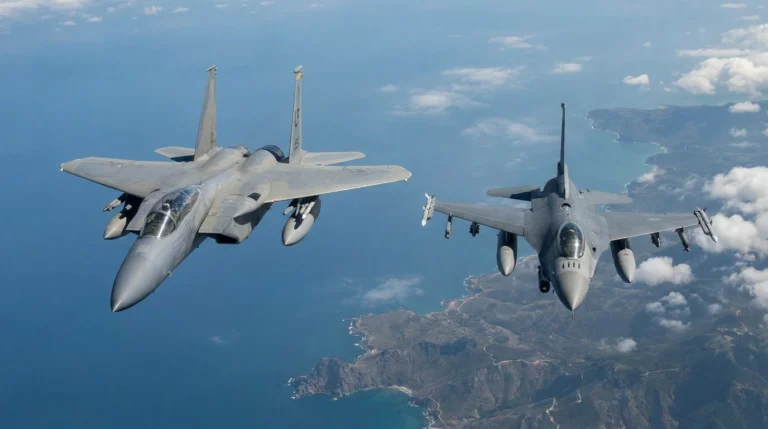
When the F-4G was retired, the baton passed to the F-16CJ/CM Fighting Falcon, which remains one of the most recognized HARM carriers today.
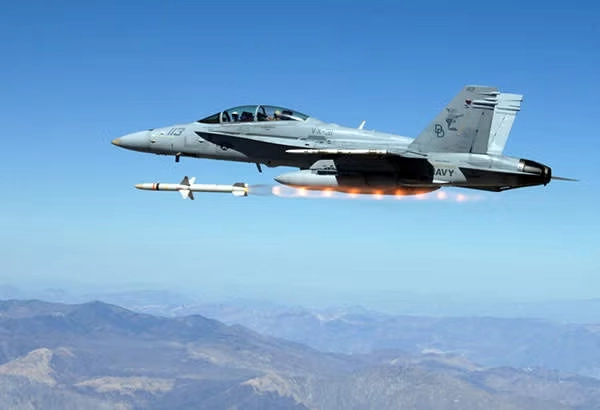
The Navy and Marine Corps expanded the playbook with the EA-6B Prowler and later the EA-18G Growler, both electronic warfare specialists. With these aircraft, the HARM became part of a broader package: jamming, deception, and radar-hunting all rolled into one mission set. Growlers in particular can carry multiple HARMs while simultaneously blinding enemy radars with electronic attack, a brutal one-two punch.
Internationally, the missile has had an equally interesting journey. German Tornado ECRs carried HARMs during NATO operations in the Balkans. Italy and several other NATO countries integrated it as well, relying on the weapon to keep Russian-made SAMs at bay.
More recently, the HARM has shown up in places nobody quite expected, like Ukraine, where engineers improvised to fit the missile onto aging Soviet-designed MiG-29s—proof that when survival is on the line, ingenuity finds a way.

And then there’s the future. The AGM-88G AARGM-ER is being integrated with the F-35 Lightning II, both in external pylons and eventually inside its weapons bay for stealth operations. That step cements the missile’s role not just as a Cold War relic upgraded for modern battles, but as a cornerstone of tomorrow’s air campaigns.
From Wild Weasels to stealth jets, the AGM-88 has proven it doesn’t belong to one aircraft or one era. It adapts, just like the pilots who trust it to keep them alive.
If you want to understand the impact of the AGM-88 HARM, you can’t just stare at spec sheets—you have to see where it’s been fired in anger. Every conflict where it showed up tells a story not only about the missile, but also about how enemies responded to its presence.
The HARM got its baptism of fire during Operation El Dorado Canyon in 1986, the U.S. airstrike against Libya. Radar sites were among the first targets, and HARMs were the tool for the job. Just two years later, during Operation Praying Mantis in the Persian Gulf, the missile again played a central role in blinding Iranian radars.
But its breakout performance came in Desert Storm (1991), when U.S. and coalition forces faced one of the densest Soviet-built air defense networks outside of the USSR itself. Wild Weasel crews in F-4Gs and F-16CJs fired hundreds of HARMs, systematically stripping away radar coverage and allowing strike aircraft to hit Iraqi targets with far less risk.

The Balkans in the late 1990s brought another test. In Operation Allied Force over Kosovo, Serbian radar operators learned to play cat-and-mouse, switching their emitters on for just seconds at a time.
HARMs still rained down, but it was clear that adversaries were learning—the need for smarter seekers and GPS-guided memory became painfully obvious. This was the crucible that pushed the U.S. to accelerate the development of AARGM.
Fast forward two decades and the HARM has once again made headlines, this time in Ukraine (2022–present). Western-supplied missiles were adapted for use on Ukrainian MiG-29s and Su-27s, aircraft never intended to carry them. That improvisation shocked many observers.
Videos and photos quickly circulated of missile fragments with “AGM-88” markings, proof that the old Wild Weasel playbook was alive and well in Europe’s largest war since 1945.
Ukrainian pilots have used HARMs to harass and degrade Russian air defense batteries, forcing them to relocate or shut down—a classic example of how even the threat of the missile can shape the battlefield.
From Libya to Iraq, from Serbia to Ukraine, the HARM has proven itself more than just a missile. It’s a psychological weapon that forces radar operators into a dilemma: turn on the radar and risk destruction, or turn it off and go blind. Either way, the pilots it protects gain the edge.