Follow Us:
Follow Us:

When people talk about modern air combat, they often picture roaring jets, twisting dogfights, and that heart-stopping moment when a missile leaves the rail.
But here’s the quiet truth: most air battles today never happen within eyesight. They’re decided dozens of miles apart, with one pilot never even glimpsing the other. Enter the R-77 missile, NATO codename AA-12 Adder, Russia’s go-to “beyond visual range” (BVR) air-to-air weapon.
What makes the R-77 interesting isn’t just its technical sheet, though that’s plenty impressive; it’s the way it reshaped Russia’s approach to missile combat. Born in the late Cold War, this weapon wasn’t designed to dazzle at air shows or look sleek on posters; it was crafted to give Russian fighters a missile that could match the AIM-120 AMRAAM, the West’s reigning champion of BVR warfare.
Think of it as Moscow’s answer to Washington’s heavyweight boxer, different stance, similar punch.
At first glance, the R-77 looks conventional: a long, cylindrical missile with a pointed nose. But its signature feature is unmistakable, those lattice, almost cage-like fins at the rear.
They’re not just there to look futuristic; they give the missile extraordinary agility at high angles of attack, something that helps it remain deadly even against highly maneuverable targets. Pilots have described it, half in jest, as the “missile with a waffle-iron tail.”
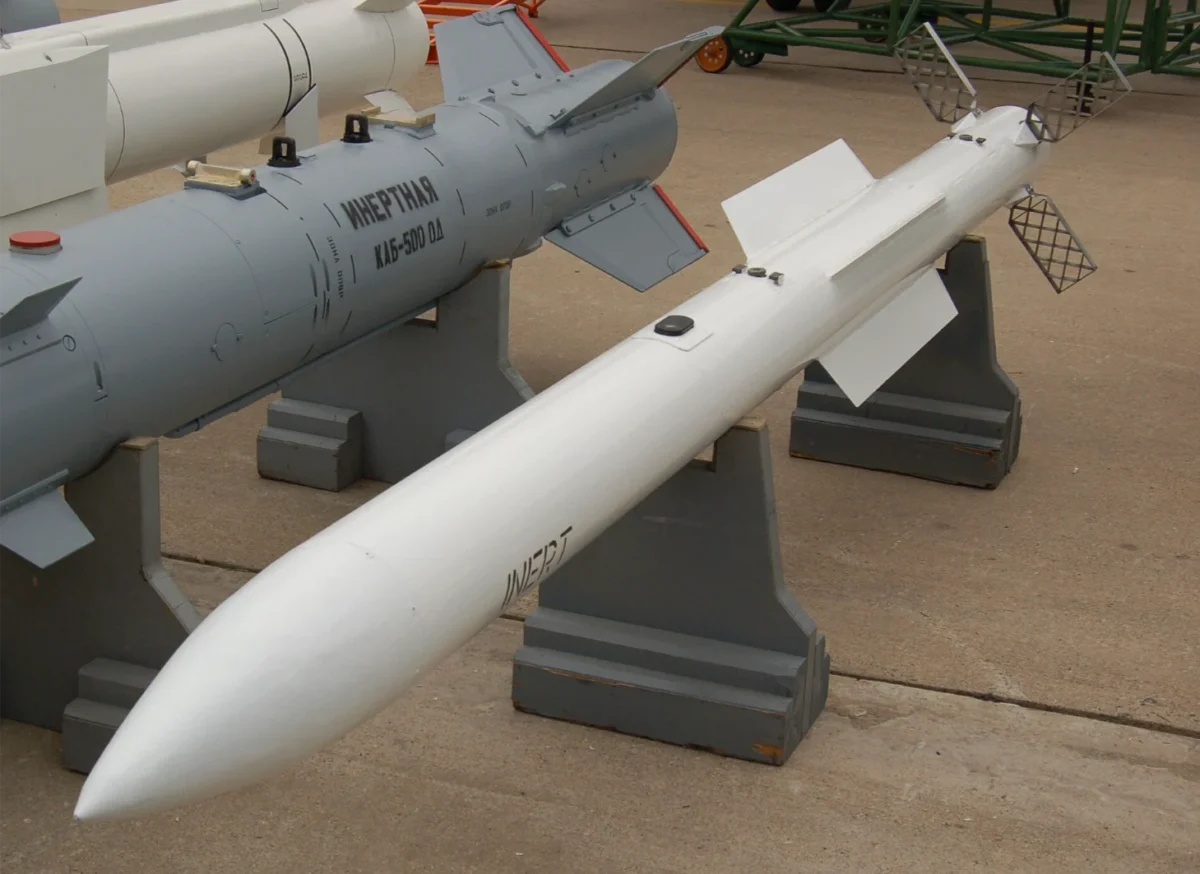
Of course, the missile’s story doesn’t stop at design quirks. Over the years, multiple variants have rolled out, R-77-1, RVV-SD, and the much-discussed R-77M (Izdelie 180), each one pushing range, guidance precision, and resistance to electronic countermeasures further.
If you follow reports from Ukraine or Russian defense expos, you’ll notice that the R-77M in particular is being presented as a leap into a new era of long-range dueling.
So why should you care? Because the R-77 is more than hardware, it’s a lens into how Russia prepares for aerial combat, how it adapts to Western systems, and how future skies might be contested. In the following sections, we’ll peel back its layers, specifications, variants, and even how it stacks up against rivals like the AIM-120 and China’s PL-15.
Every weapon has a backstory, and the R-77 missile is no exception. Its journey began in the late Cold War, when Soviet designers realized that their air-to-air arsenal was lagging behind the West.
The Americans had just introduced the AIM-120 AMRAAM, a missile that promised “fire-and-forget” capability, pilots could shoot, break away, and trust the missile’s active radar seeker to finish the job. For the Soviet Union, this was a wake-up call. If they wanted to maintain parity in aerial combat, they needed a counterpart.
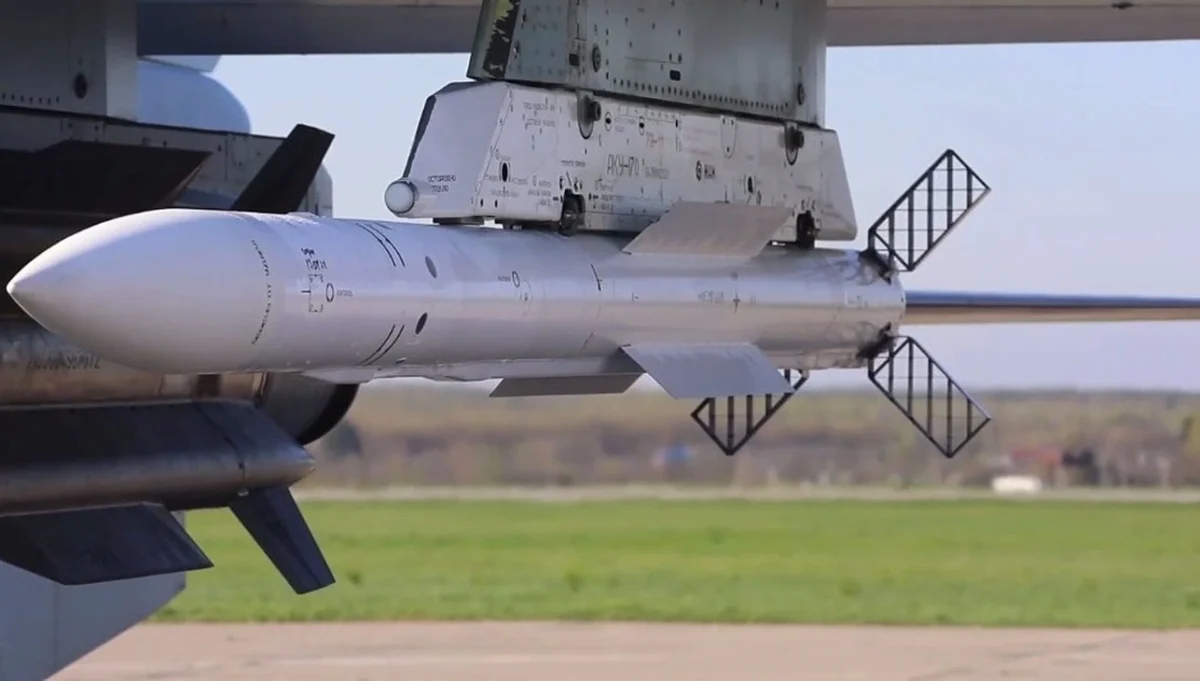
The task fell to the Vympel Design Bureau, a legendary Russian firm responsible for many of the country’s most famous air-to-air weapons. Work kicked off in the early 1980s, and by the late decade, prototypes were already flying.
Engineers experimented with something radically different: instead of traditional tail fins, they opted for lattice (grid) fins. These weren’t just stylistic; they allowed compact storage on aircraft while still delivering exceptional maneuverability, especially at high angles of attack.
But development was anything but smooth. The collapse of the Soviet Union in 1991 left the R-77 program stranded in a tangle of funding shortages, political uncertainty, and shifting priorities. For years, progress slowed to a crawl.
Russia’s defense industry was in survival mode, selling export versions of the R-77 (marketed as the RVV-AE) just to keep factories running. Ironically, that export push kept the missile alive. Countries like India and China became early customers, sustaining the program while Russia rebuilt its own air force.
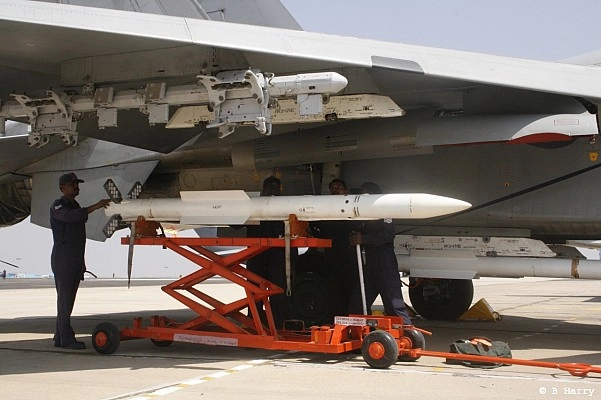
By the 2000s, modernization efforts breathed new life into the project. Improved seekers, longer-range motors, and better resistance to jamming were rolled into the R-77-1, which entered service in the 2010s. Later came the R-77M (Izdelie 180), tailored for Russia’s newest fighter, the Su-57, with redesigned fins and a reported active electronically scanned array (AESA) seeker.
What’s fascinating here isn’t just the technology, but the persistence.
The R-77 is essentially a survivor of history: born in the USSR, kept alive by export dollars, and matured into a modern weapon for Russia’s 21st-century air force. Its evolution mirrors Russia’s own post-Cold War defense struggles, stalled, then revived, always chasing Western benchmarks but carving out unique solutions along the way.
If you’re the kind of person who likes to cut through the storytelling and get straight to the numbers, this section is for you.
The R-77 missile may be wrapped in layers of military secrecy, but enough reliable data has trickled out to give us a pretty sharp picture of its core specifications. And let’s be honest, specs tell their own story. They show us not just what a missile is, but what it aspires to do.
Here’s a breakdown of the most cited figures for the R-77 and its early variants (RVV-AE export model). Keep in mind: exact numbers vary depending on the variant and the source, but these figures give us a solid baseline.
| Specification | R-77 (Baseline / RVV-AE) |
| Length | ~3.6 meters (11.8 ft) |
| Diameter | 200 mm (7.9 in) |
| Launch Weight | ~175 kg (385 lbs) |
| Warhead | 22.5 kg fragmentation |
| Guidance | Inertial + active radar seeker |
| Control Surfaces | Grid fins (lattice type) |
| Propulsion | Solid-fuel rocket motor |
| Speed | ~Mach 4 (est.) |
| Effective Range | 80–110 km (baseline) |
| Service Ceiling | 25 km (~82,000 ft) |
Now, raw numbers don’t capture everything. The grid fins, for instance, aren’t just a quirky aesthetic—they allow for tight, last-second maneuvers that can catch even agile fighters off-guard. Western engineers have often debated the trade-off: those fins increase drag, but they also give the R-77 a distinctive edge in dogged pursuit.
The missile’s active radar seeker makes it a true fire-and-forget weapon. Once launched, the pilot doesn’t need to babysit it, freeing them to break off or fire another shot. Still, the missile can accept mid-course updates via datalink, meaning it doesn’t just fly dumbly in a straight line—it’s continually fed information until its radar takes over in the terminal phase.
Numbers also reveal philosophy. Notice the warhead size: 22.5 kg may sound modest, but fragmentation warheads are brutally effective. They don’t have to “smash” an aircraft directly; a near-miss is often enough to spray lethal fragments into engines, wings, or cockpits.
If the missile’s body is its muscle, then the guidance and seeker system is its brain. This is where the R-77 missile distinguishes itself—not only by matching Western designs but, in some cases, by carving its own path.
At its core, the R-77 relies on a combination of inertial navigation and an active radar seeker. The inertial stage handles the early portion of flight, keeping the missile on a calculated intercept path. Think of it like a driver setting off on a road trip with a rough map in hand.
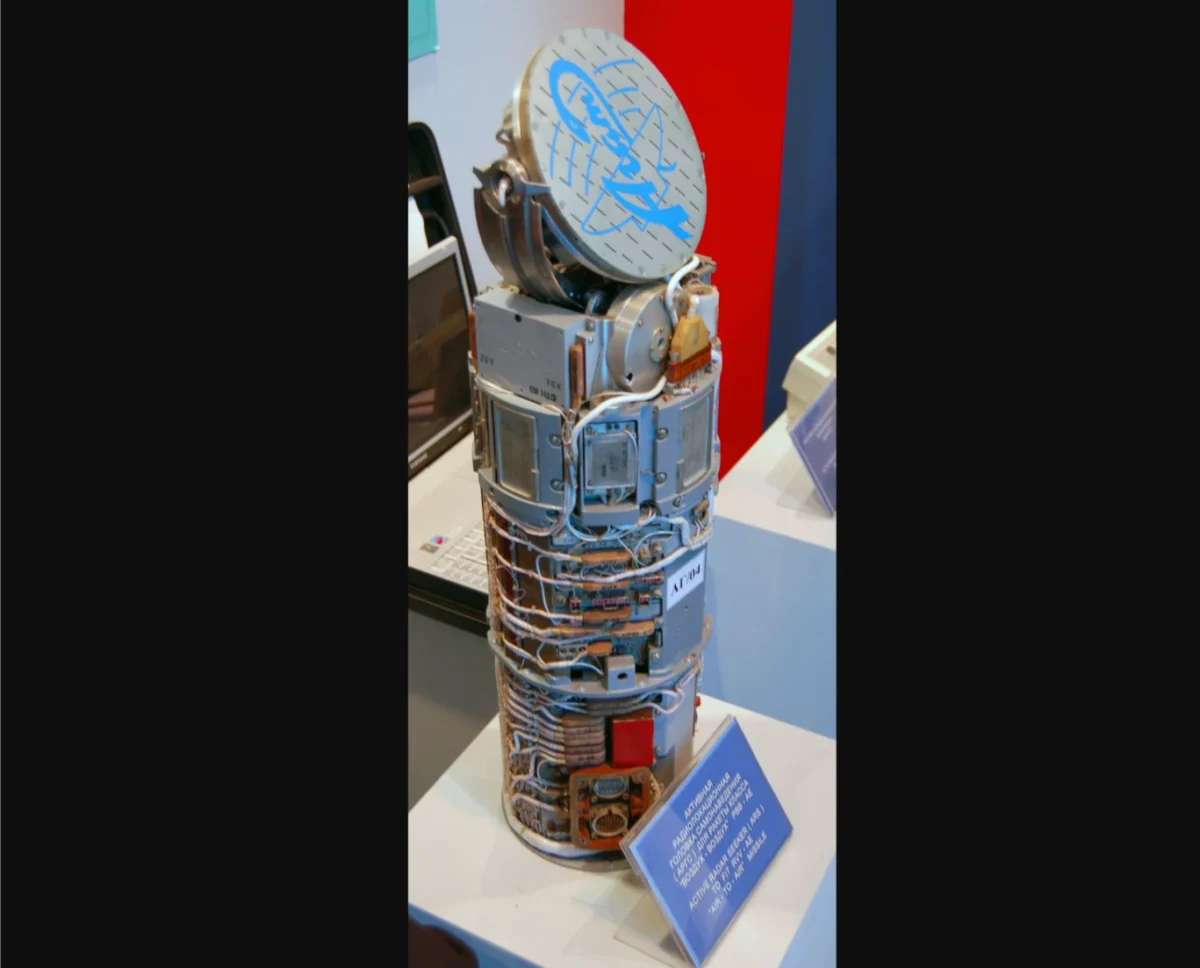
But midway, the missile can receive datalink updates from the launching aircraft. These updates fine-tune its course, adjusting for a target that’s maneuvering, climbing, or trying to shake pursuit. By the time the missile closes in, the active radar seeker takes over—locking onto the target independently, without further pilot assistance. That’s the “fire-and-forget” magic.
What makes this particularly dangerous is the multi-phase adaptability. The pilot doesn’t need to keep radar pointed at the enemy the whole time, unlike with older Soviet weapons like the R-27R, which required continuous illumination.
The R-77 lets the pilot launch, then dive away, fire another weapon, or break radar lock, reducing exposure to enemy counterfire.
Now, here’s where variants matter. The R-77-1 improved the seeker with more sophisticated processing power and better resistance to electronic countermeasures (ECM). In modern air warfare, ECM is everywhere: aircraft spew radar noise, decoys, and jammers to confuse incoming missiles.
The R-77-1 was designed to cut through that fog, holding a lock where earlier seekers might have been tricked.
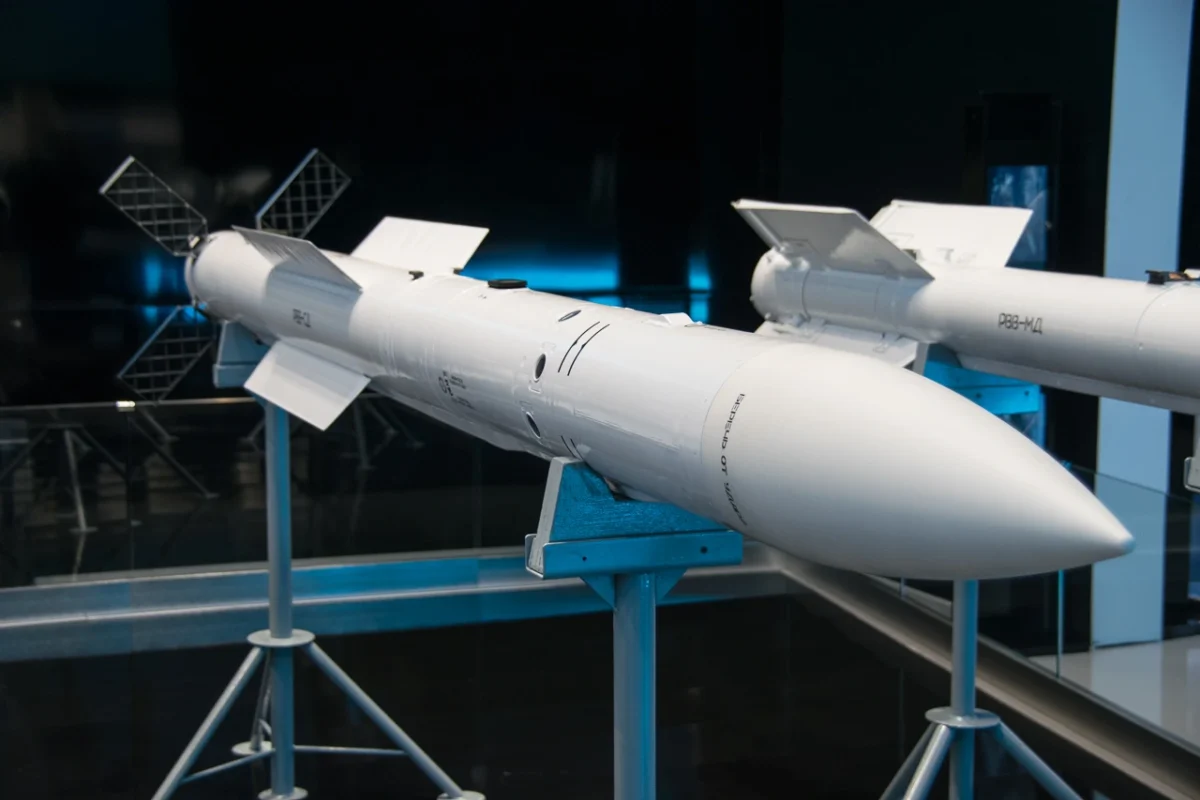
The latest development, the R-77M (Izdelie 180), reportedly takes it a step further with an active electronically scanned array (AESA) seeker.
Instead of a mechanically steered antenna, the AESA can electronically “jump” its radar beam across frequencies, scanning faster, resisting jamming, and tracking even stealthier targets. If those claims hold true, it would place the R-77M in the same league as Western top-tier seekers like those on the AIM-120D.
There’s also a subtle point worth mentioning: seeker miniaturization. Packing advanced electronics into a compact nose cone without overheating or losing reliability is an engineering art form.
Each new generation of the R-77 isn’t just about longer range; it’s about cramming more “smarts” into the same physical footprint. That, more than anything, determines whether a missile is relevant or obsolete in a sky thick with countermeasures.
The R-77 missile is not a single, frozen-in-time design. It’s more like a family tree that’s been branching and mutating for decades, with each variant reflecting new priorities, new technologies, or simply the reality of keeping up with rival missiles like the AIM-120 AMRAAM or China’s PL-15.
Looking at these variants side by side helps us understand how Russia’s design philosophy has shifted from the 1990s through today.
Here’s a simplified comparison table of the most notable versions:
| Variant | Key Features | Estimated Range |
| R-77 (baseline) | Original design with grid fins, active radar seeker | 80–90 km |
| RVV-AE (export) | Export model of R-77 | 80 km |
| R-77T / R-77P | Infrared (T) and passive radar (P) seekers | ~80 km |
| R-77-1 (RVV-SD) | Improved motor, better seeker, higher ECM resistance | 110 km |
| R-77M (Izdelie 180 / K-77M) | AESA seeker, longer body, clipped fins, dual-pulse motor | 160–200 km (claimed) |
What’s striking here is how each iteration addresses very specific challenges. The baseline R-77 was about getting Russia into the “active radar” club, competing with the AIM-120. The RVV-AE kept the lights on during the post-Soviet defense crisis by bringing in export dollars, even if it wasn’t cutting-edge.
The R-77T and R-77P are fascinating outliers. Instead of radar, one hunts by infrared, the other homes in on enemy radar signals. They never became mainstream, but they reveal a willingness to experiment—almost like side projects in the R-77’s evolution.
The real leap, though, came with the R-77-1. By extending range past 100 km and bolstering the seeker’s resistance to jamming, it finally gave Russian fighters a credible BVR punch in the 2010s. Su-35 pilots flying over Syria, for example, reportedly carried R-77-1s as their main long-range option.
Then there’s the R-77M (Izdelie 180)—the crown jewel. Fitted with an AESA seeker and a dual-pulse rocket motor (allowing the missile to “sprint” again in its terminal phase), it promises engagement ranges well beyond earlier models.
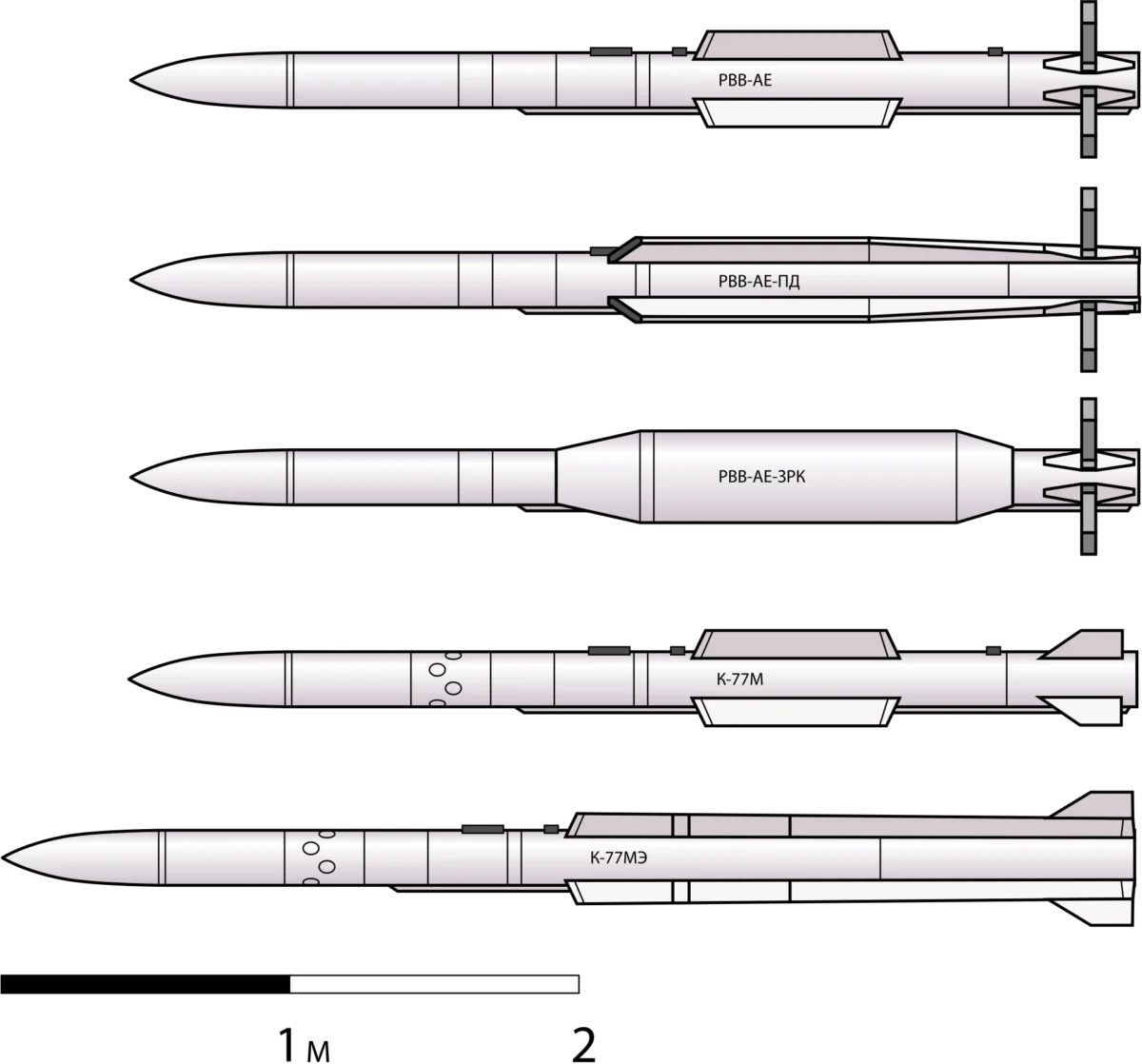
For Russia’s Su-57 stealth fighter, this missile is designed to be the spear tip, sliding into internal bays where the original lattice fins wouldn’t fit. That’s why the R-77M swaps its cage-like fins for slimmer control surfaces.
In short, the R-77’s evolution is like watching a Soviet-era workhorse gradually transform into a sleek, modern predator. Each version tells a story: survival, adaptation, and ambition. And those ambitions only make sense when we see how the missile is actually deployed in the real world.
A missile’s worth isn’t measured on the factory floor—it’s proven in the air, strapped under wings, carried into contested skies, and fired when it counts.
The R-77 missile has slowly earned its place as the standard beyond-visual-range (BVR) weapon for Russian and export fighters, though its journey from prototype to frontline service has been uneven.
When first fielded in the 1990s, the R-77 was carried primarily by MiG-29 Fulcrum and Su-27 Flanker variants. These aircraft were the backbone of post-Soviet air power, and the missile’s compact size allowed multiple rounds to be mounted on pylons without compromising agility.
As the years rolled on, the improved Su-30SM, Su-35S, and export-oriented Su-30MKI (India) became the mainstay carriers of the updated R-77-1 (RVV-SD). Pilots valued the combination of range and agility, though operational reports often hinted at teething issues with seeker reliability in cluttered environments.
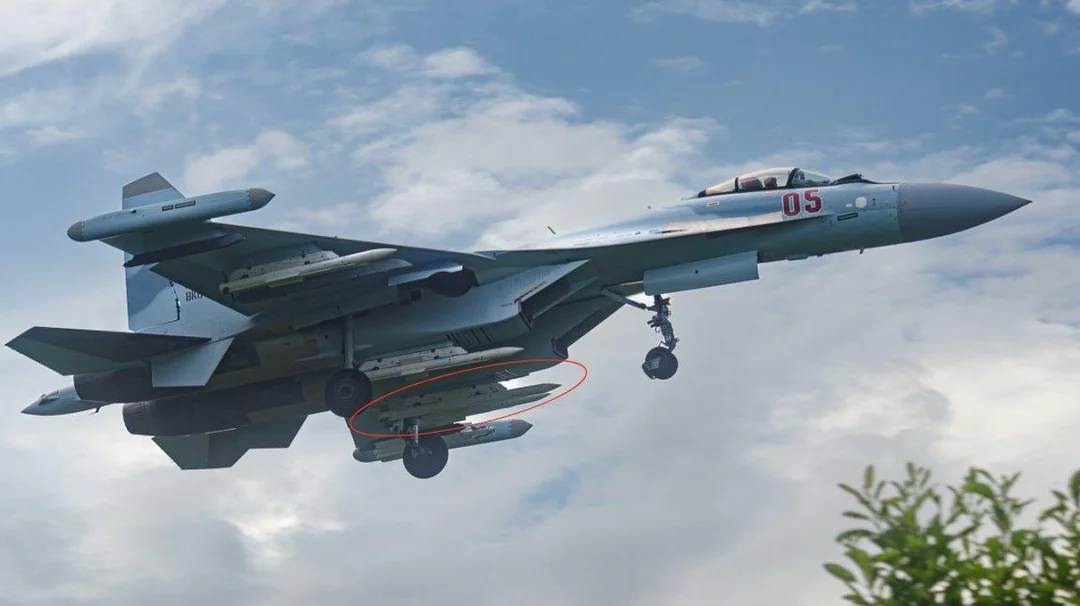
The R-77 family has also found its way into real combat zones. During the Syrian conflict, Russian Su-35s and Su-30SMs patrolled with R-77-1s slung beneath their wings, serving as deterrence against Western aircraft operating nearby. While there are no confirmed “kills” attributed to the missile in Syria, its mere presence altered the tactical landscape, forcing NATO pilots to respect Russian BVR envelopes.
The war in Ukraine has provided perhaps the most revealing glimpse into the R-77’s role. Both Russia and Ukraine operate aircraft capable of firing variants of the missile.
Reports suggest that R-77-1s have been launched against Ukrainian jets and drones, though like all modern missile warfare, the results are clouded by propaganda and limited battlefield transparency. What is clear is that the R-77 has become Russia’s go-to BVR weapon, replacing older semi-active radar missiles like the R-27.
Looking ahead, the R-77M (Izdelie 180) is being tailored for Russia’s stealth fighter, the Su-57 Felon. Unlike earlier grid-fin designs, which wouldn’t fit inside the Su-57’s internal weapons bays, the R-77M uses clipped fins and a redesigned airframe.
This adaptation isn’t cosmetic, it’s survival. Stealth jets can’t afford to hang weapons externally without losing their radar-evading advantage.
In short, the R-77 has grown from a Cold War-inspired counter to AMRAAM into a versatile staple of modern Russian air combat. Whether on legacy Su-27s or cutting-edge Su-57s, it has become the defining long-range punch of Russia’s fighter fleet.
When talking about the R-77 missile, it’s impossible not to bring up its two biggest rivals: the American AIM-120 AMRAAM and the Chinese PL-15 Missile. These three weapons embody three different philosophies of aerial warfare, shaped by geography, doctrine, and technology. Comparing them isn’t just about numbers on a chart, it’s about understanding how different nations think about winning in the sky.
The AIM-120 AMRAAM, first fielded in the 1990s, set the benchmark for modern BVR combat. Its reputation was built during real-world conflicts, including the Balkans, Iraq, and Syria, where it scored confirmed kills.
The latest version, the AIM-120D, reportedly reaches ranges of 160 km, uses advanced ECCM (electronic counter-countermeasures), and leverages the U.S.’s unmatched network-centric warfare—aircraft, AWACS, and satellites constantly feeding missiles targeting data. In short, the AIM-120 isn’t just a missile; it’s part of a digital ecosystem.
The R-77, by contrast, started life with similar ambitions but a very different set of tools. The baseline version’s 80–90 km range lagged behind AMRAAM’s later blocks. The R-77-1 closed that gap somewhat, stretching to around 110 km. And the R-77M (Izdelie 180), with its dual-pulse motor and AESA seeker, is Russia’s answer to the AIM-120D.
On paper, it can compete. In practice, though, Russia lacks the same battle-tested kill record and robust data-link ecosystem the U.S. uses to maximize missile effectiveness. It’s like having a sports car without the pit crew and logistics chain to keep it at peak performance.
Then comes China’s PL-15, the wild card. With a claimed range of 200–250 km, thanks to its dual-pulse motor and advanced AESA seeker, it’s arguably the most ambitious of the three.
Chinese designers openly prioritized countering U.S. assets like AWACS and tankers, aiming not just to win dogfights but to cripple America’s airborne infrastructure. In this sense, the PL-15 reflects China’s strategic culture: denying the U.S. its advantage in extended, networked wars.
So where does the R-77 missile family stand? It’s competitive, especially in the R-77M form, but uneven. Against the AIM-120D, it matches in raw specifications but trails in integration and combat record. Against the PL-15, it risks being out-ranged, though Western analysts debate whether China’s range claims are fully realistic.
In many ways, the R-77 represents Russia’s struggle: brilliant engineering (grid fins, AESA seekers) hampered by limited resources and inconsistent integration. It can be deadly in the right hands, but whether it consistently dominates in real-world battles depends as much on doctrine and networks as on the missile itself.