Follow Us:
Follow Us:

When it comes to battlefield dominance and crew survivability, few machines command respect like the Merkava Tank. Designed and built entirely in Israel, this formidable Israeli main battle tank stands out not just for its firepower but also for its unconventional layout, which prioritizes crew protection above all else. With a front-mounted engine, rear troop compartment, and a high-tech active protection system, the Merkava battle tank is a symbol of Israeli innovation and wartime necessity.
Developed in response to the harsh lessons of the 1973 Yom Kippur War, the Israeli Merkava tank was conceived with one mission—survive and win in the unforgiving terrain of the Middle East. Unlike traditional Western tanks, every detail of its design serves a tactical purpose. From its modular armor to its integration of the Trophy APS, the Merkava has evolved through multiple generations—Mark I through Mark V—becoming a highly advanced platform for modern warfare.
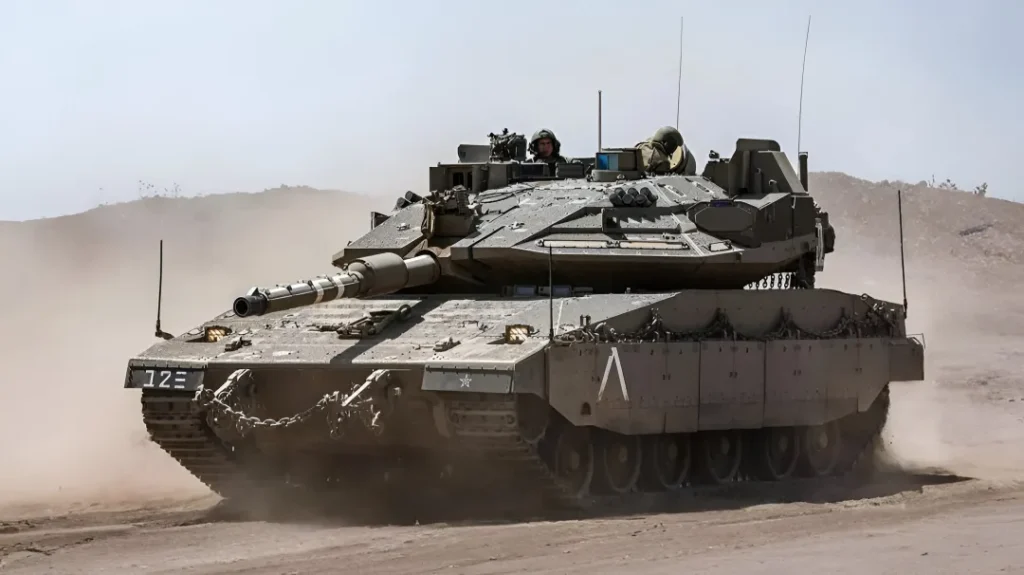
In this post, we’ll break down everything you need to know about the Merkava battlefield performance, or how it compares to other modern MBTs. This guide offers a comprehensive, easy-to-follow overview of one of the most elite armored vehicles in service today.
The origins of the Merkava tank trace back to the aftermath of the 1973 Yom Kippur War, when Israel faced critical shortages in military hardware due to reliance on foreign suppliers. Determined to break free from this dependency, the Israeli Ministry of Defense commissioned the development of a domestically produced Israeli main battle tank. Spearheaded by General Israel Tal, a visionary who had witnessed the shortcomings of imported armor firsthand, the Merkava program emphasized one thing above all: crew survivability.
The first iteration, Merkava Mark I, officially entered service in 1979. It featured a revolutionary layout with a front-mounted engine—a deliberate departure from the norm. This allowed the rear of the tank to act as a troop compartment, making the tank capable of doubling as an armored personnel carrier.
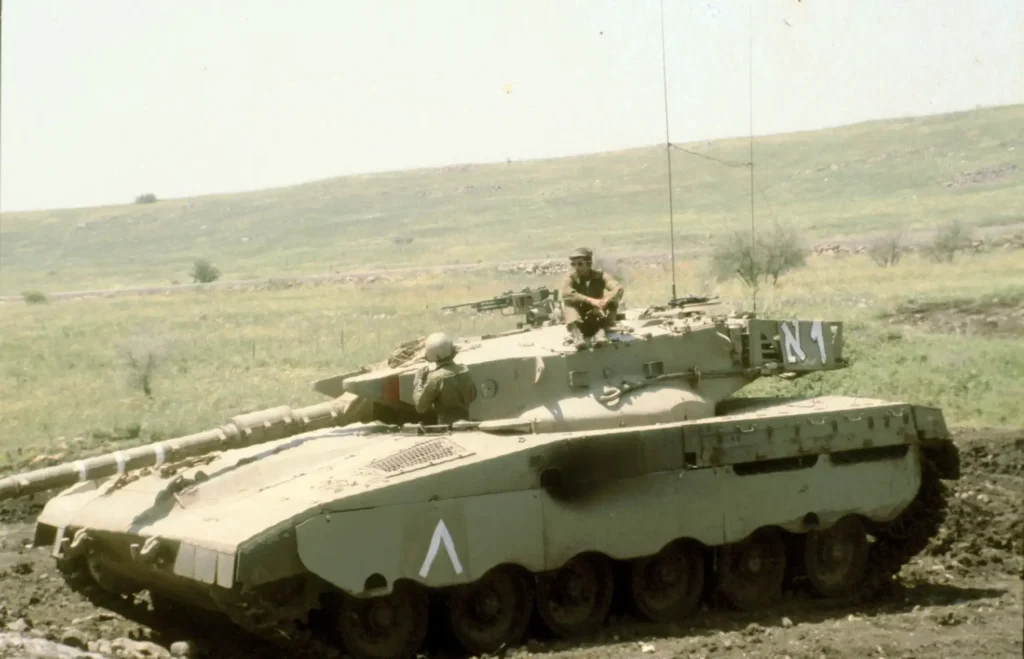
The Mark I weighed approximately 63 tons, armed with a 105mm rifled cannon, and protected by modular composite armor that could be replaced in the field. It performed successfully during the 1982 Lebanon War, proving its effectiveness in mountainous terrain and close-quarters combat.
Each successive generation brought major improvements. The Merkava Mark II, introduced in the early 1980s, upgraded its fire control and track systems. By the 1990s, the Merkava Mark III arrived with a 120mm smoothbore gun and a more powerful engine, enhancing mobility and firepower.
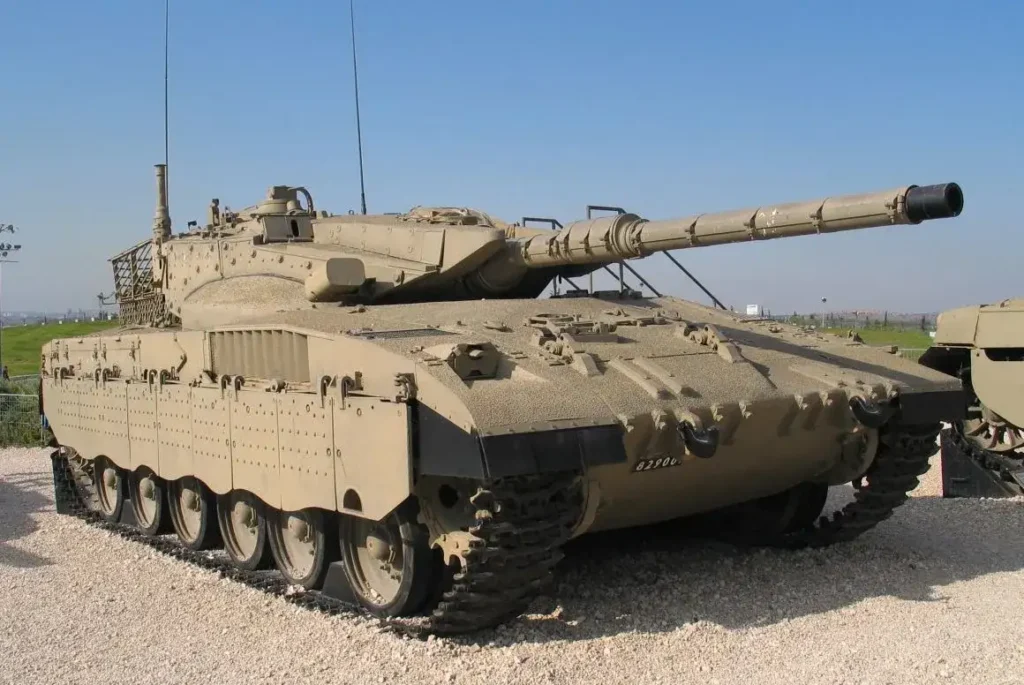
However, it was the Merkava Mark IV, launched in 2004, that represented a true technological leap. With enhanced armor, modern electronics, and the integration of the Trophy Active Protection System (APS), it became one of the most advanced tanks globally.
Now, with the anticipated full deployment of the Merkava Mark V “Barak”, Israel is pushing further into next-gen warfare with AI-driven targeting and smarter battlefield systems. Each generation not only refined the design but reinforced the Merkava’s reputation as a tank built for survival in real combat—not for showroom floors.
Beneath the rugged armor and advanced electronics lies one of the most vital components of the Merkava battle tank—its powerplant. The Merkava tank engine is a 1,500 horsepower turbocharged diesel engine, specifically developed to deliver reliable performance in Israel’s harsh and varied terrain.
Whether it’s the rocky Golan Heights, sandy Negev Desert, or urban combat zones like Gaza, this engine provides the torque and speed needed to maneuver the tank effectively under combat conditions. Placing the engine at the front not only shields the crew from incoming fire but also creates a balanced weight distribution, enhancing off-road mobility.
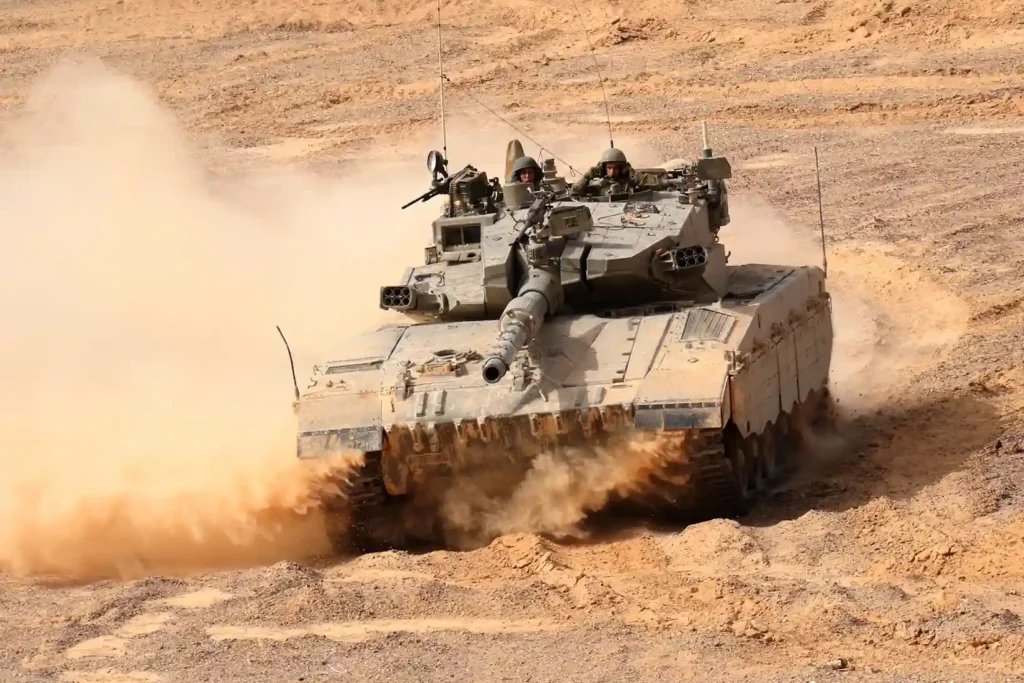
In terms of raw numbers, the Merkava tank weight of the Mark IV and Mark V hovers between 65 and 66 tons, placing it among the heavier tanks in global service. Despite this, the Merkava tank’s size and design allow for impressive agility. The tank can reach speeds of up to 64 km/h on paved roads and maintain around 55 km/h on rugged terrain. A hydropneumatic suspension system allows the tank to “kneel,” “lean,” or adjust its chassis angle, giving it an edge in targeting and mobility across uneven ground—a critical advantage in mountainous or urban settings.
Fuel efficiency and operational range are also key aspects of the Merkava’s engine configuration. On a full tank, it has a range of approximately 500 kilometers, making it suitable for extended operations without frequent refueling. Maintenance and accessibility were also factored into the engine’s design, allowing for quicker field repairs and modular replacement. This is crucial in wartime scenarios where downtime can mean the difference between victory and vulnerability.
What truly sets the Israeli Merkava tank apart from other main battle tanks is its uncompromising emphasis on crew protection—an ethos embodied in its armor design and revolutionary active defense systems. Unlike Western tanks that typically use a fixed composite armor structure, the Merkava employs modular composite armor plates.
These can be replaced or upgraded in the field, offering logistical flexibility and allowing quick adaptation to evolving battlefield threats. This system covers not just the front and turret but also the belly and roof, areas increasingly vulnerable to mines and top-attack munitions.
But armor alone isn’t enough in today’s high-threat environment. That’s why the Merkava Mark IV and Mark V are equipped with the Trophy Active Protection System (APS), one of the most battle-proven APS platforms in service. Trophy detects incoming threats such as anti-tank guided missiles (ATGMs) or rocket-propelled grenades (RPGs) using radar arrays mounted around the turret.
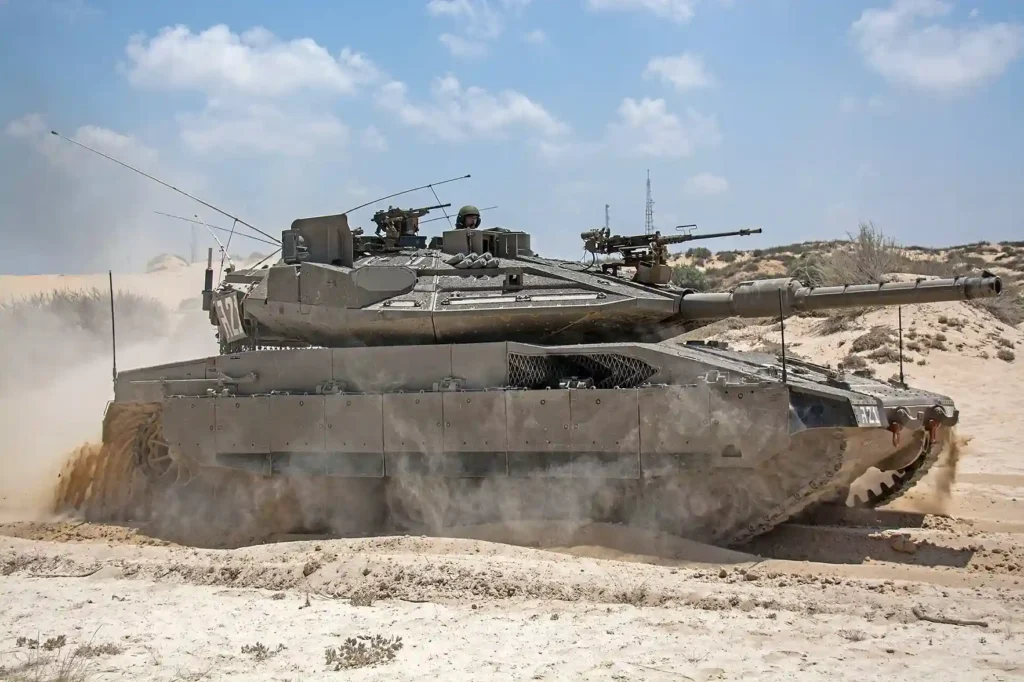
When a threat is identified, the system calculates its trajectory and launches a countermeasure to intercept and destroy the projectile before it can make contact. Since its debut, Trophy has successfully intercepted dozens of real-world threats, notably during operations in Gaza, making the Merkava the first tank in history to actively neutralize incoming missiles in live combat.
This dual-layered defense—armor for brute-force absorption and APS for interception—makes the Merkava battle tank one of the most survivable armored vehicles in the world. It’s not just about keeping the vehicle operational; it’s about ensuring the survival of its crew.
While protection and mobility are cornerstones of the Merkava tank’s design, its ability to project power is no less impressive. The main armament of the Merkava Mark IV and V is a 120mm MG253 smoothbore cannon, developed domestically to replace the older 105mm gun used on earlier models.
This cannon is capable of firing a wide variety of munitions, including high-explosive anti-tank (HEAT), high-explosive fragmentation (HE-FRAG), and anti-personnel rounds. Notably, it can also fire Israel’s LAHAT laser-guided missiles, allowing the Israeli main battle tank to engage both armored vehicles and fortified targets at ranges beyond 8 kilometers.
What makes the Merkava’s main gun even more effective is its advanced fire control system. Integrated thermal and daylight sights, laser rangefinders, and ballistic computers enable the crew to engage targets with precision whether stationary or on the move.
The gunner and commander both have independent thermal imaging systems, allowing them to hunt targets simultaneously—a feature known as “hunter-killer” capability. This system significantly reduces target acquisition time and gives the Merkava battle tank a tactical edge in fast-moving engagements.
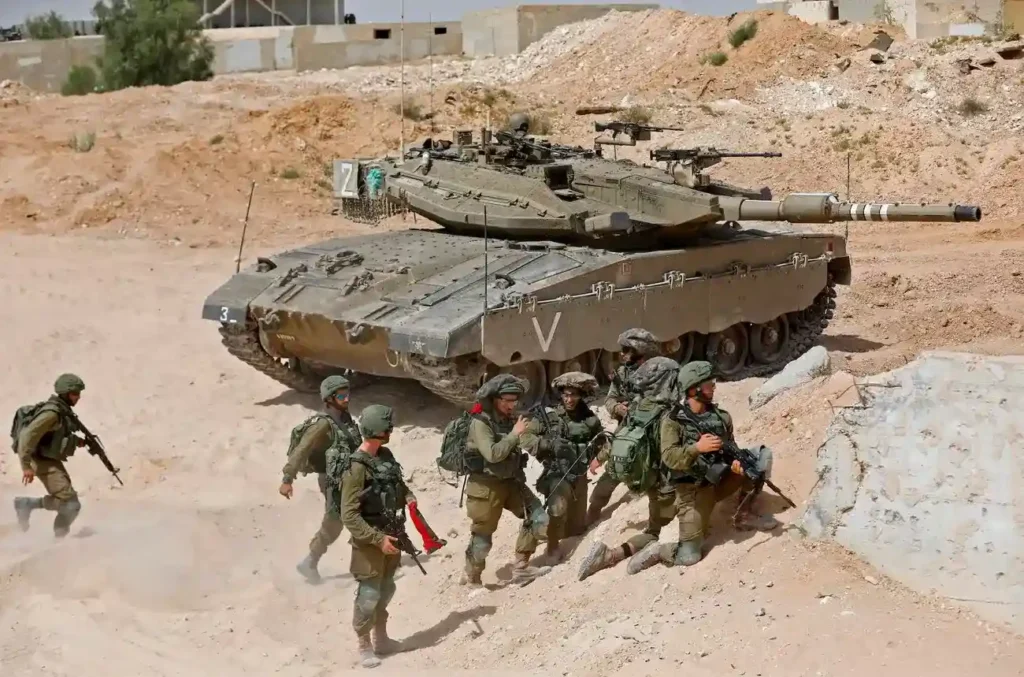
In addition to the main gun, the tank is equipped with several secondary weapons for close defense and versatility. These include a coaxial 7.62mm machine gun, a 12.7mm heavy machine gun mounted on the turret for anti-air or infantry use, and a 60mm internal mortar system. The mortar, which can be operated from within the safety of the Merkava tank interior, is particularly useful in urban and mountainous terrain where indirect fire support is essential.
These secondary systems provide comprehensive defense against infantry, drones, and light vehicles—ensuring the Merkava can operate independently or as part of a larger combined force. Together, these weapons make the Merkava not only a fortress on tracks but a mobile, adaptable offensive platform capable of dominating on today’s high-tech battlefield.
Unlike many tanks that remain largely theoretical or are tested only in training exercises, the Israeli Merkava tank has been thoroughly battle-tested in real-world combat scenarios. Its first significant deployment was during the 1982 Lebanon War, where earlier variants of the Merkava demonstrated their resilience against Soviet-made Syrian tanks and guerrilla tactics.
Since then, newer models, particularly the Merkava Mark IV, have been pivotal in numerous IDF operations, including the 2006 Lebanon War, Operation Cast Lead (2008–09), Operation Protective Edge (2014), and more recent engagements in Gaza and along the Lebanese border.
The Merkava battle tank has consistently proven its worth in asymmetric warfare. In areas like Gaza, where narrow streets and urban environments pose significant challenges, the tank’s protection systems and modular armor have repeatedly saved lives.
The Trophy Active Protection System has become a battlefield game-changer, successfully intercepting dozens of anti-tank guided missiles and RPGs in actual combat—turning what might have been catastrophic hits into non-events. These real-time defenses have transformed the dynamics of armored warfare, allowing Merkava tank crews to operate more aggressively and confidently in high-risk areas.
Furthermore, the Merkava’s design has demonstrated its versatility under various combat conditions. From engaging enemy armor and fortified positions in open fields to supporting infantry and evacuating wounded in dense cityscapes, the tank has adapted to a wide spectrum of missions. Its rear troop compartment, a unique feature among modern main battle tanks, has allowed IDF units to perform combined arms maneuvers with greater speed and flexibility.
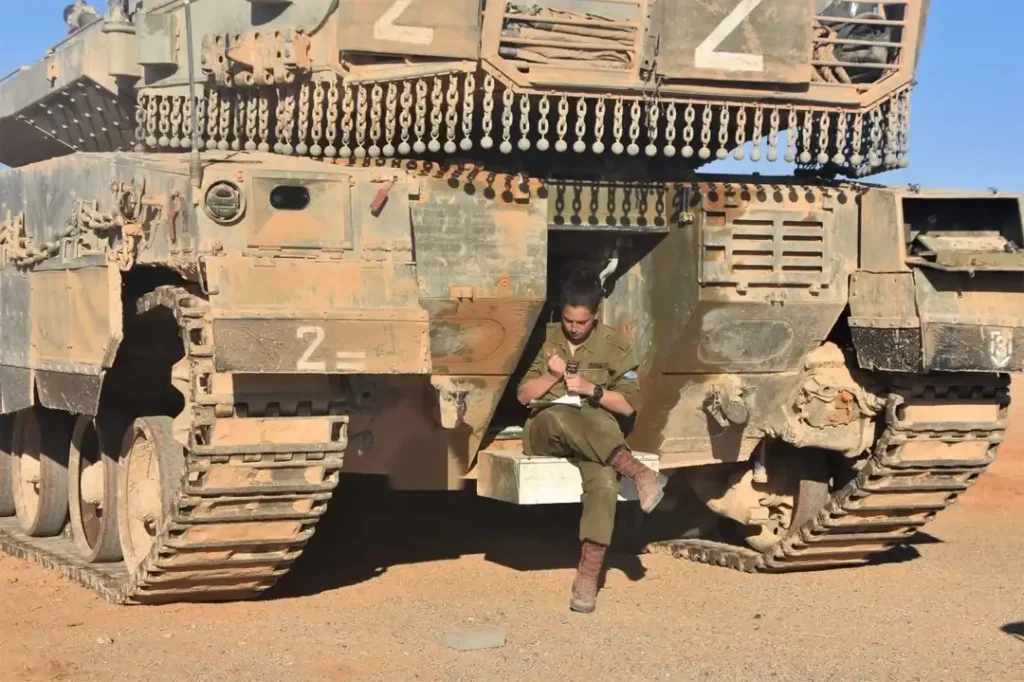
The success of the Israeli Merkava tank is not just in surviving war zones—it’s in dominating them. Its real-world record has proven that Israel’s heavy investment in protection, technology, and crew-first design pays dividends when lives and strategic outcomes are on the line.
The Merkava tank has long been a symbol of Israeli ingenuity and military pragmatism, and its reputation has steadily grown among defense analysts and militaries worldwide. While originally designed exclusively for the Israel Defense Forces, interest in exporting the Merkava has increased over the last decade—especially as the global battlefield shifts toward urban and hybrid warfare, where survivability and adaptability are paramount.
Until recently, Israel was reluctant to export the Merkava due to its sensitive technologies and the strategic edge it provides domestically. However, this stance has gradually shifted. In 2023, Israel signed agreements to export modified Merkava tanks to a few allied nations, notably Colombia and a potential Southeast Asian partner.
These export models are adapted to meet the specific operational requirements and geopolitical constraints of the buyer, often omitting or altering some of the most advanced systems, such as the full Trophy APS or battlefield management networks.
The global interest in the Israeli Merkava tank stems from its proven track record in real combat, its emphasis on crew survivability, and its modular adaptability. In a world where many militaries are reconsidering the traditional tank’s role, the Merkava offers a blueprint for what a modern armored vehicle can be: multi-role, digitally integrated, and able to protect both its crew and accompanying troops.
The Merkava tank is not just a cornerstone of Israel’s defense strategy—it’s a globally recognized symbol of innovation in armored warfare. With its front-mounted engine, modular armor, and the battle-proven Trophy Active Protection System, the Merkava prioritizes crew survivability without sacrificing offensive capability.
It’s a rare combination of brute strength and advanced technology, capable of operating effectively across diverse terrains and combat environments. Whether it’s the Merkava tank interior designed for troop transport and casualty evacuation or its cutting-edge fire control systems, every feature reflects a tactical mindset shaped by decades of real-world combat.
Despite its substantial cost, the Israeli Merkava tank delivers unmatched value through superior survivability, adaptability, and digital integration. Its evolution—from the early Mark I to the AI-enhanced Mark V Barak—demonstrates how tanks can remain relevant in a battlefield dominated by drones, precision missiles, and cyber threats.
As nations rethink the role of heavy armor in modern warfare, the Merkava stands as a benchmark—proving that with the right philosophy and continual innovation, a main battle tank can be more than a weapon; it can be a smart, strategic guardian of the battlefield.