Follow Us:

Follow Us:

In a world where missile threats are growing more sophisticated and widespread, nations are racing to develop air defense systems that can protect their skies from multiple types of attacks. One of the most talked-about advancements in this field is Israel’s David’s Sling air defense system—a cutting-edge technology designed to intercept and destroy a wide range of aerial threats before they can reach their targets. But what is David’s Sling, and why has it become such a critical part of modern military strategy?
The David’s Sling missile system, sometimes referred to as the “Magic Wand,” is a joint project developed by Israel’s Rafael Advanced Defense Systems and America’s Raytheon Technologies. Filling the vital middle tier in Israel’s multi-layered missile defense network, it bridges the gap between the short-range Iron Dome and the high-altitude Arrow system. Capable of intercepting medium to long-range rockets, ballistic missiles, and even cruise missiles, the David’s Sling weapon system has proven its worth not only in rigorous tests but also in real combat situations over the skies of Israel.
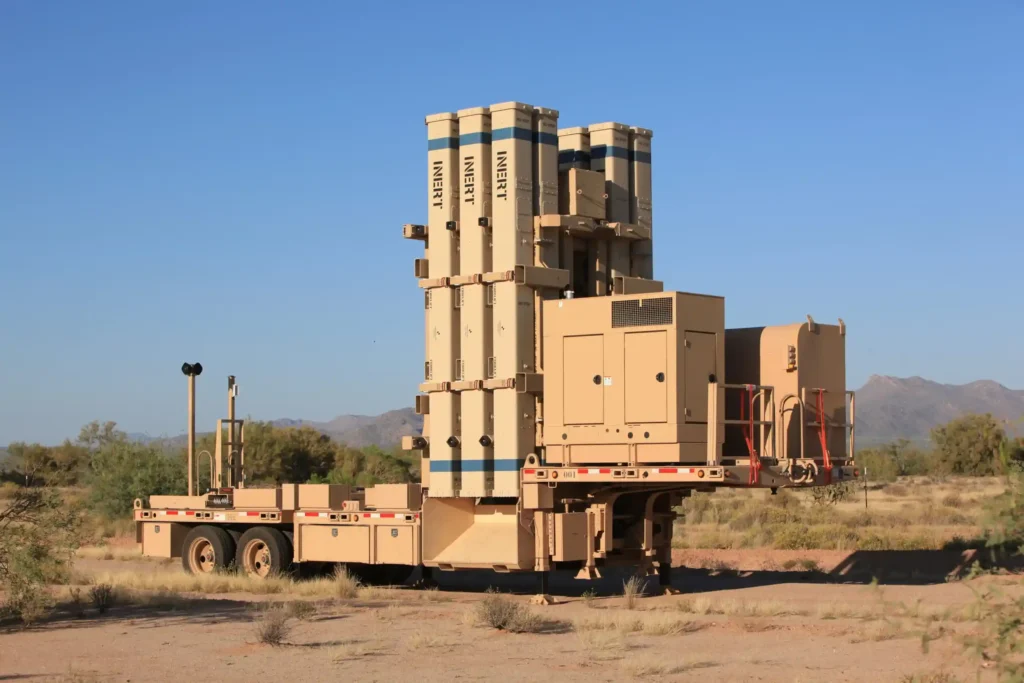
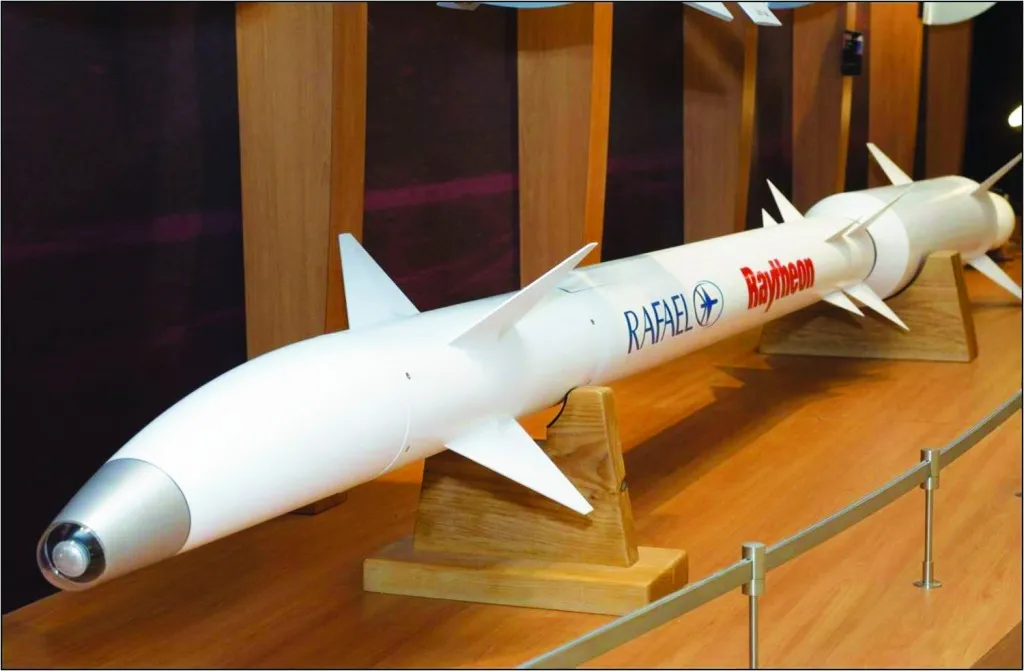
Unlike traditional missile systems that rely on proximity warheads, the David Sling missile battery uses the highly advanced “Stunner” interceptor, which eliminates threats with a direct “hit-to-kill” strike. With an operational range of up to 300 kilometers and pinpoint accuracy, this system has become a central pillar in defending Israeli cities and military assets.
The development of the David’s Sling missile defense system was born out of necessity in the early 2000s, as Israel recognized the growing threat posed by medium- and long-range rockets from hostile neighboring territories. While systems like the Iron Dome protected against short-range threats and the Arrow missile system was designed for long-range ballistic missiles, there was a glaring vulnerability in the medium-range segment. This gap prompted Israel’s Ministry of Defense, in partnership with the United States Missile Defense Agency, to fund a project that would eventually become the David Sling air defense system.
Work on the David’s Sling missile system officially began in 2006, with development shared between Israel’s Rafael Advanced Defense Systems and Raytheon in the U.S. The Stunner missile, the core of the David’s Sling weapon system, was engineered to neutralize a broad spectrum of airborne threats, including tactical ballistic missiles, large artillery rockets, and advanced cruise missiles.

A series of rigorous tests was conducted between 2012 and 2015, during which the system successfully intercepted various simulated threats under combat-like conditions. These successful trials validated the system’s “hit-to-kill” capability and ensured that the David Sling missile battery was ready for deployment.
By April 2017, the David’s Sling system was officially declared operational and was integrated into Israel’s multi-layer missile defense array alongside Iron Dome and Arrow. Since then, the system has seen real-world use, most notably in 2018 during an incident where the David Sling missile defense intercepted ballistic missiles fired from Syria.
More recently, in 2025, the system played a pivotal role in intercepting missiles during an Iranian attack on Israeli targets. These combat deployments not only demonstrated the effectiveness of Israel David’s Sling but also sparked interest from other nations, leading to major export deals with Finland and Germany. As threats evolve, so does the David Sling system, ensuring its place at the forefront of modern missile defense technology.
The David’s Sling system represents a technological leap in missile defense, using a highly sophisticated network of sensors, command systems, and interceptors to protect vast areas from a variety of threats. At the heart of this air defense shield is the Stunner interceptor missile, which is specifically designed for hit-to-kill accuracy—a method that does not rely on an explosive warhead but instead destroys enemy projectiles through direct collision. This dramatically reduces the risk of debris falling on populated areas, a crucial advantage for defending dense urban regions like Tel Aviv.
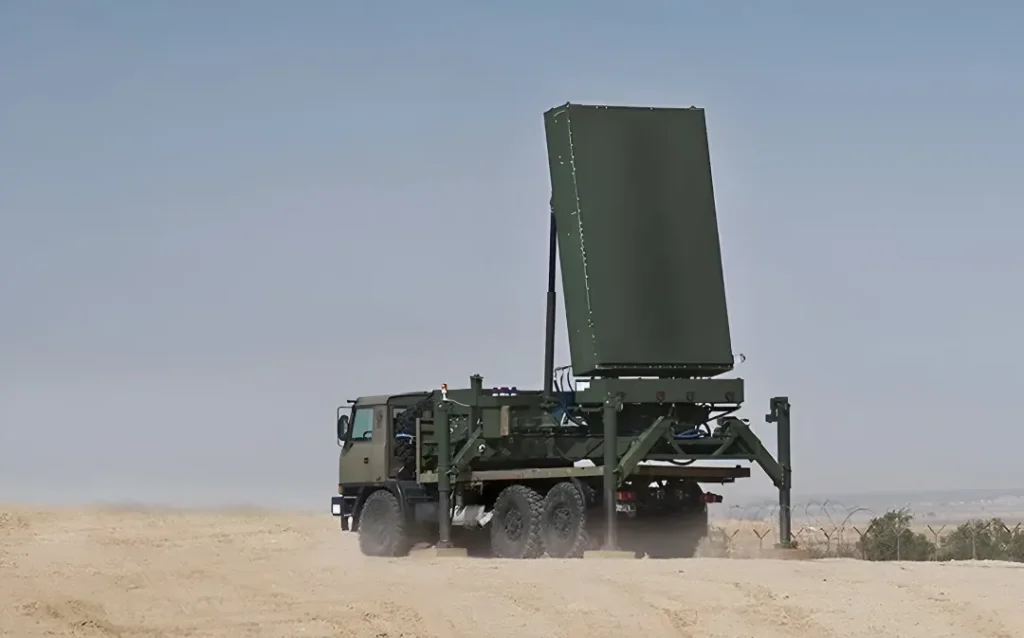
One of the key components that makes the David Sling missile defense system so effective is its advanced radar and targeting technology. The system uses the EL/M-2084 Multi-Mission Radar (MMR), which can detect and track multiple targets simultaneously at various altitudes and speeds. Once an incoming threat—such as a tactical ballistic missile or large-caliber rocket—is detected, the radar relays this information to the battle management and control unit.
This component calculates the trajectory of the threat, selects the optimal interceptor, and launches a Stunner missile from its vertical launcher to engage the target. The David’s Sling missile battery is designed to handle saturation attacks, meaning it can respond to several incoming missiles at once, maintaining Israel’s defensive edge against coordinated strikes.
The David’s Sling range is another feature that sets it apart from older systems. With an interception envelope stretching from 40 to 300 kilometers, the system covers medium to long-range threats that would otherwise fall between the coverage of the Iron Dome and Arrow defenses.
Additionally, the David Sling price per missile is estimated to be lower than that of the high-altitude Arrow system, making it a cost-effective choice for dealing with the frequent and diverse missile attacks Israel faces.
Each Stunner interceptor carries an electro-optical sensor and a multi-pulse rocket motor, allowing it to adjust course mid-flight and ensure a direct strike on the target. This blend of radar sophistication, battle management intelligence, and guided interceptor technology has made the Israel David’s Sling system a benchmark for modern missile defense systems worldwide.
The David’s Sling air defense system is designed to deliver exceptional performance against a wide range of threats, filling the crucial gap between Israel’s Iron Dome and Arrow systems. Its versatility allows it to intercept medium to long-range projectiles such as tactical ballistic missiles, large-caliber rockets, and cruise missiles—types of threats that no other single system in Israel’s arsenal can handle with such precision.
At the heart of this performance is the Stunner interceptor missile, which employs a sophisticated “hit-to-kill” approach instead of relying on a traditional explosive warhead. Equipped with dual electro-optical and radar seekers, the David’s Sling missile can identify, track, and directly impact targets traveling at high speeds—even those designed to evade detection or deflect interceptors.
Its Mach 7.5 speed and in-flight course correction capabilities make it effective against highly maneuverable threats. This design minimizes collateral damage and is essential for protecting densely populated cities, proving the David Sling system is both accurate and safe for urban defense.

Operational flexibility is another hallmark of this system. The David’s Sling missile battery can engage multiple targets simultaneously, making it resistant to saturation attacks where dozens of projectiles may be fired at once.
While the exact David’s Sling missile cost per unit is undisclosed, estimates suggest it is more affordable than long-range interceptors like the Arrow series, making it a cost-effective solution for medium-range defense. This balance of coverage, capability, and price underscores why nations like Finland and Germany are investing in their own David’s Sling systems, seeing its value beyond Israel’s borders.
The David Sling system plays an indispensable role in Israel’s multi-layered missile defense strategy, standing as the critical middle tier between the Iron Dome and Arrow systems. While the Iron Dome is designed to intercept short-range rockets and mortars, and the Arrow system focuses on long-range ballistic missile threats, David’s Sling missile defense bridges the gap by handling medium- to long-range threats that neither of the other systems are optimized to tackle. This layered architecture allows Israel to address the full spectrum of aerial threats, from simple unguided rockets to complex, maneuverable ballistic missiles.

During past conflicts, such as cross-border hostilities with Hezbollah or tensions with Iran, the vulnerability to medium-range projectiles became evident. The development and deployment of the David’s Sling missile battery directly addressed this gap, ensuring that enemy forces could no longer exploit a range window previously unguarded by Israel’s defenses.
The system’s integration with Israel’s other defense assets has made it a cornerstone of the country’s ability to intercept multiple threats simultaneously, improving both strategic depth and reaction time during hostile engagements.
Recent operational successes—such as intercepting ballistic missiles fired from Syria and neutralizing potential threats during the 2025 Iranian missile attacks—have cemented Israel David Sling as a frontline defensive tool. Its effectiveness not only reassures Israeli citizens but also signals to adversaries that Israel can now defend its airspace comprehensively. As new threats emerge and missile technology evolves, the David’s Sling system remains a critical component in preserving Israel’s strategic superiority in the volatile Middle East region.
While originally designed to safeguard Israel’s borders, the David’s Sling system has quickly drawn international attention for its proven capabilities and adaptable design. In 2023, Finland became the first European nation to secure a contract for the David’s Sling missile defense system, marking a significant milestone in the system’s export journey. The deal, valued at around $345 million, underscored global confidence in Israel’s defense technology and demonstrated that the David’s Sling weapon system can be integrated into other nations’ military frameworks beyond the Middle East.
Germany also showed serious interest in acquiring the system as part of its European Sky Shield Initiative—a multinational effort to strengthen air defenses across the continent in response to rising tensions with Russia. This growing demand highlights the system’s appeal not only for its combat-proven effectiveness but also for its operational flexibility and cost efficiency.
The estimated David’s Sling price is considered competitive when compared to similar long-range systems such as the U.S. Patriot or THAAD, making it a more accessible choice for countries seeking to enhance their medium-range missile defense capabilities without excessive spending.
Moreover, the success of Israel David’s Sling in combat scenarios has served as a powerful marketing tool. Countries in Asia, Europe, and even the Gulf are reportedly exploring procurement options, recognizing that the David Sling missile battery offers a unique balance of technological advancement and strategic value. With ongoing geopolitical instability and the increasing risk of missile warfare, the global demand for systems like the David Sling missile system is expected to rise, potentially establishing it as one of Israel’s most successful and widely deployed defense exports.
The David’s Sling air defense system stands as a testament to Israel’s commitment to safeguarding its airspace against an increasingly complex range of missile threats. By effectively bridging the gap between the Iron Dome and Arrow systems, Israel David’s Sling ensures that medium- and long-range projectiles are no longer a vulnerability in the country’s defense strategy. Its combination of advanced radar, high-speed Stunner interceptors, and a flexible battle management system offers unmatched protection that has been tested both in controlled environments and in live combat situations over the skies of Israel.
Beyond its role in Israeli defense, the David’s Sling missile system is quickly becoming a sought-after technology in the global arms market. Nations like Finland and Germany are integrating this system into their own military architectures, signaling widespread trust in its reliability and cost-effectiveness. As missile threats continue to evolve—from ballistic missiles to hypersonic weapons—the David’s Sling system is poised for further upgrades, ensuring that it remains relevant and indispensable on the modern battlefield.