Follow Us:
Follow Us:

Events over the past weeks have reignited the high-stakes aerial chess game between India and China. Just days ago, reports emerged that Chinese and Pakistani actors launched a coordinated disinformation campaign aimed at discrediting India’s Dassault Rafale fighter jet—revealing how modern warfare now extends into the cyber-information domain.
Meanwhile, satellite imagery has confirmed Beijing’s upgrades of six air bases near the Line of Actual Control, strategically boosting the PLA Air Force’s forward posture. Not to be outdone, recent Chinese deployments of J-20 stealth fighters to high-altitude bases like Shigatse, just over 150 km from the Sikkim frontier, further challenge India’s Rafale deterrent.
That brings us back to the J10C vs Rafale debate—now not just theoretical, but situated in a live, tense border standoff. Which jet would dominate if tensions escalated into air combat over the Himalayas? Will the Chengdu J‑10C’s PL-15 missile and advanced AESA radar be enough to challenge the Dassault Rafale’s Meteor missile and SPECTRA electronic warfare suite under real-world conditions?
In this analysis, we’ll break down every key aspect of the J10C vs Rafale comparison—from weapons and radars to engines and electronic countermeasures—to find out which jet truly dominates the skies.
Building on the strategic rivalry between these two fighters, we begin with how they’re shaped to perform. In the J10C vs Rafale matchup, both jets feature delta wing and canard configurations—a design known for offering excellent maneuverability and high lift during close-combat engagements.
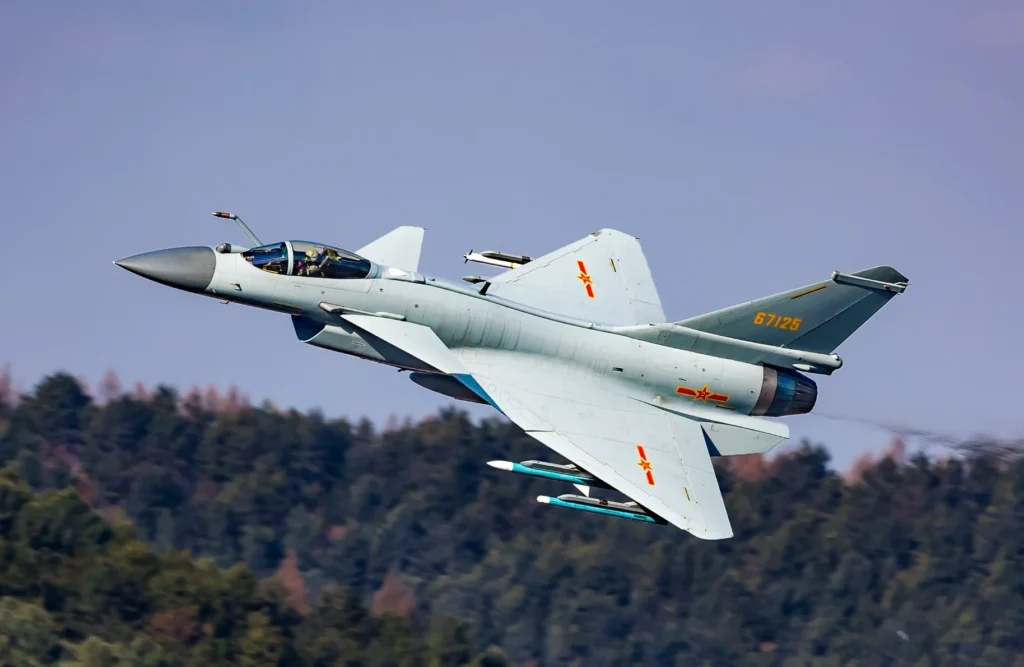
The Chengdu J-10C fighter jet sports a tailless delta wing layout paired with mid-mounted canards, giving it high agility at lower speeds and tight turning radii—valuable in dogfights or evasive maneuvers. The aircraft has a sleek, streamlined design and benefits from an AES (Active Electronically Scanned) radar dome integrated with low-observable (stealth-conscious) shaping, though it’s not a full stealth aircraft.
The Dassault Rafale fighter jet also employs a delta-canard configuration, but its aerodynamic refinements are more mature, resulting from decades of wind tunnel testing and combat experience. Rafale’s airframe makes extensive use of composite materials—about 70% of the structure is composite—to reduce weight and radar cross-section. Its stealth comes more from shaping and material treatments, including radar-absorbent coatings, than from a stealthy internal weapons bay.
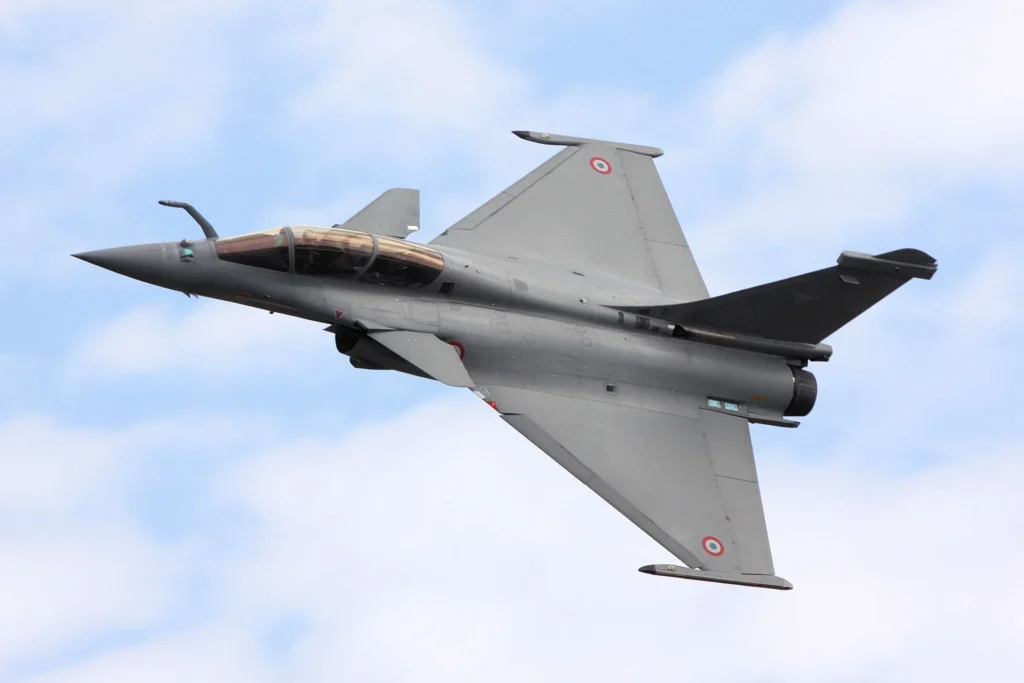
While both jets are designed to reduce radar signature to some extent, the Rafale places greater emphasis on survivability through passive stealth and electronic warfare, while the J-10C compensates with raw speed, sensors, and long-range missile capability.
Turning to what drives these jets, the powerplant and performance category play a critical role in combat effectiveness. The J10C vs Rafale comparison here highlights the different design priorities behind each aircraft’s engine.
The J-10C is powered either by the Russian-made AL-31FN or China’s domestic WS-10B turbofan engine, depending on the production batch. The WS-10B variant delivers around 13,200 kgf of thrust with afterburner, giving the J-10C strong acceleration and a top speed of approximately Mach 2.2.
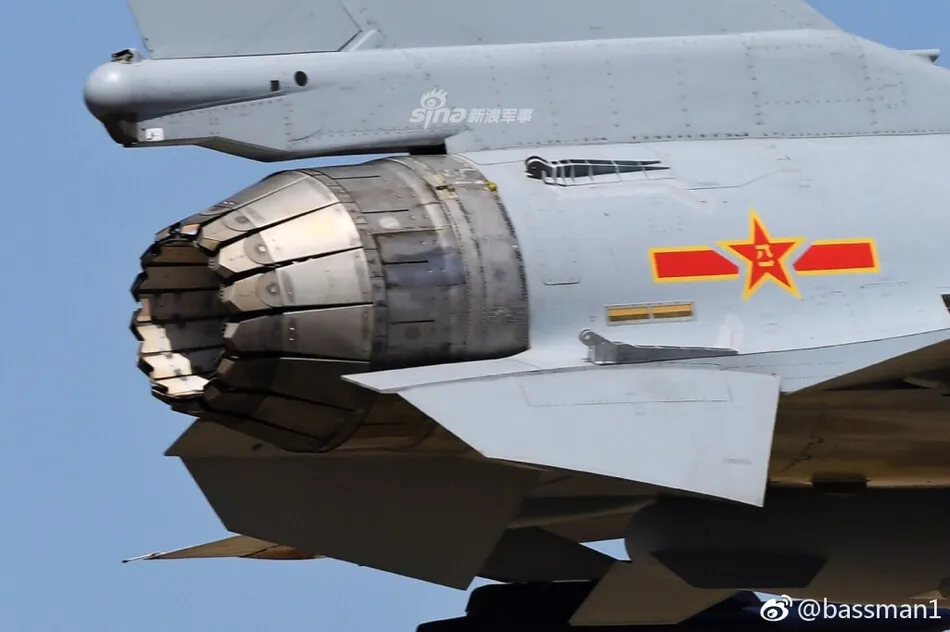
However, the reliability and longevity of the WS-10B have been questioned in the past, though improvements continue to be made. The range of the J-10C is estimated at around 1,850 km, with in-flight refueling capabilities to extend it further. It also boasts a service ceiling of 18,000 meters (roughly 59,000 feet), giving it good high-altitude performance, especially in a Himalayan conflict scenario.
The Rafale, in contrast, is powered by two Snecma M88-2 turbofan engines, each producing about 7,500 kgf of thrust with afterburner. Though its top speed is lower—Mach 1.8—the twin-engine layout gives it excellent redundancy and better performance in sustained operations, especially from shorter or high-altitude runways.
The Rafale’s combat range is around 1,850 km as well, with an impressive ferry range of over 3,700 km with drop tanks. Its service ceiling is about 50,000 feet, slightly lower than the J-10C, but its operational flexibility and fuel efficiency give it a strong edge in longer missions or carrier-based roles (in the Rafale M variant).
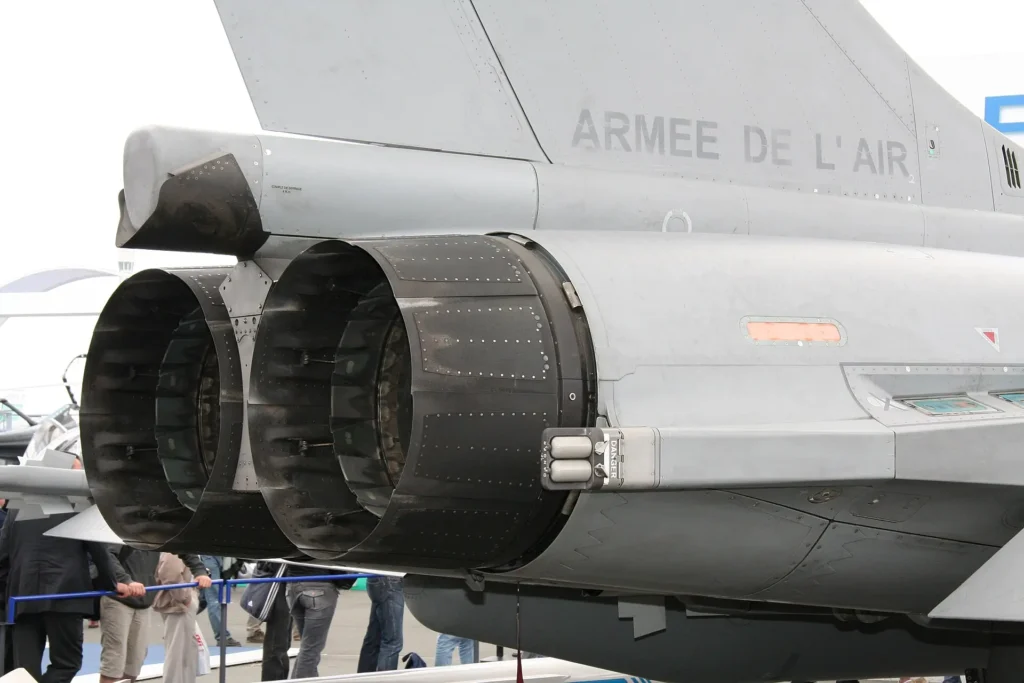
In essence, the J-10C fighter jet aims for speed and altitude to deliver long-range strikes and stay ahead in BVR (Beyond Visual Range) scenarios, while the Rafale fighter jet balances performance with survivability, fuel economy, and multirole versatility—especially vital in sustained operations or contested airspace.
The J10C vs Rafale comparison becomes especially interesting when we examine radar systems and avionics—the electronic heart of any modern fighter.
The J-10C fighter jet features the Chinese-developed KLJ-7A AESA radar, which represents a significant leap over older mechanically scanned arrays. This radar offers improved detection range, multitarget tracking, and better resistance to jamming. Combined with the sensor fusion system developed by China, the J-10C can track multiple airborne threats while simultaneously engaging them with long-range missiles like the PL-15.
On the other side, the Rafale fighter jet is equipped with the Thales RBE2-AA AESA radar, one of the most combat-proven AESA systems in service today. The RBE2-AA provides exceptional target tracking and fire control, even in cluttered or electronic warfare-heavy environments. What truly sets the Rafale apart, however, is its SPECTRA electronic warfare system—a highly advanced suite that includes radar warning receivers, jammers, decoys, and infrared missile launch detectors. It enables the Rafale to not only avoid detection but actively deceive and counter enemy systems.
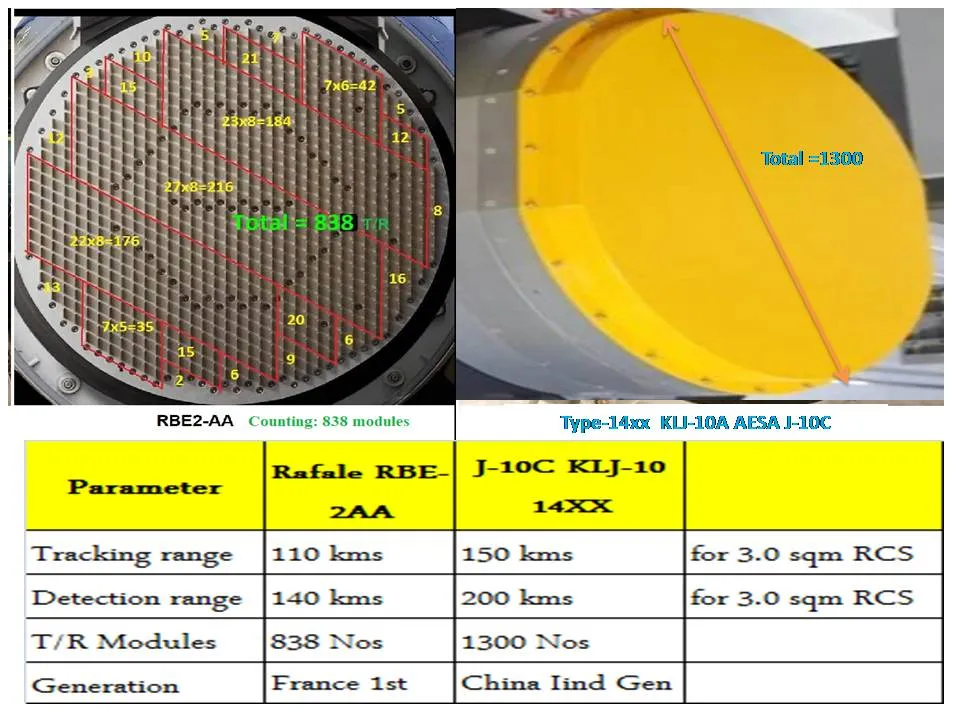
When it comes to sensor fusion, both jets attempt to provide the pilot with a unified tactical picture, integrating data from radar, infrared sensors, and datalinks. However, the Rafale’s architecture is more mature and Western-standard, benefiting from NATO-level interoperability and battlefield networking. In contested environments, this could give Rafale pilots a crucial edge in survivability and target discrimination.
Of course, avionics mean little without the firepower to back them up. In the J10C vs Rafale standoff, weapons and armament reveal both jets’ multirole ambitions and how they prioritize air dominance versus strike capability.
The J-10C is primarily armed with the PL-15, a long-range active radar-guided air-to-air missile with a range believed to exceed 200 km—potentially outmatching most current Western missiles. Paired with the short-range PL-10 infrared-guided missile, the J-10C is well-equipped for both BVR and close-in dogfights. China’s emphasis on long-range engagement aligns with the J-10C’s role as a deterrent platform in the Pacific and South Asian theaters.
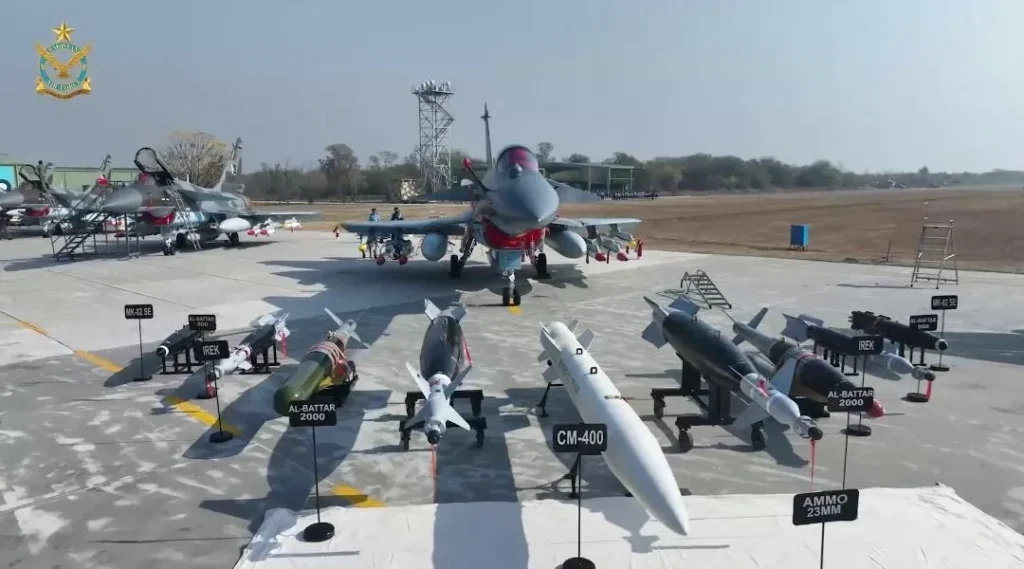
Meanwhile, the Rafale counters with the Meteor missile, widely considered one of the most advanced BVR missiles in the world. Using a ramjet propulsion system, it maintains high energy until impact, allowing no-escape zones that rival or surpass the PL-15 in real combat conditions. For shorter-range combat, the Rafale employs the MICA missile, available in both radar- and IR-guided variants, offering flexibility and reducing the need to carry multiple missile types.
When it comes to ground attack, the Rafale fighter jet shines as a true multirole platform. It can deploy a wide variety of precision-guided munitions, including SCALP-EG cruise missiles, AASM “Hammer” smart bombs, and even nuclear-capable air-launched weapons. Its integration with targeting pods like Thales TALIOS ensures pin-point strike accuracy under all-weather conditions.
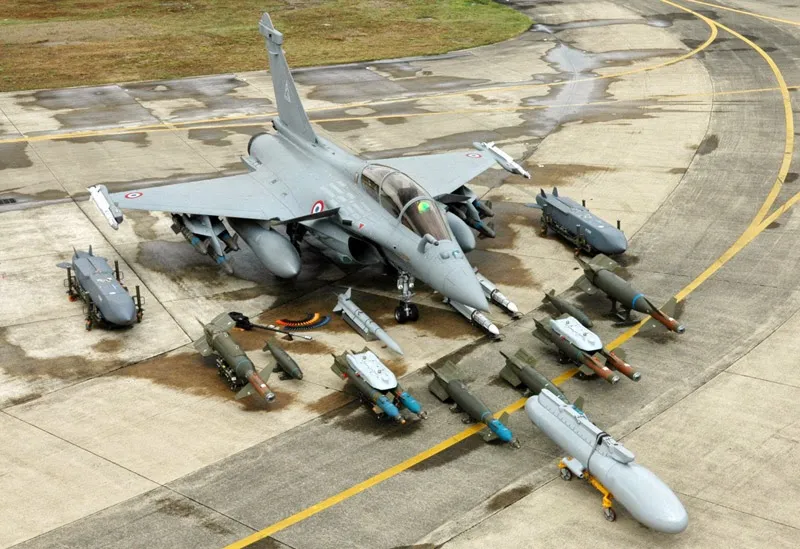
The J-10C also has multirole capabilities, capable of carrying laser-guided bombs, precision glide munitions, and even anti-ship missiles, making it versatile for regional strike roles. China’s modular weapon racks and domestic targeting pods like the K/JDC01 help the J-10C keep pace with Western-style flexibility, though operational testing and combat use are more limited compared to the Rafale.
So, while both jets are deadly, the Rafale presents a more balanced and combat-tested weapons package—especially with its emphasis on smart bomb integration and electronic countermeasures. The J-10C, meanwhile, banks on long-range missile reach and quantity-based deployment to establish aerial dominance.
The J10C vs Rafale debate deepens when we explore how each jet avoids detection and increases its chances of survival in hostile airspace. In modern air combat, seeing first—and not being seen—is often the difference between winning and losing.
The Rafale fighter jet was not designed to be a stealth aircraft in the fifth-generation sense, but it does incorporate low observable technologies to reduce its radar cross-section (RCS). This includes a refined fuselage shape, composite materials, and radar-absorbent coatings. While not as stealthy as aircraft like the F-35, Rafale’s RCS is significantly lower than legacy fighters, making it harder to detect, especially when paired with its SPECTRA electronic warfare suite, which actively jams, deceives, and disrupts enemy radars.
The Chengdu J-10C, similarly, is not a stealth fighter, but improvements over earlier variants include a reshaped intake, fewer external protrusions, and surface treatments that aim to lower its radar signature. Its RCS is believed to be larger than Rafale’s, partly due to its single-engine layout and overall airframe design. However, it compensates with a modern AESA radar, electronic countermeasures, and infrared countermeasures designed to confuse heat-seeking missiles.
In terms of infrared signature, the Rafale’s M88-2 engines are known to have lower thermal output compared to the WS-10B or AL-31FN used on the J-10C fighter jet, making it slightly harder to track using infrared sensors. Combined with directional infrared countermeasures (DIRCMs), flares, and chaff, both jets have layered survivability systems, but the Rafale’s proven sensor fusion and stealth-conscious design give it a slight edge in contested environments.
Of course, a fighter jet’s real-world value isn’t just in theory or simulations—it’s tested in the harsh reality of actual operations. Here, the J10C vs Rafale comparison clearly shows one aircraft with extensive combat experience, and another building its credibility through exercises and international partnerships.
The Rafale fighter jet has built a solid reputation in combat since its first operational use in 2007. It was deployed during Operation Harmattan in Libya (2011) as part of the NATO-led intervention, where it conducted deep strike, air superiority, and reconnaissance missions against Gaddafi’s forces. In Mali, during Operation Serval (2013) and later Operation Barkhane, Rafales played a critical role in close air support and precision bombing missions against Islamist insurgents in the Sahel region.
The jet was also actively involved in Operation Chammal over Iraq and Syria beginning in 2014, where it carried out numerous sorties targeting ISIS infrastructure. These missions included long-range strike operations using SCALP cruise missiles and surveillance flights guided by advanced targeting pods.
More recently, while not engaging in direct combat, French Rafales have been flying intelligence-gathering, patrol, and deterrence missions near Ukraine’s eastern flank as part of NATO’s enhanced air policing efforts following Russia’s invasion in 2022. Though not in direct combat over Ukraine, their deployment in Romania and Poland underscores the Rafale’s strategic value in high-alert, contested airspace.
Altogether, these operations have tested the Rafale in a wide range of mission types—from desert counterinsurgency to near-peer deterrence—firmly establishing its reliability, survivability, and true multirole capability under real combat conditions.
The J-10C, by contrast, has not been tested in actual wartime combat, but it has participated in high-profile joint exercises, notably with Pakistan and Russia. One standout moment was the Shaheen series of drills, where Pakistan Air Force (PAF) pilots flew J-10C jets alongside Chinese crews in simulated combat scenarios. Pakistan’s acquisition of the J-10C also marked a major export success for China and positioned the jet as a counterbalance to India’s Rafale fleet in South Asia.
In 2022, the Pakistan Air Force officially inducted the J-10C, emphasizing its ability to carry the PL-15 long-range missile, directly responding to India’s Meteor-equipped Rafales. In multiple joint exercises, J-10Cs have showcased capabilities like beyond-visual-range engagements, electronic jamming, and rapid deployment—suggesting growing confidence in the platform.
While the Rafale’s combat record gives it clear operational credibility, the J-10C fighter jet is rapidly gaining relevance through strategic deployments and regional influence, particularly with allies like Pakistan. However, without real wartime exposure, its performance in live conflict remains somewhat speculative.
When it comes to unit cost, the J-10C fighter jet is significantly cheaper than its French counterpart. Estimates place the J-10C’s cost between $30–40 million USD per unit, depending on configuration and quantity. This makes it an attractive option for countries seeking a modern 4.5 generation fighter jet without the Western price tag.
In contrast, the Dassault Rafale comes at a premium. A fully equipped Rafale—including SPECTRA electronic warfare, Meteor missiles, and customized integration—can cost between $90–110 million USD per unit. This higher price reflects not only its advanced systems and combat record but also the costs associated with Western defense ecosystems, training, and support infrastructure.
On the export front, the Rafale has seen solid success. India’s procurement of 36 Rafale fighter jets, worth roughly $8.8 billion, was a major geopolitical shift aimed squarely at countering regional threats, particularly from China and Pakistan. The Rafale is also operated by France, Egypt, Qatar, Greece, the UAE, and has been considered by multiple NATO and allied air forces, reinforcing its credibility and versatility.
The J-10C, while not as widely exported, found a major customer in Pakistan—a move clearly aimed at balancing India’s Rafale acquisition. The J-10C’s entry into the Pakistan Air Force (PAF) marks China’s increasing influence in regional defense networks, offering a cost-effective multirole solution with modern air-to-air missiles like the PL-15. China is also rumored to be marketing the J-10C to other friendly nations, particularly those outside the Western sphere of influence or under arms embargoes.
This divergence in export success reflects larger geopolitical alignments—Western allies leaning toward the Rafale, while Chinese allies and budget-sensitive nations consider the J-10C as a capable alternative with fewer political strings attached.
So, Who Wins?
So, in the J10C vs Rafale face-off, which jet actually comes out on top? The answer, as always in military aviation, depends on context.
If you’re measuring by combat record, proven survivability, and high-end multirole flexibility, the Rafale fighter jet is the superior aircraft. Its SPECTRA electronic warfare system, Meteor missile, and deep strike capabilities make it a formidable platform in any modern conflict. It’s been battle-tested, well-supported by NATO standards, and offers unmatched sensor fusion in its class.
On the other hand, the J-10C fighter jet holds its own as a serious regional threat. Its PL-15 missiles, AESA radar, and cost-efficiency make it highly competitive in BVR (Beyond Visual Range) combat. While it lacks actual wartime experience, it is fast becoming a pillar of China’s military diplomacy, especially through its deployment in Pakistan, where it’s seen as a direct response to India’s Rafale.
In a South Asian scenario, the comparison becomes sharply relevant. If a Rafale were to face off against a J-10C over the Himalayas or Arabian Sea, much would depend on pilot training, AWACS support, and the rules of engagement. The Rafale might dominate in electronic warfare and survivability, but the J-10C could strike first with longer-range missiles and superior numbers.
Ultimately, the Rafale is more refined, while the J-10C is more accessible. One wins on capability; the other on strategic affordability. As tensions simmer between India, China, and Pakistan, both the Rafale and J-10C are symbols of shifting power and strategy in the skies. And while each brings its own strengths, the real outcome will be written not on paper, but in the air, if and when the day comes.