Follow Us:

Follow Us:

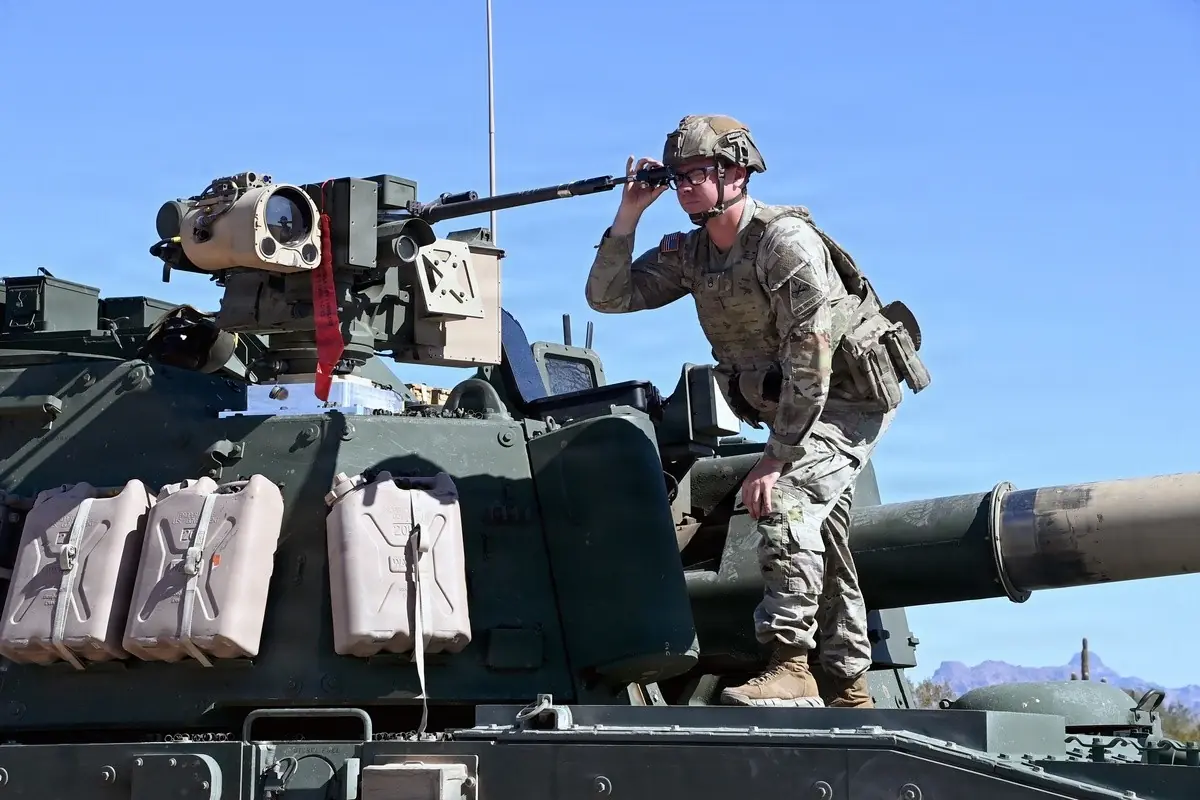
Defense Feeds, Aberdeen Proving Ground – The LP CROWS M109A7 Paladin upgrade is undergoing testing as the U.S. Army seeks to improve the survivability of its frontline self-propelled artillery against drones and other close-range threats.
By integrating the Low-Profile Common Remotely Operated Weapon Station (LP CROWS) onto the M109A7 Paladin, the Army aims to provide artillery crews with an organic defensive capability while allowing them to remain protected inside the vehicle during combat operations.
The trials reflect how recent conflicts have transformed battlefield priorities. Self-propelled artillery systems are no longer threatened only by counter-battery fire but also by first-person-view drones, loitering munitions and light ground attacks that can emerge with little warning.
The LP CROWS M109A7 Paladin configuration equips the Army’s latest Paladin self-propelled howitzer with a remotely operated weapon station capable of engaging nearby threats without exposing crew members. Mounted above the vehicle, the system allows operators to detect and engage targets using stabilized optics and remotely controlled weapons from inside the armored hull.
This capability addresses a growing operational challenge identified during recent conflicts. Artillery systems often become priority targets after firing, forcing crews to relocate quickly while remaining vulnerable to drones and infantry attacks during movement or reloading operations.
The LP CROWS system provides an additional defensive layer by enabling crews to respond immediately to low-flying drones, reconnaissance systems or hostile personnel approaching the vehicle.
The integration is part of the Army’s broader effort to adapt existing combat platforms to the realities of modern warfare rather than relying solely on future vehicle designs.
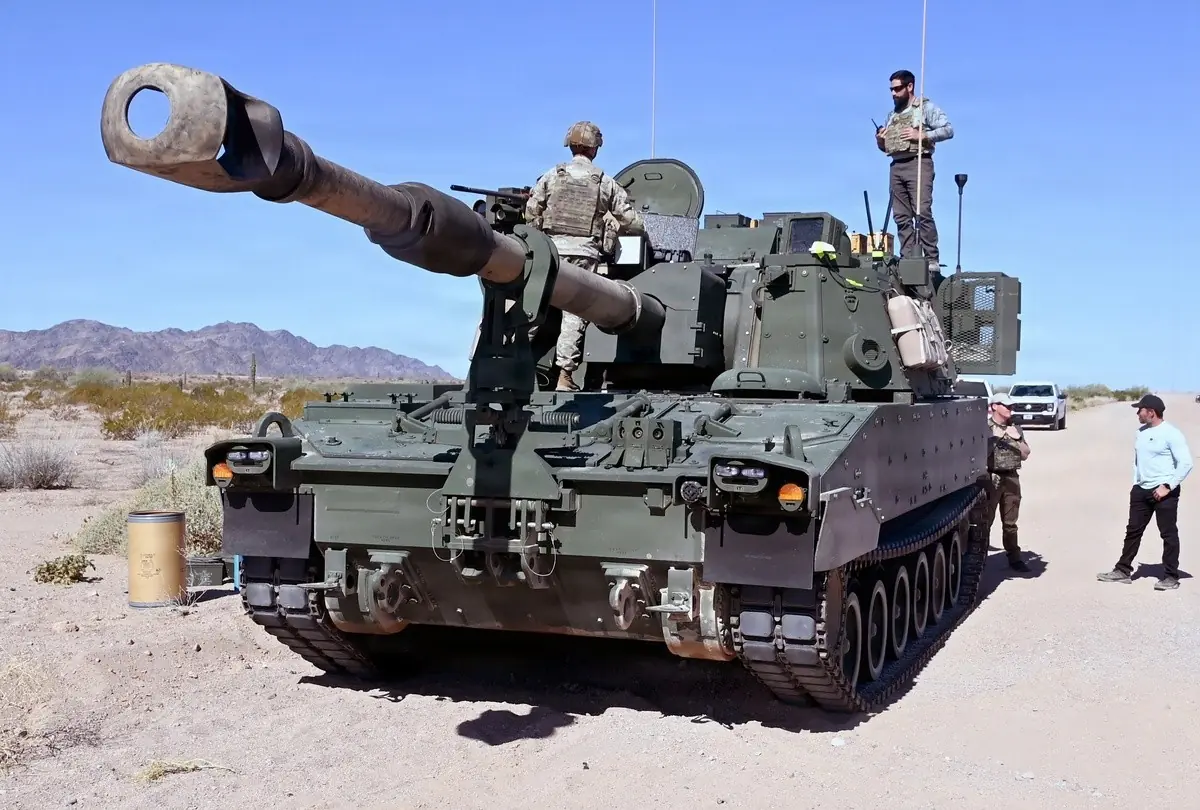
A key advantage of the LP CROWS M109A7 Paladin is its ability to enhance force protection without significantly affecting the howitzer’s primary artillery mission. The low-profile design minimizes interference with the vehicle’s main weapon while adding an independent defensive capability.
Remote weapon stations have become increasingly important as armed forces seek to improve survivability against rapidly evolving aerial threats. Unlike manually operated machine guns, remotely controlled systems enable crews to identify and engage targets while remaining under armor, reducing exposure to enemy fire.
The LP CROWS incorporates stabilized targeting systems that improve accuracy against moving targets and support operations in both daytime and low-visibility conditions. These capabilities are particularly valuable when responding to small unmanned aerial systems, which often present difficult targets due to their speed, size and maneuverability.
Adding such systems to self-propelled artillery reflects lessons learned from Ukraine, where drones have become one of the most persistent threats facing artillery units. Many militaries are now exploring ways to integrate active protection, electronic warfare and remote weapon stations into existing armored platforms.
The LP CROWS M109A7 Paladin program demonstrates how artillery modernization now extends beyond range and firepower to include survivability and force protection. Modern self-propelled howitzers must not only deliver accurate long-range fires but also survive in increasingly contested environments where threats can emerge from multiple directions.
The widespread use of drones has fundamentally altered battlefield dynamics. Artillery units that once focused primarily on avoiding counter-battery fire must now defend themselves against persistent aerial surveillance and rapidly deployed attack drones capable of striking vulnerable vehicles.
By integrating remote weapon stations, the U.S. Army is enhancing the operational resilience of one of its most important indirect fire platforms. The approach also supports broader modernization efforts aimed at increasing battlefield survivability without requiring entirely new vehicle fleets.
The testing may influence future upgrades across other armored vehicle programs as the Army evaluates how best to protect combat platforms against evolving threats. Similar technologies could eventually be adopted for additional tracked and wheeled vehicles operating near the front line.
As warfare continues to evolve, systems like the LP CROWS integration demonstrate that survivability has become just as critical as firepower. By equipping the M109A7 Paladin with improved self-defense capabilities, the Army is preparing its artillery forces to operate more effectively in battlefields increasingly dominated by drones, precision weapons and close-range threats.