Follow Us:
Follow Us:

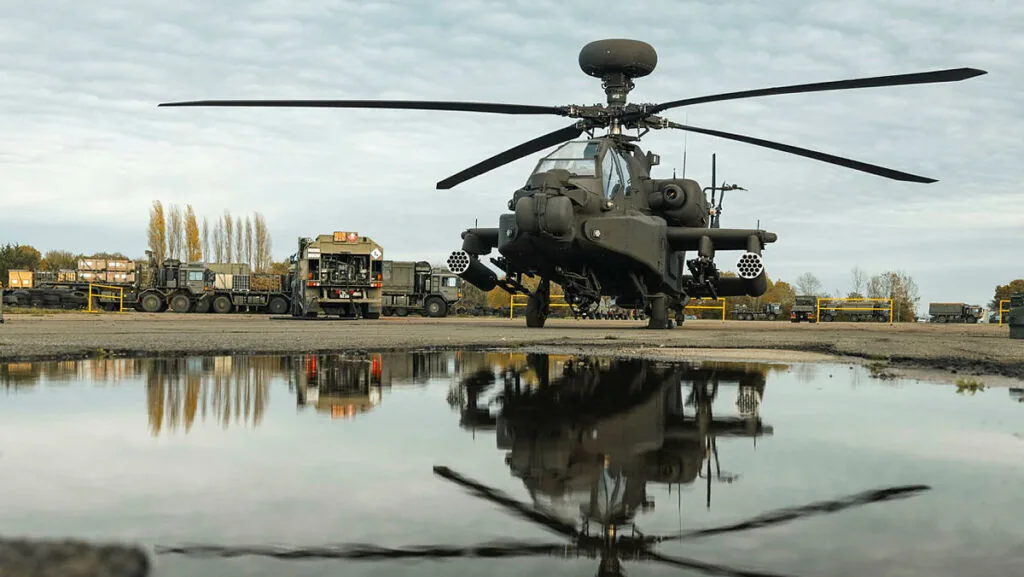
Defense Feeds, London – The British Army is reshaping how its attack helicopters will fight over the next decade as the Apache drone wingmen concept moves from experimentation toward operational capability.
Under Project NYX, the Ministry of Defence plans to field up to 24 armed autonomous drones that will operate alongside AH-64E Apache helicopters by 2030, extending reconnaissance, precision strike and electronic warfare capabilities while reducing the exposure of crewed aircraft in contested airspace.
Rather than replacing the Apache, the drones are intended to work as force multipliers. They will scout ahead of the helicopter, locate potential threats, carry additional sensors or weapons and perform high-risk tasks that would otherwise place pilots in danger. The concept reflects one of the most significant changes in British Army Aviation since the introduction of the AH-64E Guardian fleet.
The Apache drone wingmen initiative sits at the center of Project NYX, a modernization effort focused on integrating autonomous systems into future battlefield operations. Instead of relying solely on crewed helicopters to conduct reconnaissance and strike missions, the Army wants distributed formations where unmanned aircraft operate as forward elements of a larger combat team.
The Ministry of Defence has already shortlisted industry teams to develop competing drone concepts before selecting the final solution. While designs differ, each proposal is expected to provide autonomous flight, reconnaissance, target acquisition and the ability to support precision engagement under human supervision.
One notable aspect of the program is that the drones will not function as independent weapons. Human operators aboard the Apache will remain responsible for authorizing the use of force, preserving human control over lethal decisions while allowing the aircraft to benefit from greater battlefield awareness.
That balance between autonomy and human oversight has become a defining feature of many next-generation military aviation programs across NATO.
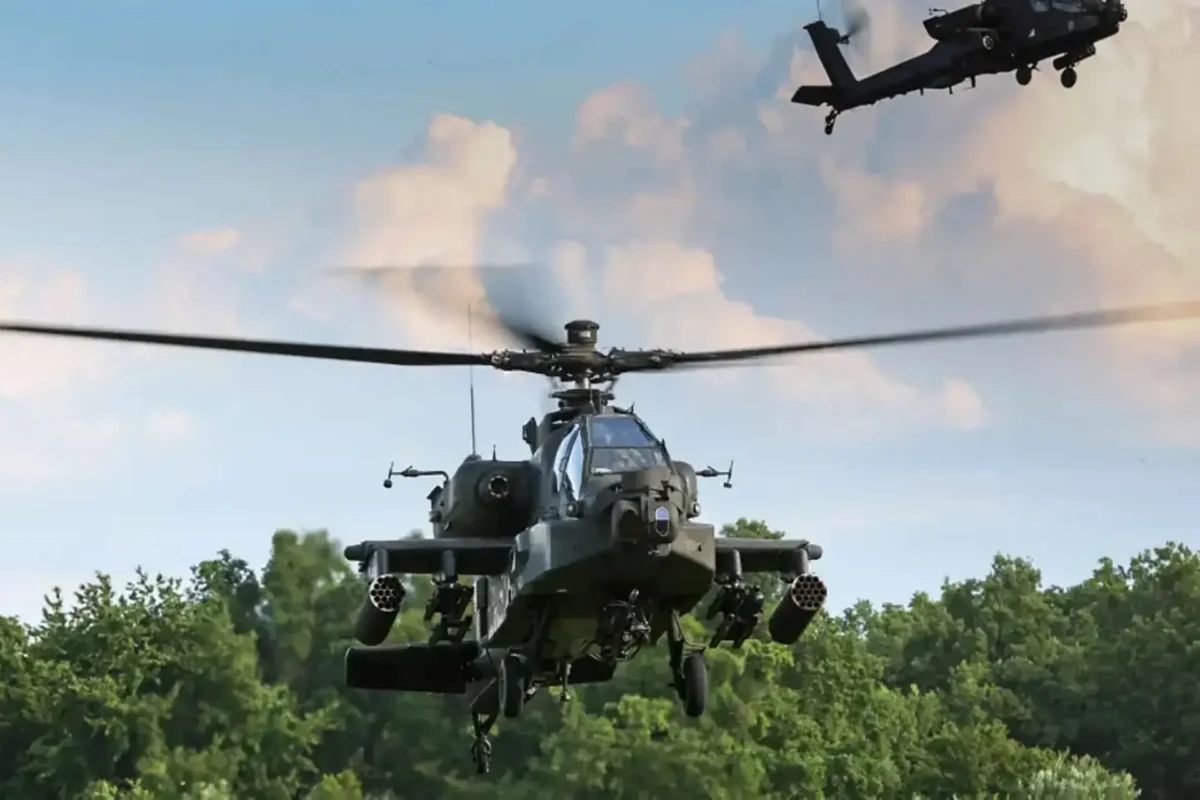
For decades, attack helicopters have often been forced to expose themselves before identifying enemy positions. The Apache drone wingmen concept seeks to reverse that equation.
Instead of leading from the front, the drones can move ahead of the helicopter formation, transmitting real-time intelligence, searching for air defenses or identifying armored targets before the Apaches enter engagement range. If equipped with electronic warfare payloads, they could also disrupt hostile sensors or communications to improve survivability for crewed aircraft.
Operationally, that creates several advantages. Commanders gain more information before committing expensive aircraft, while pilots can make decisions using a broader picture of the battlefield rather than relying only on onboard sensors.
The approach also increases tactical flexibility. Depending on the mission, the drones could carry surveillance equipment, electronic warfare systems or precision weapons, allowing commanders to tailor each package without changing the helicopter itself.
It’s a concept that mirrors broader developments across Western militaries, where autonomous platforms are increasingly viewed as companions to crewed aircraft rather than replacements.
The Apache drone wingmen program reflects a wider shift in military thinking driven by recent conflicts, particularly the extensive use of drones in Ukraine. Small and relatively inexpensive unmanned aircraft have demonstrated an ability to locate artillery, identify armored vehicles and support precision strikes at a fraction of the cost of traditional aviation assets.
For military planners, the lesson is clear: future combat aviation will depend less on individual aircraft and more on connected teams of crewed and uncrewed systems operating together.
Project NYX also aligns with Britain’s broader Defence Investment Plan, which places greater emphasis on autonomous technologies, artificial intelligence and distributed combat capabilities across all branches of the armed forces.
From a strategic perspective, introducing drone wingmen could significantly improve the survivability of the Army’s Apache fleet. Every reconnaissance mission completed by an unmanned aircraft is one that doesn’t require a helicopter crew to enter the highest-risk portion of the battlefield first.
If the program progresses as planned, the British Army could become one of the first NATO land forces to routinely pair attack helicopters with armed autonomous wingmen. That would represent more than a technological upgrade—it would mark a fundamental evolution in how rotary-wing combat operations are planned and executed, providing a blueprint that other allied armies may eventually choose to follow.