Follow Us:
Follow Us:

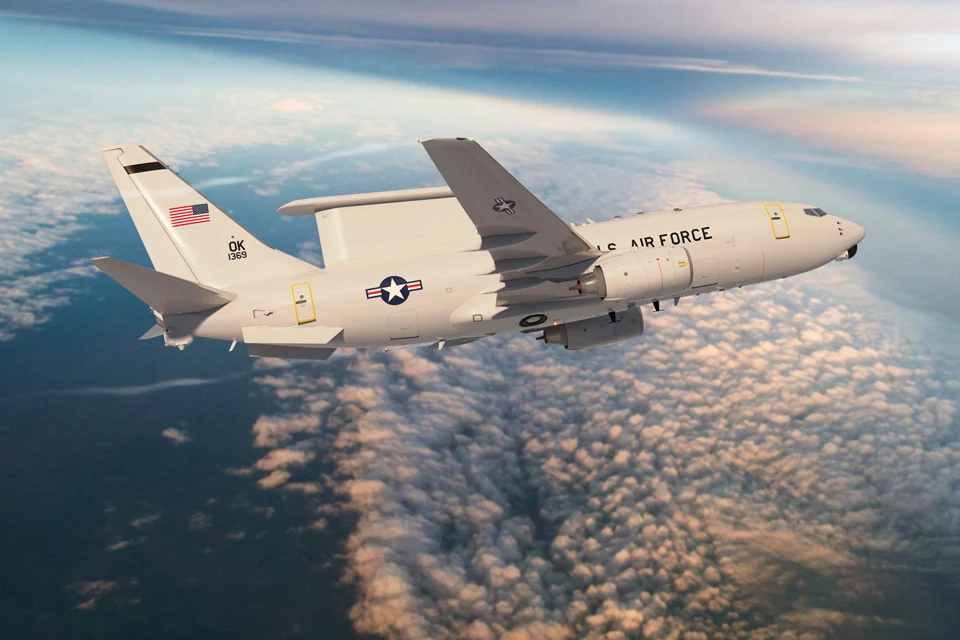
Defense Feeds, Washington – The E-7 Wedgetail funding debate has taken another unexpected turn after the White House proposed shifting Pentagon resources to keep the U.S. Air Force’s next-generation airborne battle management aircraft on track.
The proposal would redirect approximately $1.55 billion toward continued development of the Boeing E-7 Wedgetail, including funding for two prototype aircraft and ongoing engineering and manufacturing activities.
The move is particularly notable because the Pentagon had previously argued that the Navy’s E-2D Advanced Hawkeye fleet could temporarily fill the airborne battle management role while the Air Force moved away from the E-7 program.
Now, the administration is seeking to preserve the Wedgetail by drawing part of the proposed funding from the Navy’s aircraft procurement budget, highlighting how rapidly defense priorities have shifted over the past year.
The proposed E-7 Wedgetail funding package would transfer roughly $651 million from the Navy’s aircraft procurement account and another $899 million from an Air Force procurement account into Air Force research and development funding.
The objective is to continue engineering, manufacturing and development activities while completing two prototype aircraft already under contract.
The proposal marks a significant policy reversal. Only a year earlier, the Department of Defense had sought to cancel the E-7 acquisition program, arguing that additional E-2D Hawkeye aircraft combined with future space-based surveillance systems could provide an interim solution for airborne battle management.
However, evolving operational requirements and renewed congressional support have shifted momentum back toward the Wedgetail program.
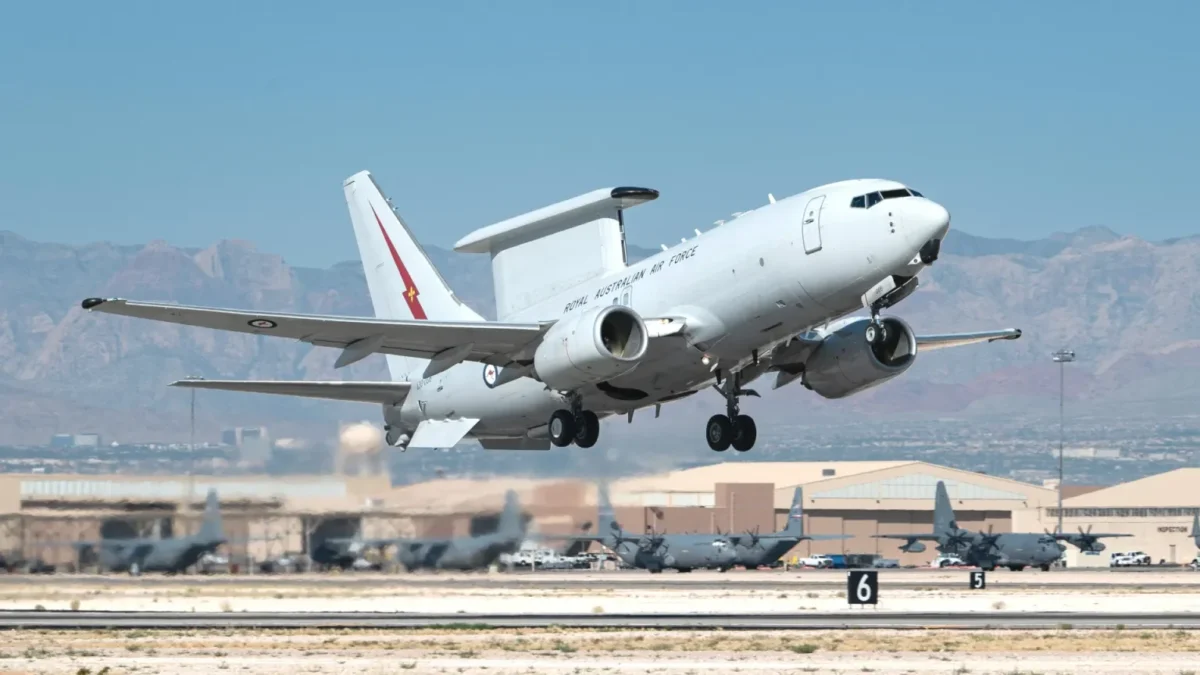
The aircraft is intended to replace the aging E-3 Sentry Airborne Warning and Control System (AWACS), whose growing maintenance demands have raised concerns about long-term availability.
Although lawmakers broadly supported restoring E-7 Wedgetail funding, they rejected one key element of the White House proposal: reducing purchases of the Navy’s E-2D Advanced Hawkeye.
The House Appropriations Committee restored the funding that had been proposed for transfer, allowing the Navy to proceed with plans to procure six E-2D aircraft while simultaneously supporting continued E-7 development. Committee members argued that the two aircraft perform complementary missions rather than serving as direct replacements for one another.
While both aircraft provide airborne command and battle management capabilities, the E-7 is designed to deliver broader theater-wide surveillance, greater endurance and enhanced command-and-control capacity. The carrier-based E-2D, meanwhile, remains optimized for protecting carrier strike groups and supporting naval operations.
This distinction has become increasingly important as military planners reassess airborne command capabilities following recent operational demands in the Middle East and Indo-Pacific. According to congressional documents, maintaining both fleets is viewed as essential for future readiness rather than choosing one platform over the other.
The renewed E-7 Wedgetail funding proposal underscores the growing importance of airborne command-and-control platforms in modern military operations. These aircraft serve as flying command centers, coordinating fighter aircraft, tracking airborne threats and managing large-scale operations across contested environments.
As the Air Force prepares to retire the E-3 fleet, maintaining continuity in airborne battle management has become a strategic priority. The Wedgetail’s advanced electronically scanned radar, improved networking capabilities and modern mission systems are expected to provide a substantial capability upgrade over the legacy AWACS fleet.
The budget debate also illustrates a broader challenge facing the Pentagon: balancing modernization priorities with limited resources while preserving essential capabilities during transitions between legacy and next-generation systems.
Although Congress appears supportive of continuing the Wedgetail program, lawmakers are also seeking greater clarity regarding long-term procurement plans beyond the initial prototype and development aircraft. The outcome of that process will help determine how quickly the E-7 becomes the Air Force’s primary airborne battle management platform.
For now, the White House proposal signals that the Wedgetail program remains a central element of future U.S. airpower planning, even as policymakers work to ensure the Navy’s E-2D fleet continues supporting operations alongside its future Air Force counterpart.