Follow Us:
Follow Us:

Imagine something the size of a football field slipping through the ocean… completely undetected. No engine roar. No wake. No warning. Just silence, and then, if it chooses, overwhelming force.
That’s the reputation of Seawolf-class submarines. Not just another fleet asset, but a kind of underwater myth among naval engineers and defense analysts. These boats weren’t built for numbers. They were built for dominance.
Here’s the strange part: only three of them exist.
At a time when the U.S. Navy typically produces entire classes of ships in dozens, the Seawolf program stopped almost as soon as it began. Why? Cost, timing, and a geopolitical plot twist, the Cold War ended right as these submarines were entering the scene. It’s like designing the world’s most advanced race car… only for the race to be canceled.
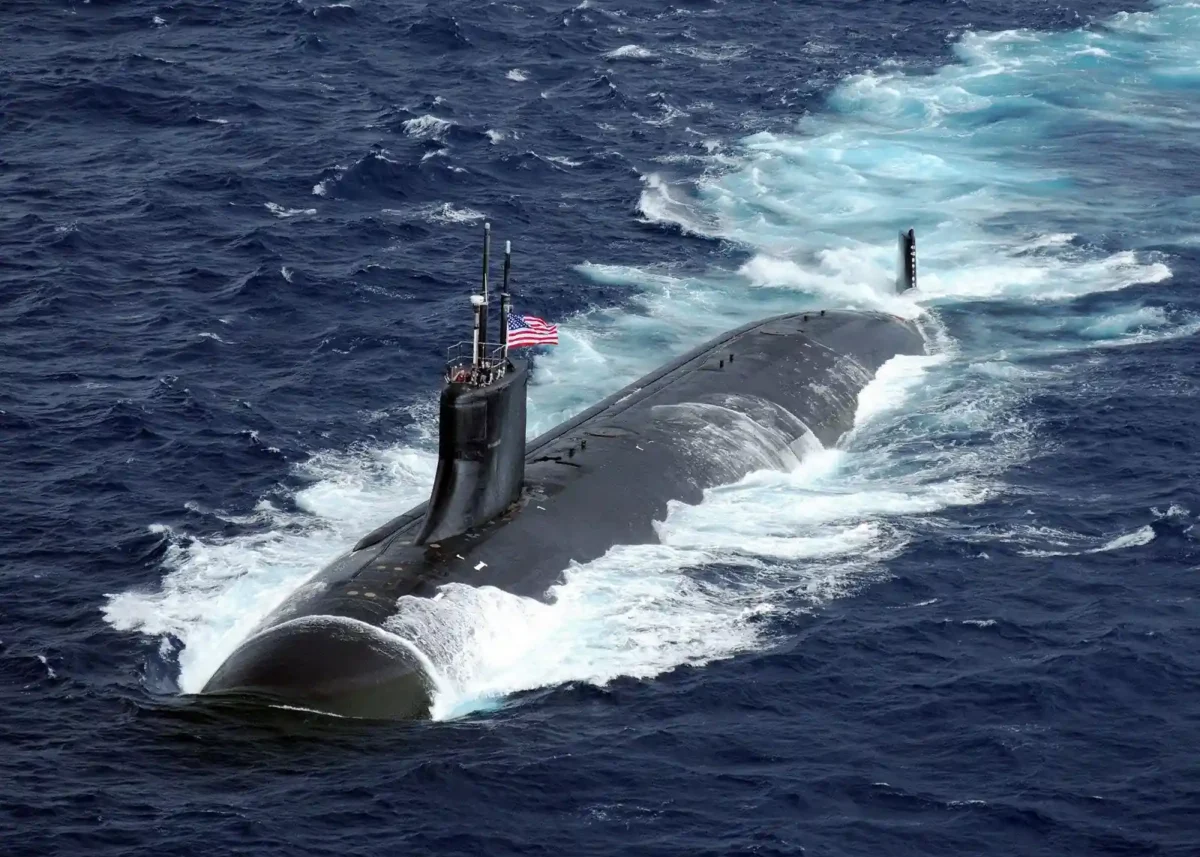
But don’t mistake rarity for irrelevance. Even today, Seawolf-class submarines are often whispered about as the quietest submarines ever built, the kind that can hear others long before being heard themselves.
In underwater warfare, that’s not just an advantage. It’s everything.
And if you’re wondering whether newer submarines have surpassed them? That’s where things get interesting. Many experts still put Seawolf in a league of its own, faster, quieter, and more heavily armed than most modern counterparts.
So what makes these submarines so special? Why were they so expensive, and arguably still worth it?
Let’s peel back the layers.
If you strip away the mystique, Seawolf-class submarines are officially categorized as fast attack nuclear submarines, or SSNs. But that label doesn’t quite capture what they were designed to do. These weren’t just patrol vessels. They were built as apex predators of the Cold War’s underwater chessboard.
Their primary job? Hunt. Track. If necessary, eliminate.

More specifically, Seawolf submarines were engineered to detect and destroy enemy submarines (especially the ultra-quiet Soviet ones) and surface ships, all while remaining nearly invisible themselves. Think of them less as ships and more as stealth systems that happen to move through water.
Unlike ballistic missile submarines, which act as strategic deterrents, Seawolf-class boats are tactical. They get close. Really close. Close enough to monitor, intercept, or strike without being noticed.
Here’s a quick snapshot of their core role:
| Capability | Purpose |
| Anti-submarine warfare | Hunt enemy subs before they’re detected |
| Anti-surface warfare | Target ships and naval groups |
| Intelligence gathering | Quiet surveillance and data collection |
| Land attack | Launch precision strikes via cruise missiles |
And then there’s the defining trait, stealth.
Seawolf submarines were designed to operate in the noisiest, most complex parts of the ocean (think deep Arctic waters or heavily trafficked naval zones) and still come out acoustically invisible. That’s not accidental; it’s the result of obsessive engineering, everything from hull design to propulsion was tuned to reduce noise.
In a way, calling them “submarines” almost undersells it. They’re more like underwater listening devices… that just happen to carry an enormous amount of firepower.
The story of Seawolf-class submarines begins in a very specific mood, late Cold War anxiety.
Picture the 1980s: the U.S. and the Soviet Union locked in a quiet, high-stakes contest beneath the ocean surface. Soviet submarines were getting faster, deeper-diving, and, most concerning, quieter. For the U.S. Navy, that was unacceptable.
So they aimed higher. Not incrementally better. Radically better.
Seawolf wasn’t designed to match Soviet submarines. It was meant to outclass them in every measurable way, speed, stealth, firepower, and sensor capability.
Engineers pushed boundaries that, at the time, felt almost excessive. Noise reduction became an obsession. Detection range had to be unmatched. Survivability? Non-negotiable.

The plan was ambitious: build a fleet of up to 29 Seawolf submarines to replace the aging Los Angeles-class. It would’ve been a generational leap.
And then, history blinked.
By the early 1990s, the geopolitical landscape shifted dramatically.
The Soviet Union collapsed, and with it, the justification for an ultra-expensive undersea arms race. Suddenly, the Seawolf program looked like overkill in a world trying to cash a “peace dividend.”
Cost didn’t help its case either.
| Factor | Impact on Program |
| End of Cold War | Reduced urgency for advanced SSNs |
| Rising costs | Budget pressure in Congress |
| Strategic shift | Focus moved to versatility |
Instead of 29 submarines, only three were built:
It’s a bit like building three prototypes of the world’s most advanced machine, and then deciding that’s enough.
Odd? Maybe. But it’s also what makes Seawolf-class submarines so fascinating today: they’re not just weapons. They’re relics of a moment when engineering ambition briefly outran geopolitical reality.
Let’s get into the nuts and bolts, because with Seawolf-class submarines, the numbers tell a story of excess (the good kind).
These subs weren’t designed with compromise in mind. They were engineered like someone said, “What if we just… maxed everything out?”
At first glance, they’re massive. But not just for show, every extra ton supports stealth, power, or payload.
| Specification | Seawolf-Class Submarines |
| Length | ~353 ft (107.6 m) |
| Beam (width) | ~40 ft (12.2 m) |
| Submerged Speed | 30–35+ knots |
| Test Depth | ~800 ft (estimated higher) |
| Displacement | ~9,100 tons submerged |
That speed, over 30 knots underwater, isn’t just impressive, it’s strategic. It means a Seawolf can reposition fast, chase targets, or disappear before anyone realizes what’s happening.
And depth? Official numbers are vague (navies love their secrets), but it’s widely believed they can operate deeper than most adversaries. Down there, pressure crushes steel, and advantages multiply.

At the heart of each Seawolf is the S6W nuclear reactor. No refueling stops. No need to surface for air.
In theory, these submarines can stay submerged for months at a time. The real limit isn’t fuel, it’s food and human endurance.
Crew and Endurance
Life onboard? Tight, controlled, and intensely routine. Imagine living in a metal tube, cut off from sunlight, trusting sensors more than your own senses.
Still, everything about the design screams one thing: dominance through engineering.
Seawolf submarines aren’t just built to survive the ocean, they’re built to own it.
If Seawolf-class submarines were only quiet, they’d be impressive. But they’re not just silent observers, they’re heavily armed hunters. And this is where things get a little intimidating.
These submarines carry more weapons than most of their peers. Not slightly more, significantly more. It’s like showing up to a chess match with extra queens hidden off the board.

Each Seawolf-class submarine is equipped with eight torpedo tubes, that’s two more than many other U.S. attack submarines. That difference might sound minor, but in combat scenarios, it means faster engagement and more flexibility under pressure.
Here’s a clearer breakdown:
| Weapon Type | Capability |
| Mk-48 Torpedoes | High-speed, deep-water submarine killers |
| Tomahawk Missiles | Long-range land attack (over 1,000 km range) |
| Naval Mines | Area denial and strategic disruption |
| Total Payload | Up to ~50 weapons onboard |
Fifty. That’s a floating arsenal.
And unlike older submarines, Seawolf can deploy these weapons rapidly, thanks to advanced fire control systems that feel closer to modern computing than Cold War tech.
What’s fascinating is how flexible these submarines are. One mission, they’re stalking an enemy sub in total silence. The next, they could be launching precision strikes at land targets hundreds of kilometers away.
They’re capable of:
There’s also a psychological layer here. Any adversary who suspects a Seawolf nearby has to act differently, slower, more cautiously. That alone shifts the balance.
So while they may be few in number, Seawolf-class submarines punch far above their weight. Quiet, yes, but when they act, it’s anything but subtle.
Here’s the thing about underwater warfare: it’s not about what you can see, it’s about what you can hear. And in that invisible soundscape, Seawolf-class submarines are almost ghost-like.
Not silent, exactly. Physics won’t allow that. But quiet enough that, in many cases, they blend into the ocean’s background noise, waves, marine life, distant shipping. Imagine trying to pick out a whisper during a storm.

The quietness of Seawolf submarines wasn’t achieved through one breakthrough. It was the result of layer upon layer of noise reduction, each shaving off tiny acoustic signatures until very little remained.
Some of the key tricks:
In practical terms, being quieter means:
It’s a bit like playing hide-and-seek where one player can hear everything… and the other can’t even tell the game has started.
That’s why Seawolf-class submarines are often called the quietest submarines ever built. Not because they make no sound, but because, in the vast noise of the ocean, they simply don’t stand out.
At some point, every conversation about Seawolf-class submarines runs into a natural comparison: how do they stack up against the newer Virginia-class?
On paper, it might seem obvious, newer should mean better. But this matchup isn’t that simple. It’s less like replacing an old phone with a new one… and more like comparing a high-performance race car to a versatile SUV.
Seawolf submarines were designed with a singular goal: win against the most advanced enemy submarines of their time. Virginia-class, on the other hand, was built for a broader, more unpredictable world.
Here’s how they compare:
| Feature | Seawolf-Class | Virginia-Class |
| Primary Focus | Cold War dominance | Multi-mission flexibility |
| Stealth | Extremely high (arguably best) | Very high |
| Speed | Faster (~35 knots) | Slightly slower |
| Weapons Capacity | Larger payload (~50 weapons) | Moderate |
| Cost per Unit | ~$3–3.5 billion | ~$2–2.8 billion |
| Fleet Size | 3 submarines | 20+ and growing |
Seawolf is what happens when you design without compromise. Virginia is what happens when you design with reality in mind, budget limits, diverse missions, evolving threats.
Virginia-class submarines can:
Seawolf can… outfight almost anything underwater.
So Which Is Better?
That depends on the question you’re asking.
If it’s pure underwater combat superiority, many experts still lean toward Seawolf-class submarines. They’re faster, quieter, and carry more firepower.
But if the question is which submarine fits modern naval strategy, Virginia often wins. It’s more scalable, adaptable, and easier to deploy globally.
In a way, Seawolf is a masterpiece from a different era, still formidable, just not designed for today’s rules of the game.