Follow Us:

Follow Us:

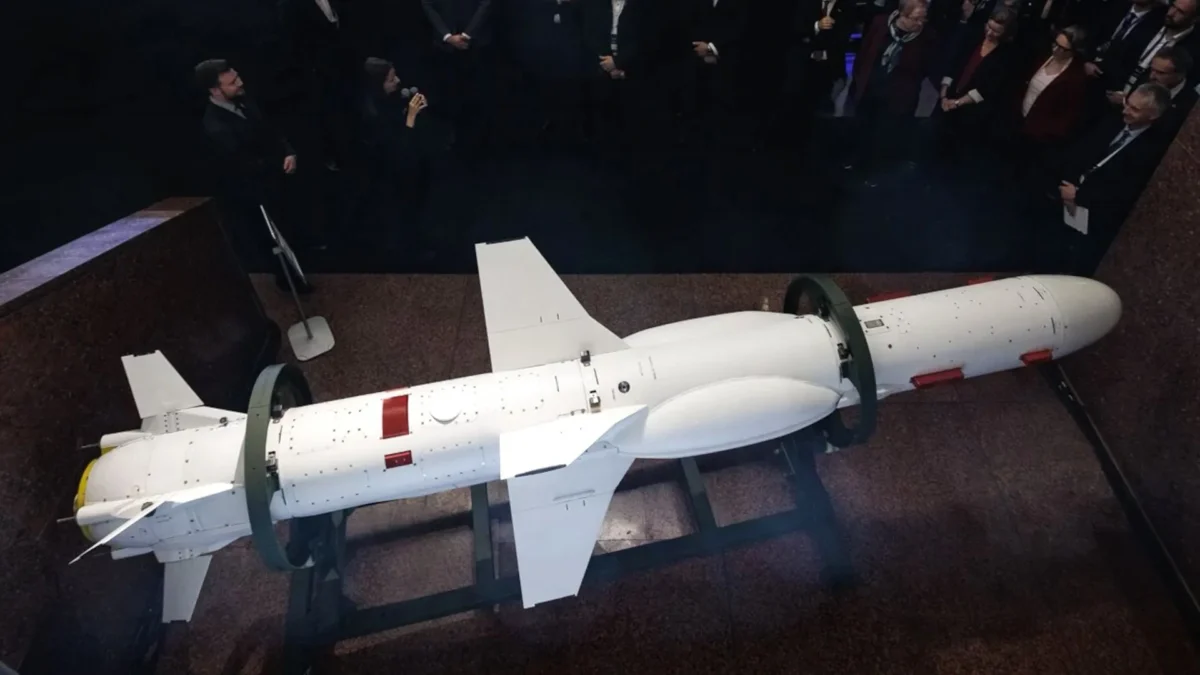
Defense Feeds – New Neptune Missile Variant has been unveiled by Ukraine, marking a significant milestone in the nation’s pursuit of long-range precision strike capability.
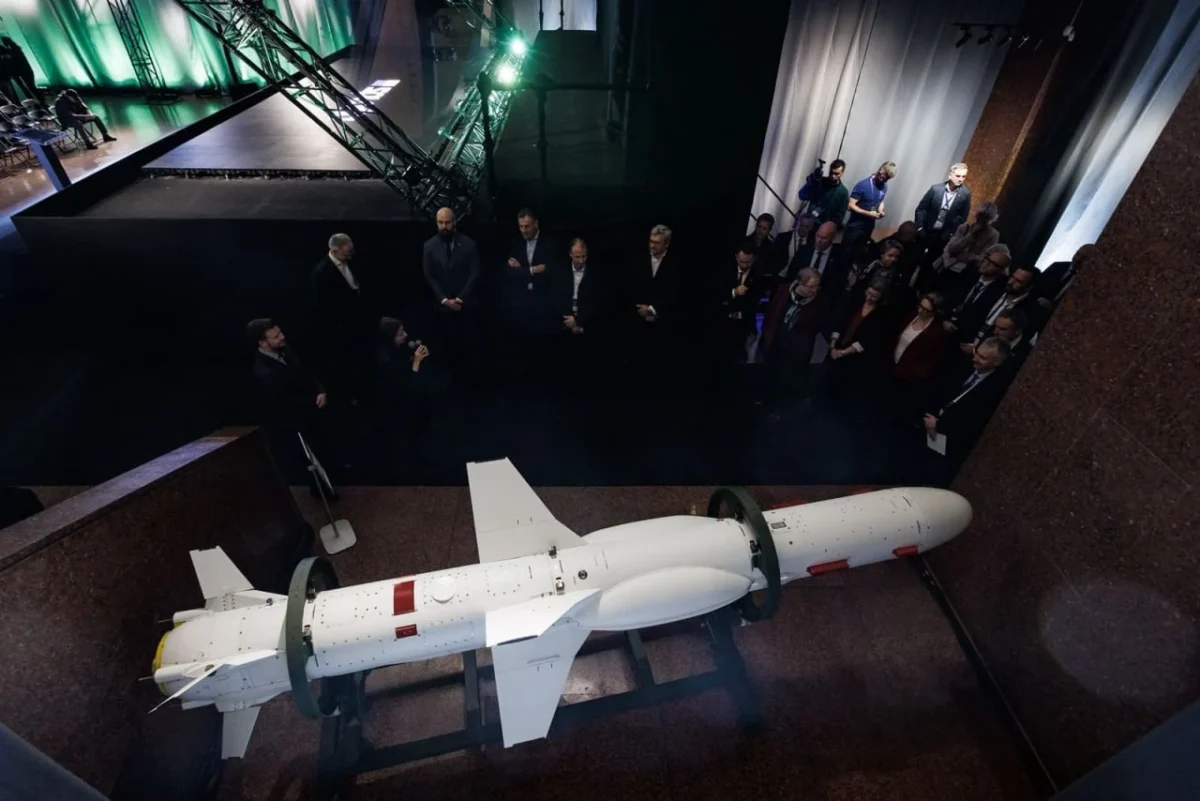
Informally dubbed the “Bulky Neptune,” this upgraded missile was showcased at a defense exhibition attended by NATO representatives on October 7, according to Defense Express.
The variant features a visibly enlarged midsection, believed to contain conformal fuel tanks that extend its range, highlighting Ukraine’s growing expertise in missile engineering and its ability to innovate under wartime conditions.
Developed by the Luch Design Bureau and first fielded in 2020, the original R-360 Neptune serves as the foundation of Ukraine’s coastal and land-attack defenses, capable of striking targets up to 280 kilometers away.
Its successor, the R-360L, reportedly extends this reach to about 1,000 kilometers, giving Ukraine a much greater strategic depth and operational flexibility in countering Russian military assets.
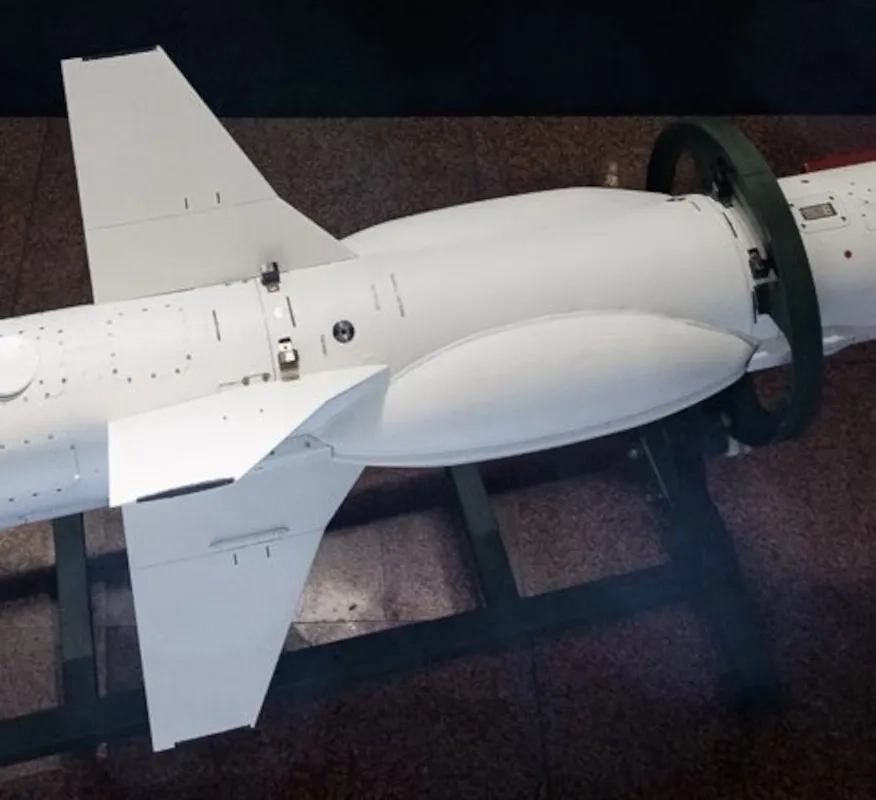
The newly revealed Bulky Neptune is thought to serve as an intermediate model between the standard and long-range variants.
Analysts estimate its operational range at approximately 500 kilometers, a significant improvement that would allow Ukraine to hit high-value targets deeper inside Russian-held territory while keeping launch sites at safer distances.
This range extension greatly enhances Ukraine’s operational flexibility, enabling precision strikes against critical infrastructure such as supply hubs, command centers, and air defense systems.
The updated structure indicates Ukraine is shifting toward a modular, flexible missile platform capable of performing both anti-ship and land-attack missions as required.
Unveiling the Bulky Neptune before NATO observers also serves a diplomatic and industrial purpose.
Beyond showcasing Ukraine’s technical competence, the demonstration underscores its commitment to achieving self-reliance in strategic weapons technology and attracting international defense partnerships.
It signals to Western allies that Ukraine is not merely reliant on imported systems but is increasingly capable of producing sophisticated homegrown weaponry.
One of the key developments in the Bulky Neptune’s design is its adaptability. Military analysts suggest Ukraine could configure the missile for different missions by varying its payload and fuel capacity.
A version prioritizing fuel might achieve a range of up to 500 kilometers, Another configuration carrying a heavier warhead could sacrifice range for higher impact, reducing its reach to around 300 kilometers but significantly increasing destructive force.
The standard R-360 carries a 150-kilogram warhead, and the long-range R-360L variant supports about 260 kilograms.
If the Bulky Neptune accommodates larger payloads, it would markedly enhance Ukraine’s ability to neutralize fortified or industrial targets with higher efficiency.
Such modular flexibility mirrors broader trends in modern missile design, where multi-role capability is prioritized over single-mission specialization.
By balancing reach and firepower, Ukraine secures a strategic benefit, enabling flexible responses to battlefield conditions, from deep-range attacks to assaults on hardened targets closer to combat zones.
The Neptune family’s versatility reinforces Ukraine’s capacity to sustain effective strike operations using domestically produced systems.
More than a feat of missile engineering, the Bulky Neptune’s reveal is a deliberate signal of intent.
It reflects Ukraine’s maturing defense industry, which continues to innovate despite immense wartime pressures.
The Luch Design Bureau’s progress with the Neptune line has been particularly notable; in 2024 alone, Neptune missiles reportedly carried out over 50 precision strikes against Russian military and industrial targets, including the notable attack on the Elektrodetal plant in Russia’s Bryansk region.
By advancing the Neptune platform, Ukraine demonstrates that it can produce missile systems capable of competing with established Western designs, such as France’s MdCN naval cruise missile.
This evolution strengthens Ukraine’s deterrence posture, providing a credible deep-strike capability that enhances regional security and reshapes strategic balances in Eastern Europe.
Ultimately, the Bulky Neptune embodies Ukraine’s transition from a defense consumer to a capable innovator in high-precision weapons technology.
Combining longer range, greater payload flexibility, and modular adaptability, this missile signifies a crucial leap toward self-sufficiency.
With ongoing improvements to its missile arsenal, Ukraine’s Bulky Neptune serves as a testament to innovation and endurance, reinforcing national defense and projecting confidence to allies and adversaries.