Follow Us:
Follow Us:


Defense Feeds – New BATT-S Terrier MLX armored vehicles were unveiled at the Defence and Security Equipment International (DSEI) 2025 expo in London by The Armored Group, marking a significant step forward in troop transport and battlefield flexibility.
The new BATT-S Terrier MLX armored platforms are attracting attention from industry insiders as they address evolving military needs with features like counter-drone systems, modular design, and enhanced agility to meet real-world operational demands.
Both vehicles go beyond simple upgrades and represent a focused effort to deliver armored solutions that integrate cutting-edge defense technologies, including anti-drone weapons and advanced communications, while ensuring ease of maintenance for operators in the field.
The launch highlights DSEI’s importance as a global hub for defense innovation, drawing together manufacturers and buyers aiming to supply adaptable armored vehicles that can effectively counter threats ranging from roadside ambushes to unmanned aerial attacks.
For military planners, the new BATT-S Terrier MLX armored vehicles offer vital protection, speed, and a platform ready for future technology enhancements—critical capabilities in today’s complex and unpredictable operational environment.
BATT-S builds on the legacy of The Armored Group’s established models but is reengineered for high agility in both congested urban streets and unforgiving terrain.
By shortening the wheelbase and trimming overall weight, designers created a nimble armored vehicle with capabilities tailored for convoy escort, perimeter security, and rapid response missions.
The core advantage of BATT-S is its modularity: protection levels hit STANAG Level 2 out of the box, but scalable armor kits let units beef up hydraulic and ballistic resistance on demand, without swapping out the base vehicle.
This means troops can shift from routine patrol to high-risk zones using the same platform, dialing up defense as situations change.
BATT-S isn’t just about armor, though. Its architecture supports easy upgrades—remote weapon stations, electronic warfare packages, surveillance modules, and communications suites slot in cleanly, giving crews layered defense for newer battlefield threats, especially drones and electronic attacks.
In addition, all major systems are logically arranged for rapid maintenance. For field mechanics, simplified access and widely available components cut downtime, keeping fleets operational longer and lightening the logistics tail.
As modern forces push to stay mission-ready with fewer specialized tools, these features are increasingly key ranking factors for armored vehicle procurement. Another highlight is ease of service.
The engineering team shaped BATT-S with mechanics in mind, streamlining basic repairs so readiness rates stay high even under demanding ops tempos.
Quick swaps and sensible layouts mean less waiting and less gear stuck in depot limbo—a clear answer to operators struggling with costly delays in theater.
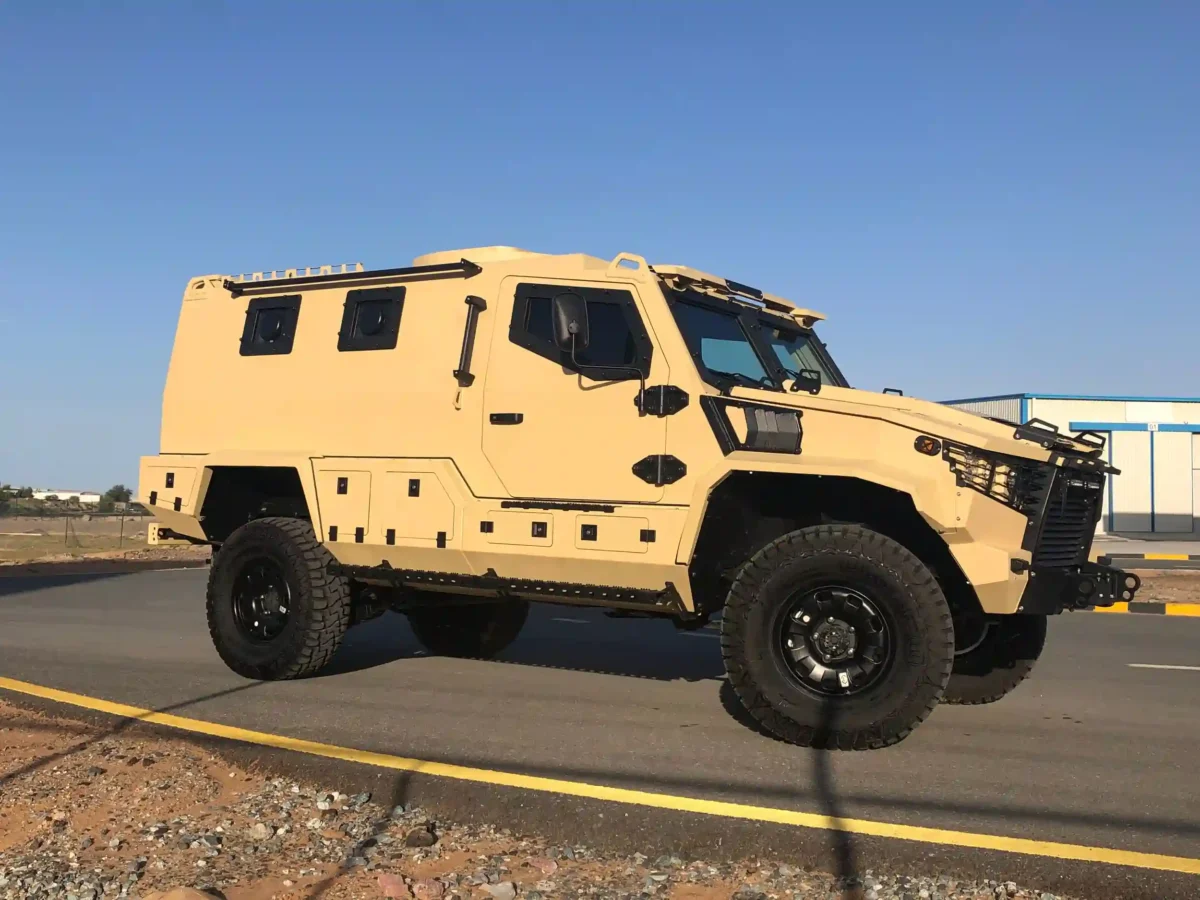
While BATT-S balances protection with maneuverability, the Terrier MLX leans into speed and role adaptability.
Using a lightweight, proven chassis, the MLX suits special ops, rapid deployment, and reconnaissance missions—scenarios where fast movement can determine the outcome.
The open architecture lets forces configure the MLX for troop transport, command and control, or direct fire support, fitting remote weapon stations and anti-drone modules as needed.
With the ability to change payloads quickly, commanders can transition units from surveillance to strike without swapping vehicle types, simplifying fleet management.
Terrier MLX’s design also reflects practical logistics. By specifying common off-the-shelf parts and easy servicing routines, The Armored Group aims for minimal wait-time between missions, maximizing fleet availability without demanding unique supply chains.
Field units benefit from reliability and faster turnaround, helping them keep the operational tempo up where conventional vehicles might fall behind.
Both vehicles set out to answer current battlefield realities: highly mobile units need protection that can scale, technology that can adapt, and platforms that do not burden maintenance crews.
Operators no longer want a fixed role for every vehicle; instead, flexibility and modular solutions dominate acquisition checklists. In this context, the MLX stands out for offering speed and adaptability where it’s needed most—especially for units conducting reconnaissance or hit-and-run operations.
Together, the BATT-S and Terrier MLX expand The Armored Group’s armored vehicle lineup, covering missions from routine urban patrol to high-intensity rapid intervention.
The focus on modular payloads, anti-drone defense, and scalable armor puts both platforms on the front line of industry trends.
As military forces worldwide wrestle with asymmetric threats and hybrid warfare, vehicles that adapt to changing technologies and unpredictable enemy tactics are in demand.
DSEI remains the focal point for unveiling these innovations, reflecting the importance of international collaboration in defense.
As militaries seek equipment that’s more than just protective steel—expecting platforms that integrate remote weapons, surveillance, communications, and counter-drone tech—the BATT-S and MLX show how manufacturers are responding with future-proof solutions.
Adoption may come swiftly, setting a new standard for modular armored vehicles in both professional defense circles and active theaters of operation.
Whether patrolling volatile streets, escorting convoys, or racing to enemy positions, The Armored Group’s latest platforms offer operators solutions built for modern conflict, where survivability, adaptability, and rapid mission turnaround all matter.
As procurement chiefs look for value and flexibility, the debut of BATT-S and Terrier MLX at DSEI London signals how the armored vehicle market is moving—right at the intersection of ready protection and next-gen tech integration.