Follow Us:

Follow Us:


Defense Feeds – Demonstrating a major leap in air defense technology, the UK Army fires Sky Sabre missile for the first time on UK soil, showcasing a new era of ground-based capabilities and enhanced protection from advanced threats.
This breakthrough, announced on August 22, 2025, during Exercise Formidable Shield 25, demonstrates a robust upgrade to the UK’s military shield at a time when global security challenges are intensifying.
In a dramatic demonstration on the Outer Hebrides, the Army’s 16th Regiment Royal Artillery fired the Sky Sabre system in realistic operational conditions, validating its precision and reliability against modern aerial threats.
This live-fire event coincided with the Ministry of Defence unveiling a plan to double Sky Sabre launcher units as part of a £118 million investment to reinforce national air defense posture.
The Sky Sabre system replaces the aging Rapier, which, despite its historic service in the Falklands and Gulf Wars, could no longer meet today’s threat environment.
The upgrade comes as recent global conflicts, including the war in Ukraine, emphasize the value of responsive, layered air defense in modern warfare.
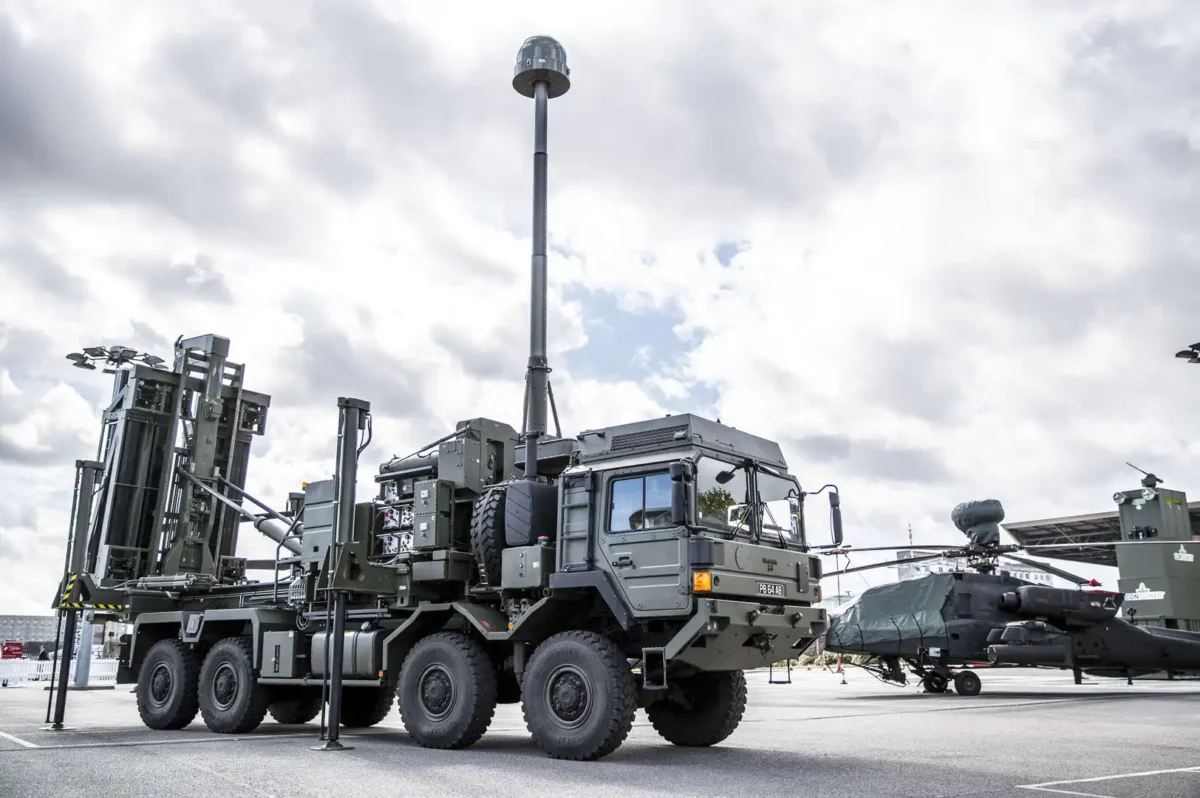
Sky Sabre is a leap ahead in technological sophistication, combining three main elements: the Land Ceptor launcher equipped with Common Anti-Air Modular Missiles (CAMM), the agile Saab Giraffe Multi-Beam Radar, and an integrated digital command-and-control module.
Together, these form a versatile and mobile air defense solution that adapts to rapidly evolving battlefield scenarios.
The CAMM missiles stand out for their high maneuverability and active radar homing, allowing them to lock onto a variety of targets, including aircraft, drones, cruise missiles, and even objects as small as a tennis ball.
They feature real-time mid-course guidance via a secure datalink, giving the British Army flexibility to retarget threats as situations change.
Elevated on a hydraulic mast, the Giraffe Agile Multi-Beam Radar delivers robust 360-degree coverage and rapid updates, easily tracking over 100 aerial targets simultaneously.
Its advanced capabilities allow forces to identify and engage low-flying, evasive threats that older systems would miss, including stealth drones and precision-guided munitions.
Unlike the analog Rapier, Sky Sabre is network-enabled, offering seamless integration with UK Royal Air Force assets and NATO’s broader Integrated Air and Missile Defence architecture.
Its modular design means it can fit homeland security missions, expeditionary deployments, or joint allied operations, making it a flexible asset in the UK’s defense toolkit.
Exercise Formidable Shield 25 tested Sky Sabre’s interoperability in multinational environments, with nine NATO allies participating, including advanced aircraft like Eurofighter Typhoons and Norwegian F-35s.
The system’s ability to accurately detect, track, and engage threats amid busy, layered airspace showcases its operational effectiveness and value to NATO’s collective security.
British defense planners are keenly aware of lessons drawn from Ukraine’s battlefield experience: survivability now demands rapid detection and engagement of drone swarms, cruise missiles, and hypersonic threats.
Robust, digital air defense is no longer optional—ground forces and key infrastructure require protection beyond traditional air power. Sky Sabre isn’t just a shield; it’s a strategic tool for shaping the battlefield.
Its digital backbone and multi-domain integration allow the Army to coordinate air defense with allied forces, enhancing the United Kingdom’s contribution to NATO and its own national resilience.
Senior military analysts emphasize that adapting to new forms of warfare—where threats emerge suddenly and unpredictably—is essential, and Sky Sabre, with its flexibility and precision, ensures Britain is equipped for both current and future challenges.
With ongoing investment in air defense modernization, the UK Armed Forces have decisively stepped into the future.
Sky Sabre reflects a shift toward networked, agile defense that can respond to high-intensity conflicts and asymmetric attacks—all while keeping British ground forces safe and maintaining national security in an uncertain world.