Follow Us:

Follow Us:


Defense Feeds – New L-SAM Missile has been publicly unveiled by South Korea, showcasing an advanced Anti-Aircraft Missile (AAM) variant from its indigenous Long-range Surface-to-Air Missile system for the first time.
This marks a significant boost to the nation’s layered air and missile defense network.
Designed to work alongside the system’s existing Anti-Ballistic Missile (ABM) interceptor, the new AAM is set to replace the legacy PAC-2 GEM-T missile, delivering performance comparable to the widely used SM-2 family.
The L-SAM program is a cornerstone of South Korea’s efforts to establish a multi-tiered air defense shield capable of intercepting a broad spectrum of airborne threats.
The system’s primary interceptor, the L-SAM-I ABM, is optimized for high-altitude ballistic missile engagements.
Recently, South Korea’s defense industry unveiled the AAM variant, engineered for medium- to long-range aerial defense against fighter aircraft, cruise missiles, and other airborne threats.
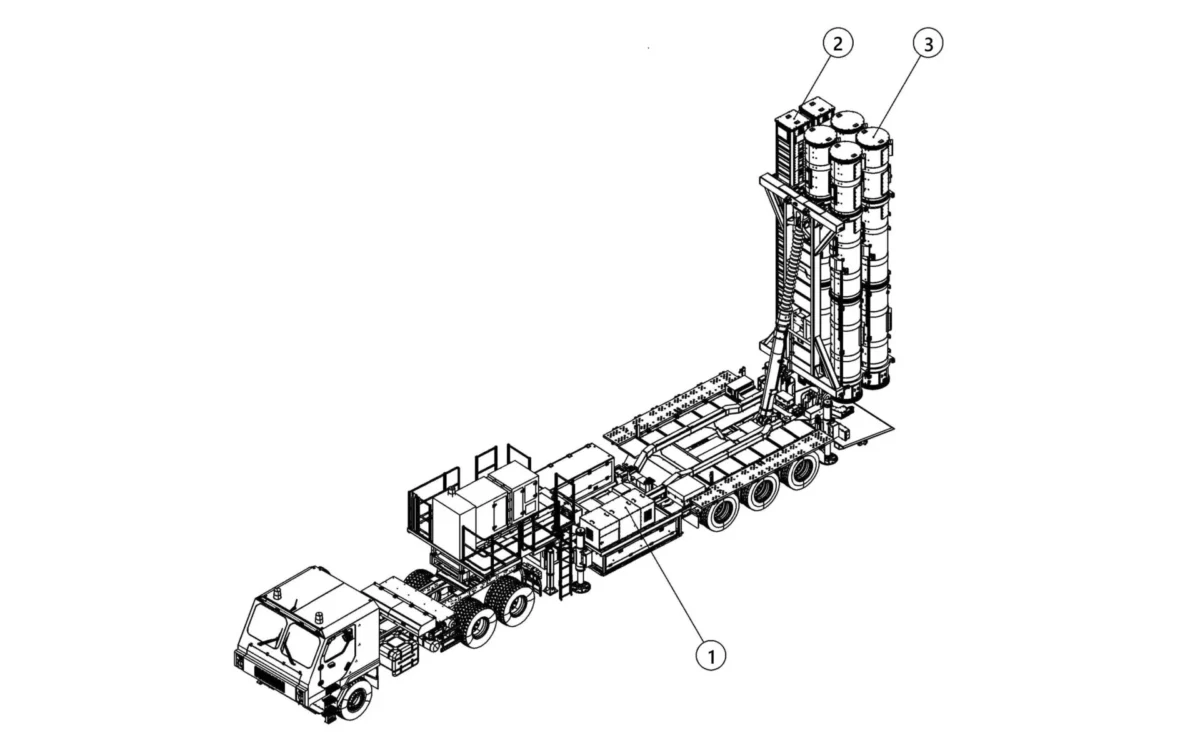
Unlike conventional systems requiring separate launchers, the L-SAM launcher can be loaded with a combination of ABM and AAM canisters, allowing rapid adaptability to diverse threat scenarios.
The newly presented AAM, developed by LIG Nex1, replaces the aging PAC-2 GEM-T, widely used but limited by older radar and guidance technologies.
Its design parameters echo those of the naval SM-2 missile, offering enhanced active radar homing capabilities for fire-and-forget engagements, reducing platform vulnerability during missile flight.
The L-SAM AAM is now in mass production, reflecting South Korea’s growing self-reliance in defensive missile technology.
The project is a collaboration among leading national firms: Hanwha Aerospace leads the ABM missile component, Hanwha Systems delivers the large active electronically scanned array (AESA) radar, and LIG Nex1 is responsible for the AAM interceptor.
The AESA radar supports detection ranges up to 600 km and allows simultaneous tracking and engagement of numerous targets, including stealthy or hypersonic threats.
Additionally, a naval variant of the L-SAM system is under development, aimed at replacing older SM-series missiles on Republic of Korea Navy vessels.
This maritime adaptation will strengthen South Korea’s maritime air defense by defending surface combatants and critical naval assets against modern aerial and missile threats, enhancing combat effectiveness in contested waters.
South Korea’s L-SAM system, with its modular launcher carrying both ABM and AAM missiles, offers unmatched operational flexibility.
Defense planners can configure missile batteries based on specific threat profiles, whether facing ballistic missile salvos, dense cruise missile attacks, or aggressive air incursions.
The system’s capability to operate in electronically contested environments using advanced guidance and radar technology marks a leap forward in autonomous air defense.
Geopolitically, the unveiling coincides with increasing missile threats from North Korea, including maneuvering reentry vehicles and intermediate-range missiles, making enhanced missile defense a pressing priority for Seoul.
Simultaneously, South Korea seeks to reduce dependence on foreign air defense systems by manufacturing high-capability indigenous solutions.
This advancement aligns with regional trends in defense modernization in countries such as Japan, Australia, and various European nations.
On the diplomatic front, South Korea is engaging potential buyers in the Middle East for exports of the L-SAM system and has eyed strategic markets including Poland, Australia, the Philippines, and Northern Europe for future sales.
South Korea is also advancing development of the more sophisticated L-SAM-II interceptor, projected to expand missile defense coverage three to four times beyond the current generation, featuring cutting-edge propulsion and precise kill vehicle control technologies comparable to U.S. THAAD systems.
This latest chapter in South Korea’s air defense modernization demonstrates the country’s commitment to securing its airspace against evolving threats with advanced, homegrown missile systems.
The L-SAM’s integrated design bridges the gap between ballistic missile defense and long-range air defense, positioning South Korea as a rising force in the global defense industry and a key player in layered missile defense technology.