Follow Us:
Follow Us:

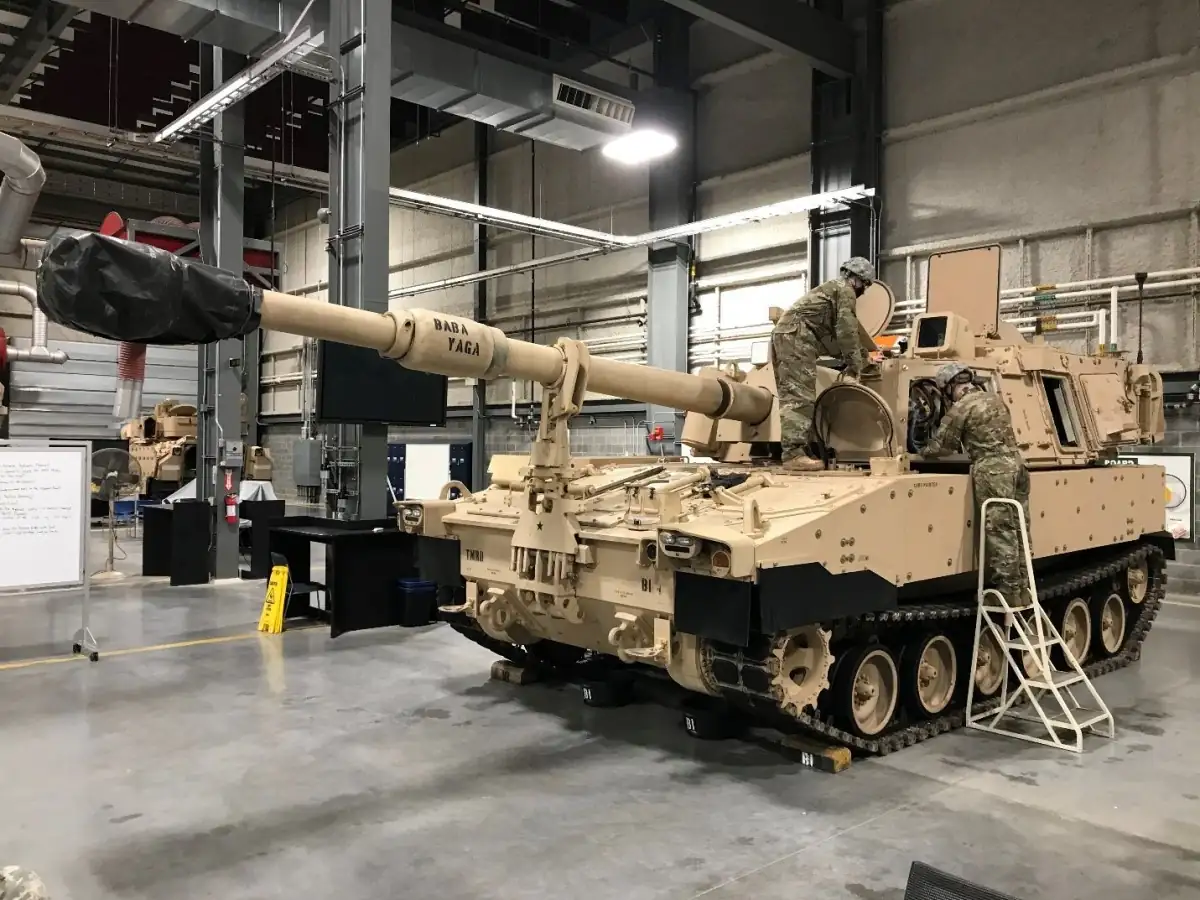
Defense Feeds, Washington. The M109A7 Paladin howitzers will continue serving as a cornerstone of U.S. Army artillery forces following a new $535 million contract aimed at sustaining production and maintaining long-term fire support capabilities.
The agreement reinforces the Army’s commitment to modernizing its indirect fire systems while ensuring combat units retain access to one of the military’s most important battlefield assets.
The latest procurement decision comes as artillery remains at the center of military planning worldwide. Recent conflicts have demonstrated the decisive role of long-range fires, prompting armies to invest heavily in modernized self-propelled howitzers capable of delivering accurate and sustained fire support under demanding combat conditions.
The new contract supports ongoing production and sustainment efforts for the M109A7, the most advanced version of the long-serving Paladin artillery system. Developed under the Paladin Integrated Management program, the platform incorporates substantial improvements over earlier variants while retaining the proven combat capabilities that have kept the system in service for decades.
The Army views the M109A7 as a critical element of its armored brigade combat teams. The self-propelled howitzer provides mobile fire support capable of keeping pace with maneuver forces while delivering precision and volume of fire against enemy positions.
Unlike older artillery systems, the M109A7 incorporates upgraded power generation, improved survivability features and modern digital architecture designed to support future technology integration. These enhancements allow the platform to remain operationally relevant despite the rapidly evolving nature of modern warfare.
The latest procurement also reflects the Army’s broader effort to maintain industrial capacity for key weapon systems. Sustaining production lines ensures the military can continue replacing older equipment while supporting readiness requirements across active-duty and reserve formations.
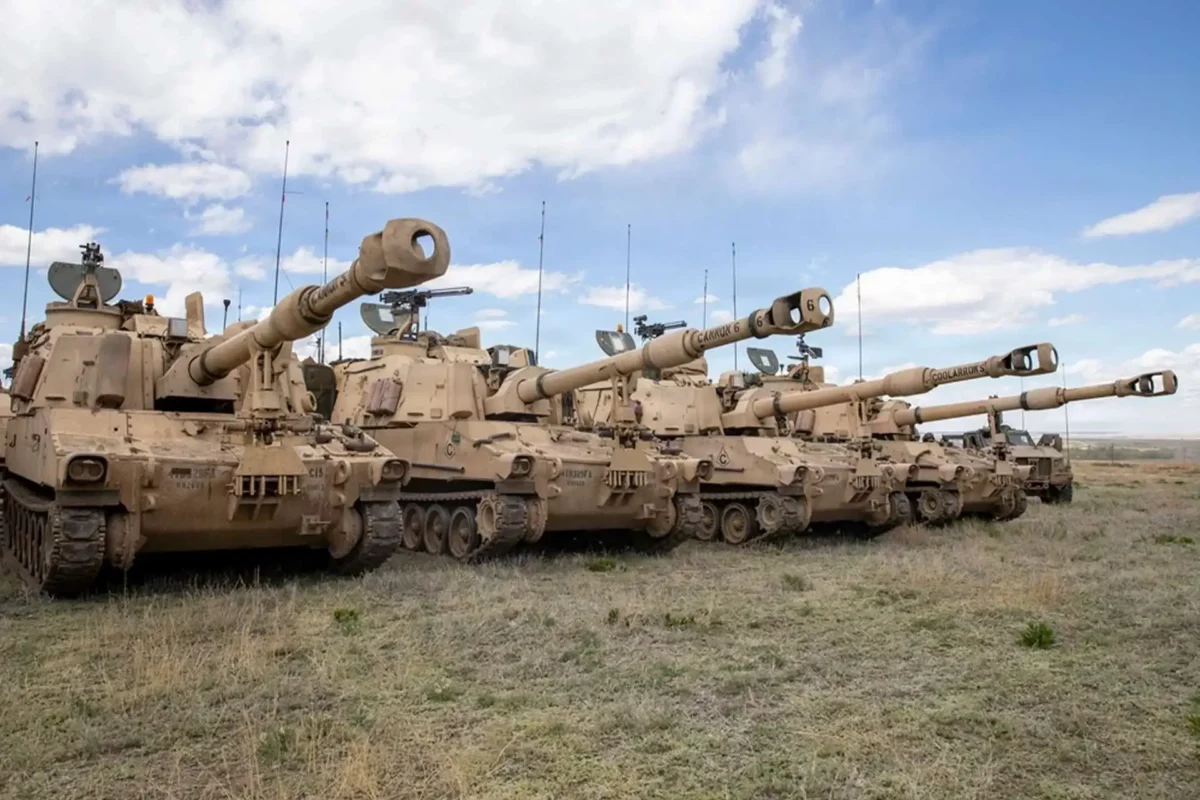
The M109A7 Paladin howitzers were developed to address the demands of modern battlefield operations, where mobility, responsiveness and survivability are increasingly important. The platform combines a 155mm artillery system with an upgraded chassis derived from components used across the Army’s armored vehicle fleet.
This commonality simplifies logistics and maintenance while improving operational efficiency. The upgraded platform also offers increased electrical power generation, supporting modern communications equipment and future battlefield technologies.
One of the key advantages of the M109A7 is its ability to rapidly relocate after firing. Modern counter-battery radars can quickly identify artillery launch locations, making mobility a crucial factor in survivability. The system’s ability to execute fire missions and move before enemy forces can respond helps reduce vulnerability on the battlefield.
The platform remains capable of employing a wide range of conventional and precision-guided munitions, providing commanders with flexibility across different operational scenarios. This versatility allows artillery units to support both large-scale combat operations and more limited tactical missions.
As the Army pursues broader modernization initiatives, the M109A7 continues to serve as a reliable and adaptable artillery solution.
The M109A7 Paladin howitzers contract highlights the continuing importance of artillery in contemporary military strategy. While emerging technologies such as drones and autonomous systems attract significant attention, recent conflicts have reaffirmed that artillery remains one of the most effective tools for shaping battlefield conditions.
Long-range fires play a crucial role in suppressing enemy positions, disrupting logistics networks and supporting maneuver operations. Maintaining a capable artillery force is therefore essential for military readiness and deterrence.
The latest investment also demonstrates the Army’s approach to balancing modernization with sustainment. While future programs seek to extend artillery range and improve precision, existing systems must remain effective and available in sufficient numbers to meet operational requirements.
For the defense industry, continued procurement supports manufacturing capacity and preserves critical expertise related to artillery production and maintenance. These industrial capabilities become particularly important during periods of heightened military demand.
As global security challenges continue to evolve, the Army’s decision to invest further in the Paladin fleet underscores the enduring value of mobile artillery. By sustaining production of the M109A7, the service is ensuring that its forces retain a proven and modernized fire support capability capable of meeting the demands of future battlefields.