Follow Us:
Follow Us:

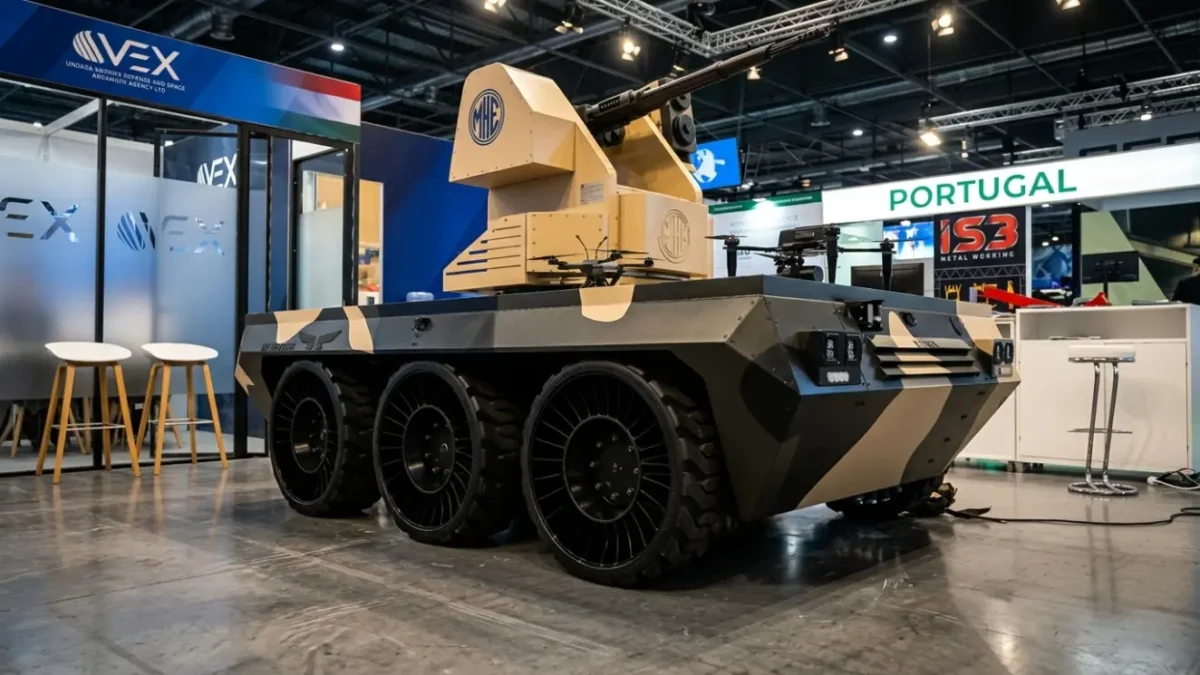
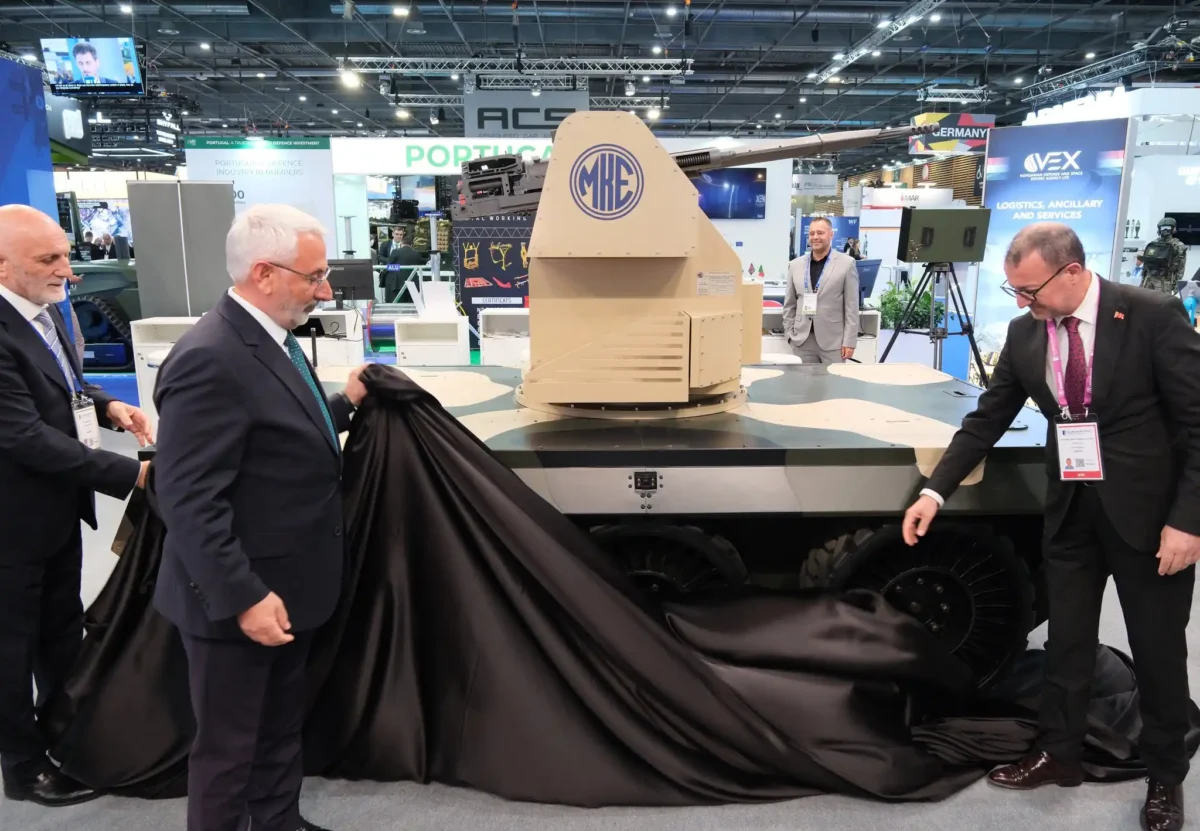
Defense Feeds – Paris. The Türkiye Unveils TOLGA-KATICA UGV Air Defense System at Eurosatory showcase highlights the growing trend toward autonomous battlefield systems as defense manufacturers seek new ways to counter aerial threats while reducing risks to military personnel.
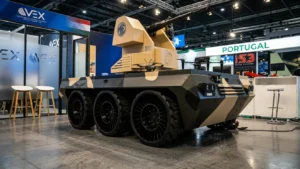
Presented at Eurosatory 2026, the TOLGA-KATICA system combines an unmanned ground vehicle (UGV) with a mobile short-range air defense capability, creating a platform designed to protect military formations against drones, helicopters and low-flying aerial targets.
Developed by Turkish defense companies MKE and KATICA, the system reflects Türkiye’s expanding investment in autonomous combat technologies and layered air defense solutions.
The unveiling comes as armed forces worldwide increasingly prioritize counter-drone capabilities in response to the rapid proliferation of unmanned aerial systems across modern battlefields. Recent conflicts have demonstrated how even low-cost drones can pose significant threats to troops, vehicles and critical infrastructure, driving demand for more mobile and responsive air defense systems.
Military analysts view the TOLGA-KATICA as part of a broader shift toward integrating autonomous platforms into frontline operations.
The TOLGA-KATICA system is built around an unmanned ground vehicle capable of operating without a crew onboard while carrying an integrated short-range air defense weapon system. The platform is designed to provide mobile protection for military units operating in contested environments where aerial threats can emerge with little warning.
Unlike conventional air defense vehicles that require personnel inside the platform, the TOLGA-KATICA allows operators to control the system remotely, reducing exposure to enemy fire and increasing operational flexibility. This capability is particularly valuable in high-risk zones where drone attacks, loitering munitions and reconnaissance aircraft are increasingly common.
The combination of autonomous mobility and air defense firepower allows the system to accompany maneuver units while maintaining continuous protection against airborne threats. Such platforms can be deployed ahead of advancing forces, positioned near critical infrastructure or integrated into layered defensive networks.
Defense experts note that modern air defense is no longer focused solely on traditional aircraft. Small drones and unmanned systems have become some of the most persistent threats on today’s battlefield, forcing militaries to develop specialized solutions capable of responding quickly and efficiently.
The TOLGA-KATICA appears designed specifically to address that challenge by providing a mobile and autonomous counter-air capability.
The rise of drone warfare has become one of the defining military developments of the past decade.
From Ukraine to the Middle East, unmanned aerial systems have demonstrated their ability to conduct surveillance, support artillery targeting and carry out precision attacks against military positions. As drones become more accessible and sophisticated, militaries are investing heavily in systems capable of detecting and neutralizing them before they can threaten troops or equipment.
Traditional air defense systems are often optimized to engage larger aircraft and missile threats. However, smaller drones present unique challenges due to their size, speed and relatively low cost. Using expensive interceptors against low-cost drones can quickly become economically unsustainable.
As a result, defense companies are increasingly developing specialized counter-drone platforms that combine sensors, automation and rapid-response weapon systems. Autonomous ground vehicles are emerging as a particularly attractive option because they can operate for extended periods while reducing manpower requirements.
Türkiye has become one of the most active countries in the development of both unmanned aerial and ground systems. The country’s defense industry has expanded rapidly in recent years, producing a wide range of drones, armored vehicles, missile systems and electronic warfare technologies.
The introduction of TOLGA-KATICA demonstrates how Turkish manufacturers are seeking to integrate these capabilities into comprehensive battlefield solutions.
The unveiling of TOLGA-KATICA reflects a broader transformation taking place across military forces worldwide.
Future battlefields are expected to feature increasing numbers of autonomous systems operating across land, air and maritime domains. Military planners believe unmanned platforms can improve operational efficiency, enhance survivability and reduce risks to personnel while maintaining combat effectiveness.
Autonomous air defense systems are particularly attractive because they can provide persistent protection without requiring large crews or extensive logistical support. As sensor technology and artificial intelligence continue advancing, such platforms are expected to become more capable of detecting, tracking and responding to threats with minimal human intervention.
The growing use of drone swarms and low-cost aerial systems is likely to accelerate demand for these technologies. Military forces require flexible defenses capable of adapting to rapidly evolving threats while maintaining affordability and operational effectiveness.
For Türkiye, the TOLGA-KATICA represents another example of the country’s ambition to become a leading producer of advanced defense technologies. The system combines expertise in autonomous mobility, air defense and battlefield networking into a single platform designed for modern operational requirements.
As defense industries continue responding to the lessons of recent conflicts, autonomous air defense solutions like TOLGA-KATICA are expected to play an increasingly important role in protecting forces against the expanding range of aerial threats found on contemporary battlefields.