Follow Us:
Follow Us:

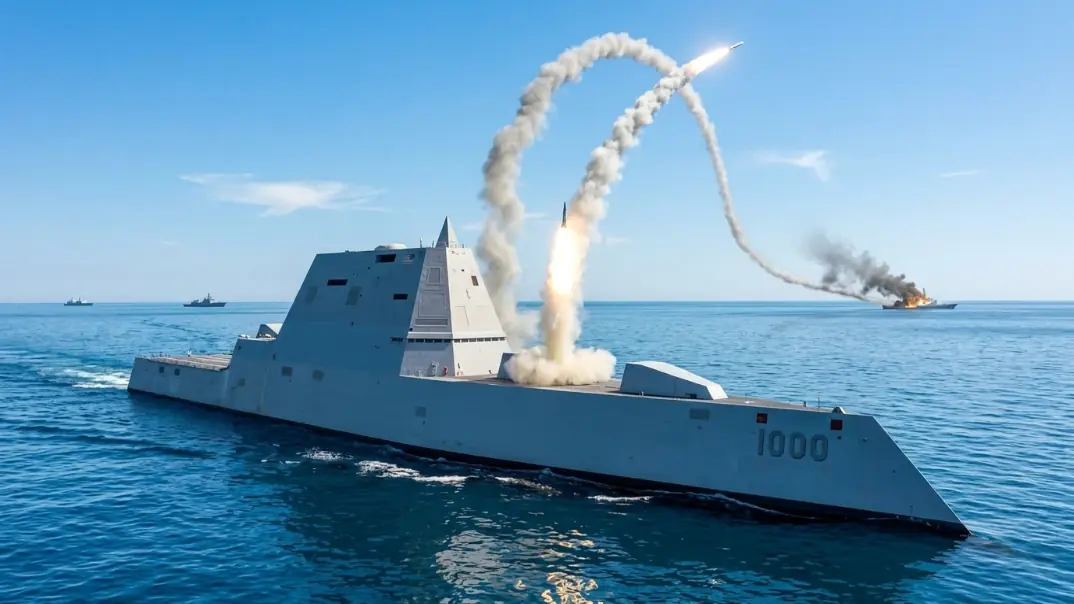
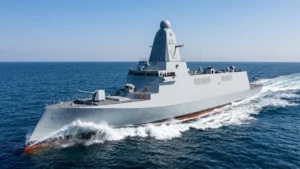
Defense Feeds, Washington — The United States is reshaping its future naval warfare strategy as the US Navy Zumwalt destroyers shift toward hypersonic strike role through a broader repositioning of the stealth destroyer fleet.
The Navy is increasingly viewing the Zumwalt-class as a platform for advanced long-range strike missions and a potential technological bridge toward future BBGN-style battleship concepts centered on hypersonic weapons.
Originally designed as stealth-focused land attack destroyers, the Zumwalt-class ships have undergone major strategic reassessment over the past decade. Rising demand for long-range precision strike capability and hypersonic weapons integration has given the class a new operational purpose. The shift reflects changing priorities in maritime warfare where missile reach and survivability are becoming decisive factors.
The repositioning effort also aligns with broader US Navy modernization plans aimed at countering increasingly advanced naval threats. As major powers invest heavily in anti-access and long-range strike systems, the Navy is adapting its surface fleet for operations in highly contested environments.
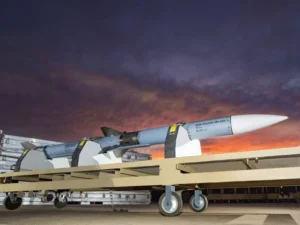
The Zumwalt-class destroyers are now being prepared to carry Conventional Prompt Strike hypersonic missiles, significantly expanding their offensive capability. Hypersonic weapons can travel at extremely high speeds while maneuvering during flight, making them more difficult to intercept than traditional ballistic or cruise missiles.
Integrating these weapons transforms the Zumwalt fleet into long-range strike assets capable of engaging high-value targets from significant distances. This role differs substantially from the ships’ original focus on naval gunfire support and coastal strike operations.
The destroyers already feature advanced stealth shaping and integrated power systems, making them suitable candidates for future high-energy and missile technologies. Their reduced radar signature enhances survivability during operations in contested maritime regions.
The transition also gives the Navy a dedicated platform for operational testing and deployment of next-generation weapons. Lessons learned from Zumwalt hypersonic integration could shape the design and doctrine of future large surface combatants.
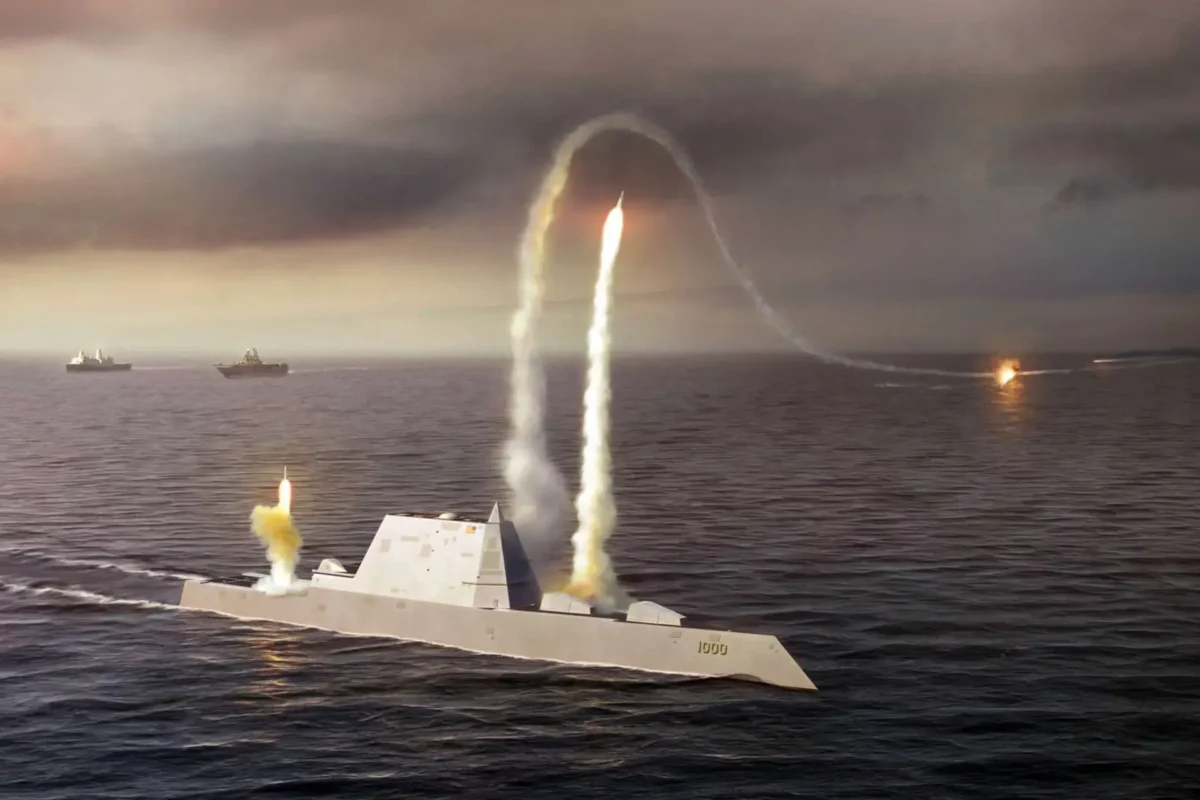
The discussion surrounding future BBGN-style battleships reflects renewed interest in heavily armed surface combatants optimized for missile warfare. Unlike traditional battleships centered around large naval guns, future concepts would likely emphasize hypersonic strike systems, advanced missile defense and enhanced survivability.
The term BBGN generally refers to a nuclear-powered guided missile battleship concept. While still largely theoretical, the idea highlights how naval planners are reconsidering the role of large surface combatants in modern warfare. Long-range missile engagement has increasingly replaced close-range naval combat.
Supporters of larger strike ships argue that future fleets may require platforms capable of carrying substantial missile payloads while surviving in contested environments. Advances in radar, integrated power systems and defensive technologies could make heavily armed ships more viable than previously thought.
At the same time, critics question whether concentrating large amounts of capability into a few expensive vessels increases strategic risk. Modern anti-ship missiles, drones and underwater threats continue to challenge the survivability of large naval platforms.
The Navy’s decision to reposition the Zumwalt-class highlights the growing importance of hypersonic weapons in future military planning. Hypersonic missiles are expected to alter naval warfare by reducing reaction times and challenging existing missile defense systems.
Long-range precision strike capability is becoming central to deterrence strategy in regions such as the Indo-Pacific. Surface combatants equipped with hypersonic missiles could engage enemy ships, command centers or strategic infrastructure from extended distances while remaining difficult to counter.
The integration of these systems also supports distributed maritime operations. Instead of relying solely on aircraft carriers, the Navy aims to spread offensive capability across multiple platforms. This creates a more flexible and resilient force structure capable of operating in contested waters.
In addition, hypersonic weapons may influence future ship design across the entire surface fleet. Larger power requirements, advanced sensors and expanded missile storage will likely shape next-generation naval platforms. The Zumwalt-class is effectively serving as a testbed for these evolving operational concepts.
Looking ahead, the Navy’s modernization strategy appears increasingly focused on balancing survivability with long-range strike power. The repositioning of the Zumwalt destroyers demonstrates how existing platforms are being adapted to meet emerging operational demands.
As global naval competition intensifies, hypersonic weapons and advanced missile systems are expected to become defining features of future maritime warfare. The Zumwalt-class transition may represent an early step toward a new generation of heavily armed surface combatants designed for the missile-dominated battlespace of the future.