Follow Us:
Follow Us:

Defense Feeds – AI Tech Enhances Abrams and Bradley as the US Army begins testing a next-generation counter-drone system powered by artificial intelligence.
The technology aims to boost the protection of its armored vehicles against rising drone threats on modern battlefields.
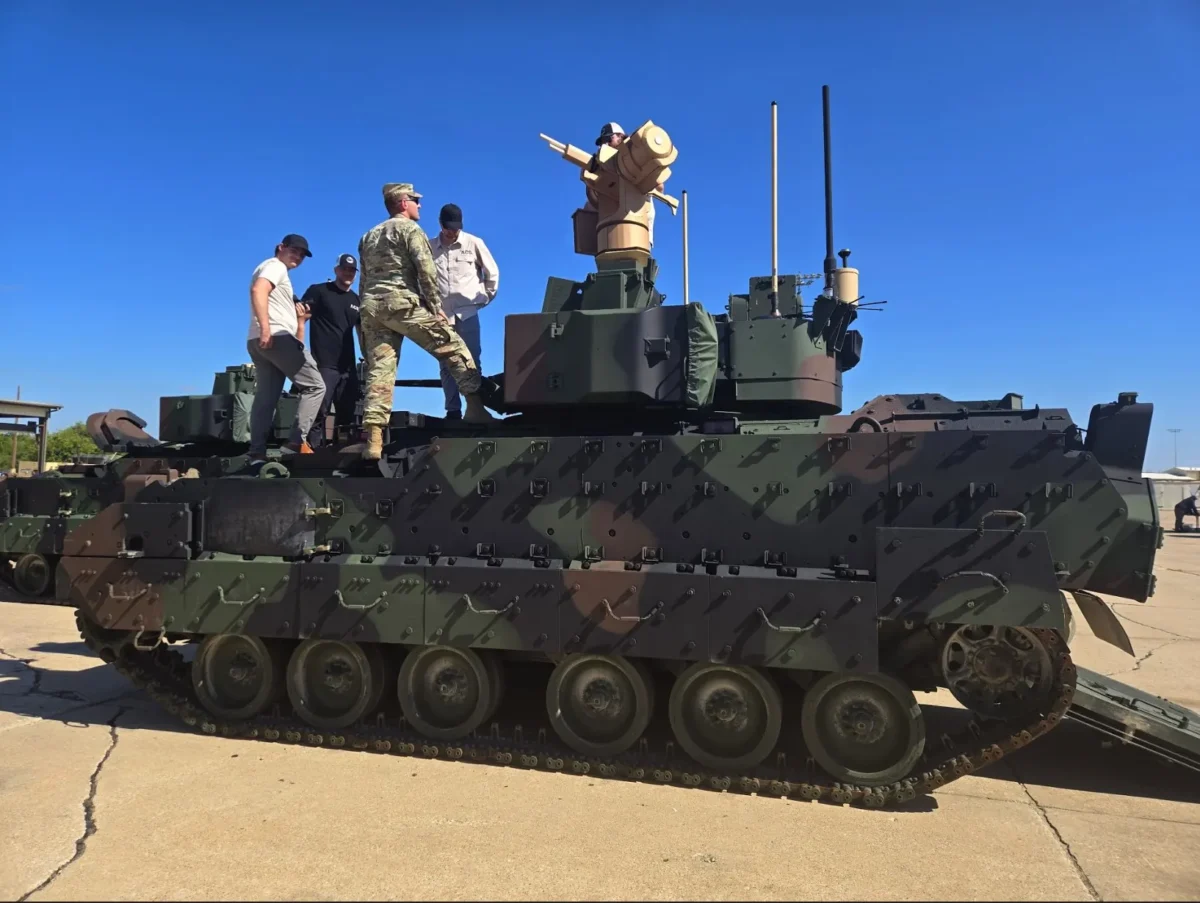
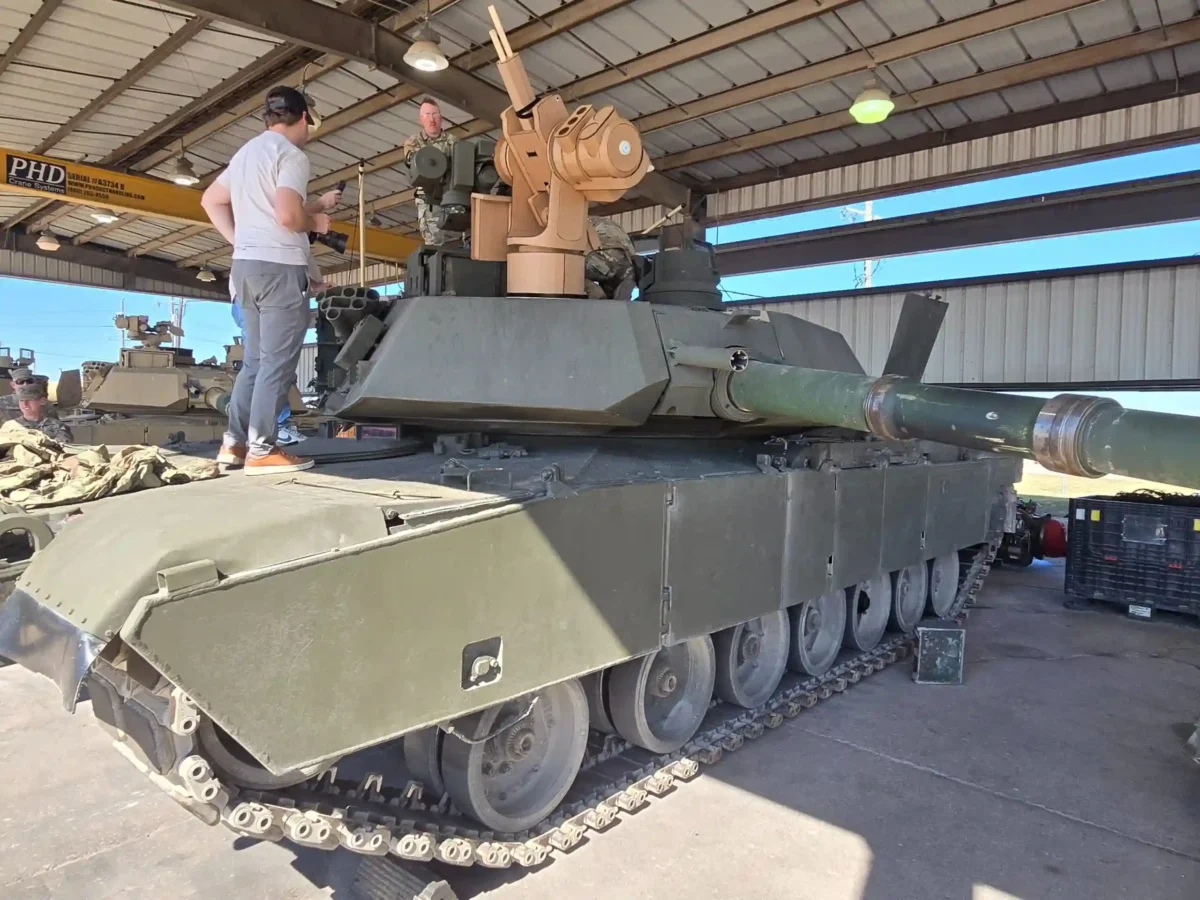
Images shared by Allen Control Systems President Steven Simoni show the company’s Bullfrog remote weapon station mounted on a Bradley Infantry Fighting Vehicle during recent trials.
Simoni noted that today’s mechanized units are increasingly vulnerable to small, low-cost drones used as airborne IEDs.
He said the Bullfrog system is built to counter that danger, giving back control and situational awareness to US and allied ground forces.
The Bullfrog system is a compact, 400-pound (181-kilogram) autonomous weapon mount capable of being armed with the M240 machine gun chambered in 7.62×51mm NATO rounds.
The weapon delivers a fire rate of approximately 600 rounds per minute, providing a fast-reacting kinetic response against aerial threats.
Engineered to counter drones classified between Class 1 and Class 3, the platform can engage targets weighing up to 600 kilograms (1,320 pounds) within an operational range of about 1,500 meters.
The Bullfrog integrates computer vision, artificial intelligence algorithms, and proprietary control software to enable precise targeting while adapting legacy and modern weapon systems for autonomous threat engagement.
Its modular design allows it to fit NATO-standard combat vehicles, including main battle tanks and infantry transports, making it suitable for both retrofit and new-build applications.
The company also claims the Bullfrog has a passive detection capability with a reported false-negative rate below 2 percent, indicating reliable target identification performance.
The growing availability of affordable first-person-view (FPV) drones has posed a severe challenge to traditional armored vehicle defenses.
Platforms like the M1 Abrams and M2 Bradley rely heavily on active protection systems such as Trophy and Iron Fist, which are optimized for intercepting high-velocity threats like anti-tank missiles or rocket-propelled grenades.
However, these systems struggle to detect and neutralize low-flying, erratic drones that operate with minimal radar and heat signatures.
Conventional countermeasures, such as the M2 heavy machine gun or crew-operated remote weapon stations, still depend largely on a gunner’s field of view and situational awareness.
As battlefields become more saturated with small aerial reconnaissance and attack drones, especially those tethered by fiber optics that resist electronic jamming, ground forces face increasing constraints on their defense envelope.
Allen Control Systems has not disclosed whether the Bullfrog’s current testing phase is part of a formal acquisition program or a rapid prototyping initiative. The US Army has yet to confirm an official contract related to its deployment.
The company’s track record with earlier defense collaborations, including its project with ManTech to adapt Bullfrog systems for use on maritime platforms with US Special Operations Forces, points to rising confidence in its multi-domain versatility.
The integration of artificial intelligence into defensive weapon stations represents a broader modernization trend within the US Army’s Next Generation Combat Vehicle (NGCV) program.
By automating drone detection and engagement, systems like the Bullfrog may soon become essential components of armored formations operating in drone-contested theaters.
As adversaries continue innovating with inexpensive, swarming drone tactics, AI-driven hard-kill solutions could offer a vital defensive layer for future mechanized warfare.
The Bullfrog’s development signals an important evolution in counter-drone technology, aiming to safeguard not only vehicles like the Abrams and Bradley but also the soldiers inside them.