Follow Us:
Follow Us:

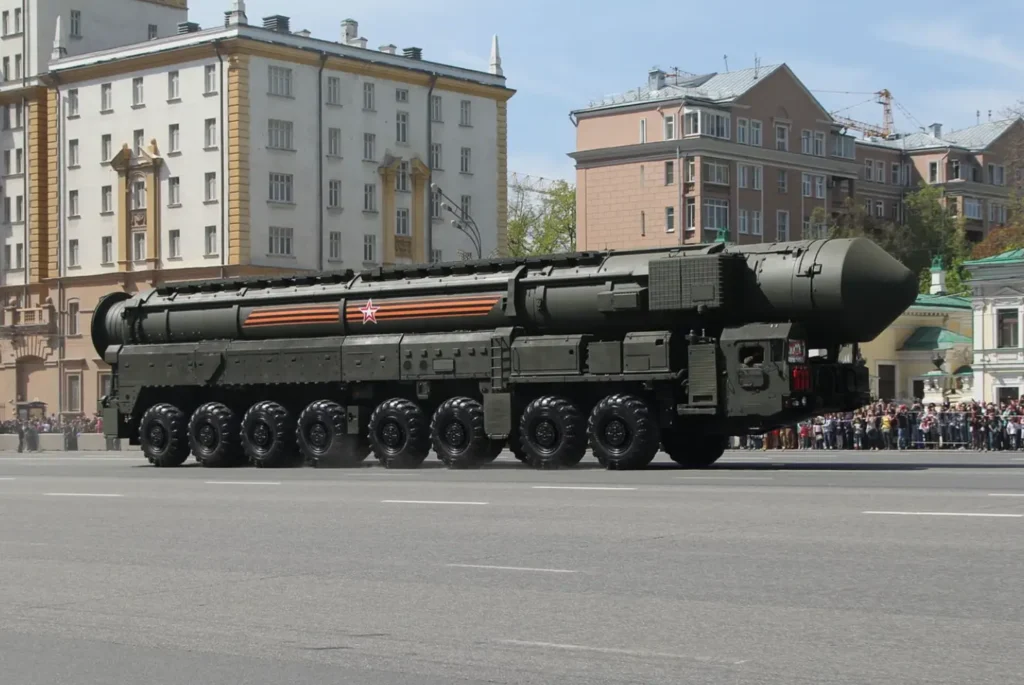
Defense Feeds – Russia is moving closer to officially deploying its most powerful weapon, the RS-28 Sarmat ICBM, a super-heavy intercontinental ballistic missile that marks a pivotal step in Moscow’s ongoing nuclear modernization campaign.
The move signals Russia’s evolving strategic posture amid escalating tensions with Western nations.
While visiting a Moscow military hospital on October 29, President Vladimir Putin stated that the RS-28 Sarmat, referred to by NATO as “Satan II,” is nearing operational deployment within Russia’s Strategic Missile Forces.
“It’s not yet deployed, but it will be soon,” Putin said while addressing wounded servicemen.
His comments confirm that the long-tested RS-28 missile system is nearing readiness for active deployment.
The RS-28 Sarmat has been portrayed as Russia’s ultimate land-based nuclear deterrent, replacing the aging R-36M Voyevoda ICBM fleet.
It was designed to carry heavy payloads, strike virtually any target on Earth, and defeat modern Western missile defense systems through complex and unpredictable flight paths.
This next-generation RS-28 Sarmat missile represents years of development intended to ensure Moscow’s strategic edge in global nuclear balance.
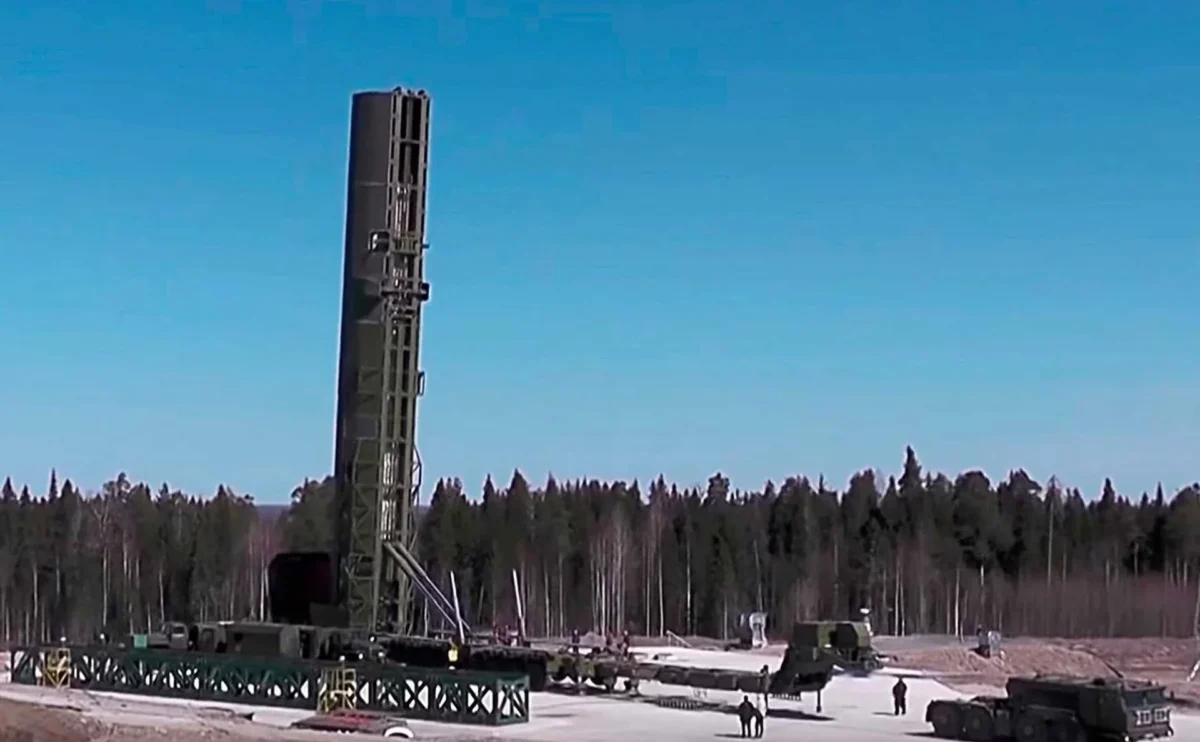
Reports from the Moscow Times reveal that initial Sarmat ICBM units are entering what officials describe as a “combat duty” phase.
Satellite imagery indicates upgrades to hardened launch silos and increased crew activity, signaling Russia’s readiness phase for operational alert status.
Earlier Russian claims about the RS-28 Sarmat ICBM entering service in 2023 now appear partly clarified by Putin’s confirmation that full deployment is imminent.
The Sarmat program has faced notable technical setbacks, including several failed tests and an explosion during a late-2024 silo trial. However, defense analysts note that Russia is pursuing a phased operational rollout, introducing limited launch complexes before moving to full-scale regimental deployment.
According to available data, the RS-28 Sarmat missile weighs over 200 tons, stretches nearly 35 meters in length, and can deliver up to a 10-ton payload.
Its configuration supports up to 15 MIRVs (Multiple Independently Targetable Reentry Vehicles) and is compatible with advanced hypersonic glide vehicles such as the Avangard.
The RS-28 Sarmat’s reported range reaches approximately 18,000 kilometers, granting it global strike capability through polar orbits, including a potential south-pole trajectory via its Fractional Orbital Bombardment System (FOBS) mode.
This allows the Sarmat to bypass conventional early-warning systems, complicating NATO’s missile detection efforts.
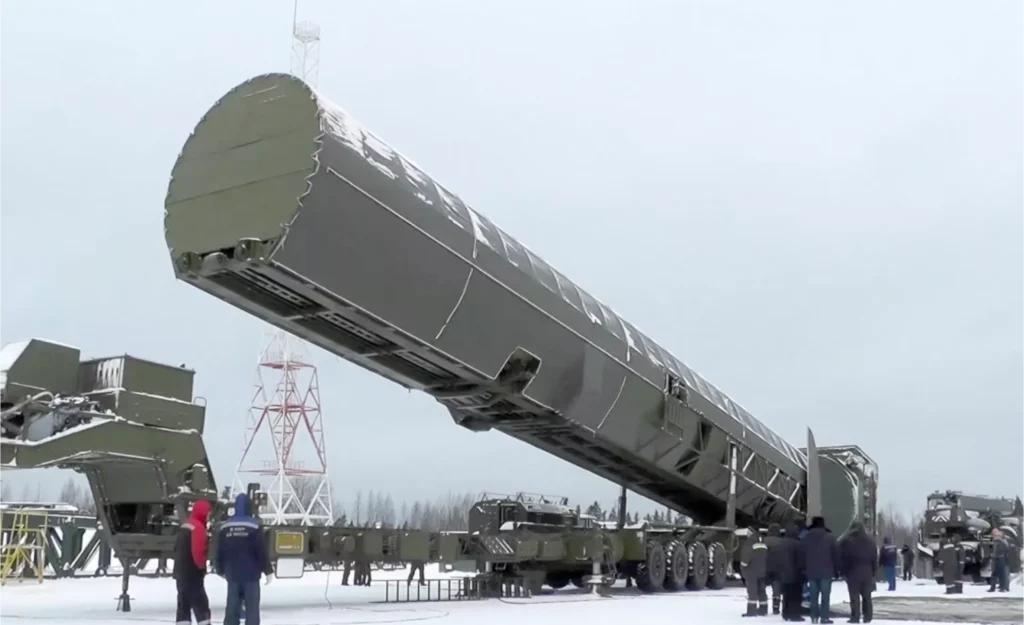
For the United States and NATO countries, deployment of the RS-28 Missile represents a significant challenge to deterrence and missile defense structures.
The missile’s advanced accuracy, heavy throw-weight, and unconventional flight path make it one of the most formidable weapons in Russia’s arsenal.
Its deployment comes as the U.S. continues to face delays in the LGM-35A Sentinel ICBM modernization project, reinforcing Moscow’s message of staying technologically competitive despite sanctions and industrial constraints.
Military experts note that while full operational capability may still take years, the RS-28 Sarmat serves as both a technical achievement and a psychological instrument of deterrence.
The system strengthens Russia’s nuclear triad, ensuring parity with Western powers as part of its broader modernization agenda.
Observers also highlight that Russia’s expanding silo network and command infrastructure suggest gradual integration into its strategic command systems.
Analysts suggest that upcoming debates will center on how the RS-28 Sarmat ICBM fits into Russia’s nuclear doctrine, specifically if it will be used for launch-on-warning, deterrence, or retaliation missions.
The missile’s success will depend heavily on secure command, control, and communications networks resilient to cyber and electromagnetic interference.
As Russia’s nuclear modernization advances, the RS-28 Sarmat missile symbolizes Moscow’s broader ambition to maintain its strategic influence and counterbalance Western capabilities well into the next decade.
Its introduction underscores that, even amid economic difficulties, Russia continues to prioritize strategic deterrence and nuclear parity as pillars of its defense policy.