Follow Us:

Follow Us:


Defense Feeds – South Korea Unveils First KSS-III Batch-II Submarine, marking a major milestone in the nation’s defense industry with the official launch of the ROKS Jang Yeong-sil.
The ceremony took place on October 22 at Hanwha Ocean’s Geoje shipyard, heralding a new era for the Republic of Korea (ROK) Navy’s underwater warfare capabilities.
Jointly organized by the ROK Navy and the Defense Acquisition Program Administration (DAPA), the event drew over 200 participants, including Admiral Kang Dong-gil, Chief of Naval Operations, and senior defense industry leaders.
The unveiling of the first KSS-III Batch-II Submarine highlights South Korea’s growing expertise in building advanced diesel-electric submarines.
Named after the renowned 15th-century Korean inventor Jang Yeong-sil, the vessel represents the nation’s commitment to innovation and indigenous technological excellence.
The KSS-III Batch-II project represents the second phase of South Korea’s 3,000-ton-class submarine program.
This stage builds upon the earlier Dosan Ahn Chang-ho-class (Batch-I) submarines, integrating more powerful systems and locally developed components.
The ROKS Jang Yeong-sil, displacing about 3,600 tons surfaced and 4,000 tons submerged, took shape following a contract signed in 2019.
The steel cutting was completed in 2021, followed by keel-laying in 2023. At 89 meters in length and 9.7 meters in beam, it stands larger and more robust than its predecessors.
Hanwha Ocean’s engineers incorporated advanced technologies aimed at significantly improving stealth, endurance, and combat effectiveness.
Enhanced cooperation among domestic defense companies throughout the construction process underscores Seoul’s increasing self-reliance in submarine production, marking a crucial move toward boosting the nation’s defense export potential.
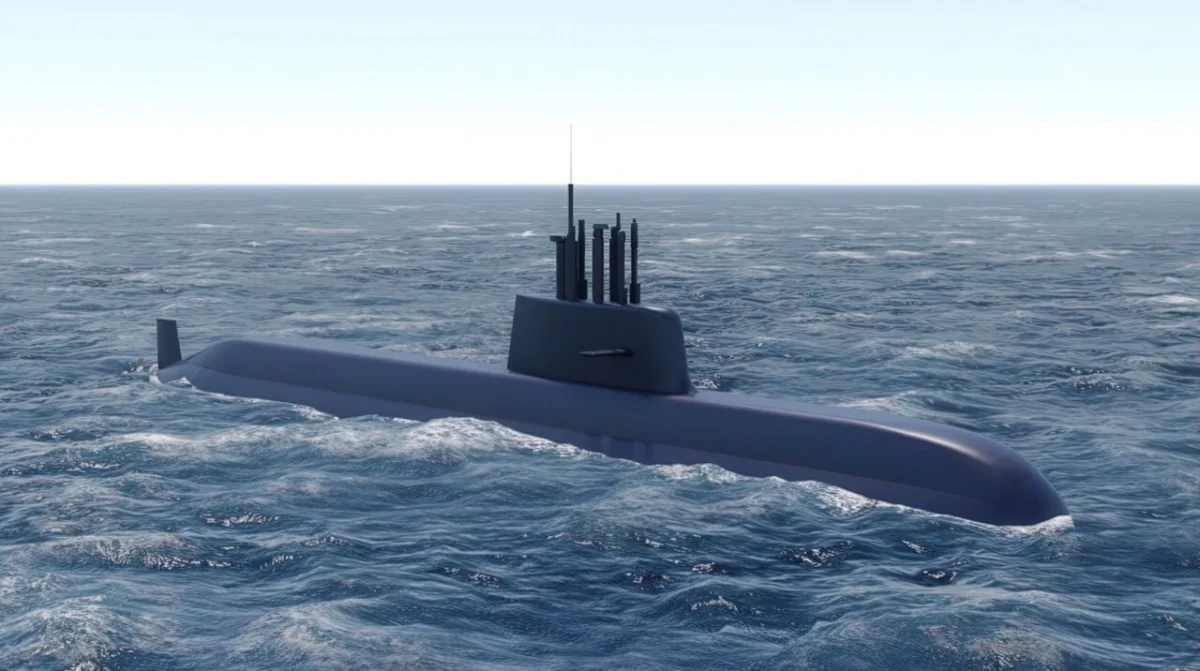
The new KSS-III Batch-II submarine is designed to handle evolving maritime security threats across the Indo-Pacific and beyond.
Among its most critical upgrades are a redesigned combat system and advanced sonar arrays for improved target tracking and data analysis.
These systems serve as the “brain” and “senses” of the vessel, providing superior situational awareness in deep-sea operations.
It carries six 533mm torpedo tubes capable of launching Tiger Shark torpedoes, C-Star-III cruise missiles, and Submarine Launched Mobile Mines (SLMM).
Most notably, it includes 10 vertical launch cells for deploying Hyunmoo-IV-4 submarine-launched ballistic missiles (SLBMs), expanding South Korea’s strategic strike reach.
The platform’s propulsion system combines three MTU diesel engines, four Bumhan PH1 fuel cells, and improved lithium-ion batteries, allowing for extended underwater endurance and quieter operation.
Reduced underwater noise through advanced vibration control gives the submarine an edge in stealth missions, while an auxiliary propulsion system ensures maneuverability even in emergencies.
In his speech, Admiral Kang emphasized that the submarine represents the peak of South Korea’s advanced defense technology, embodying Admiral Son Won-il’s belief that the Navy should continually embrace the most modern innovations.
He added that the ROKS Jang Yeong-sil would strengthen the Navy’s transition into a smart, elite force capable of safeguarding national waters.
Lee Sang-woo, Director General of the KSS-III Project at DAPA, emphasized that the launch demonstrates Korean industry’s ability to produce world-class submarines using domestic expertise.
He expressed optimism that such platforms will enhance Korea’s global defense image and strengthen its export portfolio.
Following the launching ceremony, the submarine will undergo a comprehensive series of sea trials and performance evaluations.
It is expected to be delivered to the ROK Navy by the end of 2027, after which it will enter active deployment to bolster South Korea’s strategic deterrence and maritime resilience.
The KSS-III Batch-II series, powered by a mix of diesel-electric and Air Independent Propulsion (AIP) systems, marks a decisive leap in South Korea’s naval innovation.
With the successful launch of ROKS Jang Yeong-sil, the nation reaffirms its position among the world’s leading submarine producers and signals its intent to play a stronger role in regional and global security.