Follow Us:
Follow Us:

Defense Feeds – Ukrainian Buk-M1 Downs Russian Iskander-K cruise missile during a recent large-scale assault targeting the Sumy region, the Air Force confirmed.
Ukraine’s air defense units successfully intercepted and destroyed the advanced Russian cruise missile before it could strike civilian areas.
On October 12, the Ukrainian Air Force released footage showing the Buk-M1 surface-to-air missile system launching and precisely hitting the incoming Iskander-K mid-flight.
According to the Air Force statement, the interception was carried out by a crew from the anti-aircraft missile regiment named after the Ukrainian Sich Riflemen.
The Buk-M1 unit engaged the Iskander-K missile during a wave of Russian attacks on northern Ukraine, showcasing rapid response and excellent coordination among Ukrainian air defenders.
“Our warriors once again demonstrated professionalism, calmness and teamwork, proving that these qualities remain Ukraine’s strongest defense,” the statement emphasized.
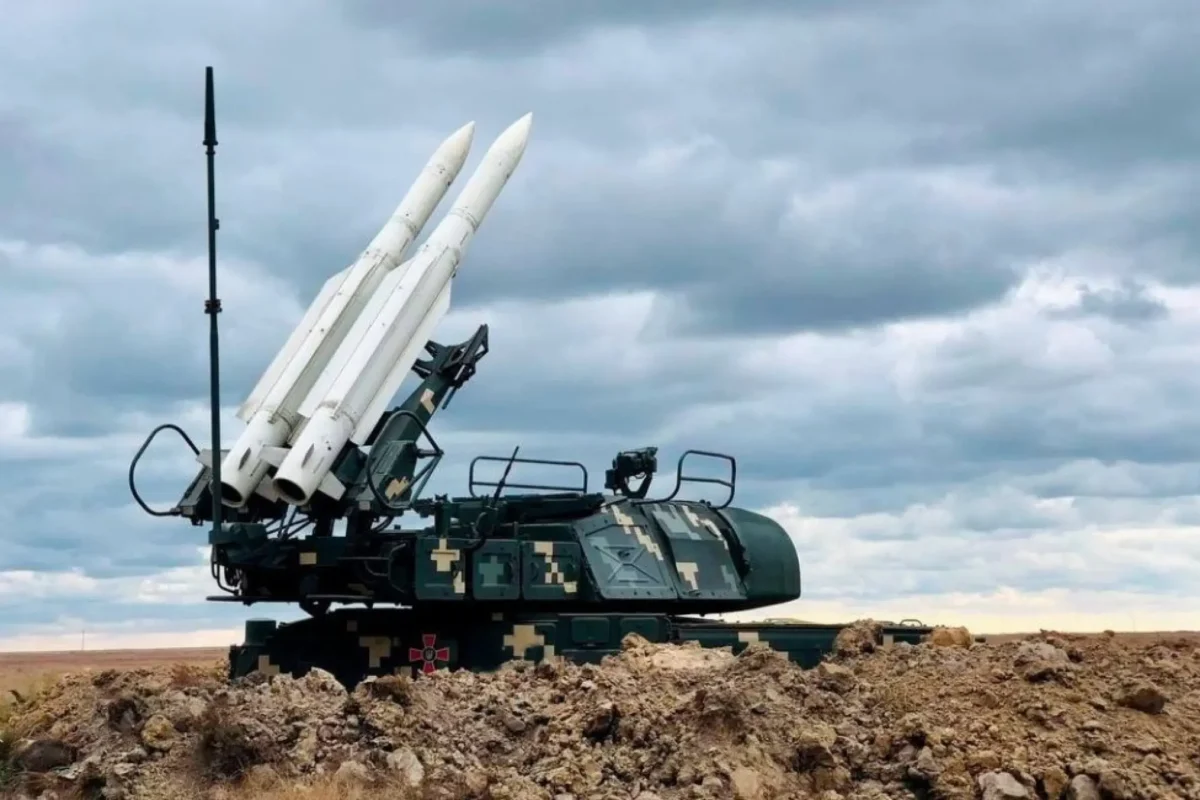
The Buk-M1, first introduced by the Soviet Union in the early 1980s, remains a vital component of Ukraine’s layered air defense network.
The system is designed to engage multiple aerial targets simultaneously, including aircraft, drones and cruise missiles, at ranges of up to 35 kilometers and altitudes between 15 meters and 22 kilometers.
Despite its age, the platform continues to play a decisive role thanks to ongoing modernization and the skill of Ukrainian operators.
The successful interception reinforces confidence in Ukraine’s ability to adapt Cold War-era systems to counter modern Russian threats.
Military analysts note that modifications and integration with digital command-and-control networks have allowed older weapons like the Buk-M1 to remain competitive against low-flying, radar-evading munitions.
The Iskander system serves as one of Russia’s key short-range missile platforms, capable of launching both ballistic and cruise variants.
The downed missile was confirmed to be the Iskander-K variant, equipped with the R-500 cruise missile that flies at low altitude, has a range of about 500 kilometers, and carries a warhead weighing roughly 480 kilograms.
Using terrain-following navigation, the R-500 is engineered to fly just above ground level, significantly reducing its radar visibility and reaction time for defenders.
Unlike the Iskander-M ballistic version, which follows a high-arching trajectory, the Iskander-K’s cruise variant imitates aircraft flight paths, making it particularly challenging to detect early.
Experts suggest that the missile’s neutralization by a Buk-M1 demonstrates not only the proficiency of Ukrainian air defense crews but also the diminishing element of surprise that Russian forces once enjoyed during mass missile offensives.
Ukraine’s air defense network, composed of both legacy Soviet hardware and newly supplied Western systems, continues to record notable victories.
Earlier this month, Ukrainian forces reportedly downed one of Russia’s newest Kh-69 stealth cruise missiles using a cost-effective laser-guided APKWS interceptor, underscoring Ukraine’s improvised, resourceful defense strategy.
Recent engagements reveal a growing trend where Ukrainian air defenses intercept increasingly advanced Russian missiles that were previously thought to be difficult to neutralize.
The combination of improved radar coverage, enhanced targeting procedures, and real-time intelligence sharing with Western partners has elevated Ukraine’s defensive capabilities across multiple fronts.
Analysts predict that as Russia relies more heavily on long-range precision missiles to strike infrastructure and logistics hubs, Ukraine’s continued success in intercepting such weapons will become a key determinant in sustaining the country’s resilience through the winter campaign.
Each successful interception not only protects civilian lives but also undermines Russia’s psychological and operational objectives.
For now, the Buk-M1’s enduring reliability and the adaptability of Ukrainian forces serve as a testament to the country’s defensive ingenuity against high-tech Russian threats.
As missile warfare continues to evolve, Ukraine’s growing interception record highlights both the effectiveness of its legacy systems and the tenacity of its air defenders.