Follow Us:
Follow Us:

Defense Feeds – The Sikorsky Nomad VTOL drones, developed by Lockheed Martin’s Sikorsky division, offer a new generation of rotor-blown wing unmanned aerial systems designed for the U.S. Army’s future combat needs.
These innovative drones combine vertical takeoff and landing (VTOL) capabilities with efficient fixed-wing flight, enabling versatile operations in reconnaissance, light strike, and rapid logistics missions.
The Sikorsky Nomad VTOL drones stand out with their ability to operate without runways, providing greater battlefield flexibility in complex environments.
Featuring advanced autonomy through Sikorsky’s MATRIX architecture, these drones support multi-domain operations with enhanced endurance, stealth, and modular payload options.
By integrating both agility and range, Sikorsky Nomad VTOL drones are poised to be crucial assets for tactical intelligence, surveillance, strike missions, and contested logistics in evolving combat scenarios.
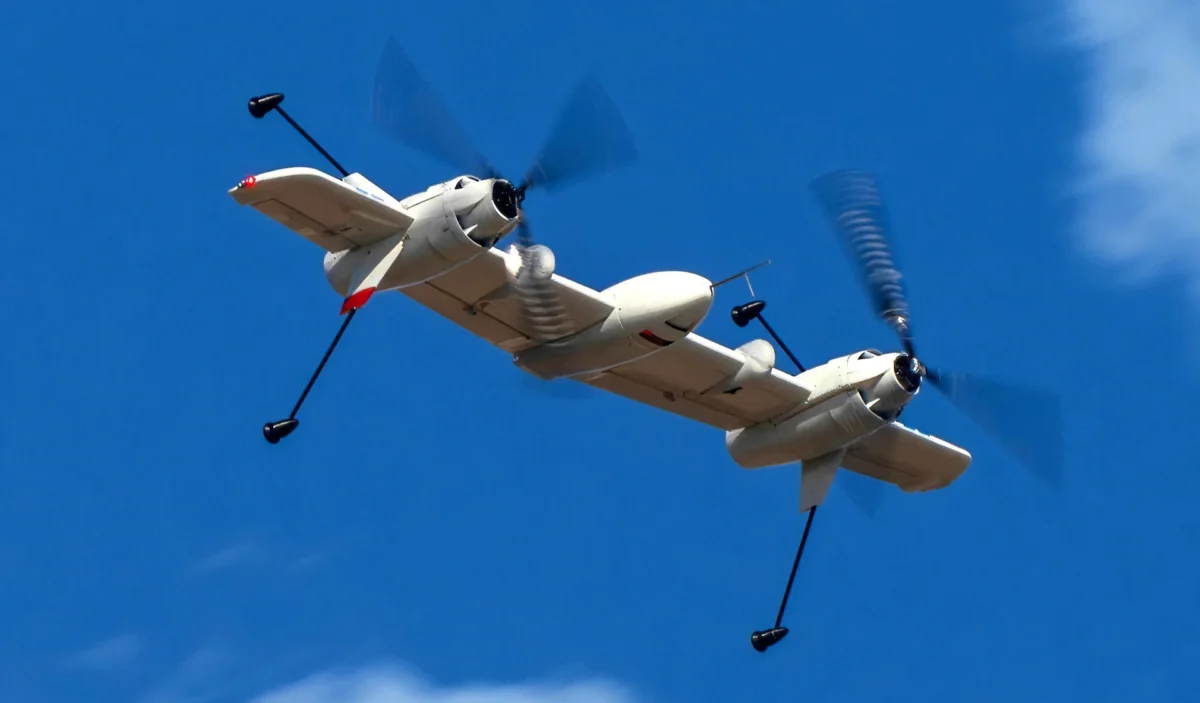
Revealed on October 6, 2025, the Nomad family showcases a distinctive hybrid rotor-wing design that combines twin proprotors and fixed wings.
This configuration allows the drones to take off vertically like helicopters and seamlessly transition to airplane-style forward flight, maximizing range and fuel efficiency without requiring traditional runways or launch platforms.
The rotor-blown wing technology directs airflow from the rotors over the wing surfaces during hover to improve lift and control.
Once in forward motion, the drone uses wing-generated lift to extend endurance and conserve energy.
Sikorsky’s advanced MATRIX™ autonomy system manages this complex flight shift autonomously, enabling real-time optimization of flight performance based on mission needs and environmental conditions.
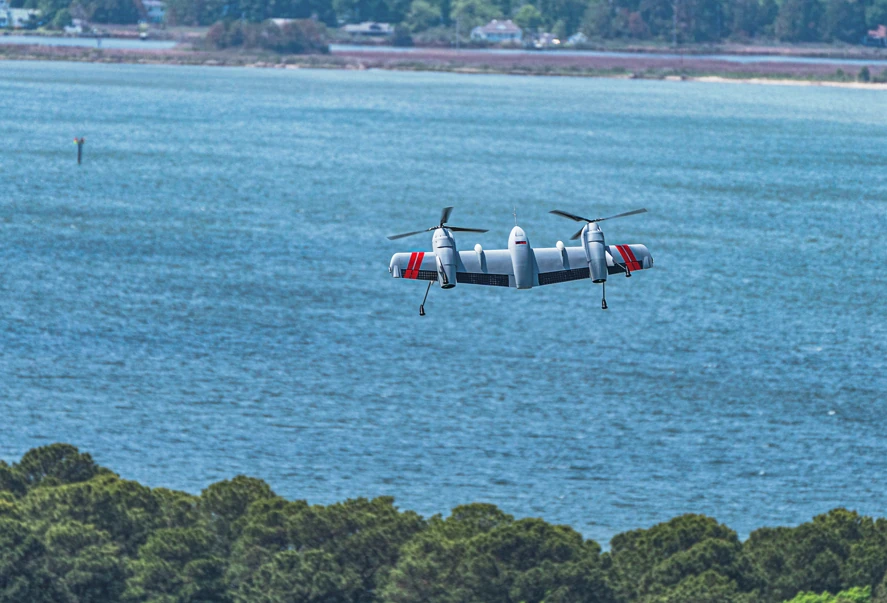
Early flight tests began in 2025 with the Nomad 50 prototype featuring a 10.3-foot wingspan.
This successfully demonstrated reliable vertical takeoff, transition flight, and stable cruising capabilities.
Sikorsky is now progressing to the larger Nomad 100, an 18-foot wingspan Group 3 variant planned for flight testing soon. This model targets tactical ISR missions and light payload deliveries in challenging, mobile combat zones.
Beyond the smaller Nomad batches, upcoming Group 4 and 5 models will adopt conventional propulsion systems designed for heavier payloads and extended range operations.
These variants will feature modular payload bays supporting electro-optical and infrared sensors, electronic warfare packages, precision munitions, and networked ISR nodes.
Such flexibility allows rapid reconfiguration in the field for missions like maritime patrol, forward arming, resupply, and manned-unmanned teaming (MUM-T).
The whole Nomad series is integrated with MATRIX™, Sikorsky’s open-architecture autonomy platform.
It enables complex navigation, obstacle avoidance, multi-drone coordination, and dynamic mission replanning, even in GPS-denied or contested electronic warfare environments.
This ensures Nomad drones can operate as persistent ISR assets, loitering munitions, or airborne logistics hubs connected with joint command networks.
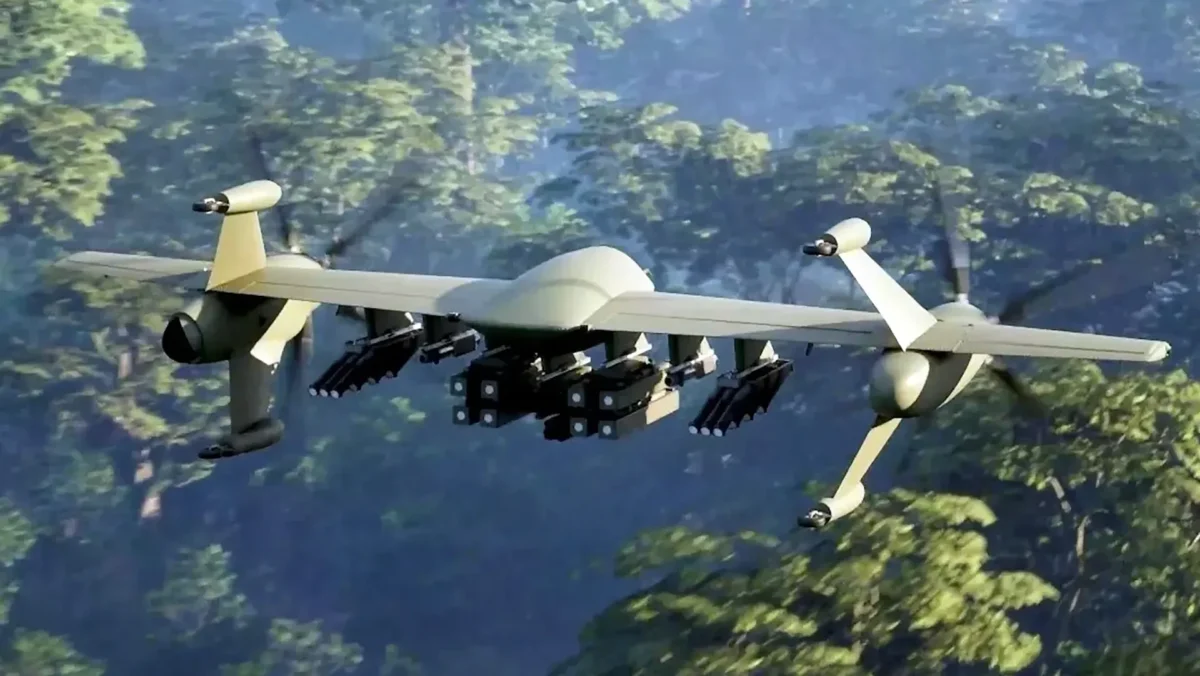
Nomad can take off and land in tight spaces such as ship decks, city rooftops, or forest clearings, making it perfect for flexible frontline use.
It combines quiet electric propulsion (in smaller variants) with low thermal signatures to enhance stealth during reconnaissance tasks.
Its endurance and nap-of-the-earth flying ability allow deep penetration into enemy territory for surveillance or precision strike support.
Designed with future AI and autonomy enhancements in mind, the Nomad platform can incorporate onboard processors for real-time target analysis, terrain mapping, and coordinated swarm operations.
In high-threat situations, multiple Nomad drones could perform synchronized surveillance, deception, or attack missions autonomously, leveraging data fusion from distributed sensors.
Sikorsky plans to showcase the Nomad 100 at AUSA 2025, highlighting its tactical readiness.
Going forward, the platform will evolve toward longer endurance missions, enhanced payload capacity, and closer integration with long-range fires and joint All-Domain Command and Control (JADC2) systems.
This new rotor-wing VTOL drone family reflects a strategic shift in battlefield aviation — focusing on flexible, runway-independent systems with high autonomy to support U.S. Army maneuver, logistics, and precision strike requirements deep inside contested zones.