Follow Us:
Follow Us:

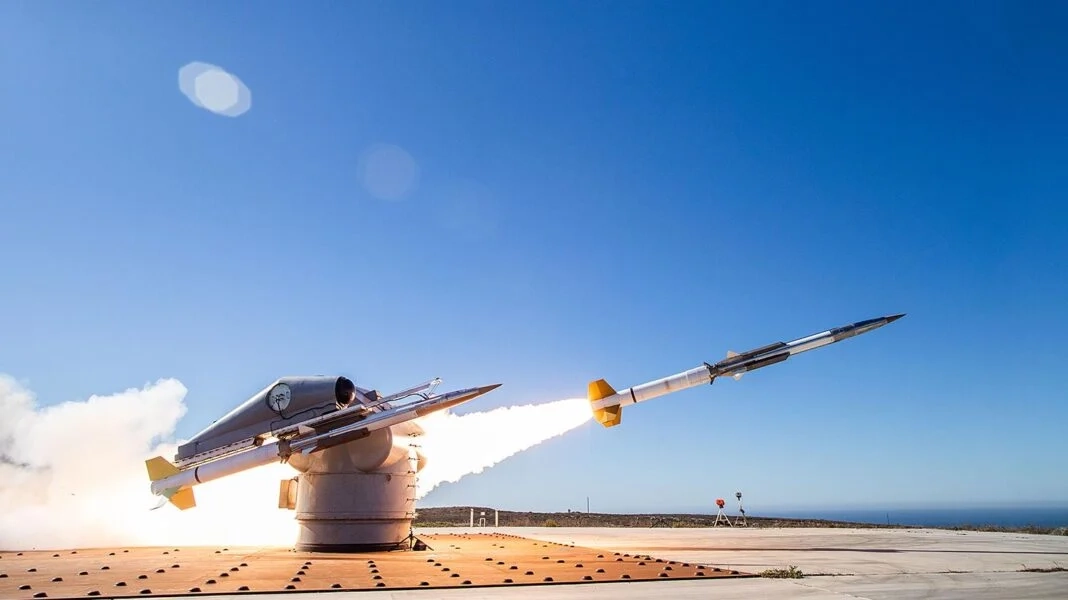
Defense Feeds– Navy Expands GQM-163A Coyote Supersonic operations by inaugurating a modern launch facility at San Nicolas Island, doubling simultaneous target launches.
This upgrade significantly enhances the U.S. Navy’s ability to train against supersonic missile threats by doubling the number of GQM-163A Supersonic Sea Skimming Targets, also known as the “Coyote,” that can be launched simultaneously.
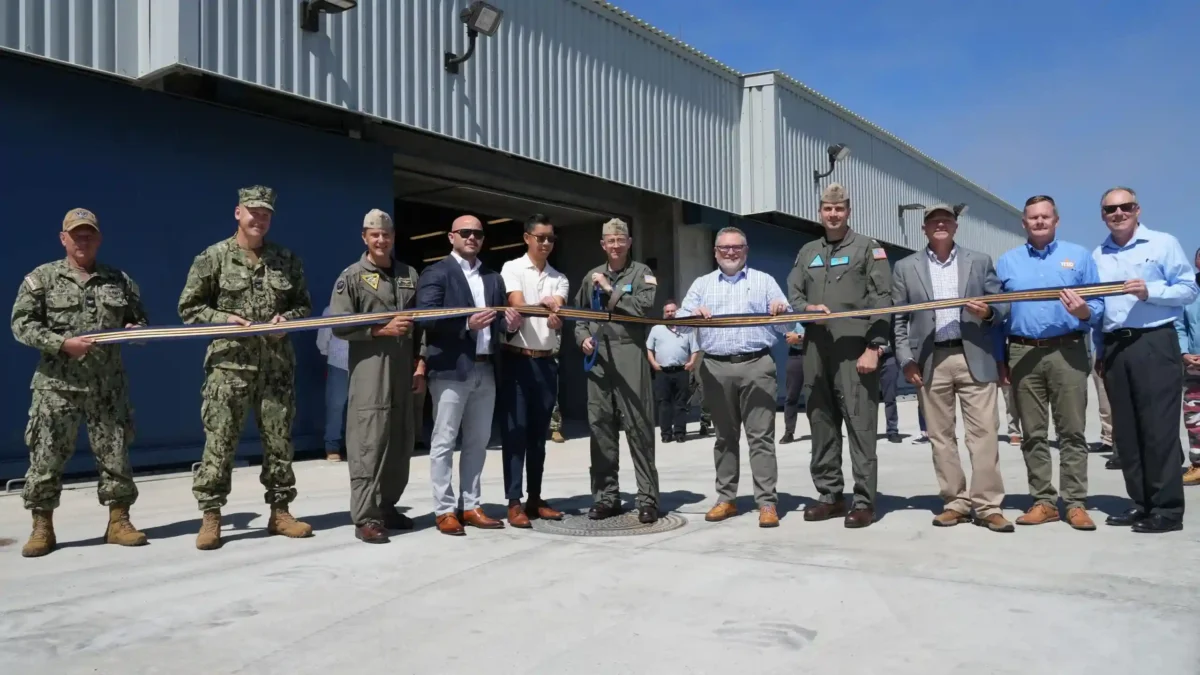
The newly built High Explosive Magazine (HEM), working in tandem with the current missile assembly structure, provides the capability for swift assembly, storage, and deployment of these high-speed supersonic sea-skimming targets for fleet training at Point Mugu Sea Range.
The GQM-163A Coyote is a state-of-the-art supersonic aerial target designed to mimic fast, maneuvering missile threats that U.S. naval forces face globally.
Capable of flying at speeds exceeding Mach 2.5, this nearly 20-foot-long drone simulates sea-skimming cruise missile attacks, providing the Navy with vital training to detect and counter hostile weapons.
With the new launch facility on San Nicolas Island, two launchers can now fire up to four targets simultaneously, creating challenging multi-threat training scenarios that better reflect real-world combat situations.
Rear Admiral Keith Hash, commander of the Naval Air Warfare Center Weapons Division (NAWCWD), highlighted the vital need for continuous adaptation to evolving threats in naval warfare.
He noted, “The threat environment is changing every day, and we must change and grow with it.
Presenting multiple, realistic threats gives our warfighters a decisive edge to deter aggression and, if necessary, win conflicts and come home safely.”
The enhanced capability allows sailors to practice responding to complex, simultaneous missile attacks, critical for ensuring readiness against emerging global challenges.
The new High Explosive Magazine, officially certified for explosives storage in August 2025, works in coordination with a missile assembly building completed in late 2022.
Together, these facilities enable the Navy to build and store up to eight GQM-163A targets every eight weeks, doubling prior production limits.
The larger storage capacity also means up to 10 assembled targets and their boosters can be staged simultaneously, greatly speeding up launch preparation and enabling rapid, consecutive “quad-launches” within a 24-hour period.
Kevin Gross, director of the NAWCWD’s Threat/Target Systems Department, explained the project’s growth since 2016, when the Navy sought to increase launches to more than 30 annually—up from a maximum of four.
This expansion was enabled by key funding support, allowing the Navy to better meet modern training demands.
Capt. Anthony Holmes, commanding officer at the Naval Surface Warfare Center Port Hueneme Division, called the facilities “force multipliers,” critical for equipping sailors to face increasingly sophisticated adversaries in dynamic combat environments.
San Nicolas Island, located in California, is part of Naval Base Ventura County (NBVC), which also includes the Point Mugu Sea Range and Port Hueneme.
The base hosts multiple specialized warfare centers, including NAWCWD and NSWC-PHD, which collaborate closely to conduct research, development, testing, and fleet training.
Capt. Daniel Brown, commanding officer of NBVC, highlighted how the base’s integrated capabilities serve as a force multiplier to prepare the Navy’s forces to face both current and emerging challenges globally.
The upgraded facility on San Nicolas Island is already in operation and set to support intensified fleet training exercises this fall.
The ability to simulate multi-target supersonic missile attacks on the Navy’s largest instrumented overwater range provides a critical edge in readiness.
This prepares sailors for the complex realities of modern naval combat, where threats are faster, more maneuverable, and more numerous than ever before.
This advancement underscores the Navy’s commitment to evolving threat response and enhancing warfighter readiness by leveraging cutting-edge technology and expanded infrastructure.
The GQM-163A Coyote remains the only supersonic sea-skimming target produced in the U.S., ensuring that training closely simulates the advanced missile threats posed by potential adversaries worldwide.
By expanding and upgrading its facilities, the U.S. Navy is strengthening its supersonic defense training capabilities, allowing surface fleets to better detect, track, and engage swift missile threats.
As global naval competition intensifies, these enhanced training capabilities will be crucial to maintaining maritime superiority and protecting national security interests.